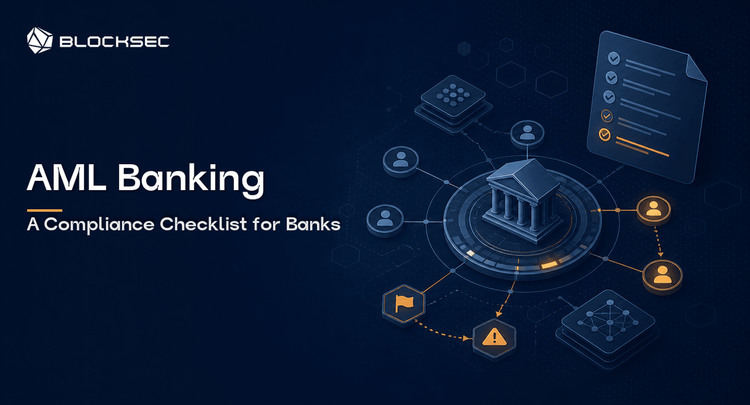
A bank examiner walks into a review with one question: show me your AML program. The answer is not a binder on a shelf; it is three connected systems that have to work in sequence. AML in finance is the framework of customer due diligence, monitoring, and suspicious reporting that banks and asset managers maintain. The on-chain counterpart of the same framework is covered in the AML program hub.
Why AML Matters in Finance
Money laundering does not just fund crime; it corrodes the financial system it runs through, because a bank that moves criminal proceeds lends its legitimacy to the underlying offense. The framework exists as law, not an option.
It has three pillars. Customer due diligence establishes who the customer is at the door, transaction monitoring watches activity over time, and suspicious reporting pushes findings to regulators. Traditional finance AML rests on onboarding KYC, ongoing transaction monitoring, and suspicious activity reports, with each stage feeding the next. FinCEN defines the money-laundering predicate all three pillars exist to interrupt. For how banks specialize this framework, see AML Banking.
Customer Due Diligence and Onboarding KYC
Know Your Customer is the first pillar, a hard legal requirement at account opening. A bank establishes identity, beneficial ownership, and the purpose of the relationship before it can serve a customer. The Financial Action Task Force sets customer due diligence as the baseline every member regime implements.
BlockSec does not provide KYC identity verification; that is a bank's own function. Phalcon Compliance does the crypto-side counterpart: screening addresses and transactions for illicit funds.
Transaction Monitoring and Suspicious Reporting
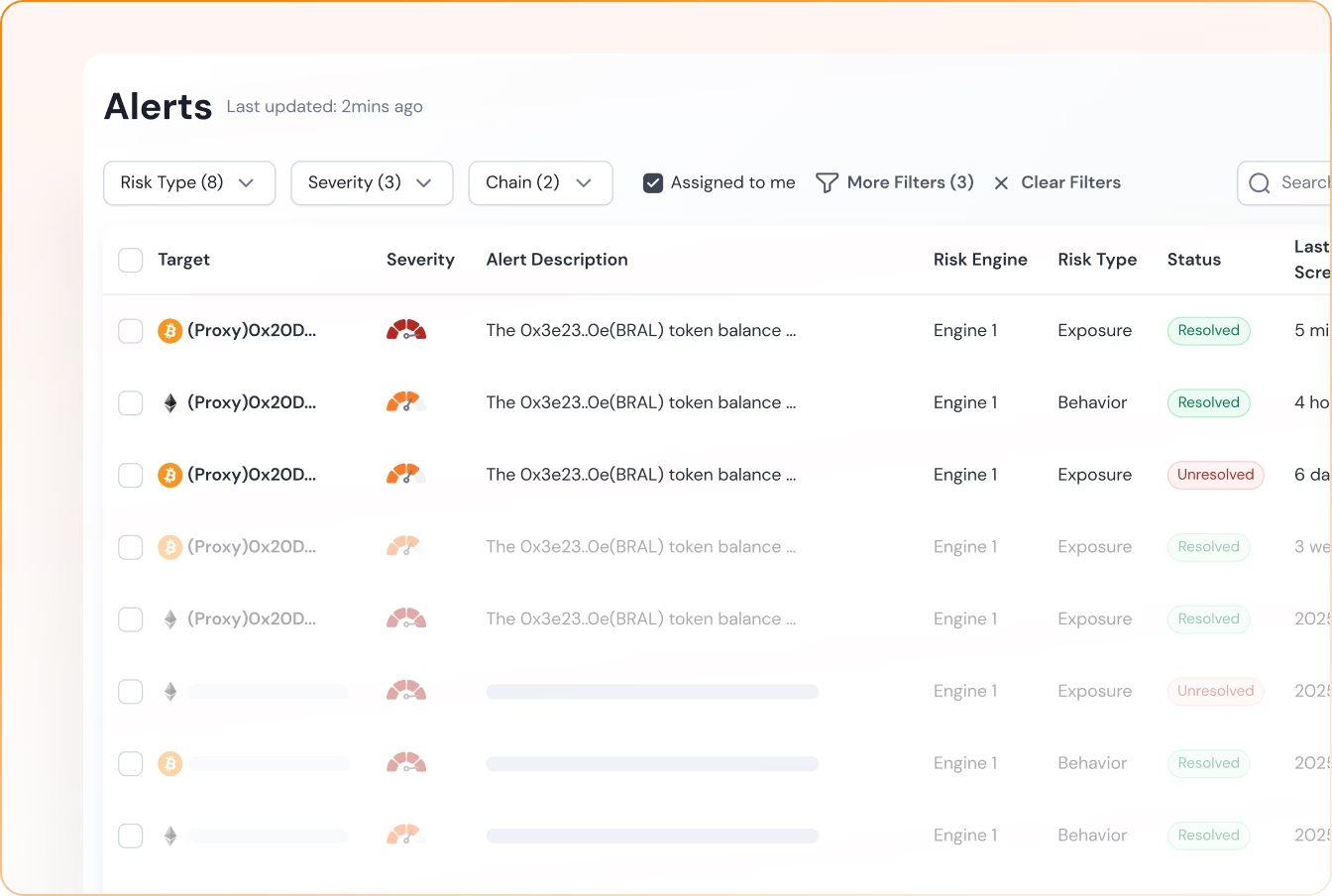
The second pillar watches activity after onboarding. Rule engines flag structured deposits, sudden transfers, and activity inconsistent with the customer's stated business. An analyst reviews each alert, and a confirmed suspicion becomes a report to the regulator. AML obligations in finance differ from crypto by the weight of identity verification at onboarding, but the monitoring and reporting stages stay the same.
AML in Finance vs Crypto
The contrast is in what each regime can see and verify.
| Dimension | Traditional Finance AML | Crypto AML |
|---|---|---|
| Onboarding anchor | Identity (KYC) | Address risk (KYA) |
| Ongoing check | Account activity | Transaction graph (KYT) |
| Evidence form | Statements, wire records | Addresses, hops, labels |
| Coverage limit | The bank's own accounts | Cross-institution, on-chain |
Traditional finance leans on knowing the person; crypto leans on knowing the address and its transaction history. The two are complements, not substitutes. A bank that serves crypto businesses needs the identity layer at onboarding and the on-chain screening layer for the activity identity cannot explain. Phalcon Compliance carries that on-chain screening half. For how on-chain screening extends a traditional AML program, see Onchain AML: Screening, Monitoring, and Investigations.
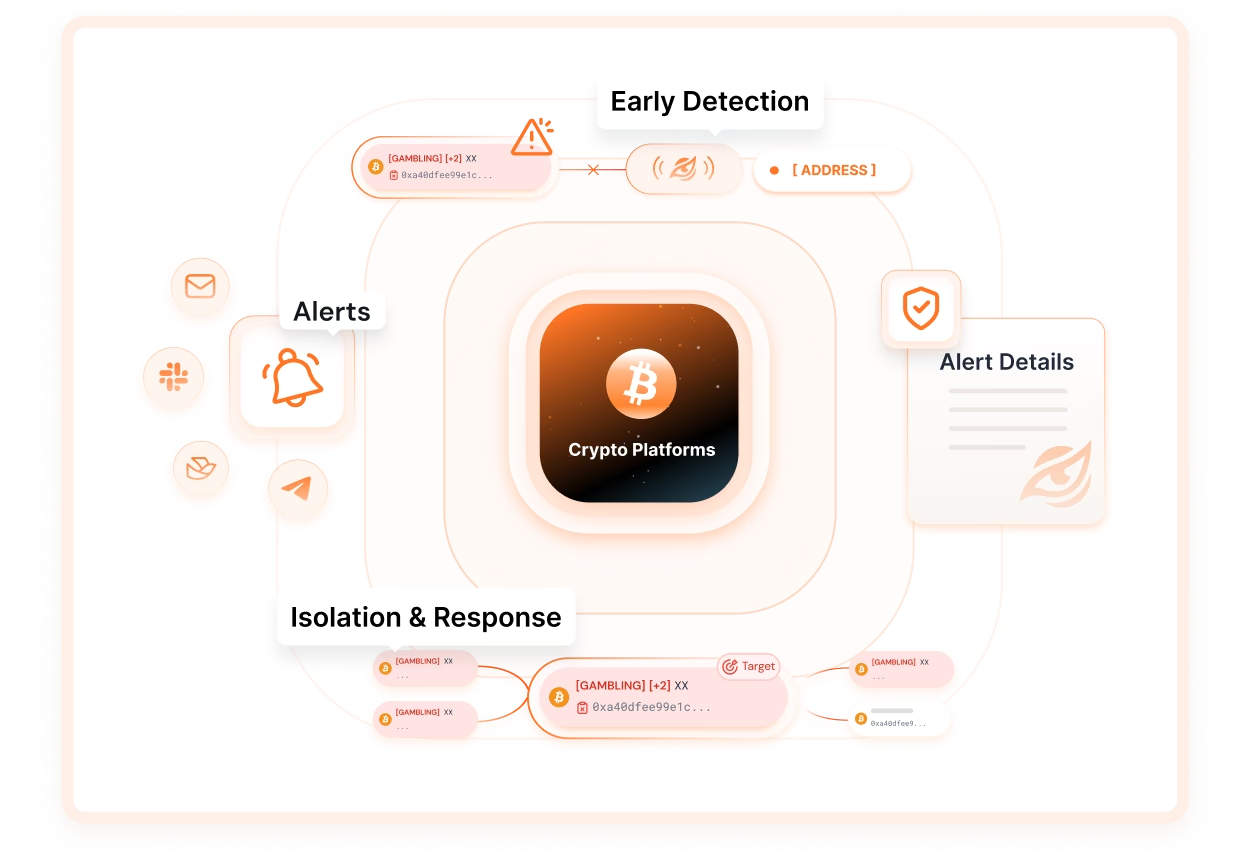
Book a demo of Phalcon Compliance and watch the monitoring and reporting stages run against live transaction data; for the software options spanning both regimes, see six blockchain compliance platforms compared.
FAQ: AML in Finance
What are the three pillars of AML?
Customer due diligence, transaction monitoring, and suspicious reporting. Due diligence establishes the customer, monitoring watches activity, and reporting escalates findings to regulators.
Is KYC part of AML?
Yes. KYC (identity verification at account opening) is the first pillar of a traditional AML program and anchors everything downstream.
How does crypto AML differ from traditional finance AML?
Traditional finance verifies identity at onboarding; crypto screens addresses and transactions on-chain. The monitoring and reporting stages stay the same.
Does BlockSec provide KYC?
No. The platform screens crypto addresses and transactions for illicit funds (KYA and KYT). Identity verification is a bank's own function.