Screen counterparties for risk, continuously monitor payment addresses, and get notified automatically. Build trust in every transaction.
Enable Secure and Compliant Crypto Payments

“Partnering with BlockSec has significantly strengthened the security of our platform. Real-time deposit and withdrawal risk management has prevented numerous high-risk transactions. BlockSec’s solution not only improved our compliance capabilities but also preserved user experience—critical for our long-term growth. ”

~$542K Lost: MakerDaoBot Exploit | BlockSec Weekly
This report covers 1 security incident on Ethereum from 2026/10/05 - 2026/10/11, with an estimated loss of approximately $542K. An attack contract deployed a malicious adapter and passed it to a MakerDaoBot function that lacked access control, causing the bot to grant the adapter permission over its internal MakerDAO balances. The adapter settled four legacy ETH-A auctions and converted 200 units of ETH-A collateral to WETH; the attack contract unwrapped it and sent 200 ETH to the attacker.
~$418M Lost: Bitget, NEAR Intents Exploits | BlockSec Weekly
This biweekly security report records eight incidents from September 21 to October 4, 2026, with approximately $418.4M in losses across Ethereum, BNB Chain, Solana, Bitcoin, TRON, XRP Ledger, Zcash, Avalanche, NEAR, and related networks. Detailed analysis covers Bitget's $387.5M third-party security product vulnerability and NEAR Intents' $3.87M refund validation flaw and missing state rollback.
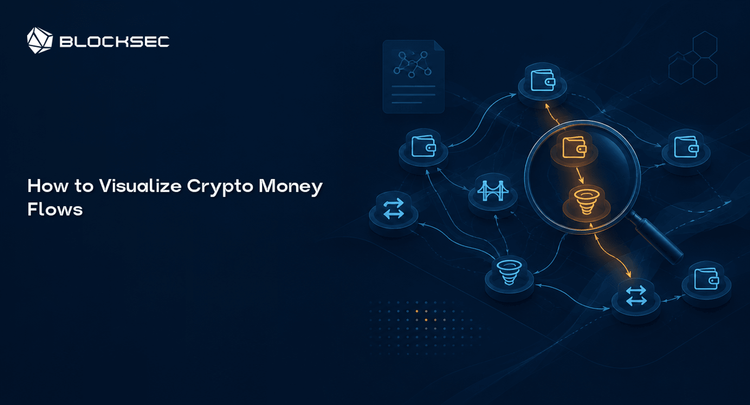
How to Visualize Crypto Money Flows
How to visualize crypto money flows: build a money flow graph, why flows beat spreadsheets for investigations, and how labels turn graphs into evidence.
For 1000+ clients, from Web3 leaders to global regulators