
What a Multisig Wallet Is
A multisig wallet spreads signing power across several keys. The rule is M of N: a transaction needs any M of the N keys to go through, so in a 2 of 3 setup, any two of three keys can move funds. Lose one key and the wallet still works; lose two and the funds are out of reach.
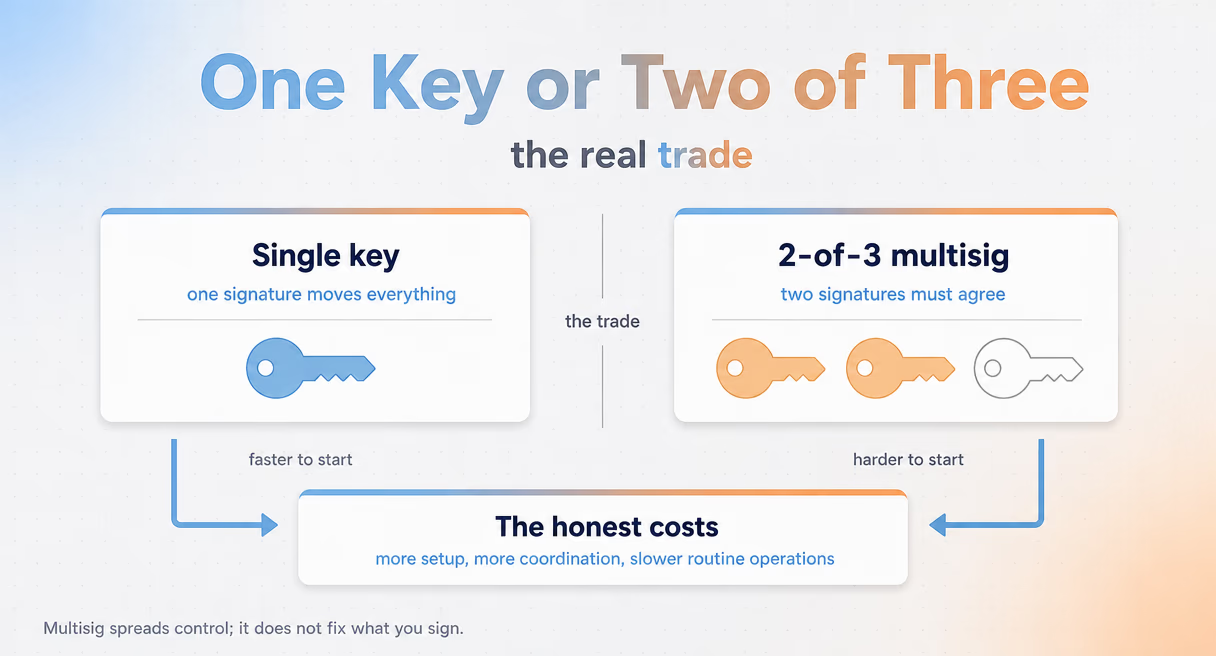
Single sig is one key with full power, and that is the whole trade in miniature. A single key is either intact or fatal. A 2 of 3 multisig tolerates one loss and still demands cooperation for every spend, which changes both who can steal from you and who must be reachable for you to pay yourself.
The most common form is 2 of 3: three keys held in different places or by different people, any two enough to act. Teams and DAOs often start there because it separates the people who approve from the device that signs. Individuals use it to keep keys in separate locations so one burglary or one house fire is survivable.
Single Sig vs Multisig: The Real Trade
Single sig buys simplicity: one seed phrase plus a passphrase, both small enough to memorize, both simple enough to restore from memory. Multisig buys survival: one stolen key no longer empties you. What you trade away is that memory friendly, single object simplicity, and whether that trade is worth it depends on amounts, habits, and who else is involved.
A user in a public forum post describes the exact standoff: after a hardware wallet incident they started moving toward 2 of 3 multisig, but could not fully commit. With single sig they could memorize both the seed and the strong passphrase, and with multisig that becomes much harder. That is not indecision; it is an accurate reading of the trade.
The honest accounting on the single sig side: a phrase you can hold in your head is a backup that cannot be seized in a burglary. Restoring your wallet from memory alone is a real kind of safety. The honest accounting on the multisig side: an attacker now needs two of your keys, not one, and a single compromised device no longer settles the matter.
Should you move from single sig to 2 of 3? The question deserves a decision frame rather than a universal yes. How much value sits at the address, how often you actually transact, whether other people share responsibility for the funds, and whether you can maintain the extra moving parts without cutting corners. Large amounts, shared control, and low transaction frequency all point toward multisig. Small amounts, frequent activity, and a strong memory habit point toward staying.
| Dimension | Single sig | 2 of 3 multisig |
|---|---|---|
| Keys that can move funds | One key | Any two of three keys |
| One stolen key | Funds can be emptied | The wallet still works |
| Backup material | One seed, plus a passphrase | Seeds plus the wallet descriptor |
| Recovery from memory | Possible with a strong habit | Not realistic to memorize |
| Best fit | Small amounts, frequent use | Large holdings, shared control |
The Honest Costs of Multisig
Multisig does not remove risk; it swaps single key compromise for backup complexity. Three costs come with the upgrade. You can lock yourself out more easily than a thief can break in. Recovery depends on materials that single sig never needed. And the backup you must keep is bigger than the seeds alone.
The first cost is self lockout. With more keys and more rules there are more ways to be the obstacle: two keys in places you cannot reach, or a threshold you can no longer meet. Users in public forum discussions report worrying they are more likely to lock themselves out than to be robbed, and for careful people that worry is often correct.
The second cost is recovery. A 2 of 3 wallet is defined by its three public keys and its policy, recorded in a wallet descriptor. To restore the wallet anywhere, you need that descriptor together with enough seeds. Lose one of the three xpubs and you have not lost one key, you have lost the wallet, because the set that defines it is incomplete. Single sig never asked this of you: one seed was the whole story.
The third cost is what that means for backups. You are no longer backing up seeds; you are backing up a descriptor, the xpubs and rules, plus the seeds, in separate places, kept current. Skipping the descriptor because the seeds felt like enough is one of the standard ways multisig holders lose funds they still hold the keys to.
These costs are real and they are yours. No monitoring product makes them smaller, and none of what follows on this page is about backup or recovery.
When Large Holdings Justify Multisig
The advice that keeps coming up in public forum discussions is blunt: people saving meaningful amounts of Bitcoin should consider a multisignature wallet. The reason is asymmetry: at small amounts, simplicity protects you, and at large amounts, a single point of failure is the one weakness you cannot afford to keep.
The same logic runs from the other direction at institutions. DAO treasurers and managers of large positions treat multisig as the default starting point for moving big amounts and approving contract upgrades. Shared signing is how a group holds money without handing any one member a private key to everything.
Scale makes this concrete rather than theoretical. As of March 2025, more than 39.14 million Safe wallets had been created, holding around 54.9 billion dollars at the time (per BlockSec). Multisig is a mainstream way to hold crypto, not a niche for the overly cautious. The FBI's Internet Crime Complaint Center counts the losses on the other side of the ledger, the theft reports that keep arriving from single key compromises.
Multisig Does Not Fix What You Sign
Multisig answers who can sign, not what gets signed. A screen that shows a transfer while the transaction actually performs an upgrade will collect every required signature just as smoothly, because each signer trusts that someone else read it. More keys change the door, not the document.
That trust is the soft spot. In the Bybit incident, later signers relied on the judgment of earlier ones, and the interface masked what the transaction truly did. The Cybersecurity and Infrastructure Security Agency covers this class of signing and interface risks in its advisories, and the pattern is general: redundancy in approval is not the same as reading the payload.
This is the narrow place where a monitoring product earns its slot, on the operation side only. Safe{Wallet} Monitor watches multisig transactions in real time, translates what a transaction will actually do into readable form, and warns before signing finishes and before the transaction reaches the chain. It can also alert people who are not signing, so a second set of eyes gets involved. What it does not do is touch your backups, your descriptor, or your recovery plan; those remain entirely your own work, as the costs section above makes plain.
For the concept underneath, read What Is Blind Signing in Crypto?. For the working routine, the four checks to run on every large transaction are in How to Check a Multisig Transaction Before You Sign It, and the wallet risk hub maps the full family.