
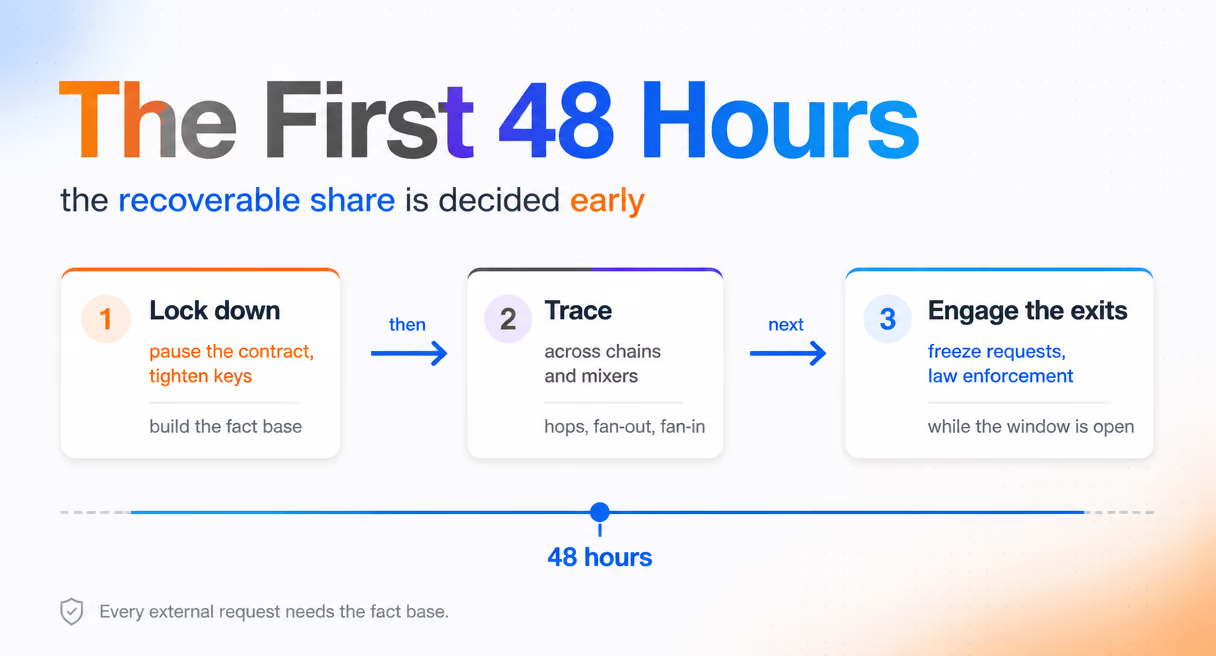
Stolen crypto can be traced after a hack, and the window that matters is the first 48 hours. Three moves decide what is recoverable: freeze what is freezable, trace the paths while they are still readable, and engage the exits before funds disperse beyond reach.
Why the First 48 Hours Decide What You Can Recover
Stolen funds follow a pattern that rewards speed. Value typically moves from the exploit transaction into an aggregation wallet. It then splits through hiding steps, mixing services, peel chains, and cross-chain bridges, before converging on exit points where it converts to fiat or other assets. Each stage narrows what tracing can still do. The aggregation stage is fully readable: one wallet, complete picture. After the mixer, individual paths become statistically fragmented. After the bridge, a single-chain trace ends unless the tooling follows value across chains.
Teams that have lived through it describe the deeper problem: the funds are gone and the cause is unclear, which process failed, which transaction was the exploit. Response starts with establishing facts, because recovery requests addressed to exchanges need specifics, and a freeze request without a transaction hash and a path is a request that sits in a queue.
Step One: Lock Down What Is Left and Establish What Was Taken
Before tracing, stop the bleeding. Pause the exploited contract if it can be paused. Tighten administrative keys and multi-signature quorums, because follow-on attacks against the responding team are a known pattern. Then establish the fact base: which transaction was the exploit, which vulnerability it abused, what assets left, in what amounts, to which addresses. Every later step references this fact base, and every external request, to an exchange, to law enforcement, to insurers, needs it. In the US, the suspicious-activity side runs through FinCEN's statutes and regulations.
This is also the moment to preserve what you already have. Export the monitoring state, the alert history, and any screening records from before the incident. A response conducted with a clean fact base and preserved records turns into evidence later; a response conducted from memory does not.
Step Two: Trace the Funds Across Chains and Mixers
With the fact base set, tracing begins from the exploit transaction's receiving addresses. Unfold the outgoing paths hop by hop: where value concentrated, where it split, which intermediate addresses behaved as one actor. Watch for the fan-out that signals distribution and the fan-in that marks a consolidation or a service deposit. Cross-chain bridges deserve particular attention, because funds hop through bridges by default. A trace that stops at the bridge stops exactly where the money kept going; tracing coverage across the major bridging routes keeps the trail continuous.
Mixers mark the hardest stretch. The practical approach is to trace to the mixer entry, document it precisely, and pick the trail up at identified exit points rather than guessing inside the fragmentation. Per BlockSec, MetaSleuth, a fund-tracing and investigation platform, follows multi-hop paths across 12 chains, supports cross-chain analysis, and maintains real-time monitoring of stolen-fund movement, so a designated watch alerts the team when watched addresses move. For the mixer stretch specifically, see How to Trace Stolen Crypto Through a Mixer.
Step Three: Engage the Exits and Coordinate the Response
Tracing feeds the engagement phase: the exits where value can still be intercepted. Exchange deposit addresses are the highest-leverage exit, because a freeze request with a transaction hash, a path archive, and a timestamp can land within the window when funds are still in the deposit address. Law-enforcement engagement follows the same logic: a report with a documented trail is actionable; a report without one is a start from zero. The obligations behind those reports trace back to the FATF standards. In cross-border cases the division of labor matters, and one pattern worth knowing is explicit: the on-chain naming work and technical explanation can come from the tracing team while counsel drives jurisdiction-specific legal process. Insurance and communications close the loop, and each consumes the same records.
The response does not end when the initial trail goes quiet. Stolen funds sit for months before moving, and continuous monitoring of the addresses involved, with alerting on movement, is what turns a dormant case into a recoverable one. Per BlockSec, Phalcon Compliance keeps labeled address data with continuous updates for exactly this watch. The verdict on recovery is honest: the first 48 hours decide almost the entire recoverable share, and some of what was stolen does come back.
This piece is part of the MetaSleuth investigations and forensics guide, where the tracing method, evidence handling, and tooling tiers are covered end to end.