
You can trace stolen crypto through a mixer because the mixer only cuts the deposit-to-withdrawal link. It leaves the signals around timing, amount, and entity behavior intact, and an investigator can follow those. The repeatable method works outward from those signals instead of treating each mixer as a dead end. This guide runs four steps: lock the seed address and flag mixer exposure, chase the trace across chains and swaps, find a cash-out point, and package the fund path with its evidence. For the broader workflow, see Phalcon Compliance. This page is part of the AML Compliance Hub.
How Mixers Break the Tracing Chain
A mixer cuts the tracing chain by design. The dominant pattern is the deposit pool. Stolen funds enter the pool as a deposit, and the pool holds them next to deposits from many other users. Withdrawals of the same denomination exit from addresses with no direct link back to the deposit. The visible link between the victim address and the cash-out address is gone, and an investigator walking the onchain trail hits a wall at the pool boundary.
Chain-hopping widens that gap. The funds that leave the mixer do not stay on one chain. They cross a bridge to a different network and swap through a decentralized exchange into a different asset. They may enter a second mixer or a second bridge before they reach a cash-out point. Each hop adds a new identifier: a new address, a new asset, a new chain. Manual tracing tools that work chain by chain stall at the first bridge, because the receiving-chain address has no native link back to the sending chain.
Regulators flag this risk at the systemic level. FATF identifies cross-chain and mixer-based laundering as a systemic risk that increases the detection burden for investigators and virtual asset service providers. The structural reason is simple: laundering that crosses chains is harder to trace than single-chain laundering. That gap reflects the topology of bridges and pools, not a lack of investigator effort. Blockchain investigators identify the cross-chain hop through a mixer as the point where the tracing chain breaks in real cases, and cross-chain capability has become the new standard for forensic work.
Step 1: Seed Address and Mixing Label Detection
The first step is to lock the seed address. The seed address is the known entry point of the stolen funds. In a hack it is the victim contract address. In a social-engineering case it is the compromised wallet. In a fund-aggregation case it is the first address that collected the funds before they moved. Every tracing effort needs a concrete starting address, because without it the rest of the SOP has nothing to follow.
The second move is to detect the Mixing label on addresses in the fund flow. Mixing is one of 17 Risk Indicator categories in Phalcon Compliance, drawn from over 200 signal types, and any address that has touched a mixer carries a traceable Mixing label. Phalcon Compliance exposes 200+ signal types organized into 17 Risk Indicator categories as a transparent set, where every risk decision returns the indicator IDs that drove it, including Mixing. The label survives the pool exit. An address that withdrew from a mixer deposit carries the Mixing label into every later transaction, so the investigator can flag the whole downstream flow, not only the pool boundary.
The label turns a tracing problem into a filtering problem. The investigator no longer has to walk every pool withdrawal one at a time. Instead, the investigator scans the fund flow for addresses that carry the Mixing indicator. The label marks exactly the addresses that sit downstream of a mixing event, which is the population that matters for a stolen-funds trace.
Step 2: Cross-Chain Multi-Hop Penetration
MetaSleuth follows fund flows through mixers, DeFi protocols, bridges, and multiple chains in one workspace. The Mixing risk indicator flags mixer exposure, interaction-based risk signals show how funds move across transaction hops, and cross-chain tracing keeps the investigation alive after a bridge transfer.
Interaction-based risk signals are the mechanism that structures multi-hop tracing. In Phalcon Compliance, interaction-based monitoring traces receipt and disbursement of funds across multiple transaction hops, and when any address in the fund flow carries a Mixing label, a customizable rule raises an alert. The rule is not a guess. It is a configurable trigger that fires when the fund path hits an address already tagged with a Mixing indicator. The investigator can set the alert to fire on the exact pattern that matters: a downstream address that received funds which passed through a mixer.
The cross-chain piece removes the wall that manual tracing hits at the bridge. MetaSleuth penetrates mixers, DeFi protocols, and cross-chain bridges, continuing the trace across chains inside one workspace rather than breaking at the bridge, while Phalcon Compliance supplies the risk labels and exposure figures behind each hop. The trace runs from the seed address through the mixer pool, across a bridge or DEX swap, and onward until it reaches an address with a real-world exit point. Depth of coverage is the parameter that matters, because a launderer who knows the tools routes funds through many hops across chains to stall tracers that stop at a fixed count. Selecting a tool that holds up under that routing is its own decision, covered on the dedicated cross-chain blockchain investigation tool page. The workflow also sits inside the broader crypto AML compliance discipline, where tracing, screening, and monitoring share one label set.
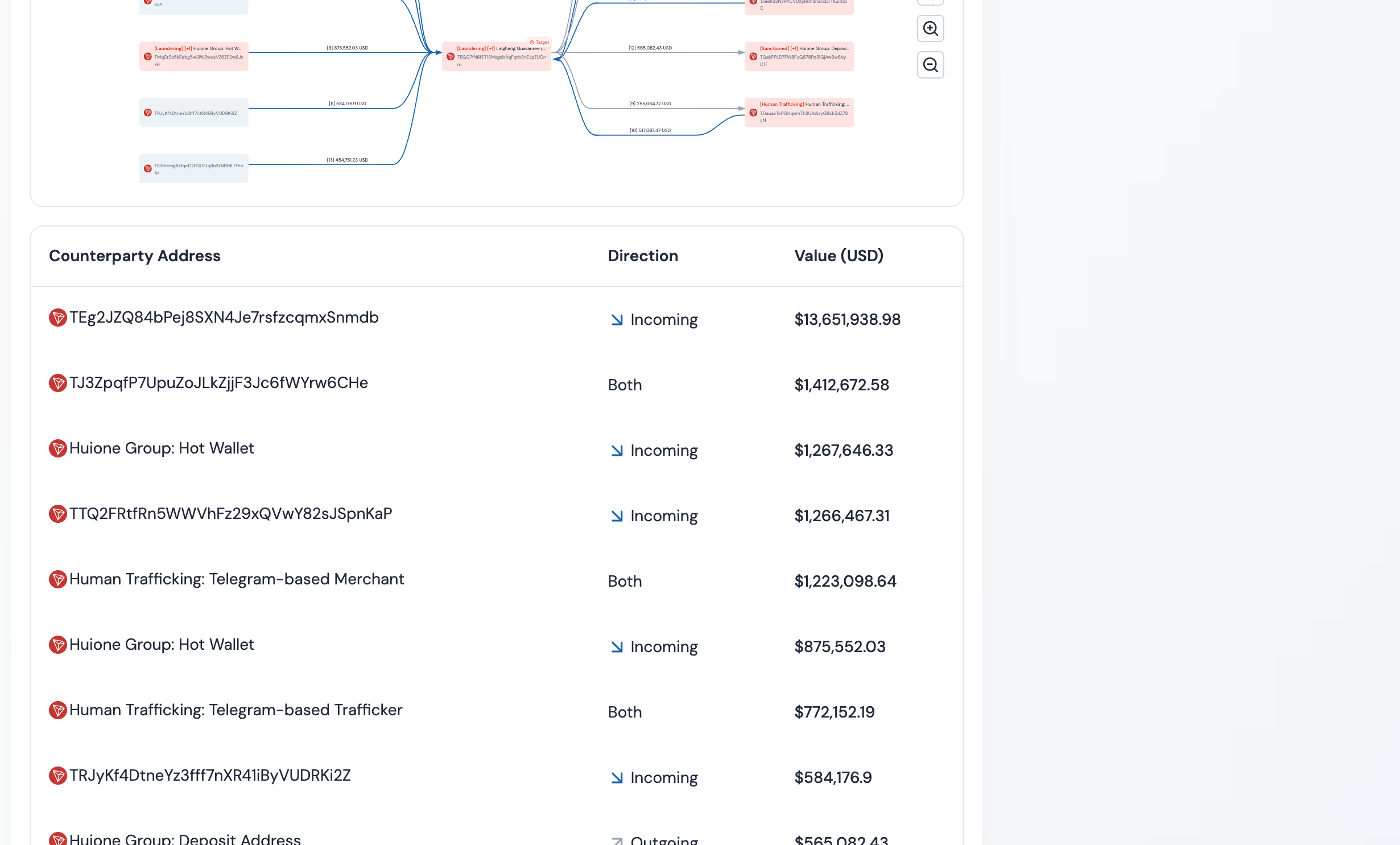
Step 3: Locate the Cash-Out Point and Build a Court-Ready Evidence Pack
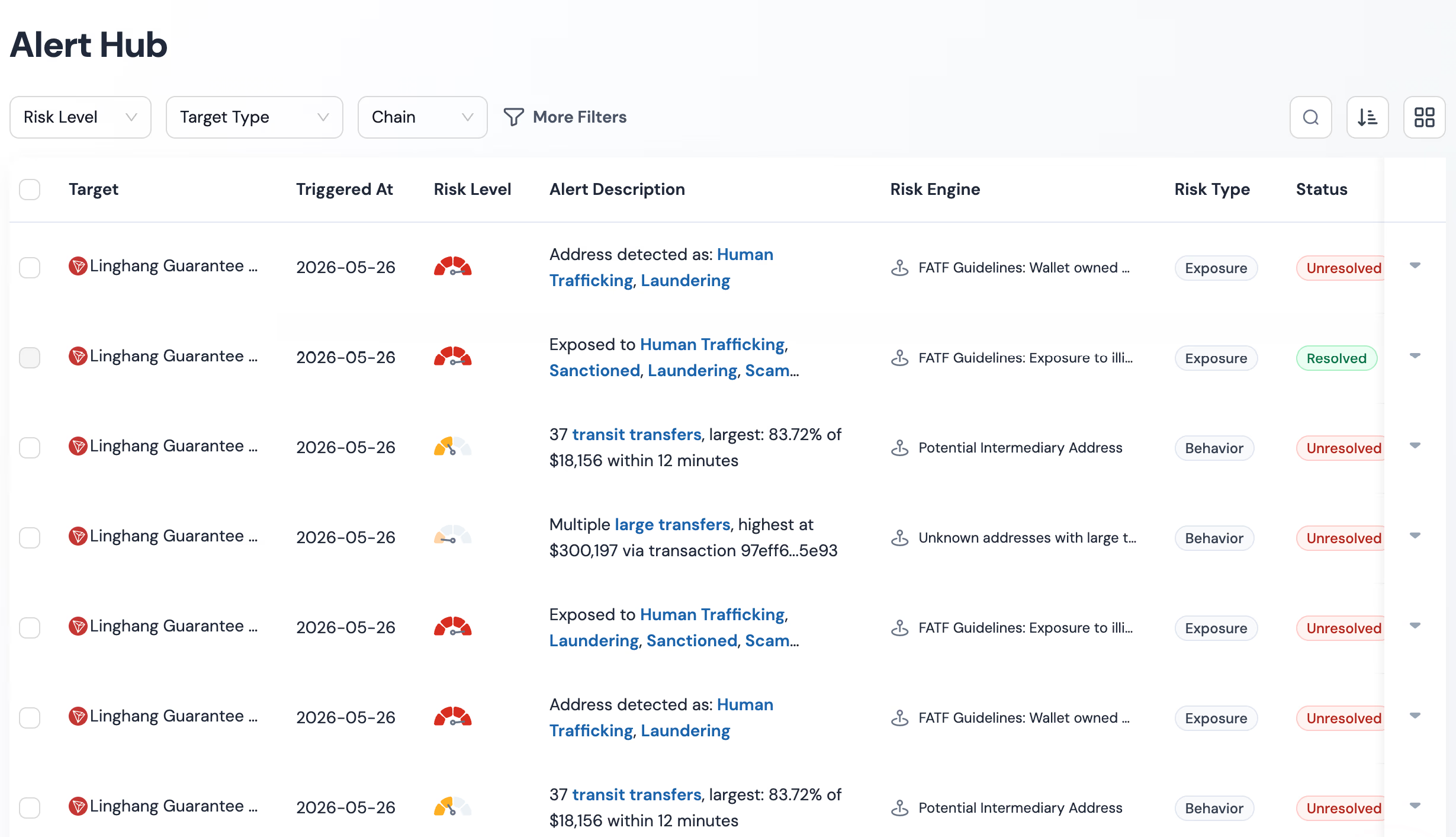
The cash-out point is where mixed funds re-enter the identifiable financial system. The most common target is a centralized exchange deposit address, because the exchange holds the off-chain identity of the account holder behind that address. Once the trace reaches an exchange deposit address, the investigator has a target for a cooperation request or a judicial freeze order. Other cash-out points include fiat off-ramps, payment processors, and merchant services that settle to identifiable bank accounts.
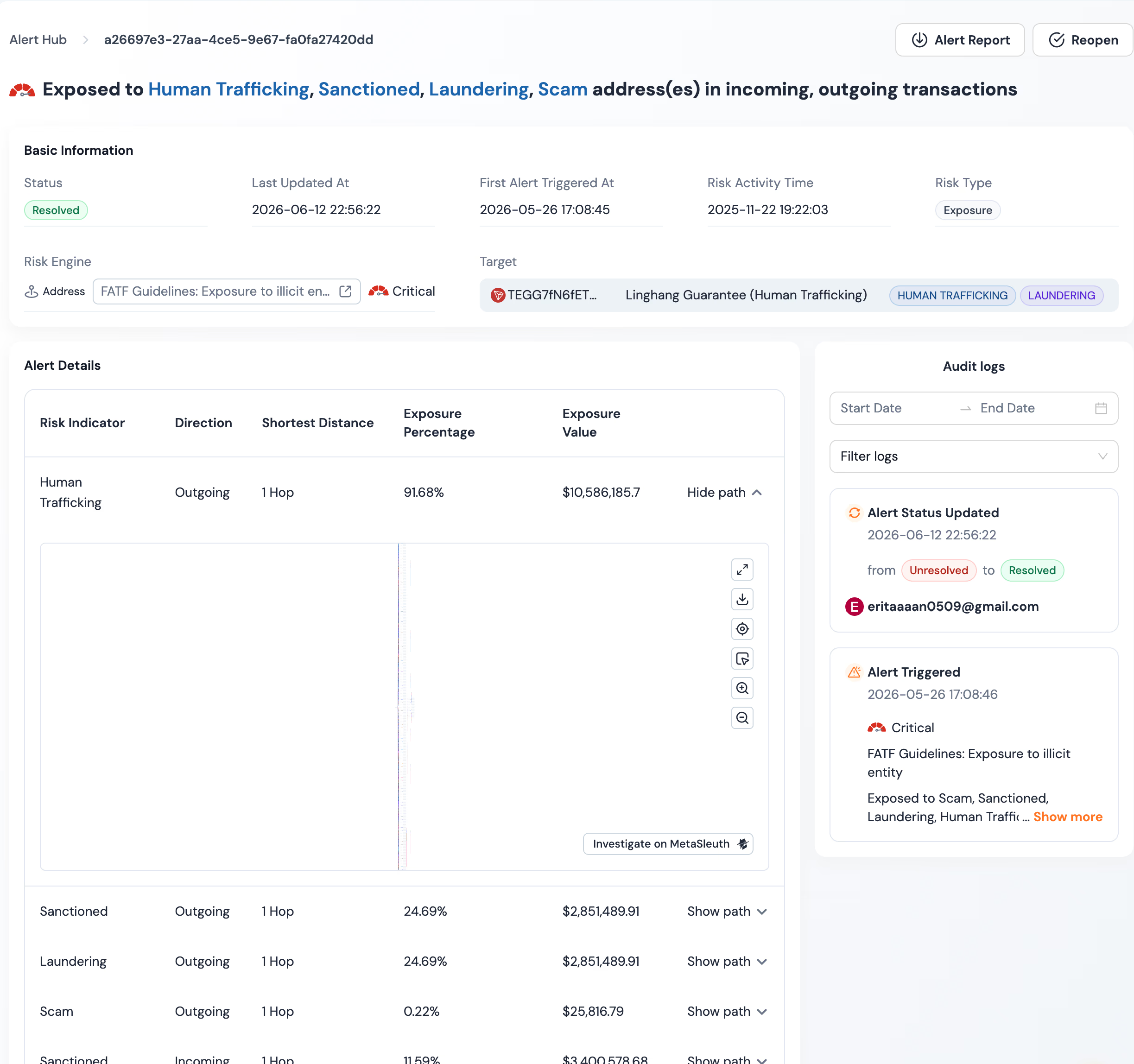
Locating the address is necessary but not sufficient. A defensible case also needs the fund path, the risk basis, and the data provenance behind each step. The evidence pack has to show how the funds moved from the seed address to the cash-out address, including the hops through the mixer, the bridge, and the DEX. It has to show the Mixing indicator on the addresses in the flow and the interaction-based alert that fired on the multi-hop path. And it has to show the data sources behind each judgment, so a second reviewer or a court can re-check the path instead of taking it on faith.
The same constraint applies to evidence as to tracing itself. A fund path that cannot be re-derived from its basis is a claim, not evidence. The Mixing label, the interaction-based rule, the cross-chain hop path, and the exchange deposit address each have to trace back to a named signal or data source. An investigator who skips the basis step ends up with a path that cannot be defended in front of a court, an exchange compliance team, or a regulator. FinCEN's rule on suspicious activity reporting for money services businesses sets the baseline expectation that a regulated institution documents the basis behind each reported alert, so the evidence pack doubles as the regulator-facing record. The path with the basis is the path that leads to a freeze, a recovery, or a prosecution.
Trace Mixed Funds With MetaSleuth
Tracing stolen crypto through a mixer stops being a one-off feat when the SOP is repeatable. The Mixing label survives the pool. Interaction-based rules fire on every downstream hop that touches a mixed address. Cross-chain tracing follows the funds through bridges and DEX swaps without breaking until the path reaches an identifiable cash-out point. MetaSleuth follows funds through mixers, DeFi protocols, and cross-chain bridges inside one workspace, with Phalcon Compliance supplying the risk context at each hop. Trace mixed funds with MetaSleuth and run the four-step SOP on a real case.