
Is blockchain analytics good for institutional crypto? Where the institution takes on risk from who it deals with and from incidents, the toolset does real work: admission screening, ongoing monitoring, incident tracing, and audit evidence. Custody desks run the same loop with their own stakes, and this page carries their version of it too. This is a tool category question, not a review of outsourced compliance services, and the category covers the analysis half of institutional requirements, not their controls. The requirements themselves start from the FATF standards.
What Blockchain Analytics Actually Covers for Institutional Operations
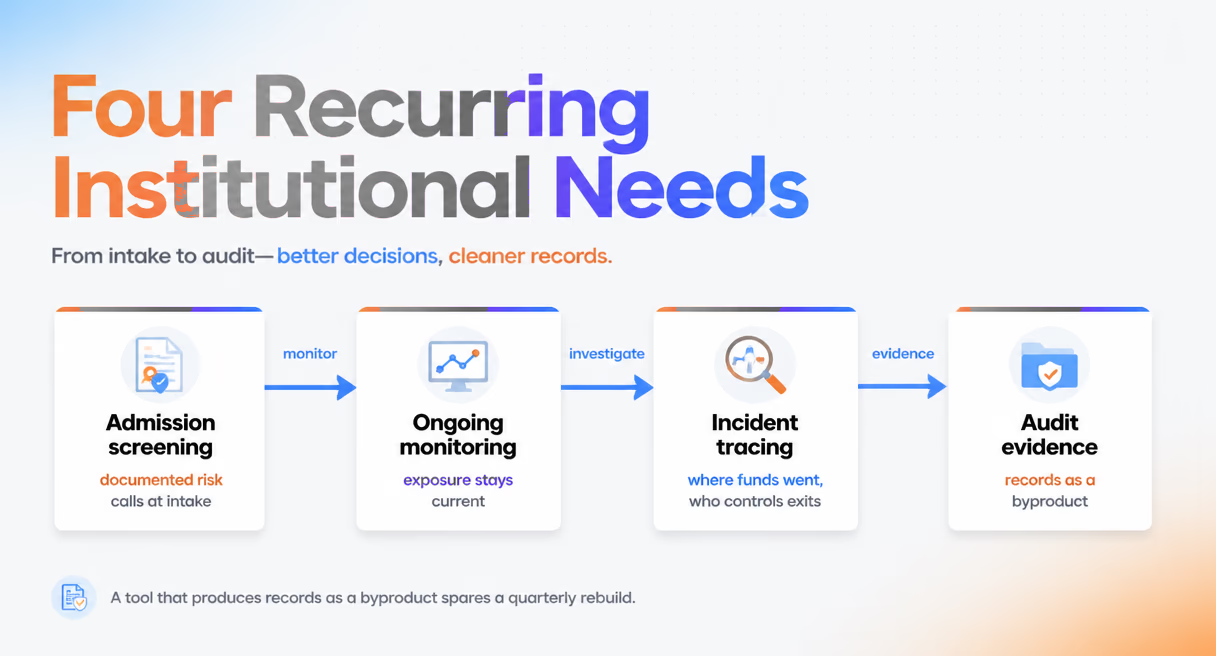
Institutional operations generate four recurring analysis needs, and the category speaks to each.
Admission screening runs at intake. Before an institution accepts a new business relationship, a deposit relationship, or a listing, the addresses in question can be assessed against labeled data. Per BlockSec technical specifications, Phalcon Compliance screens against a labeled-address database of more than 600 million addresses, updated continuously. At intake, that turns admission decisions from relationship-manager judgment into documented risk calls.
Ongoing monitoring watches what was admitted. Exposure changes after onboarding: the other side gets sanctioned, clusters get labeled, funds move through risky services. In the US, the ongoing duties that exposure touches are set out in FinCEN's statutes and regulations. Monitoring seats and scheduled re-screening keep the institution's exposure picture current instead of frozen at onboarding.
Incident tracing and naming who is behind it take over when prevention misses. When funds move unexpectedly, the question becomes where they went and who controls the exit points. MetaSleuth traces fund flows hop by hop across 12 chains and follows value through cross-chain bridges. Reading more than 600 million address labels, it turns a path that lands on a labeled exchange or mixer into a finding rather than a dead end.
Audit evidence is the fourth need and the least discussed. Institutional review, internal and external, asks for records: what was checked, when, and with what result. A tool that produces those records as a byproduct of daily use spares the institution a quarterly rebuild.
The four needs and their boundaries at a glance:
| Institutional need | What the category delivers | What stays outside it |
|---|---|---|
| Admission screening | Address-level risk assessment against labeled data before acceptance | The business decision of whether to accept |
| Ongoing monitoring | A current exposure picture as designations and labels change | The institution's controls architecture |
| Incident tracing | Path rebuilding and naming who controls the exits, across chains | Recovery itself, which runs through exchanges and law enforcement |
| Audit evidence | Check records produced as a byproduct of operation | Financial audit confirmations |
The Custody Desk Version of the Same Question
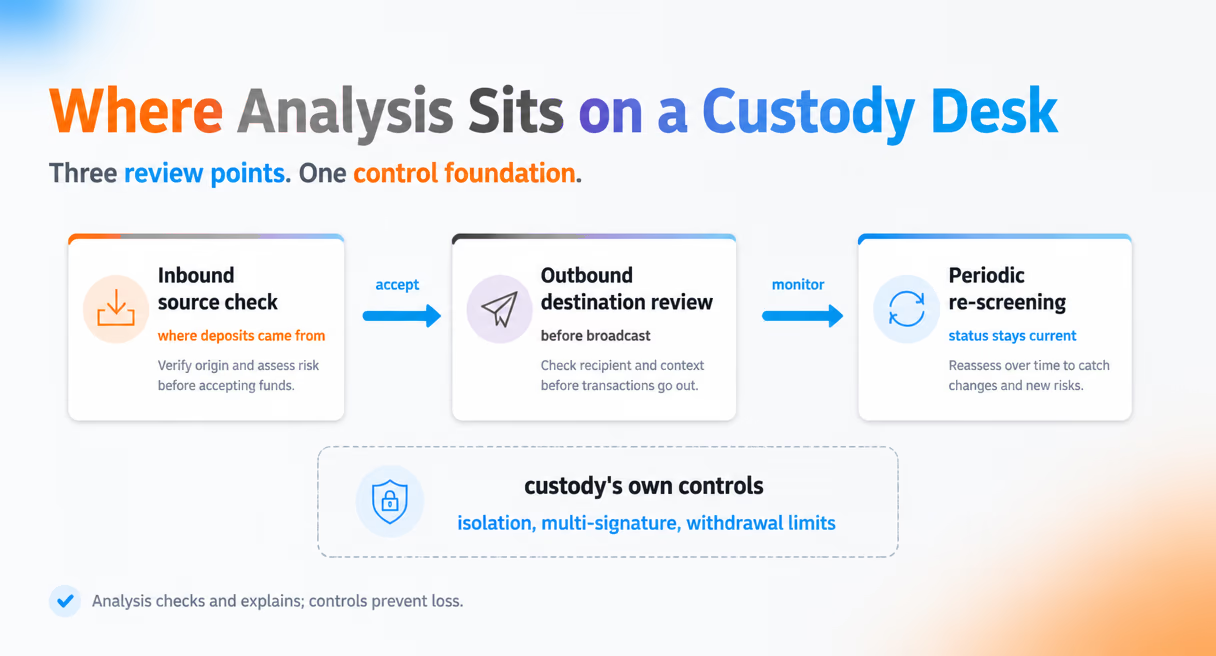
Is blockchain analytics good for digital asset custody? Not as a separate question. It is the institutional question with custody's stakes plugged in, and a custody desk judges a tool by what the rules require, not by features. The desk's work concentrates into three checkpoints.
Inbound source check. Before a deposit relationship deepens, the source address is checked against labeled data: sanctioned entities, mixing services, funds traced to theft. The US duties behind that check run through the FinCEN statutes cited above. A custodian who knows its incoming risk can price the relationship honestly instead of discovering it during an audit.
Outbound destination review is the custody-specific checkpoint, and the highest-stakes one. When money is about to leave the custodian's control, the desk needs to know what kind of address is receiving it, not merely that the transaction was signed correctly. A flagged destination caught before broadcast is a prevented incident; the same flag caught after broadcast is a case file.
Periodic re-screening closes the loop. An address cleared at onboarding can land on a sanctions list months later, and audits test current practice, not what passed at onboarding. Scheduled re-screening of active addresses keeps the desk's picture current rather than historical.
When the preventive checkpoints miss and value does leave the custodial boundary, the question flips from checking to explaining. That incident half is where the software-package question lives: is blockchain forensics software good for digital asset custody? The answer comes down to three jobs. Outflow reconstruction unfolds the path of the unexpected movement, which addresses received value, how it split and consolidated, which exits it approached, and speed matters because exchange deposits enable recovery requests only within tight windows. Explainable evidence surfaces the signals behind each finding, which label fired, why two addresses resolve to one cluster, the difference between telling a regulator "we believe" and showing them "here is the trail and here is why each step holds." Audit trails keep the running record, what was checked, when, against what data version, with what result, produced as a byproduct of daily use.
The custody checkpoints and the boundary at each one:
| Custody checkpoint | What the analysis layer answers | What stays with custody's own controls |
|---|---|---|
| Inbound source check | Where deposit value came from: sanctioned entities, mixing services, theft traces | Whether to price and keep the relationship |
| Outbound destination review | What kind of address receives value, before broadcast | Isolation of holdings, multi-signature governance, withdrawal limits |
| Periodic re-screening | Current status of the other side as the data updates | Nothing; this checkpoint is analysis end to end |
| Incident outflow | The rebuilt path, the explanations behind it, the audit record | The legal process that follows the finding |
Where It Fits, and Where It Doesn't
The category fits the analysis half of institutional requirements, and the boundary is worth drawing precisely. Chain analysis does not operate custody controls, does not perform financial audit confirmations, and is not a compliance program by itself; it feeds one. Cold storage setup, multi-signature withdrawal paths, and limits prevent loss; analysis checks and explains exposure. Neither layer substitutes for the other, and tooling budgets get misallocated when that line blurs. Institutions that treat analytics as one layer, with the compliance framework and the controls architecture as the other layers, get the value it actually delivers.
The question form also matters. Whether an institution should run its analysis in-house or buy it as part of outsourced compliance services is a service-form decision, distinct from whether the tooling itself suits institutional work. This page evaluates the tooling; the outsourcing question has its own trade-offs around accountability and examiner expectations.
One institutional practice deserves note: teams carrying large exposure tend to verify critical findings across more than one independent source rather than accepting a single provider's read. Chain analysis supports that habit, and checking across sources is cheaper to run when each source explains its signals.
What Institutional Teams Should Check Before Adopting
Multi-chain coverage comes first. Institutional portfolios span chains and bridge routes, and a data layer that is deep on some and thin on others produces confident answers at the wrong moments. Map coverage against the assets the institution actually holds and transacts, including the bridging routes between them.
Evidence format comes second. Findings that cannot be exported and reviewed do not exist for audit purposes. Check what the tool produces as its record, from structured exports to archived tracing charts, with timestamps and the data version behind each check. For how those records stand up under audit, see building a crypto evidence trail that holds up in court.
Team collaboration comes third. Institutional work is multi-analyst by nature, so the questions are shared case views, seat and permission management, and API access for integrating findings into internal systems. A tool that serves one investigator well can still fail an institution at the collaboration layer. Write the responsibility line down too, controls to prevent, screening to check, tracing to explain: teams that write it down spend audits answering questions, and teams that leave it unstated spend audits reconstructing decisions.
For the full map of where these tools sit in an investigations program, see onchain investigations and forensics: the complete guide.