OTC 데스크에게 USDT 동결은 타이밍 문제이지, 컴플라이언스 추상화가 아닙니다. 온체인으로 수령한 자산은 수령 직후 몇 초 만에 사용 불가 상태가 될 수 있고, 송금 예정인 자산은 법정화폐 전신 송금이 완료되기 전에 컴플라이언스 사고로 번질 수 있습니다. 일반적인 순마진으로 월 5,000만 달러 거래량을 운영하는 중간 규모 데스크에서는, 최근 거래 규모의 단 한 건의 입금 후 동결만으로도 수개월치 데스크 마진이 사라질 수 있습니다.
이 플레이북은 모든 OTC 컴플라이언스 프로그램이 필요로 하는 세 가지 단계(거래 전 스크리닝, 실시간 모니터링, 동결 후 대응)를 SLA 계산, 정책 템플릿, 2026년 최신 데이터와 함께 다룹니다.
OTC 컴플라이언스 한 페이지 요약: 규제 당국의 기대치
USDT를 취급하는 OTC 암호화폐 데스크는 모든 주요 관할권에서 자금 서비스 사업자(Money Services Business, 또는 현지 동등 기관)에 해당합니다. 규제 범위는 어디서나 대략 동일하며, 구체적인 인용 조항만 다를 뿐입니다.
- 미국 — FinCEN MSB 등록, 은행비밀법(Bank Secrecy Act) 보고, 모든 거래 상대방에 대한 OFAC SDN 스크리닝.
- EU — MiCA 규정 VASP 인가; 6AMLD 거래 모니터링.
- 싱가포르 — MAS 지급결제서비스법(Payment Services Act) DPT 라이선스.
- 홍콩 — USD 연동 스테이블코인 발행 및 거래에 관한 HKMA 스테이블코인 조례.
특히 USDT를 취급하는 데스크에서 동결 리스크는 가장 파급력이 큰 단일 컴플라이언스 실패 유형입니다. 동결된 입금 주소 하나가 아무 문제 없던 거래를 사고로 만들어버립니다. 이 플레이북의 모든 후속 내용 — 거래 전 스크리닝 SLA, 실시간 동결 모니터, 동결 후 대응 템플릿 — 은 회복 가능한 포지션과 손실 확정을 가르는 15분 이내에 탐지하고 대응하는 방법입니다.
OTC 데스크가 유독 취약한 이유
거래소는 오더북으로 동결 리스크를 일부 흡수합니다. 결제 처리업체는 손실을 상대방에게 전가하는 가맹점 계약 뒤에 위치합니다. OTC 데스크에는 그 어떤 완충 장치도 없습니다. 모든 거래는 양자 간 거래이고, 결제는 며칠이 아닌 수 분 내에 이루어지며, 단 한 건의 동결 수령 건이 데스크에 실사를 진행하는 미래의 모든 거래 상대방에게 노출됩니다.
세 가지 구조적 요인이 위험을 심화시킵니다:
- 거래소 중개 없는 양자 간 거래: USDT가 입금 후 동결되면, 손실은 데스크의 대차대조표에 그대로 남습니다.
- T+0 결제 대 멀티시그 지연 동결: 고객은 USDT가 확인되는 순간 법정화폐 전신 송금을 기대합니다. Tether의 소유자 멀티시그는 동결을 제안하고 일정 지연 후 실행합니다. 이더리움과 트론에서 실행된 8,310건의
addBlackList제안(2017~2026년)에 대한 BlockSec의 분석은 제안에서 실행까지 중앙값 77분의 창을 기록했으며, 가장 빠른 목표 대피 사례는 제안이 도달한 지 3초 이내에 자금을 이동시켰습니다. 제안 실행 전에 입금이 이루어지면 사용 불가 잔액을 보유하게 됩니다. - 평판 비용: OTC는 관계 사업입니다. 거래 상대방 한 명이 다섯 명의 동료에게 데스크가 50만 달러 규모의 동결 입금을 받았다고 알리면, 개척하는 데 수개월이 걸린 문들이 닫혀버립니다.
달러 수치는 명확합니다. 2026년 7월 25일, 트론에서 단일 최대 동결 규모는 TNJ1tmw...nKchef에서 474만 5천 달러였습니다. 예시로, 월 5,000만 달러 거래량에 가상의 25bps 순마진으로 운영되는 중간 규모 OTC 데스크는 월 약 12만 5천 달러를 법니다. 그 규모의 입금이 동결되면 데스크 마진 약 38개월치가 사라집니다.
거래 전: 게이트로서의 주소 스크리닝
모든 OTC 티켓에는 스크리닝이 필요한 두 개의 주소가 있습니다: 거래 상대방의 입금 주소(USDT를 보내는 곳)와 지급 주소(USDT를 받는 곳). 둘 중 하나를 건너뛰는 것이 대부분의 데스크가 처음 피해를 입는 지점입니다.
2.1 정책: 무엇을 스크리닝할 것인가
티켓당 세 가지 스크리닝 대상:
- 거래 상대방 입금 주소: 견적 시 확인하고, 입금 시 재확인. 두 시점 사이에 상태가 바뀔 수 있습니다.
- 거래 상대방 지급 주소: 송금 전 확인. 플래그된 지갑으로 자금을 이동하면 자체적인 컴플라이언스 책임이 발생할 수 있습니다.
- 최근 주소 이력: 현재는 해제되었더라도 과거 플래그 이력이 있으면 심층 검토가 필요합니다. 동일한 2025년 블랙리스트 분석에서 블랙리스트 주소 중 연내 제거된 비율은 **3.6%**에 불과하며(2025년 동기간 유량 비율, 엄격한 코호트 생존율 아님), "제거된" 플래그가 기저의 속성을 지우지는 않습니다.
2.2 스크리닝 방법: OTC 데스크를 위한 세 가지 옵션
| 옵션 | 적합 대상 | 비용 | SLA |
|---|---|---|---|
| BlockSec USDT Freeze Checker | 일회성 즉석 확인 | 무료 | 수 초, 단일 주소 |
| Phalcon Compliance 셀프서비스 | 소규모 데스크, 낮은 거래량 | 월 3회 무료 스캔, 이후 종량제 | 주소당 수 초, 웹 UI |
| Phalcon Compliance API | 프로덕션 OTC 거래량 | 종량제, 거래량 구간별 | 서브초, 배치 엔드포인트 |
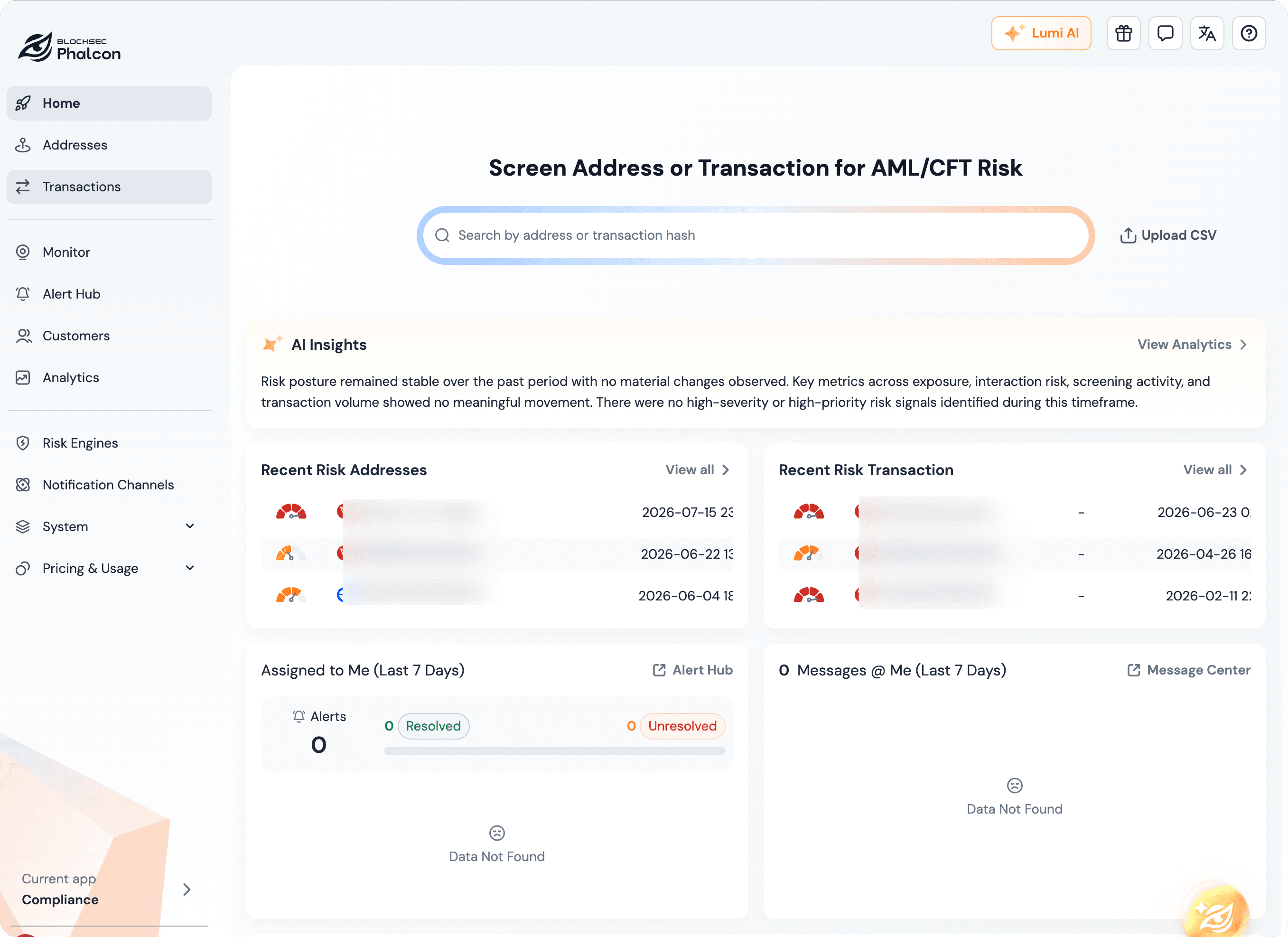
Freeze Checker는 일회성 즉석 확인에 적합한 도구입니다. 데스크에서 하루에 몇 건 이상의 티켓을 처리하게 되면 Phalcon Compliance 웹 UI가 자연스러운 다음 단계입니다: 상단 검색창에 거래 상대방 주소를 하나씩 붙여넣거나, 당일 지급/입금 지갑 목록이 담긴 CSV를 업로드하면 AML/CFT 위험 판정, 현재 동결 상태, 주소의 최근 위험 맥락을 하나의 대시보드에서 확인할 수 있습니다. 홈 화면에는 데스크가 접촉한 최근 위험 주소 및 최근 위험 거래도 표시되어, 컴플라이언스 담당자가 화면을 벗어나지 않고도 당일 자금 흐름을 한눈에 파악할 수 있습니다. 가격은 종량제로, 조용한 주에는 조용한 주에 맞는 비용이 발생하고 티켓 거래량이 늘어날 때만 비용이 증가합니다. 거래량이 웹 UI 수준을 초과하면, 동일 계정에서 프로그래밍 방식 통합을 위한 API + 웹훅 피드를 사용할 수 있습니다.
2.3 OTC 스크리닝을 위한 5초 SLA
스크리닝 SLA는 기술이 아닌 고객 대화에 의해 결정됩니다. 거래 상대방이 "지금 USDT 보내니까 EUR 송금해주세요"라고 말하면, 데스크 운영자가 입금 처리, 보류, 또는 거절 결정을 내리기 전에 답변을 얻을 수 있는 자연스러운 대화 지연 시간은 약 5초입니다. 이보다 느리면 두 가지 실패 유형 중 하나가 발생합니다:
- 스크리닝 전 입금 처리: 주소에 플래그가 있을 경우 컴플라이언스 리스크가 데스크에 귀속됩니다.
- 스크리닝을 위한 대기, 고객도 함께 대기: 마찰이 발생하고 다음 티켓은 더 빠른 데스크로 넘어갑니다.
서브초 조회를 지원하는 전체 API 스크리닝만이 프로덕션 거래량에서 이 SLA를 달성하는 유일한 방법입니다. 실시간 API를 캐시 미스 주소 백업으로 사용하는 인메모리 캐시 블랙리스트 복사본이 표준 아키텍처입니다.
2.4 샘플 스크리닝 정책 템플릿
최소 실행 가능한 OTC 스크리닝 정책은 한 페이지에 담을 수 있습니다:
1. 견적 시 모든 거래 상대방 입금 주소를 스크리닝하고
   결제 시 재스크리닝한다.
2. 송금 거래에 서명하기 전 모든 거래 상대방 지급 주소를
   스크리닝한다.
3. 도구: Phalcon Compliance API.
4. 결과 "플래그됨": 티켓 거절. 입금 처리 및 지급 없음.
   컴플라이언스 책임자에게 에스컬레이션.
5. 결과 "정상, 과거 플래그 이력 있음": 2차 검토 보류.
   강화된 KYC 및 위험 메모와 함께 진행 가능.
6. 결과 "정상, 이력 없음": 정상 진행.
7. 모든 결과를 타임스탬프, 티켓 ID, 주소, 도구 응답과 함께
   기록. 5년간 보관.
보관 기간은 대부분의 AML 기록 보관 요건에 부합합니다(미국 BSA의 경우 31 CFR 1010.430에 따라 5년, 대부분의 FATF 준수 체제에서 권고 11에 따른 최소 기간). 채택 전 현지 규정을 반드시 확인하십시오.
실시간 모니터링: 데스크 자금 흐름의 동결 포착
거래 시점의 스크리닝은 필요하지만 충분하지 않습니다. 더 큰 운영 리스크는 이미 수락한 주소가 사후에 동결되는 경우입니다. 모든 핫 월렛, 거래 상대방 지급 지갑, 장부상의 고객 출금 주소가 모니터링 대상입니다.
3.1 모니터링 대상
- 보유 중인 모든 핫 월렛 (입금, 결제, 재무). 플래그가 생기면 데스크 운영이 중단됩니다.
- 활성 티켓의 모든 거래 상대방 지급 주소: 진행 중인 아웃바운드 송금은 목적지에 플래그가 생기면 사고가 됩니다.
- 최근 30일간의 모든 거래 상대방 입금 주소: 입금 후 동결은 적시에 포착하면 조치가 가능합니다(법정화폐 보류, 거래 상대방 통보, 케이스 개설).
- 최근 90일간 지급된 모든 고객 출금 주소: 평판 및 보고 대상.
3.2 알림 트리아지: 하루 N건의 알림을 K건의 조치로
현재 시장 속도에서, 트래커는 지난 24시간 동안 양 체인에서 10건의 신규 동결이 발생했음을 보여주며, 보고서 아카이브에 따르면 2026년 상반기 트론 동결 건수는 2,116건, 동결 금액은 15억 8천만 달러입니다. 대부분은 귀 데스크와 무관합니다. 일 10건의 이벤트를 실제로 중요한 0~2건으로 압축하십시오:
- 주소 매칭 필터: 이벤트 주소가 모니터링 세트에 있어야 함. 이벤트의 99% 이상을 제거합니다.
- 위험 점수화: 활성 티켓과의 근접성, 지갑 유형(핫 vs. 콜드), 마지막 거래 이후 경과 시간으로 점수를 매깁니다.
- 중복 제거 및 케이스 연결: 동일 거래 상대방의 관련 이벤트를 하나의 케이스로 통합합니다.
- 인간 대기열: 잔여 이벤트만 컨텍스트가 미리 채워진 상태로 컴플라이언스 담당자 앞에 전달됩니다.
멀티시그 지연 창은 중요합니다. Tether의 소유자는 공개 데이터에서 볼 수 있는 거래 제안과 실행 사이의 지연이 있는 멀티시그입니다. 모니터링 대상 주소 중 일부는 동결이 실행되기 전 이 창을 이용해 USDT를 이동시킨 것으로 경험적으로 확인되었습니다. 아카이브는 잔액이 이미 이동한 주소에 대해 실행된 제안을 기록하고 있습니다. 제안 트랜잭션을 감시하십시오. 실행된 동결은 후행 신호입니다.
3.3 프로덕션 규모의 실시간 모니터링
Phalcon Compliance의 모니터링 API는 이 워크로드를 직접 처리합니다: 주소록 업로드, 이더리움 및 트론의 블랙리스트 이벤트에 대한 웹훅 구독, 트리아지를 통과한 알림을 위한 케이스 관리. 종량제 가격은 모니터링 세트에 따라 확장됩니다.
동결 후 대응 플레이북
알림이 발생하면 이후 15분이 사고가 50만 달러 손실이 되느냐, 방어 가능한 대응이 담긴 문서화된 케이스가 되느냐를 결정합니다. 다섯 단계:
4.1 즉각적 조치 (처음 15분)
- 파생 법정화폐 지급 동결: 거래 상대방에게 지급해야 할 법정화폐가 아직 송금되지 않았다면 운영 보류 상태로 전환합니다.
- 컴플라이언스 책임자 및 CEO에게 통보: 문서화된 달러 임계값 초과 시, 동결 이벤트는 즉시 두 명에게 통보합니다.
- 증거 보존: 동결 트랜잭션 해시, 블록 번호, 제안 번호(Tether 멀티시그를 통한 경우), 거래 상대방 관련 모든 내부 메시지 로그를 저장합니다.
- 아직 거래 상대방과 소통하지 마십시오: 먼저 사실 관계를 확인하십시오.
4.2 법무 및 규제
의무 사항은 관할권에 따라 다르지만, 공통적인 항목은 다음과 같습니다:
- 미국 데스크: FinCEN에 30일 이내 SAR 제출(31 CFR 1022.320에 따라), 동결 트랜잭션 해시 및 거래 상대방 KYC 파일 참조.
- EU 데스크: MiCA 통보, 회원국에 따라 국가 FIU 보고. 대부분의 FIU 체제는 24~72시간 이내 통보를 요구합니다.
- 영국 데스크: POCA 2002 제7편의 "실행 가능한 한 빨리(as soon as practicable)" 기준에 따라 NCA에 수상한 거래 보고서(SAR) 제출.
- 홍콩 데스크: HK 스테이블코인 조례(2025년 8월 1일 발효) 및 광범위한 AML/CFT 체제 하에서, 스테이블코인 관련 사고에 대해 HKMA 및 JFIU에 통보해야 합니다.
신고 능력은 사고 중 당황해서 마련하는 것이 아닌, 컴플라이언스 프로그램의 사전 전제 조건입니다. 팀이 당일 SAR을 제출할 수 없다면 갭이 존재하는 것입니다.
4.3 고객 커뮤니케이션 템플릿
사실 관계가 확인되고 법무팀이 대외 커뮤니케이션을 승인한 후, 안내문은 짧고 사실에 근거해야 합니다:
제목: USDT 입금 [티켓 ID] – 컴플라이언스 보류

최근 귀하의 USDT 입금 주소([주소])가 USDT 컨트랙트에서
플래그되었다는 온체인 알림을 수신하였습니다. 당사 컴플라이언스
정책에 따라, 검토가 완료될 때까지 해당 법정화폐 지급을
보류합니다.

[영업일 3일] 이내에 상태를 업데이트해 드리겠습니다. 자금 출처
또는 플래그 이벤트 관련 서류가 있으시면
compliance@[desk].com으로 보내주십시오.

검토가 완료될 때까지 법정화폐 지급을 진행할 수 없습니다.
검토 결과에 따라 해당 사고를 관할 금융 규제 기관에
보고해야 할 수 있습니다.
사실에 근거하고, 추측을 피하며, 지킬 수 있는 일정만 약속하십시오. 모든 문장은 법무팀이 법정 증언에서 방어할 수 있어야 합니다.
4.4 회수: 3.6%의 확률
데스크가 플래그된 주소를 보유하고 있다면(통제하는 지갑의 입금 후 동결), 세 가지 동결 해제 경로가 적용됩니다: Tether에 직접 청원, 적절한 관할권에서의 법적 이의 제기, 또는 미국 몰수 사건의 경우 선의의 소유자 항변. 현실적인 2025년 기준치: **3.6%**가 연내 제거되었으며, 제거된 일부의 중앙값은 18.2일이었습니다. 회수를 추진하는 동시에 손실도 대비하십시오. 전체 의사결정 매트릭스: USDT 주소 동결 해제 방법.
플래그된 주소가 거래 상대방 소유이고 데스크가 보관한 적이 없다면 회수는 귀사의 문제가 아니지만, 상호작용을 문서화하는 것은 필요합니다. 컴플라이언스 파일은 규제 기관이 요청할 산출물입니다.
4.5 사후 검토 및 근본 원인 분석
모든 사고는 서면 사후 검토로 마무리합니다: 플래그된 주소가 어떻게 장부에 들어왔는지, 어떤 스크리닝 단계에서 포착되었어야 했는지, 재발 방지를 위한 변경 사항. 대부분의 OTC 동결 사고는 몇 가지 갭 중 하나로 추적됩니다: 결제 시 재스크리닝 없음, 이전 거래 상대방 주소 모니터링 없음, 또는 지급 이후에 발생한 지연된 웹훅. 각각에 대한 알려진 해결책이 있습니다.
실시간 현황: 오늘날 OTC 데스크가 직면한 상황
2026년 7월 26일 기준 트래커 및 보고서 아카이브 데이터:
| 지표 | 값 |
|---|---|
| 전체 USDT 동결 총액 (전체 기간, 전체 체인) | $5,685,941,960 |
| 블랙리스트 주소 (전체 체인) | 9,597개 |
| 최근 24시간 신규 동결 | 10건 |
| 트론 동결 | $3,709,576,603 (6,901개 주소) |
| 이더리움 동결 | $1,976,365,356 (2,696개 주소) |
| 2026년 상반기 트론 동결 | 2,116개 주소 / 15억 8천만 달러 |
OTC 컴플라이언스를 위한 두 가지 관찰:
- 트론이 OTC 관련 리스크를 지배: 2026년 상반기에는 이더리움 대비 훨씬 많은 2,116건의 트론 동결이 15억 8천만 달러를 동결했습니다. TRC-20 USDT 집중도는 Etherscan USDT 컨트랙트 대비 Tronscan USDT 대시보드를 통해 직접 온체인에서 확인할 수 있습니다. 이더리움 전용 모니터링은 동결 위험 대상의 대부분을 놓칩니다.
- 동결 빈도는 산발적이 아닌 지속적: 트래커에서 하루 10건의 동결은 일반적인 수준입니다. 분기별 사고를 기준으로 설계된 컴플라이언스 프로그램은 구조적으로 자원이 부족합니다.
컴플라이언스 프로그램 체크리스트
OTC 컴플라이언스 책임자를 위한 한 페이지 감사 항목. 각 항목을 솔직하게 체크하십시오:
- [ ] 모든 거래 상대방 입금 및 지급 주소에 대한 거래 전 스크리닝, 견적 시 및 결제 시.
- [ ] 프로덕션 거래량에서 스크리닝 SLA 5초 미만, 월별 측정.
- [ ] 모니터링 주소록이 핫 월렛, 활성 티켓 지급, 최근 30일 거래 상대방 입금, 최근 90일 고객 출금을 포함.
- [ ] 동결 후 SOP 작성 및 훈련 완료, 첫 15분 조치 세트 정의.
- [ ] SAR/FIU 신고 능력 사내 보유 또는 상임 법률 자문을 통해, 당일 신고 SLA 포함.
- [ ] 법무팀이 승인한 고객 커뮤니케이션 템플릿.
- [ ] 실행된 동결 대비 제안에 대한 조기 경보를 위한 멀티시그 지연 창 모니터링.
- [ ] 최소 5년 보관의 사고별 감사 추적이 있는 케이스 관리 시스템.
- [ ] 합리적인 단일 사고 시나리오(예: 중앙값 동결 규모의 3배)에 맞게 규모를 정한 운영 손실 준비금.
- [ ] 규제 변화(HK 스테이블코인 조례, MiCA, 미국 GENIUS Act)에 맞춘 연간 정책 검토.
두 개 이상의 항목이 미체크라면, 다음 분기 컴플라이언스 검토 전에 갭을 해소하십시오.
자주 묻는 질문
OTC 데스크는 입금 주소를 얼마나 빠르게 스크리닝할 수 있습니까? API 기반 스크리닝 서비스를 사용하면 주소당 서브초가 표준입니다. 종단 간 SLA(주소 수신부터 데스크 운영자에게 답변 전달까지)는 프로덕션 거래량에서 5초 미만이어야 합니다. 수동 확인 도구는 일회성 티켓에는 적합하지만 데스크 수준의 처리량에는 맞지 않습니다.
USDT를 입금 처리했는데 다음 날 동결되면 어떻게 됩니까? 잔액이 이전 불가 상태가 됩니다. 고객에게는 여전히 법정화폐 지급 의무가 있습니다. 현실적인 확률은 전체 동결 해제 가이드에서 다룹니다. Tether의 토큰 복구 프로세스가 공식 채널입니다. 손실에 대비하면서 병행하여 회수를 추진하십시오.
장부의 주소가 플래그될 때마다 SAR을 제출해야 합니까? 관할권에 따라 다릅니다. 미국의 경우, 31 CFR 1022.320에 따라 불법 활동으로부터 유래한 자금, BSA 요건 회피 의도, 또는 명백한 합법적 목적이 없는 거래와 관련된 경우 SAR 제출이 요구됩니다. 입금 주소의 동결은 최소 하나의 요건을 충족한다는 강력한 지표이며, 대부분의 미국 컴플라이언스 팀은 신고합니다. 의심스러우면 신고하십시오.
이더리움과 트론 모두 모니터링해야 합니까? 그렇습니다. 2026년 중반 기준, 트론은 블랙리스트 주소의 약 72%, 동결 금액의 약 65%를 차지합니다(9,597개 중 6,901개, $5.69B 중 $3.71B). 2026년 상반기에는 2,116건의 트론 동결이 발생했습니다. 이더리움 전용 모니터링은 위험 대상의 대부분을 놓칩니다.
OTC급 컴플라이언스 스택 비용은 얼마입니까? 거래량 및 직접 구축 vs. 구매 여부에 따라 다릅니다. Phalcon Compliance의 종량제 가격은 사용량에 따라 확장됩니다. 수개월치 데스크 마진을 날리는 단일 동결 사고와 비교하면, 스택 비용은 작습니다.
관련 자료
- USDT 동결: 2026년 완전 가이드
- USDT 주소가 동결되었는지 확인하는 방법
- USDT 주소 동결 해제 방법
- Tether가 USDT를 소각하고 피해자에게 재발행하는 방법
- BlockSec 동결 보고서 아카이브
- 12억 6천만 달러 동결: 2025년 블랙리스트 분석
저자 소개

Andy는 BlockSec의 공동 창업자입니다. BlockSec은 MetaSleuth, Trace AI, Phalcon Compliance를 개발합니다. 그는 또한 홍콩 중문대학교 부교수로, 시스템 및 블록체인 보안 연구에 집중하고 있습니다. 개인 홈페이지: yajin.org.
팔로우: X / Twitter · LinkedIn