Back to Blog

Saddle Finance攻撃を阻止:380万ドル救済、業界初の画期的ブロック

May 19, 2022

BlockSecが2021年にデビューして以来、コード監査だけではWeb3のセキュリティ問題を解決できないと長年主張してきました。そのため、Web3セキュリティのための新しいパラダイムを模索するために投資を続けてきました。これにより、世界初の暗号ハック阻止システムである**Phalcon**を創設しました。

Phalconのローンチに先立ち、このシステムは社内で2年間稼働し、20件以上のハッキングを阻止し、Saddle Financeの380万ドル、Platypusの240万ドル、ParaSpaceの500万ドルを含む、2000万ドル以上の資産を救出しました。

この記事シリーズでは、Phalconシステムの代表的な成功事例を紹介します。今日は、380万ドルを救出した業界初の画期的な阻止事例を見ていきましょう。

Saddle Financeに対する攻撃を阻止した方法

2022年4月30日、Saddle Financeが攻撃者の標的となりました。攻撃により、合計4,900 Etherが危険にさらされました。幸いにも、当時380万ドル相当の1,360 Etherを無事確保することができました。

脆弱性の根本原因分析と攻撃の実行方法は、以前のレポートで確認できます。

攻撃者は、各試行で同じパターンを踏襲しました。まず、攻撃コントラクトを作成し、次にデプロイされたコントラクトの関数0xaf8271f7を呼び出して攻撃を開始しました。攻撃者は合計3回試行しました。 最初の試行は成功しましたが、2回目の試行はガス不足によりブロック14684432で失敗しました。そのため、攻撃者は3回目の試行を実行しました。

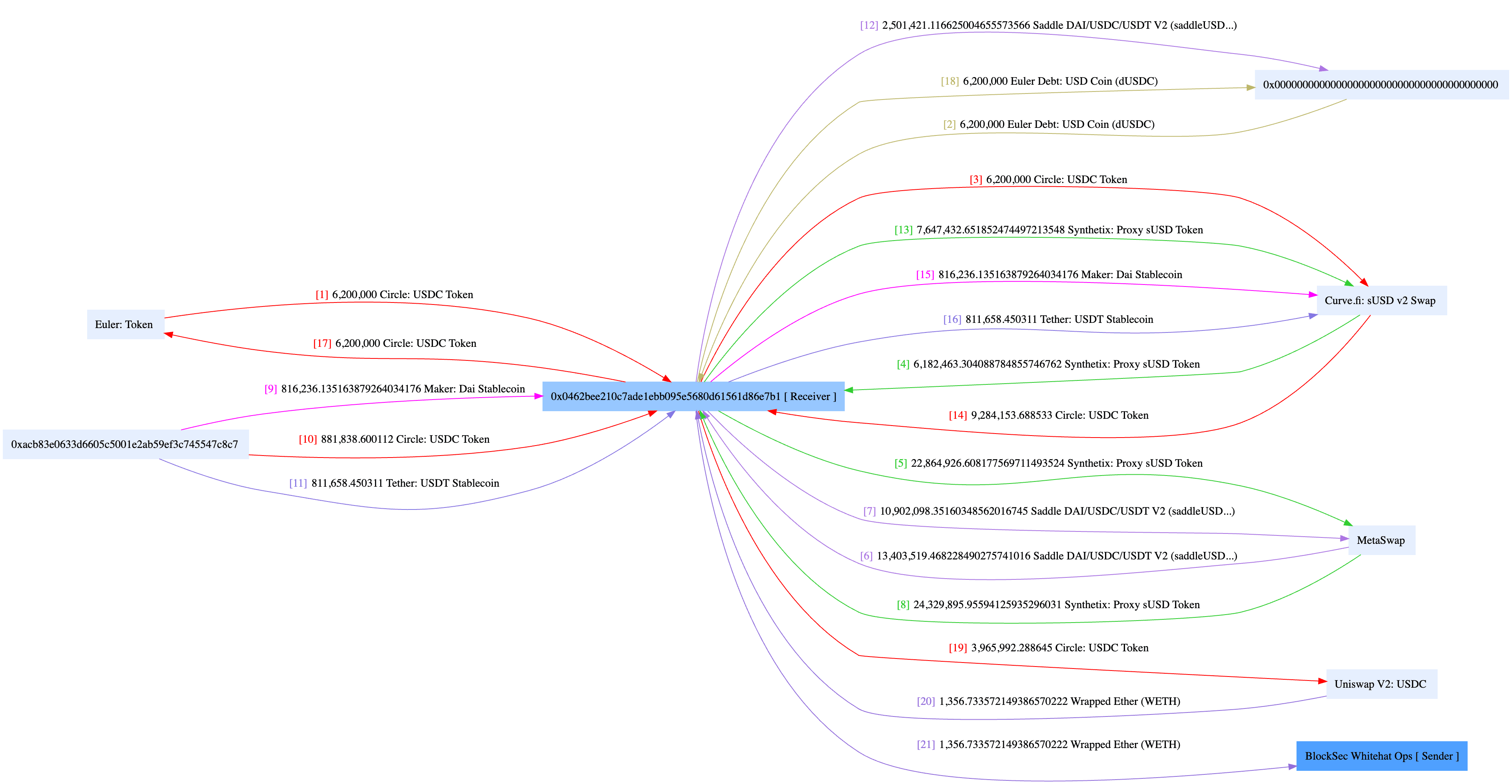
当初、最初の試行はすり抜けましたが、システムは2回目の試行を待ち構えていました。まさにその時、失敗したトランザクションを検知し、スーパーヒーローのマントを羽織って、ブロック14684434で救済トランザクションを送信し、その後の試行を阻止しました。そして、攻撃者の3回目の試行は阻止され、期待していたよりもはるかに少ない金額しか得られませんでした。

救済トランザクションの資金フロー(クリックで拡大)

完璧ではありませんでしたが、**「進行中の脅威を積極的に回避した、業界初の画期的な阻止行動」**として、確かにマイルストーンとなりました。この勝利は、私たちの自信を強め、さらなる進歩を追求する意欲を掻き立てました。特に、この失敗は改善すべき点を示し、システムの洗練を導いてくれました。心配しないでください、より洗練された強力なシステムがすぐそこまで来ています!

サービスへのアクセス方法

  • PhalconはSaaSプラットフォームです。 ウェブサイトにログインして、機能を確認したり、価格を表示したり、直接購読したりできます。
  • また、デモを予約して、Phalconについてさらに詳しく学び、専門家によるセキュリティアドバイスを受けることもできます。

Phalconの成功事例をもっと見る

Phalconについて

**Phalcon**は、BlockSecがローンチした攻撃監視・自動阻止プラットフォームです。このプラットフォームは、攻撃を正確に特定し、自動的に阻止することができます。Phalconは、Web3プロジェクトに、継続的な監視、攻撃阻止、緊急対応を含む、包括的なローンチ後のセキュリティ保護を提供し、プロトコルプロバイダー、LP、DAO組織の参加者のオンチェーン資産を保護することを目的としています。

現在までに、Phalconは20件以上のハッカー攻撃を阻止し、2000万ドル以上の資産を救出しています。初期の顧客段階でも、PhalconはトップDeFiプロトコルCompoundから評価と助成金を受け、同社のための攻撃阻止プラットフォームを確立しました。

ウェブサイト:https://blocksec.com/phalcon

Twitter:@Phalcon_xyz

Telegram:https://t.me/BlockSecTeam
Sign up for the latest updates
Tether Freezes $6.76M USDT Linked to Iran's IRGC & Houthi Forces: Why On-Chain Compliance is Now a Geopolitical Battlefield
Security Insights

Tether Freezes $6.76M USDT Linked to Iran's IRGC & Houthi Forces: Why On-Chain Compliance is Now a Geopolitical Battlefield

Looking ahead, targeted freezing events like this $6.76M USDT action will only become more common. On-chain data analysis is improving. Stablecoin issuers are also working closely with regulators. As a result, hidden illicit financial networks will be exposed.

Weekly Web3 Security Incident Roundup | Mar 2 – Mar 8, 2026
Security Insights

Weekly Web3 Security Incident Roundup | Mar 2 – Mar 8, 2026

During the week of March 2 to March 8, 2026, seven blockchain security incidents were reported with total losses of ~$3.25M. The incidents occurred across Base, BNB Chain, and Ethereum, exposing critical vulnerabilities in smart contract business logic, token deflationary mechanics, and asset price manipulation. The primary causes included a double-minting logic flaw during full token deposits that allowed an attacker to exponentially inflate their balances through repeated burn-and-mint cycles, a price manipulation vulnerability in an AMM-based lending market where artificially inflated vault shares created divergent price anchors to incorrectly force healthy positions into liquidation, and a flawed access control implementation relying on trivially spoofed contract interfaces that enabled attackers to bypass authorization to batch-mint and dump arbitrary tokens.

Weekly Web3 Security Incident Roundup | Feb 23 – Mar 1, 2026
Security Insights

Weekly Web3 Security Incident Roundup | Feb 23 – Mar 1, 2026

During the week of February 23 to March 1, 2026, seven blockchain security incidents were reported with total losses of ~$13M. The incidents affected multiple protocols, exposing critical weaknesses in oracle design/configuration, cryptographic verification, and core business logic. The primary drivers included oracle manipulation/misconfiguration that led to the largest loss at YieldBloxDAO (~$10M), a crypto-proof verification flaw that enabled the FOOMCASH (~$2.26M) exploit, and additional token design and logic errors impacting Ploutos, LAXO, STO, HedgePay, and an unknown contract, underscoring the need for rigorous audits and continuous monitoring across all protocol layers.