What does PEP mean at work: a risk category, not an accusation, marking people whose public office raises exposure. If you joined a compliance team this month and the term keeps surfacing in screening queues, that one sentence is the foundation. Everything else is detail you can pick up in a week. This piece is written for that first week: plain answers, no framework archaeology, and the practical moves that make the term usable on your second day.
The One-Sentence Version
Strip the framework language and the term is plain: PEP marks people whose public office raises money-laundering exposure, and the marking is a risk category rather than an accusation. The category exists because office creates opportunity (control over budgets, procurement, and enforcement), and opportunity, not misconduct, is what the classification tracks. Per FATF Recommendations 12 and 22, the category is international standard, and it attaches the moment the office is held.
Four quick examples calibrate it. A national government minister: PEP, top tier, mandatory enhanced due diligence. A senior executive at a state-owned enterprise: PEP, because the position controls state resources. A director at a UN agency: also PEP, international-organization tier. A wealthy private founder with no public mandate: not a PEP, whatever the account size. The dividing line is function, not money.
Your First Week Questions, Answered
The practical meaning lands in three moves: screen at onboarding, escalate matches for review instead of auto-rejecting, and document why each decision was made. Those three moves are ninety percent of what a new analyst does with a PEP hit, and the questions below are the other ten percent that surfaces in the first week.
"My customer is the mayor's cousin, so what do I do?" What does PEP mean for your first week: start with the relatives question, because that is where new analysts most often misjudge status. Treat the relationship as PEP-adjacent, which is the family-member extension working as designed. Screen as normal, expect the match, and route it to review rather than declining outright. The extension exists because relatives are channels for official-linked funds; your job is the elevated look, not the verdict. What you document: the relationship, the screening result, and the review outcome. One jurisdictional footnote: the 2020 U.S. interagency PEP statement is explicit that U.S. institutions do not treat American domestic officials as PEPs, so in a purely U.S.-customer program the relatives question lands differently.
"Is my customer a criminal?" No, and neither is the minister in the example above. The category marks risk by office, and most PEPs never face an allegation in their careers. The classification obligates scrutiny proportionate to exposure. Treating every hit as a criminal referral burns the program's credibility and the analyst's judgment both; treating none as serious is how programs end up in enforcement actions.
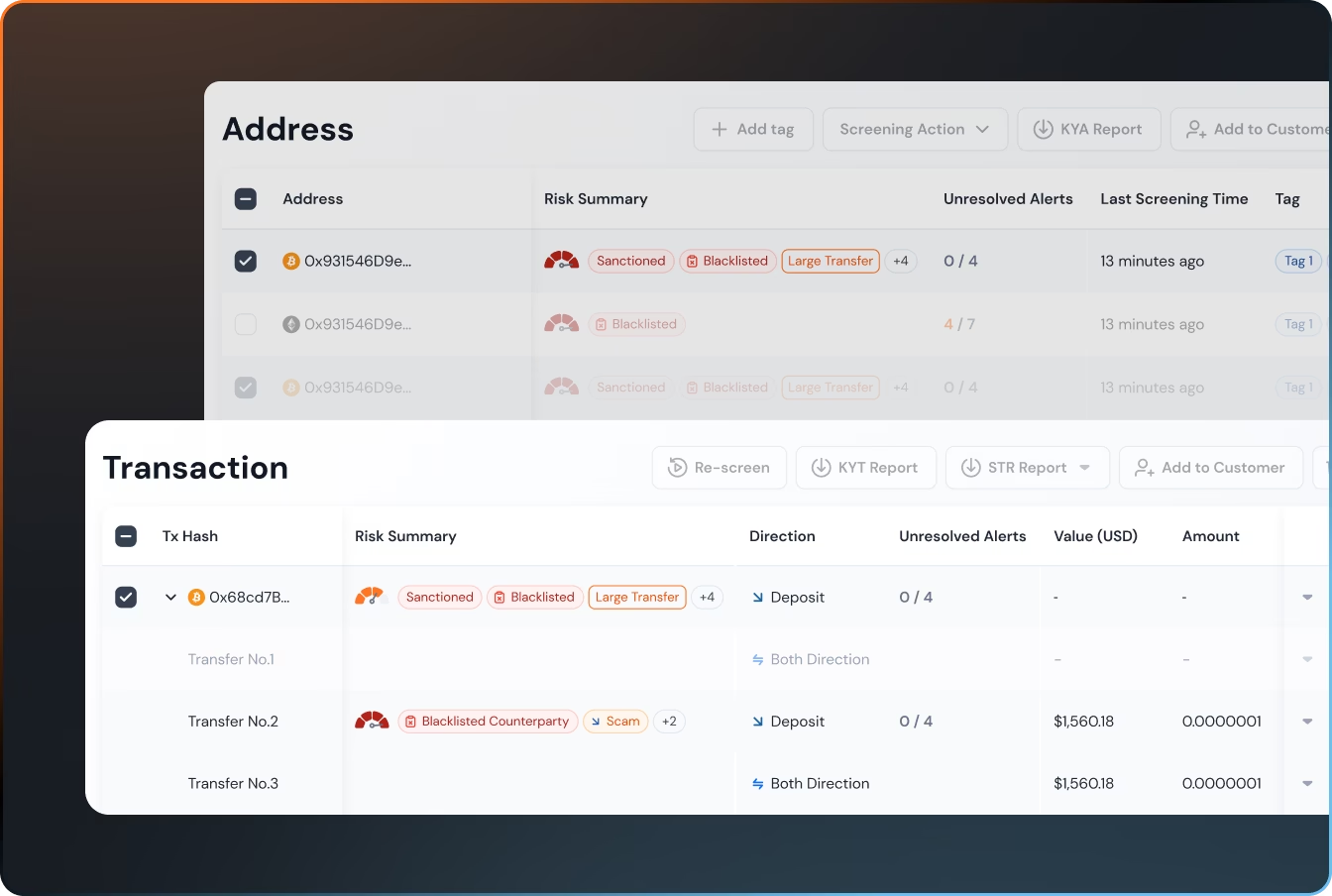
"My lead said 'run a PEP check.' What am I actually checking?" You are checking identifiers against PEP-relevant risk. That means name-based checks where you have identity data, and address-based screening where the first touchpoint is a wallet. The address side checks the wallet's history against labeled intelligence, meaning sanctioned entities, flagged counterparties, and illicit-fund exposure. A clean identity document and a dirty wallet history are both real findings; the check you run depends on which surface you can see.
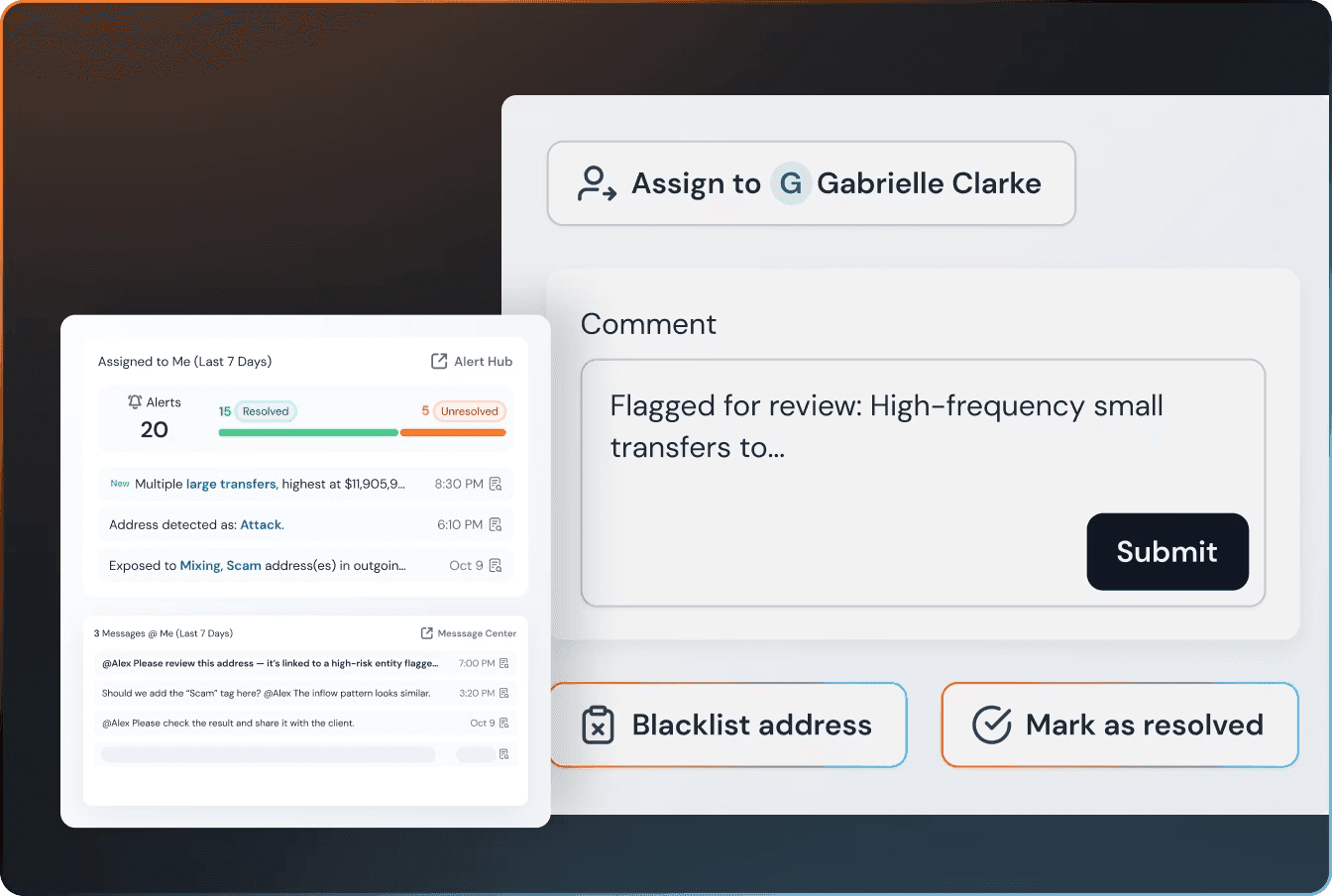
"I found something, so now what?" Escalate, don't adjudicate. New analysts flag; reviewers and senior staff decide. Your escalation should carry what you found, where you found it, and what the screening signal actually says, not a recommendation you are not yet positioned to make. The audit trail you leave is the program's memory: what was screened, what matched, what the decision was. Case-management workflows in Phalcon Compliance give that trail a place to live: alerts assigned, reviewed, and dispositioned with the record attached.
The Two-Minute Background
Why does the category exist at all: corruption proceeds need placement, and public office is where the largest pools of corruption risk concentrate. The PEP framework is the financial system's answer to that concentration, elevated scrutiny where the exposure originates, applied internationally through FATF's standards and translated into national AML law. The category predates crypto by two decades and transferred intact when virtual asset businesses came into regulatory scope.
The history in one line: banking regulators built the category in the early 2000s and FATF standardized it. Crypto's arrival changed the screening surface, addresses instead of names at first touch, without changing the obligation. A VASP today carries the same PEP expectations a bank does, adapted to on-chain identifiers. That is why the term appears in crypto screening queues as often as it does in banking.
Where PEP Checks Fit in Your Workflow
The workflow positions are fixed, from onboarding screen to periodic recheck to event-triggered recheck, and each has a trigger you can anticipate rather than discover.
Onboarding is the first position: every new wallet or customer gets screened before the relationship proceeds. Periodic recheck is the second: the clean wallet today may transact with exposed funds next quarter, and the calendar recheck catches the drift. Event-triggered recheck is the third: a designation lands, an appointment makes news, and the affected relationships get re-screened outside the calendar. Address-level screening makes all three positions automatable. Phalcon Compliance screens wallets against over 600 million labeled addresses, with sanctioned-entity detection among its categories. The concept bridge between identity checks and address checks is short and worth crossing early: What Is KYA? Know Your Address in Crypto.
Where to Go Next
The tiers behind the answers above: PEP Definition: The Three Types of Politically Exposed Persons Explained covers the classification ladder, and Politically Exposed Person Status: Role, Not Registry covers how status starts, extends, and fades. When the first touchpoint is a wallet rather than a name, start there: open Phalcon Compliance and run a free first screen, wallet history against over 600 million labeled addresses, from the free tier through credit packages to subscription tiers as the queue grows.
Quick Answers: Common Mix-Ups
The three most common mix-ups, side by side:
| Mix-up | What it actually is | The working distinction |
|---|---|---|
| PEP vs sanctions list | A sanctioned person is legally prohibited to transact with; a PEP is permitted subject to enhanced scrutiny | One is a prohibition, the other a precaution. The 2020 U.S. interagency PEP statement covers how the two run side by side |
| PEP vs KYC | Identity verification confirms who someone is; PEP classification grades the risk their position carries | Separate controls, and a platform runs both |
| PEP forever | No, status decays after office ends on a risk-based timeline, longer for senior offices | Full weight in office, stepped-down scrutiny after, residual attention for a period |
A week of live screening queues teaches these distinctions faster than any table can. Until then, the fallback order holds: classify the office, check the relationship, document the reasoning. Most first-week questions resolve inside those three steps.