Blockchain security software covers two faces: attack-side protection and the compliance monitoring that operations require. The category grew up around the first face, audits and vulnerability detection, and the second face arrived as regulation did. Buyers who treat the two as separate purchases end up with duplicated intelligence and disjointed evidence, while buyers who understand the overlap get one layer that serves both. This guide covers what each face does, where they overlap, and how a combined stack fits together. The compliance face is where the AML obligations land.
What Each Face Covers
| Face | Protects against | Typical tooling |
|---|---|---|
| Attack prevention | Exploits, vulnerable code, malicious transactions | Auditing, simulation, transaction blocking |
| Compliance monitoring | Sanctioned, stolen, and illicit-fund exposure | Screening, monitoring, alerting, reporting |
The attack face works before and during incidents: code audits before deployment, transaction simulation to preview what a contract interaction will do, runtime blocking to stop an exploit mid-flight. The compliance face works across the relationship lifecycle: screening counterparties at entry, monitoring as risk shifts, and assembling evidence when activity escalates. FinCEN and the FATF Recommendations frame the obligations the second face serves, and those obligations are the on-chain AML program itself.
Why Audits Are Not the Finish Line
Security teams that treat audits as the finish line miss the runtime half of protection. An audit is a point-in-time statement about code; operations happen continuously. The exposures that hurt at runtime, a counterparty turning sanctioned, a wallet receiving stolen funds, a clean address drifting into a hack cluster's orbit, are invisible to static review. For teams buying once, the question is whether monitoring and investigation ship in the same intelligence layer. The lesson repeats across the industry: a project passes its audit, ships, and accumulates runtime exposure that no one is watching. Continuous monitoring exists because the alternative is finding out from an incident.
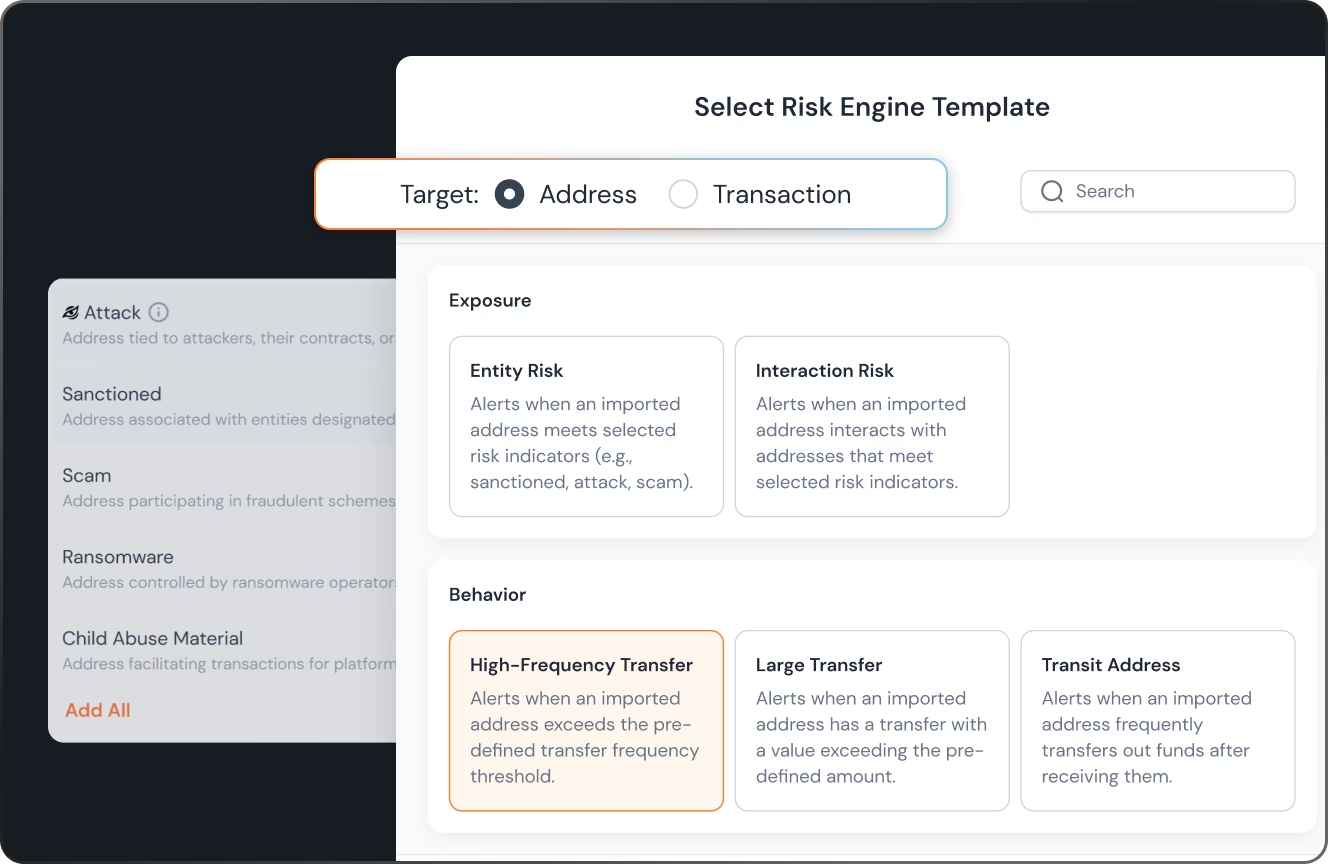
The compliance face supplies that watch. Screening calls against labeled intelligence, executed at millisecond level so they can sit inside operational flows, evaluate counterparty risk as it changes rather than as it was at onboarding. Per BlockSec, Phalcon Compliance maintains labeled-address intelligence covering over 600 million addresses, continuously updated, and evaluates over 200 risk signals per transaction, which is the depth runtime watching depends on.
The Overlap: One Intelligence Layer, Two Duties
The overlap is the purchase insight: both faces consume the same underlying intelligence. The label that marks an address as a hacking operation serves the attack face, blocking or flagging the interaction, and the compliance face, screening the counterparty. When monitoring and investigation ship in the same intelligence layer, an alert in one carries its evidence into the other without reassembly.
| Buying pattern | Result |
|---|---|
| Two vendors, two intelligence layers | Duplicated cost, conflicting reads, evidence that needs reconciliation |
| One layer serving both faces | Shared evidence, one risk picture, investigation inherits monitoring context |
Built on one intelligence layer, the combined stack holds: prevention for the code, monitoring for the runtime, investigation for the aftermath, all drawing on one labeled picture of the chain. Book a demo of Phalcon Compliance and see how the compliance face draws on that one intelligence layer; the crypto compliance software guide maps the obligations the compliance face carries, and the six compliance platforms compared show where a combined stack sits.
FAQ: Blockchain Security Software
Do we need both faces if we are not a financial institution? If you transact on-chain with counterparties you did not vet personally, the compliance face is already relevant; the obligations follow activity, not licenses.
Is compliance monitoring part of security? They share an intelligence layer but answer different questions: security asks whether this transaction exploits us, compliance asks whether this counterparty exposes us. Phalcon Compliance answers the second.
What does an audit not cover? Anything that changes after the report: counterparty risk, designations, new attributions, exposure that forms at runtime.
How do the two faces share evidence? When both draw on the same labeled intelligence, every alert carries its basis forward, and investigations start from evidence rather than from scratch.