
What the 50 Percent Rule Says
The rule says this: if blocked persons own, directly or indirectly, 50 percent or more of an entity, that entity is treated as blocked too, even though its own name appears on no list. No designation is published, no announcement is made. The ownership math does the listing silently, which is why it catches careful teams. The OFAC sanctions hub collects the related guides.
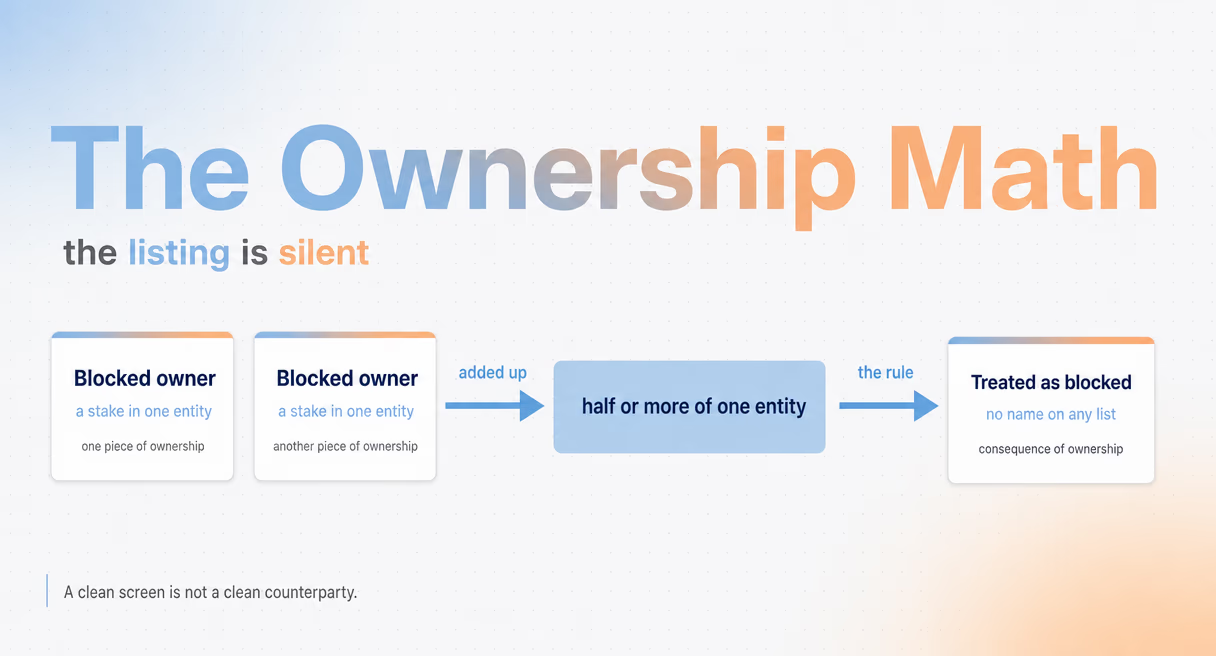
The authority behind the rule sits in OFAC's own guidance: the office's frequently asked questions spell out the interpretation, and the framework is consistent across programs. Property of a blocked person includes ownership stakes, so when blocked parties between them hold a majority of a company, the company itself becomes blocked property in OFAC's eyes.
Three words in that rule do most of the damage. "Aggregate": stakes add together, so two blocked holders at 30 percent each own 60 percent, over the line, while neither alone would trip it. "Indirectly": ownership through chains of other companies counts, so a blocked person's 80 percent of a holding company that owns 70 percent of your counterparty reaches through. "Or more": the line is 50 percent, not 51, and exactly 50 is over it.
What follows is practical. Dealings with that unlisted company are prohibited dealings with blocked property, and assets that touch it are frozen. The defense "they are not on the list" does not work, because the rule is the list's shadow.
How Ownership Adds Up: A Worked Example
Ownership math decides more sanctions exposure than name matching does. The example below builds a company from four shareholders, walks the addition twice, once careless and once careful, and shows how one unnoticed stake flips a clean counterparty into a blocked one.
Picture Company A, a supplier your exchange has used for a year, screened at onboarding with a clean result. Its ownership: Shareholder B holds 30 percent, Shareholder C holds 30 percent, and two unrelated investors hold 20 percent each. Neither B nor C is individually a majority owner, and A's name appears on no list.
Now the fact that changes everything: B and C are both blocked persons. Not under A's name, under their own, which your name screen on Company A never had reason to surface. Aggregate their stakes and blocked persons hold 60 percent of Company A. Under the rule, Company A is blocked property in full, and every transfer since B and C's designations crossed the line.
| Holder | Stake | Blocked? | Counted |
|---|---|---|---|
| Shareholder B | 30% | Yes | 30% |
| Shareholder C | 30% | Yes | 30% |
| Investor D | 20% | No | 0% |
| Investor E | 20% | No | 0% |
| Blocked total | 60%, over the line |
The chains version is quieter still. Suppose B is not itself named on the list, but B is 80 percent owned by a blocked person. Under the rule B is itself blocked, so its full 30 percent counts, and with C's 30 the total is 60, over the line again, one layer deeper. Stakes do not multiply down chains: an entity that crosses the line counts in full, as FAQ 401 confirms. Checking the parent names is exactly what the official Sanctions List Search is for, one lookup per owner.
The example is abstract on purpose: the parties are letters, because the pattern, not the names, is the lesson. Every working screening program meets a live version of this eventually.
The ownership math fills this page; the OFAC sanctions hub carries the rules it sits on.
Why a Clean Screen Misses This
A name screen checks the party in front of you against the list. The 50 percent rule lives one layer down, in who owns that party, and lists do not publish the shadow entries the rule creates. So the miss is structural, not sloppy: the tool answered a narrower question than the risk asked.
Walk the failure. Your screen takes Company A's name, compares it against the SDN list, and returns clean, correctly, because A is not listed. The blocked parties are B and C, sitting in A's ownership table, a document your screening input never included. The OFAC check was honest and the exposure is real, which is the combination that turns into an enforcement story later.
The gap has a shape, and the shape suggests the fix. Name screens cover the listed layer. Ownership checks cover the shadow layer, and they run on different inputs: shareholder registers, registry filings, beneficial ownership data, the paperwork that names B and C as owners. A program that screens names but never asks who owns the name has a hole exactly the size of the rule.
Timing deepens it. B and C can be designated the day after your ownership check, and the shadow flips on without any change to A's own paperwork. That is why the rule pairs with re-screening rather than replacing it: ownership moves, designations land, and yesterday's clean answer expires quietly.
What the Rule Changes in Your Screening
The rule adds one question to every counterparty: who owns it, and are any of those owners blocked? In practice that means ownership data joins names as a screening input, stakes get added up across blocked holders, and the whole check re-runs when either the list or the register moves. Small habits, done always, close the gap.
The first change is input. Onboarding a company now means collecting its owners, not just its name and address. The second is the math: add the blocked stakes, direct and indirect, and treat 50 percent or more as blocked. The third is recurrence, because both layers move, lists when designations land and ownership when registers change, and the SDN list guide covers the update rhythm that drives the re-checks.
For crypto teams the address half matters as much. A counterparty's wallet can be clean while the company behind it sits in a blocked ownership chain, and the exposure follows the relationship, not the address history. Screening that joins name, ownership, and address layers is the shape regulators describe when they ask whether your controls see indirect exposure.
On the tooling side, Phalcon Compliance handles the address layer, screening wallets and transactions, with sanctioned entities among the risk categories it flags. Ownership data stays a documentation task on your side, and the two run side by side. The address screen answers what a wallet touches, the ownership file answers who sits behind the counterparty, and the 50 percent rule is only ever visible in the second one. Plans are on the Phalcon Compliance page, and the family map starts at the OFAC sanctions hub.