Back to Blog

Einleitung: Phalcns Saga der Hacking-Blockade

April 23, 2024

Seit BlockSecs Debüt im Jahr 2021 vertreten wir seit langem die Ansicht, dass Code-Audits allein nicht alle Web3-Sicherheitsprobleme lösen können. Daher investieren wir in die Erforschung neuer Paradigmen für die Web3-Sicherheit. So haben wir Phalcon, das weltweit erste Krypto-Hack-Blockiersystem, entwickelt.

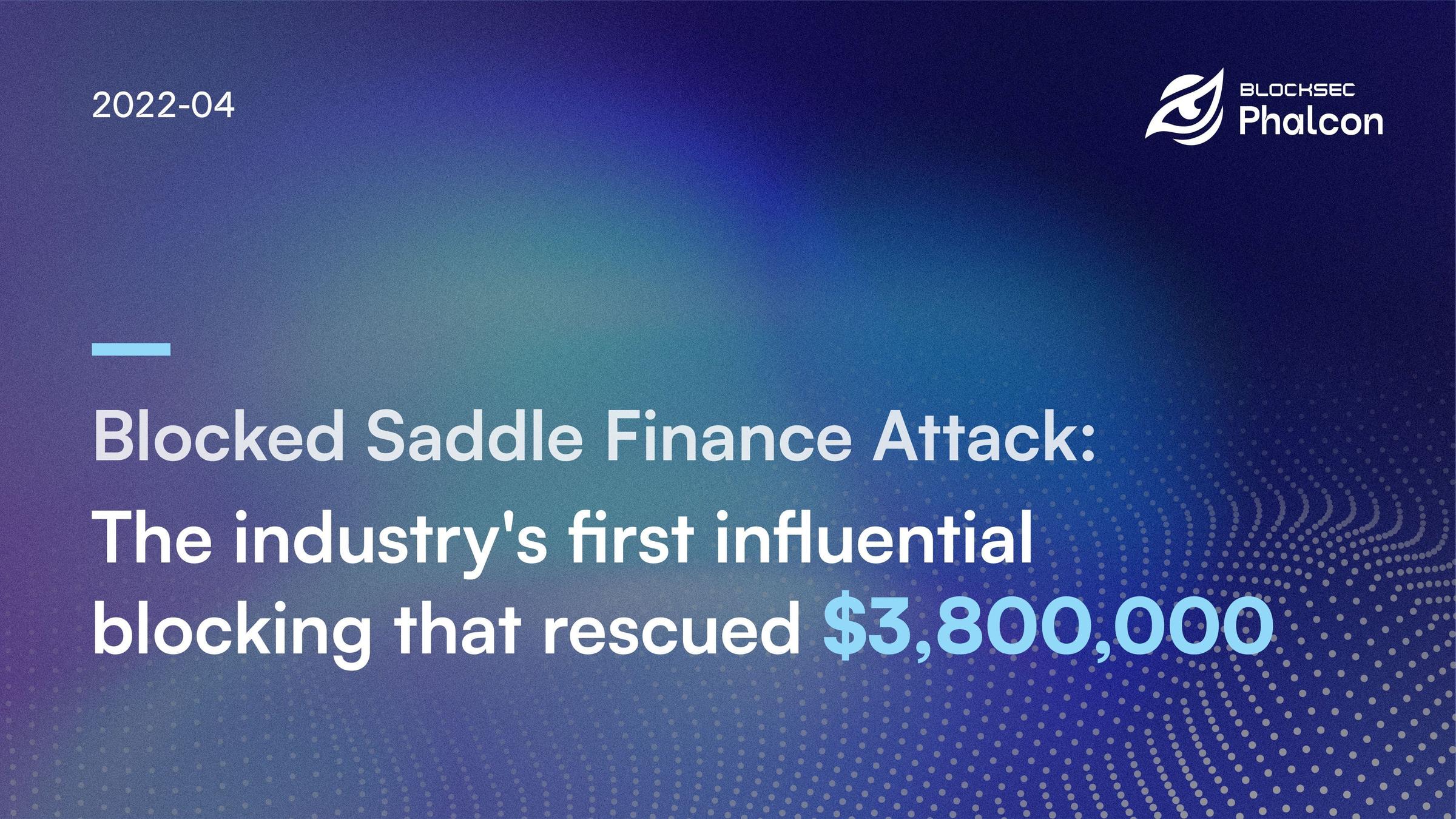
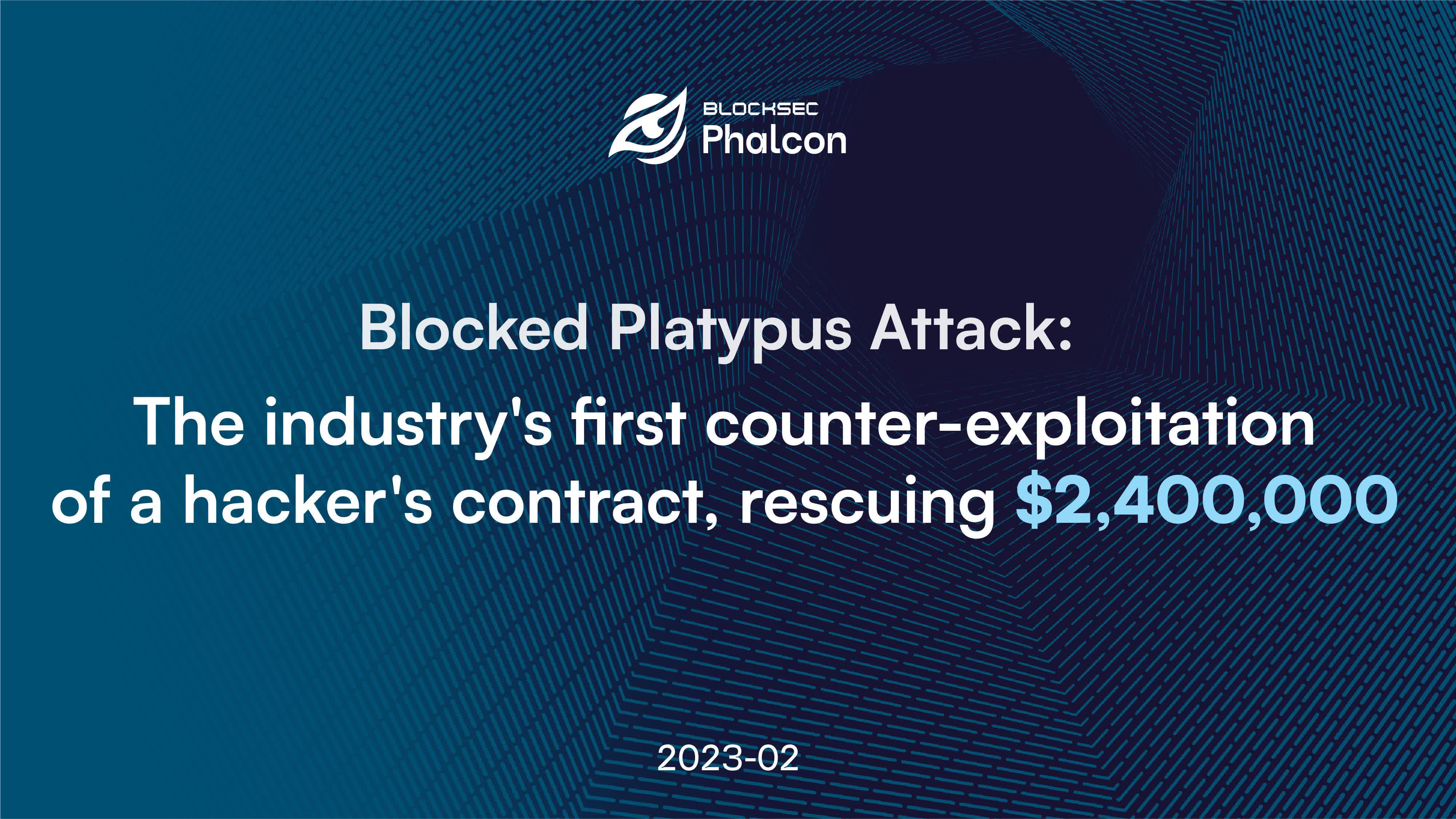
Vor der Einführung von Phalcon lief das System zwei Jahre lang intern und hat erfolgreich über 20 Hacks blockiert und Vermögenswerte im Wert von über 20 Millionen US-Dollar gerettet, darunter 3,8 Millionen US-Dollar für Saddle Finance, 2,4 Millionen US-Dollar für Platypus, 5 Millionen US-Dollar für ParaSpace und mehr.

In dieser Artikelreihe werden wir repräsentative Geschichten unseres Systems Phalcon vorstellen. Mit dem Teilen dieser Fälle möchten wir mehr als nur die Wirksamkeit unseres Systems bestätigen. Wir wollen auch den transformativen Effekt proaktiver Abwehrmaßnahmen demonstrieren.

Angesichts von Bedrohungen sind wir nicht machtlos. Gemeinsam können wir eine neue Ära der Web3-Sicherheit einläuten.

Aufschlüsselung: Ein umfassender Überblick

Über Phalcon

Phalcon ist eine von BlockSec entwickelte Sicherheitsplattform zur Überwachung und Blockierung von Hacks. Das System erkennt verdächtige Transaktionen, alarmiert Benutzer sofort und ergreift automatisierte Maßnahmen als Reaktion.

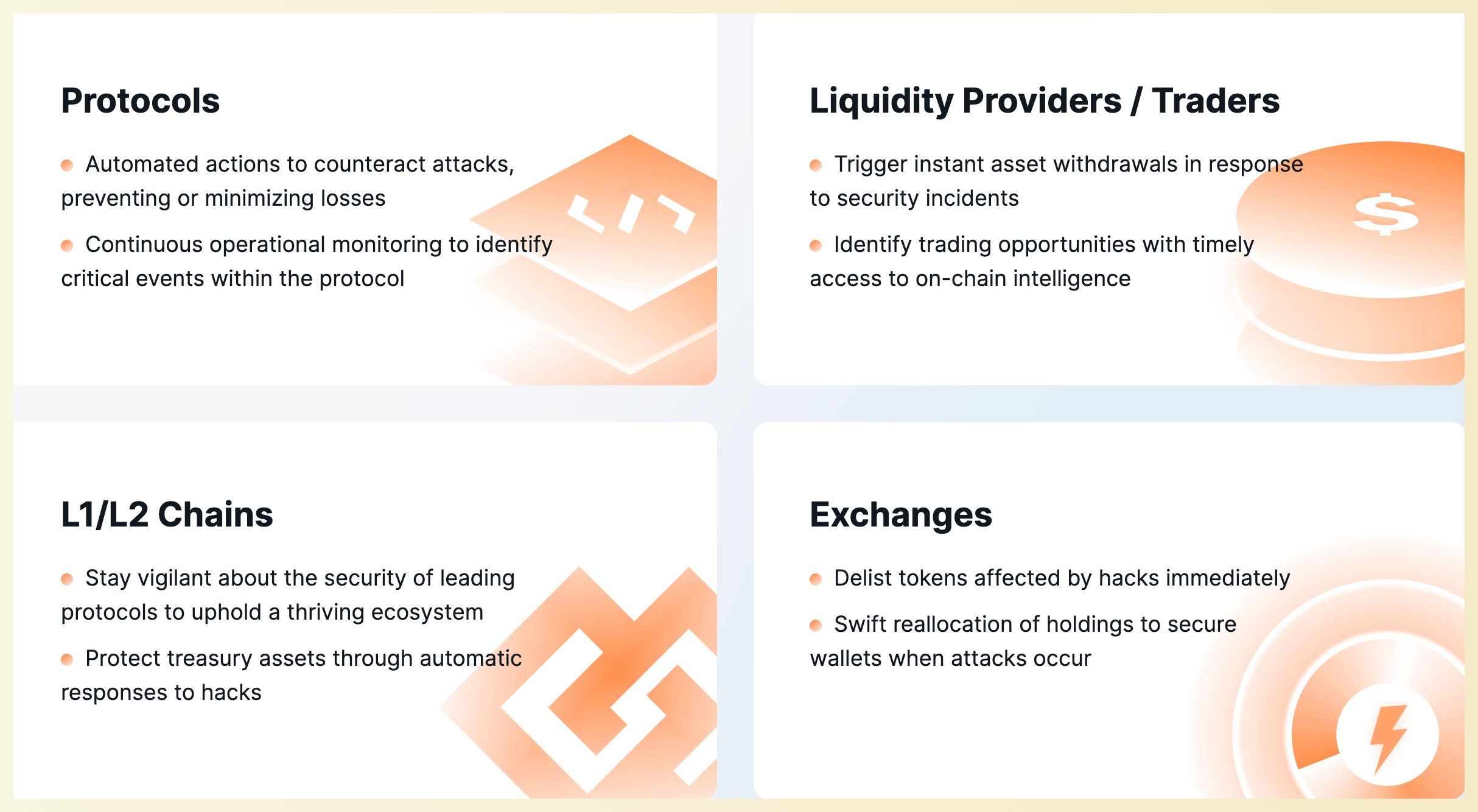
Anwendungsfälle von Phalcon

Phalcon ist eine SaaS-Plattform, auf der Benutzer sich direkt über unsere offizielle Website einloggen können, um verschiedene Preispläne und Funktionen einzusehen und sofort zu abonnieren (sowohl Kreditkarten- als auch Kryptozahlungen werden unterstützt). Bei Fragen können Sie gerne eine Demo mit unseren Sicherheitsexperten buchen, die Ihre Bedenken ausräumen werden.

Support-Tool: Phalcon Explorer

Phalcon Explorer ist ein Support-Tool für die Phalcon-Plattform. Dieser leistungsstarke Transaktions-Explorer wurde für die DeFi-Community entwickelt. Er bietet umfassende Daten zu Aufruf-Flows, Guthabenänderungen und Transaktions-Fund-Flows und unterstützt die Transaktionssimulation. Dies hilft Entwicklern, Sicherheitsexperten und Händlern, Transaktionen intuitiver zu verstehen.
Sign up for the latest updates
Tether Freezes $6.76M USDT Linked to Iran's IRGC & Houthi Forces: Why On-Chain Compliance is Now a Geopolitical Battlefield
Security Insights

Tether Freezes $6.76M USDT Linked to Iran's IRGC & Houthi Forces: Why On-Chain Compliance is Now a Geopolitical Battlefield

Looking ahead, targeted freezing events like this $6.76M USDT action will only become more common. On-chain data analysis is improving. Stablecoin issuers are also working closely with regulators. As a result, hidden illicit financial networks will be exposed.

Weekly Web3 Security Incident Roundup | Mar 2 – Mar 8, 2026
Security Insights

Weekly Web3 Security Incident Roundup | Mar 2 – Mar 8, 2026

During the week of March 2 to March 8, 2026, seven blockchain security incidents were reported with total losses of ~$3.25M. The incidents occurred across Base, BNB Chain, and Ethereum, exposing critical vulnerabilities in smart contract business logic, token deflationary mechanics, and asset price manipulation. The primary causes included a double-minting logic flaw during full token deposits that allowed an attacker to exponentially inflate their balances through repeated burn-and-mint cycles, a price manipulation vulnerability in an AMM-based lending market where artificially inflated vault shares created divergent price anchors to incorrectly force healthy positions into liquidation, and a flawed access control implementation relying on trivially spoofed contract interfaces that enabled attackers to bypass authorization to batch-mint and dump arbitrary tokens.

Weekly Web3 Security Incident Roundup | Feb 23 – Mar 1, 2026
Security Insights

Weekly Web3 Security Incident Roundup | Feb 23 – Mar 1, 2026

During the week of February 23 to March 1, 2026, seven blockchain security incidents were reported with total losses of ~$13M. The incidents affected multiple protocols, exposing critical weaknesses in oracle design/configuration, cryptographic verification, and core business logic. The primary drivers included oracle manipulation/misconfiguration that led to the largest loss at YieldBloxDAO (~$10M), a crypto-proof verification flaw that enabled the FOOMCASH (~$2.26M) exploit, and additional token design and logic errors impacting Ploutos, LAXO, STO, HedgePay, and an unknown contract, underscoring the need for rigorous audits and continuous monitoring across all protocol layers.