OFAC sanctions crypto news acts as an operational trigger: each designation can expose wallets your platform already cleared. The news framing (an enforcement announcement, a new listing, a Treasury action) treats designation as an event that happens to other people. The compliance framing treats the same event as a switch that flips parts of your existing customer base from permitted to prohibited. This piece is about the mechanism between those two framings. It covers how a designation propagates into on-chain exposure, why already-onboarded wallets carry the risk, and how a monitoring loop converts news into re-screening before it becomes a violation. The workflow that catches these flips is the crypto transaction monitoring loop this piece walks through.
Why Sanctions News Is a Compliance Event, Not Just News
Each OFAC designation adds entities to the SDN list and can flip wallets your platform already cleared from permitted to prohibited. The distinction from ordinary news is that designation creates legal obligations the moment it takes effect: dealing with a listed person becomes prohibited immediately, with no grace period for platforms that had cleared the same counterparty the week before. OFAC publishes the designations and maintains the list; the compliance operation begins when the publication lands.
The obligation's mechanics are unforgiving by design. A person or entity added to the SDN list becomes legally untouchable for U.S.-nexus platforms: property blocked, transactions prohibited. The same is true under parallel regimes for EU and UN lists. What makes crypto-specific news coverage misleading is its emphasis on the enforcement narrative rather than the compliance consequence. The question a compliance team needs answered is which existing relationships now intersect the prohibition.
That is why mature programs treat Treasury's sanctions actions as a feed rather than a news source. The designation is the input; the platform's exposure mapping is the response. Everything downstream in this piece, the propagation chain and the monitoring loop, is the machinery of that response.
The Designation-to-Exposure Chain
OFAC designations propagate through labeled addresses, so exposure arrives via interactions your customers already made. The chain runs in four steps: designation publishes, the SDN list updates, addresses associated with the designated entities acquire exposure labels, and any wallet that transacted with those addresses, directly or through bridges and mixers downstream, carries a risk picture that changed without the wallet itself moving. Your platform's exposure is a function of customer history against the updated labels, not of anything the customer did this week.
The propagation is the part worth slowing down on. A designation names entities; the entities control addresses; those addresses have transaction histories. The histories point backward, to everyone who sent funds to or received funds from the designated addresses, and the exposure follows those links. The links extend through obfuscation: funds routed via a mixer or a cross-chain bridge do not break the trail; they lengthen it, and the labeling intelligence that screening tools maintain tracks the extension.
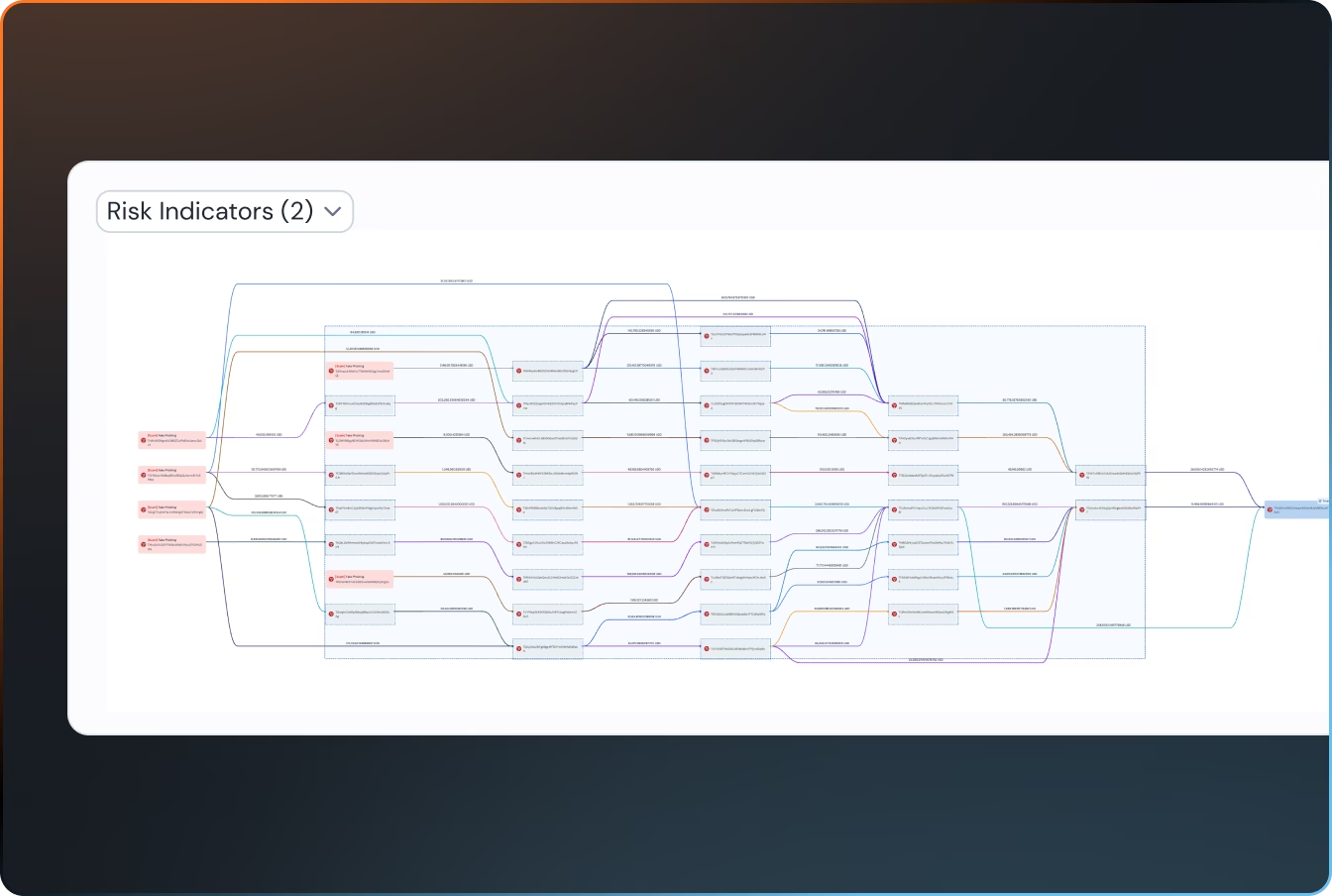
What this means practically: the day a designation lands, the set of "risky addresses" grows. Some of that growth lands inside your platform: wallets that onboarded clean, transacted normally, and woke up adjacent to a prohibition. The exposure was invisible yesterday because the designation did not exist. It is fully visible today to anyone whose screening intelligence updated.
The Clean-to-Risky Problem for Already-Onboarded Wallets
Onboarding screens answer "was this wallet clean at the door"; designation changes the question to "is it clean now," and the two answers diverge over time by design. A wallet that passed screening months ago can become exposed the hour a designation lands, through no action of its owner. Counterparties change status, lists update, and the wallet's history now points at entities it was free to interact with at the time. Compliance operators frame the underlying question plainly: can a wallet be clean one day and risky the next? Designation is the most concrete answer, and the switch is external.
The structural blind spot is that a screening program which only runs at onboarding has no mechanism to notice the change. Its clean verdicts were correct when issued; they are stale the moment the label universe shifts. The gap is a failure of screening frequency, and frequency is what continuous transaction monitoring exists to fix.
The monitoring answer has two rhythms. Calendar re-screening sweeps the customer base periodically and catches drift at scale. Event-triggered re-screening responds to designation events directly: the list update fires re-checks against the relationships whose histories intersect the new labels. The second rhythm is the one that converts sanctions news into compliance action within the same day rather than the same quarter. The mechanism of how a wallet's risk tier changes and what happens after is covered in depth at Can a Crypto Wallet Become Risky After Being Clean?
Building a Continuous Sanctions Monitoring Loop
OFAC designation updates belong in triggered re-screening, so onboarded wallets get re-rated the day the list changes. The loop has four working parts: designation feeds, re-screening triggers, exposure alerts, and disposition routing. The division of labor at the end is fixed: the monitoring layer surfaces signals, and the platform's risk rules decide what happens to them. A loop that blurs that division either automates decisions nobody authorized or buries signals nobody triages.
The four parts in sequence:
| Loop component | What it does | What carries it |
|---|---|---|
| Designation feeds | Start the clock at publication | OFAC's actions and Treasury's press releases subscriptions |
| Re-screening | Re-check wallets and counterparties against updated labels | Screening API: Per BlockSec, Phalcon Compliance maintains labeled-address intelligence covering sanctioned entities, continuously updated, returning at sub-100ms |
| Exposure alerts | Flag previously clean relationships now intersecting updated labels | Alert routing with evidence: which label, which interaction triggered the flag |
| Disposition routing | Decide: block, review, file, or clear | Your risk rules, applied by your pipeline, decision logged beside the signal |
The economics favor pay-as-you-go screening here specifically: re-screening fires on events, not on a calendar, so cost tracks designation activity and affected volume rather than the full customer base every cycle.
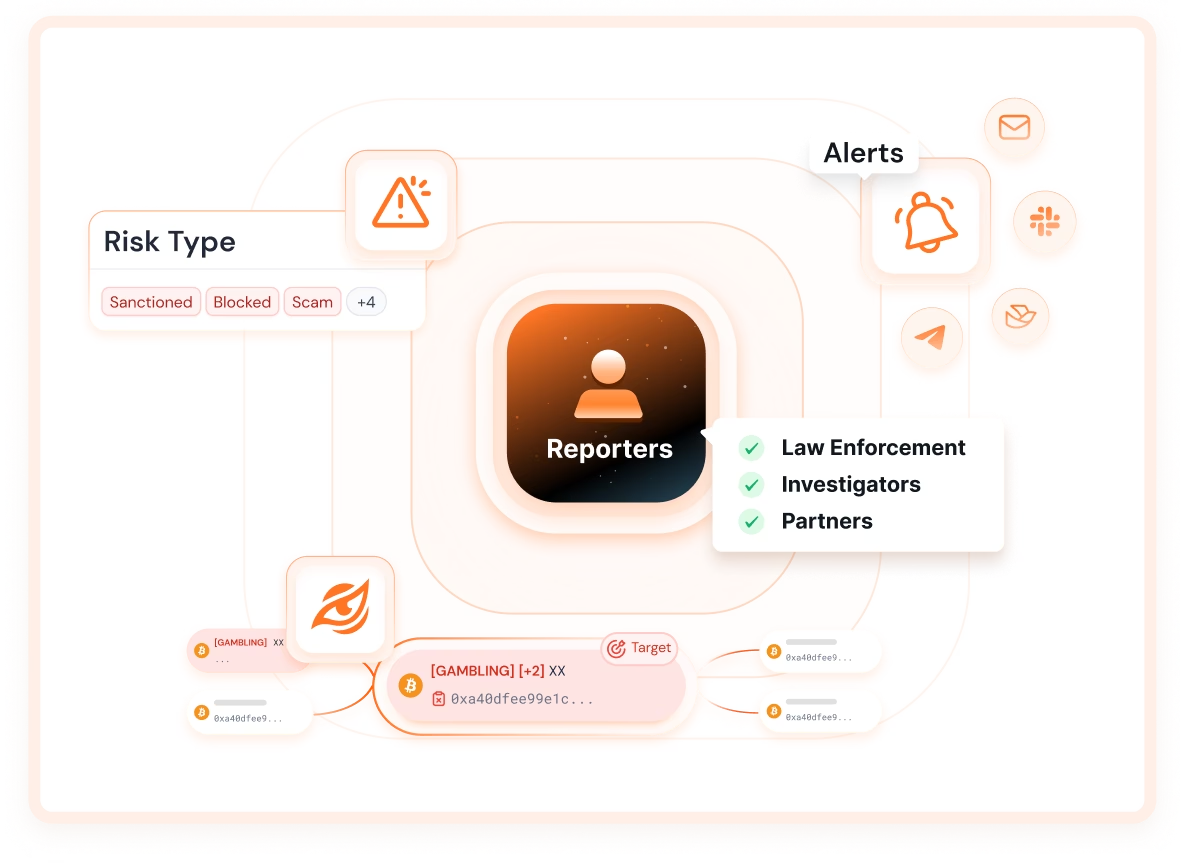
The loop above runs on the screening layer Phalcon Compliance provides. Book a demo and re-screen your exposure surface against the latest SDN update; for the wider obligation-to-capability picture, see the crypto compliance software guide.
FAQ: Sanctions Monitoring Mechanics
How fast do SDN changes reach screening tools? Designations are public at publication; the variable is how quickly screening intelligence absorbs them. Tools that maintain continuously updated label libraries fold new designations into screening on an ongoing basis. Per BlockSec, Phalcon Compliance updates its labeled-address intelligence continuously. The practical question for any tool is not the marketing answer but the practical one: when was the library last refreshed relative to the designation you just read about.
Do I need to re-screen every customer after each designation? No, and the scale would make it impossible anyway. Triggered re-screening targets the exposure surface: wallets and counterparties whose histories intersect the newly designated entities or their labeled addresses. Blanket calendar sweeps run at lower frequency as the backstop. The triggered layer is precise by construction; the blanket layer is broad by design; a program needs both in proportion to its risk appetite.
What happens to a transaction already in flight? That is jurisdiction-specific legal territory, and the answer belongs to counsel. But the monitoring loop's contribution is clear: the earlier the designation signal reaches your pipeline, the more of the in-flight window you have to act on under your own rules. This piece covers mechanism, not legal advice; the disposition policy for in-flight transactions is a policy document your compliance lead and counsel own together.
How is this different from PEP screening? Sanctions screening is list-rigid: a designated entity is prohibited, full stop, and the screening answer is binary. PEP screening is risk-graded: a politically exposed person is permitted subject to enhanced due diligence, and the screening answer opens a review rather than a prohibition. The two run side by side, one catching what is illegal and the other catching what warrants scrutiny.