Back to Blog

保护 Solana 生态系统 (1) — Hello Solana

March 9, 2022
5 min read

1. 引言

Solana是一个高性能、无需许可的Layer 1区块链系统,支持使用多种语言(例如Rust、C++和C)开发程序(智能合约)。借助Tower BFT(拜占庭容错),它每秒可以处理数千笔交易。Solana的核心创新之一是历史证明(Proof of History,PoH),它是网络中一个全局可用、无需许可的时间源,在共识之前工作。我们将在未来详细讨论PoH。

2. 我们的使命

BlockSec是一家区块链安全公司,以“保护DApp生态系统”为使命。因此,我们不仅提供合约审计服务,还为整个社区提供有关如何编写安全智能合约的建议。考虑到Solana的流行度、高性能和出色的设计,本系列将专注于Rust在Solana上智能合约的安全性。

3. Hello Solana

在从安全角度讨论Solana智能合约之前,我们首先需要了解如何编写、编译和部署Solana智能合约。这里我们以Hello World为例进行说明。

3.1 代码审查

在Solana中,智能合约被称为程序。[Hello World](https://github.com/solana-labs/example-helloworld/blob/master/src/program-rust/src/lib.rs)程序旨在维护一个计数器,该计数器记录客户端调用目标账户(由程序拥有)的次数,并将此数字作为输出打印。

现在我们来逐步分析整个合约。
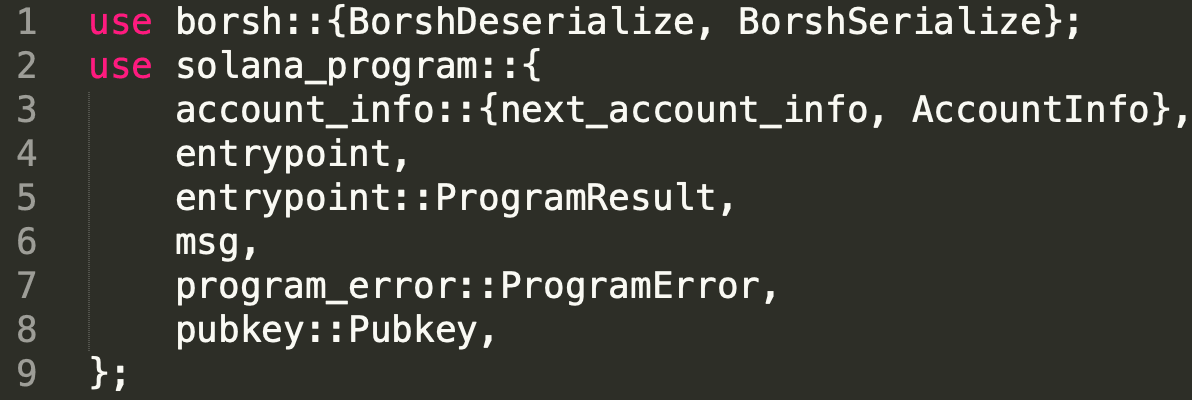
第1行到第9行使用 use 关键字显式引入了许多库。
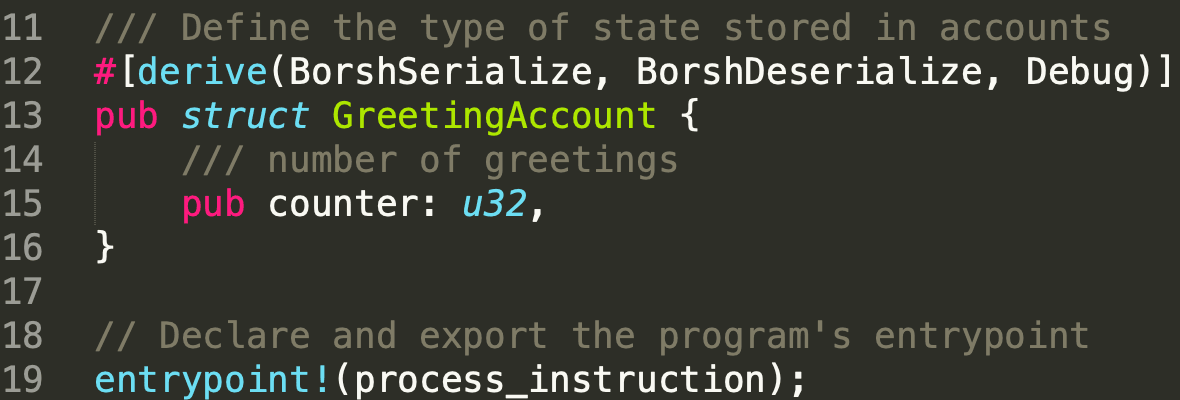
在第12行,[derive(BorshSerialize, BorshDeserialize, Debug)] 用于序列化和反序列化传递给 GreetingAccount 结构体的参数,该结构体从第13行到第16行定义。该结构体包含一个名为 counter 的公共成员,类型为 u32。之后,如注释所示,第19行导出程序的入口点,即 process_instruction 函数。
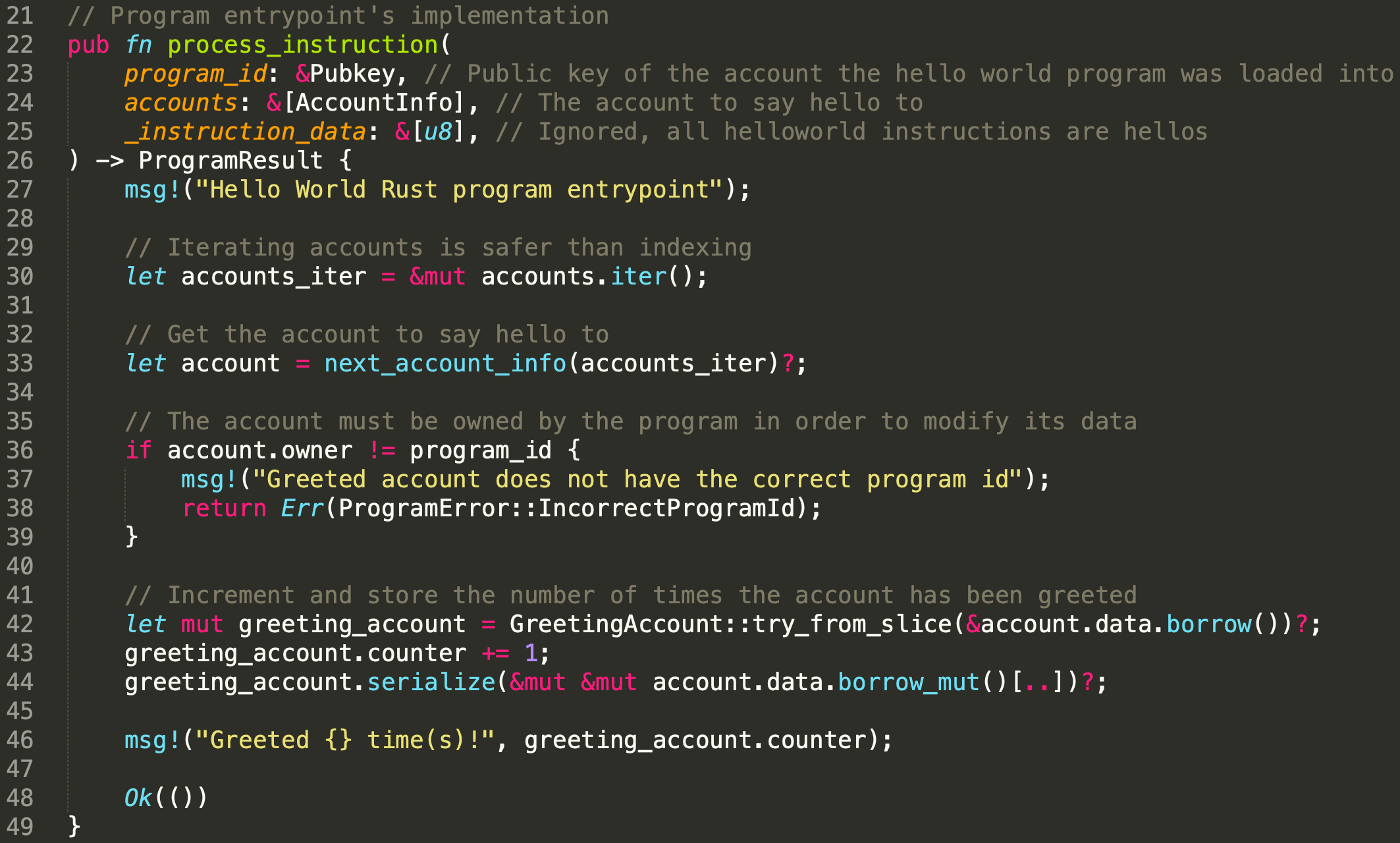
process_instruction 函数接受三个参数(即 program_idaccounts_instruction_data)。请注意,program_id 是已部署程序的公钥(即地址),而 accounts 包含要问好的账户。_instruction_data 为空且未使用。

要了解更多关于Solana中的程序和账户的信息,请参阅Solana文档

在第27行,打印了一条问候消息。从第30行到第33行,将遍历账户,并提取要问好的特定账户。之后,将检查账户的所有者,它应等于 program_id,以确保程序可以写入该账户。最后,使用 try_from_slice 提取 greeting_account,并将计数器加1。

3.2 编译程序

要编译程序,我们需要使用以下命令安装Solana CLI

sh -c "$(curl -sSfL https://release.solana.com/v1.9.9/install)"

要确认Solana CLI已成功安装,我们可以使用以下命令检查其版本。

solana --version

请注意,还需要RustNodeJS

要编译程序,我们可以使用以下命令。

cargo build-bpf --manifest-path=./src/program-rust/Cargo.toml --bpf-out-dir=dist/program

编译后的程序将在 --bpf-out-dir 中指定的目录下生成,名为 helloworld.so

3.3 部署合约

要在Solana上部署编译后的程序,我们需要先选择一个集群。在Solana中,有四种不同的集群:mainnet、testnet、devnet和localnet。在本帖中,我们仅为演示目的在devnet上部署编译后的程序。

我们使用以下命令指定集群。

solana config set --url https://api.devnet.solana.com

之后,我们需要生成用于部署的钱包。solana-keygen new --force 有助于生成钱包。有关更多信息,请查看Solana文档

由于新创建的账户没有余额来支付交易费用,我们使用以下命令空投1 SOL。

solana airdrop 1 <YourPublicKey> --url https://api.devnet.solana.com

现在,我们准备部署合约。

solana program deploy dist/program/helloworld.so

用户可以在Devnet Explorer上查看程序和交易。在此演示中,您可以通过此链接找到已部署的程序。

3.4 发送交易

建议编写脚本,即客户端,来发送Solana中的交易。幸运的是,Solana提供了示例代码。要运行客户端,我们首先需要安装客户端依赖项。

npm install

安装完成后,我们使用以下命令运行 main.ts 文件中的 main 函数。

npm run start
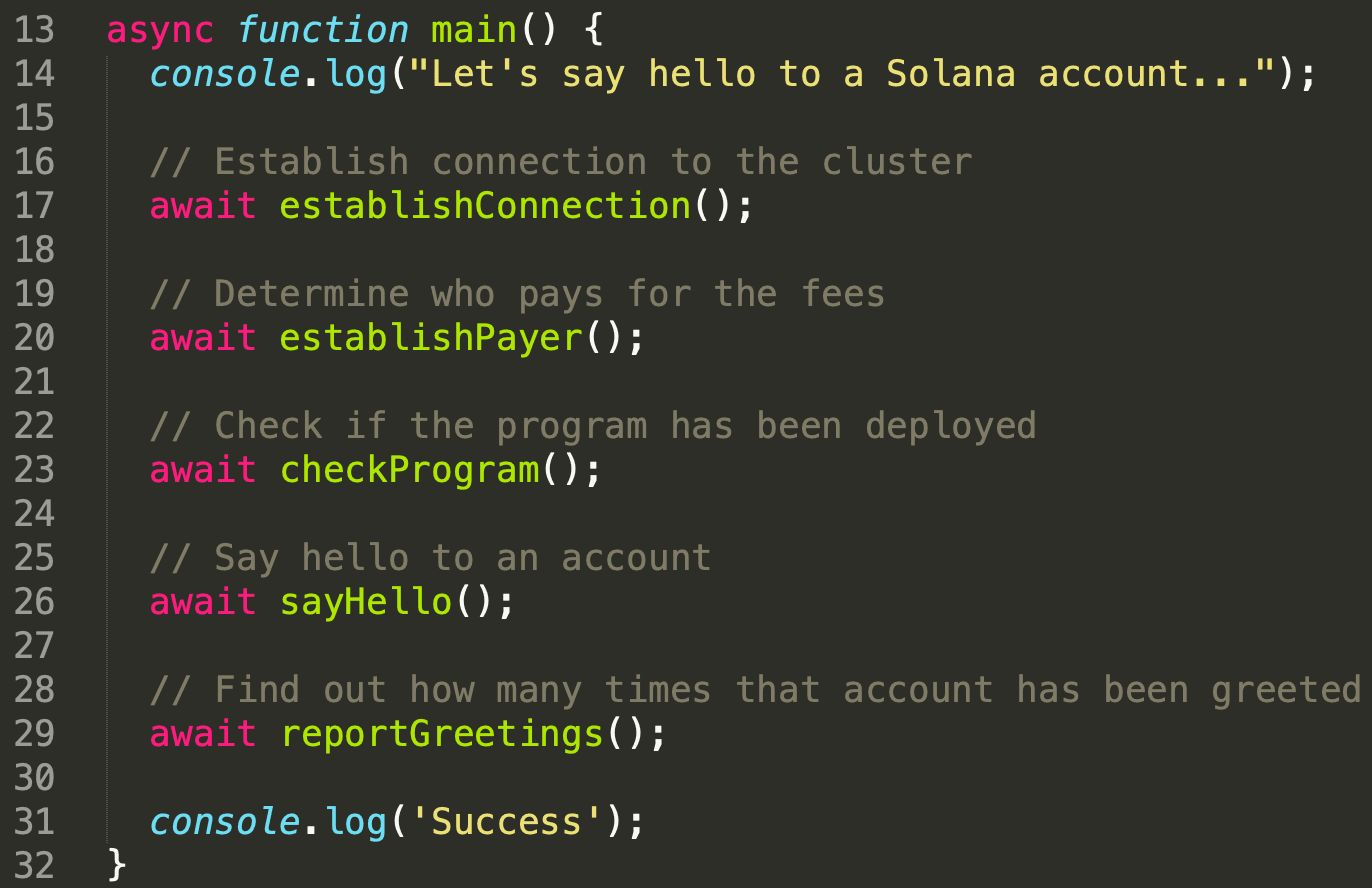
main 函数中,客户端首先使用 establishConnection() 函数建立与指定集群(即Devnet)的连接,使用 establishPayer 函数检查支付交易费用的付款人,并使用 checkProgram 函数验证程序和要问好的账户是否存在。请注意,如果所需账户不存在,它将被创建,方法是发送一笔交易。在我们的演示中,账户是在此交易中创建的。
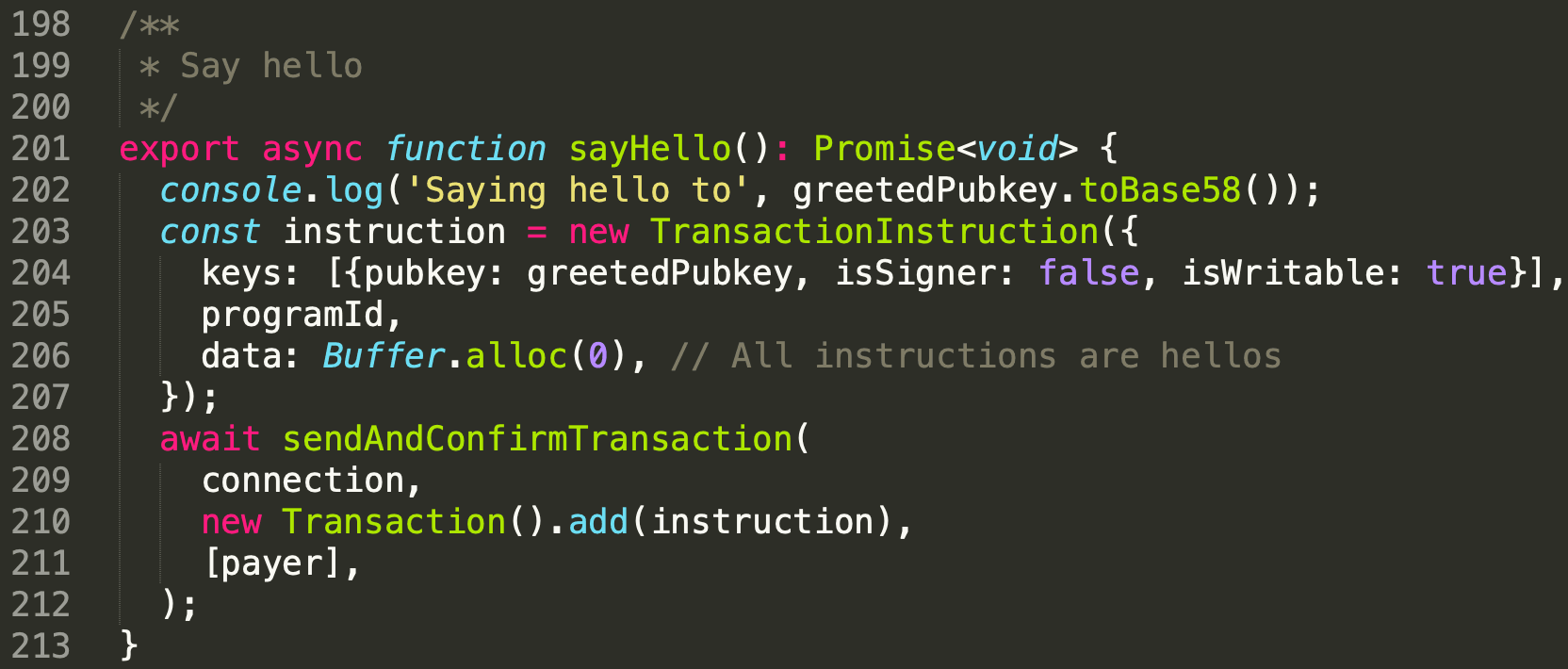
当一切准备就绪后,将调用 sayHello 函数向目标账户发送问候。该交易包含一个指令。该指令接收包含一个账户的 keys。该账户的公钥(即 greetedPubkey)是要问好的目标账户。请注意,此账户用于存储,它不是签名者。在这种情况下,isSigner 属性为 false,而 isWritabletrueprogramIdgreetedPubkey 的所有者,也是已部署合约的地址。请注意,data 为空,在此交易中将不使用。在第208行,将调用 sendAndConfirmTransaction 函数,交易将被发送到集群。

您可以**在此** 查看详细交易。

4. 结论

在本文中,我们简要介绍了Solana的背景,并通过示例项目(即Hello World)进行了介绍。我们学习了如何在Solana上部署程序,以及如何使用客户端与链上程序进行交互。请继续关注我们的博客,我们将持续发布本系列的更多文章。
阅读本系列的其它文章:

Sign up for the latest updates
The Decentralization Dilemma: Cascading Risk and Emergency Power in the KelpDAO Crisis
Security Insights

The Decentralization Dilemma: Cascading Risk and Emergency Power in the KelpDAO Crisis

This BlockSec deep-dive analyzes the KelpDAO $290M rsETH cross-chain bridge exploit (April 18, 2026), attributed to the Lazarus Group, tracing a causal chain across three layers: how a single-point DVN dependency enabled the attack, how DeFi composability cascaded the damage through Aave V3 lending markets to freeze WETH liquidity exceeding $6.7B across Ethereum, Arbitrum, Base, Mantle, and Linea, and how the crisis forced decentralized governance to exercise centralized emergency powers. The article examines three parameters that shaped the cascade's severity (LTV, pool depth, and cross-chain deployment count) and provides an exclusive technical breakdown of Arbitrum Security Council's forced state transition, an atomic contract upgrade that moved 30,766 ETH without the holder's signature.

Weekly Web3 Security Incident Roundup | Apr 13 – Apr 19, 2026
Security Insights

Weekly Web3 Security Incident Roundup | Apr 13 – Apr 19, 2026

This BlockSec weekly security report covers four attack incidents detected between April 13 and April 19, 2026, across multiple chains such as Ethereum, Unichain, Arbitrum, and NEAR, with total estimated losses of approximately $310M. The highlighted incident is the $290M KelpDAO rsETH bridge exploit, where an attacker poisoned the RPC infrastructure of the sole LayerZero DVN to fabricate a cross-chain message, triggering a cascading WETH freeze across five chains and an Arbitrum Security Council forced state transition that raises questions about the actual trust boundaries of decentralized systems. Other incidents include a $242K MMR proof forgery on Hyperbridge, a $1.5M signed integer abuse on Dango, and an $18.4M circular swap path exploit on Rhea Finance's Burrowland protocol.

Weekly Web3 Security Incident Roundup | Apr 6 – Apr 12, 2026
Security Insights

Weekly Web3 Security Incident Roundup | Apr 6 – Apr 12, 2026

This BlockSec weekly security report covers four DeFi attack incidents detected between April 6 and April 12, 2026, across Linea, BNB Chain, Arbitrum, Optimism, Avalanche, and Base, with total estimated losses of approximately $928.6K. Notable incidents include a $517K approval-related exploit where a user mistakenly approved a permissionless SquidMulticall contract enabling arbitrary external calls, a $193K business logic flaw in the HB token's reward-settlement logic that allowed direct AMM reserve manipulation, a $165.6K exploit in Denaria's perpetual DEX caused by a rounding asymmetry compounded with an unsafe cast, and a $53K access control issue in XBITVault caused by an initialization-dependent check that failed open. The report provides detailed vulnerability analysis and attack transaction breakdowns for each incident.