
The Short Answer: A Frozen Wallet Triggers a Three-Stage Response
When a stablecoin wallet is frozen, its tokens stop moving, and the wallet can no longer send or receive. A stablecoin wallet freeze triggers a three-stage response: clarify why the freeze happened, assess how far the impact reaches, and prepare communication material for the issuer and the other parties involved. The freeze is a control the stablecoin issuer exercises through its contract. The trigger is usually sanctions exposure, a law enforcement request, or an internal risk rule. Where a freeze follows a law-enforcement request, the underlying US authorities are cataloged in FinCEN's statutes and regulations. The first move for a compliance or treasury team is to work through that response in order rather than react to the panic.
The distinction that matters is between ownership and availability. A freeze does not transfer the wallet to anyone else, and it does not steal the private keys. What it does is take the assets out of circulation for a time, so the team should treat the event as an availability problem, not a custody problem. Mixing those two up is the fastest way to waste the first hour of a freeze. That framing decides whether the team reaches for a recovery plan or a compliance workflow.
This is a question that stablecoin issuers and crypto payment gateways ask with real urgency, because a frozen wallet can sit on a redemption, settlement, or reserve rail. This article explains what a freeze does to a wallet, what each of the three stages involves, and how an issuer can turn a freeze from a surprise into a managed process.
What Freezing Does to a Wallet
A freeze is not a theft and not a lost key. A freeze limits asset availability rather than private key control: the wallet owner still holds the keys, but the tokens can no longer move freely. Establishing that early matters, because it changes what the team does next.
A frozen address can no longer send or receive. Transfers in and out are blocked, and the assets sitting in the address become unavailable until the freeze is lifted or the dispute is resolved. For a stablecoin issuer, that unavailable balance can sit inside a redemption wallet, a settlement wallet, or a reserve wallet, and the interruption can ripple into redemptions, payouts, and liquidity.
This is why a freeze reads differently from the incidents most teams already drill for. The keys are safe, and the funds have not been drained. The problem is that the tokens the business depends on are temporarily out of reach. Treating a freeze as a private key emergency leads to the wrong first actions, while treating it as an availability event leads to the right ones.
The availability lens also reframes the risk. A stablecoin issuer is not just protecting assets; it is protecting its ability to redeem, settle, and pay on time. When a freeze blocks that ability, the business impact arrives through operations and reputation, not through the loss of the tokens themselves. A redemption window missed because of a freeze is a customer-facing failure even though no funds left the balance.
The Three-Stage Freeze Response
BlockSec describes a three-stage support process for the moment a freeze is detected in its whitepaper on stablecoin issuer freeze risk. The stages move from diagnosis to scope to communication, and each stage feeds the next. The process is a service framework, not a regulatory mandate, and it is a way to respond in an orderly fashion when a freeze lands.
The first stage clarifies why the freeze happened by tracing back across address, transaction, and transaction-path dimensions. The goal is to locate the trigger point, to see whether the problem is a single point or a pool-wide issue, and to tell whether the risk entered from upstream or from historical contamination. A freeze that touches one edge address needs a different response than a freeze that sits inside the main treasury pool.
The second stage assesses the impact: which addresses are affected, which asset batches are contaminated, whether the aggregation, operating, and reserve pools are implicated, and which business flows will be interrupted or delayed. Knowing the blast radius tells the team which redemptions and payment rails are at risk before the other parties pick up the phone.
The third stage helps the issuer prepare communication material and supports conversations with the issuer, using MetaSleuth to visually trace the complete fund flow within the key time window. The trace identifies the main upstream sources, the downstream diffusion paths, the associated address clusters, and the anomalous nodes. That gives the issuer a clear story of what happened, so no one has to dig through a raw transaction list.
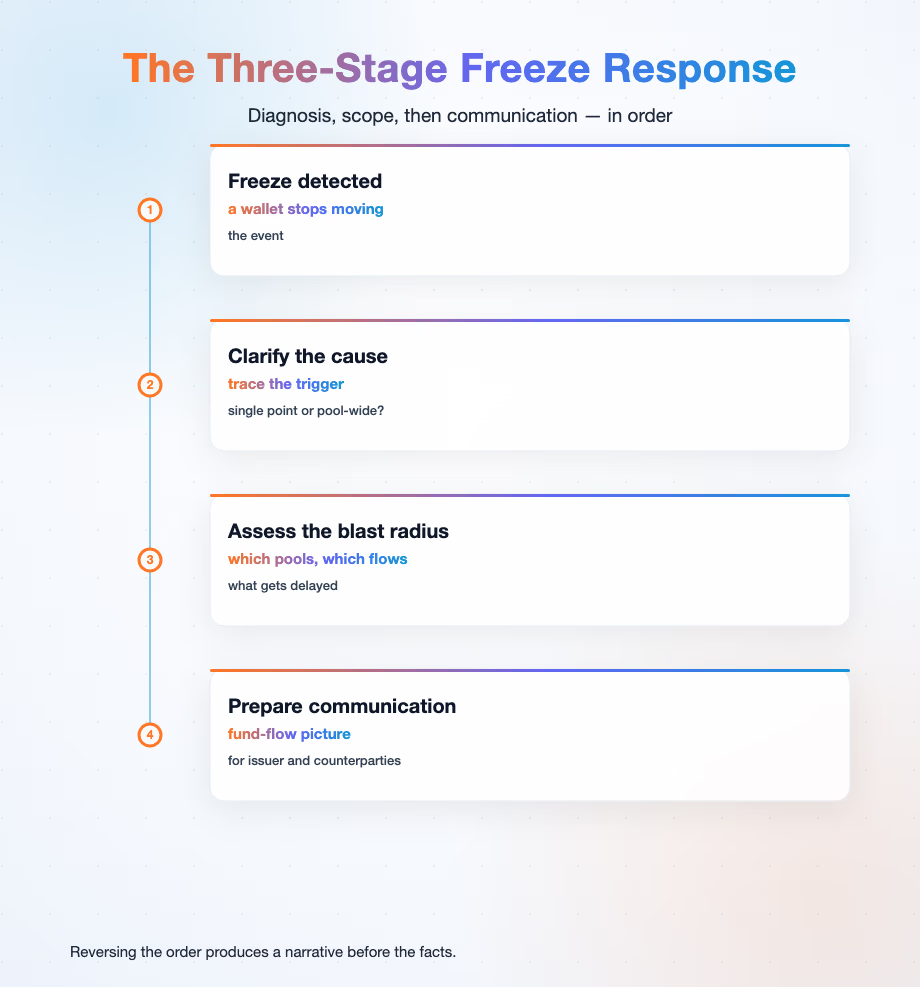
The three stages at a glance:
| Stage | What it settles | Output the team ends with |
|---|---|---|
| Clarify the cause | Which control fired, whether the problem is one address or pool-wide, and whether the risk entered upstream or historically | The trigger point and the scope question for stage two |
| Assess the impact | Which addresses and batches are affected, which pools are implicated, which business flows stop | The blast radius: redemptions and payment rails at risk |
| Prepare communication | What exactly happened, in a form the issuer and other parties can read | A fund-flow trace with upstream sources, diffusion paths, and clusters |
How BlockSec Supports the Freeze Response
Phalcon Compliance traces addresses, transactions, and transaction paths to reconstruct why a freeze happened and how far its impact spreads. This is what Phalcon Compliance does in a freeze response. It converts the raw onchain record into a cause and a scope the team can act on, which is the diagnosis half of the response.
MetaSleuth carries the visual half. It traces the complete fund flow within the key time window, so the issuer can see the upstream sources and downstream paths as a picture rather than as a wall of hashes. The two products divide the work: Phalcon Compliance reconstructs the cause and the scope, and MetaSleuth renders the flow for the people who have to understand it.
BlockSec's stated value is turning complex onchain transaction behavior into a clear, explainable, structured story, and it can coordinate with lawyers who can practice overseas. The technical analysis and the legal coordination run in parallel, which matters when a freeze triggers questions from the other side, a regulator, or a payments partner. The output is a story the issuer can hand over with confidence, and that confidence is what gets a frozen account reviewed faster. For a treasury or payment team, that is the difference between a freeze that drags on and a freeze that gets resolved.
What to Do Next
If your team could face a frozen wallet, build the response path before the freeze arrives. Decide who traces the cause, who assesses the blast radius, and who owns the communication material, so the first hour of a freeze is a process instead of a scramble. A prewritten path turns a surprising event into a checklist.
Then give the team the tools to run that path. Manage stablecoin freeze risk with Phalcon Compliance, and put the three-stage response into practice for your treasury and payment flows. Download the stablecoin freeze risk whitepaper for the full framework behind the three stages.
Two pieces pair with this one: how USDT and USDC freezing works explains the mechanism itself, and how issuers manage freeze and blacklist risk covers the decisions behind it.
For the full picture of stablecoin rules, freezing risk, and payment AML, start from the Stablecoin Compliance guide.