
The Short Answer: Risk on the Other Side Lives Beyond the Direct Address
In a stablecoin treasury, risk on the other side is not a property of a single address. An issuer or treasury manager who screens one deposit address in isolation is only looking at the surface of the risk. The other side of a payment is a graph: the address itself, the addresses it has touched, the addresses that funded it, and the pool its funds will eventually enter.
The direct address is where most teams start, and where most teams stop. A one-time check on that address answers one question: whether the address itself carries a known marker. It does not answer whether the other side's source of funds is clean. It does not answer whether the other side hides behind multiple associated addresses. It does not answer whether its funds are about to mix into your main treasury pool. Monitoring the other side means reading the path the funds traveled, the behavior of the other side, and the pool the funds are about to enter, not just the direct address.
For a stablecoin issuer or treasury manager, this is not a theoretical question. An address on the other side that passes today can become the reason a main pool is frozen tomorrow. The monitoring problem is how to see the whole graph before funds move.
The Dimensions of Risk on the Other Side
BlockSec's whitepaper on stablecoin freeze risk separates risk on the other side into three dimensions that reach past the direct address: path risk, behavior risk, and fund pool risk. The direct address itself is only the surface, and it is the part most teams already check. The three dimensions answer three different questions, and a monitoring program needs all three to hold up.
Path risk asks where the funds came from. Tracing cannot stop at the direct address. It must trace the other side's source of funds across multiple hops. An address that looks clean on the surface can be funded by a high-risk entity two or three hops away, and that upstream exposure travels with the funds. Multi-hop tracing is what turns a surface-level check into a real answer about where value actually came from.
Behavior risk asks how the other side behaves. A single address can hide behind multiple associated addresses, historical abnormal behavior, or unusual transaction patterns such as splitting funds into smaller batches. Splitting funds into smaller batches is a common way to hide a single large exposure. The other side is a cluster of nodes that move together, not one node.
Fund pool risk asks where the funds are going. The question is whether risky assets have entered the main pool, whether they have already mixed with clean assets, and whether they can keep spreading through consolidation and outbound transfers. The moment risky funds enter the main pool, the question stops being about one address and starts being about the whole treasury. An isolated risky address is a local problem. A contaminated pool is a treasury-wide problem.
| Dimension | The question it asks | What it catches that the direct address does not |
|---|---|---|
| Path risk | Where did the funds come from | A high-risk entity two or three hops upstream |
| Behavior risk | How does the other side act | Multiple associated addresses and fund splitting |
| Fund pool risk | Where are the funds going | Risky assets mixing into the main treasury pool |
The Monitoring Workflow for the Other Side
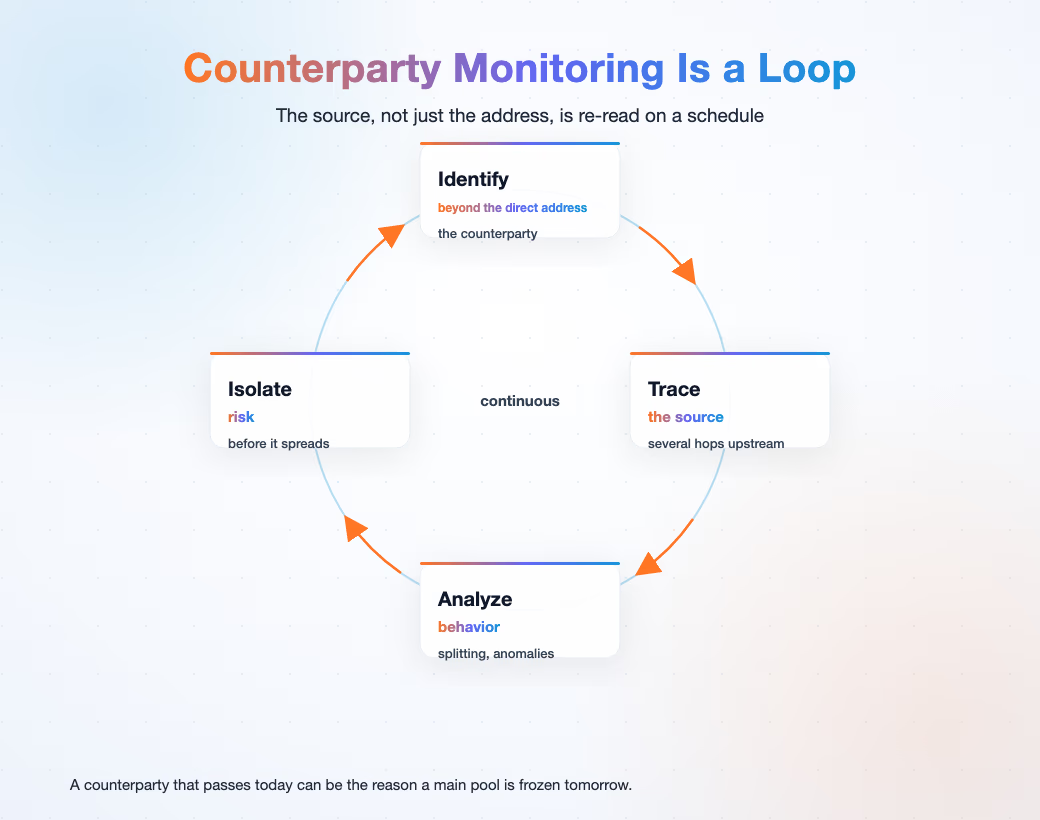
Monitoring the other side is a repeating loop with four steps: identify the parties beyond the direct address, trace the source of funds across multiple hops, analyze behavior, and isolate the risk before it spreads.
First, identify the other side beyond the direct address. Pull the associated addresses, the historical connections, and the entities behind them into a single view.
Second, trace the source of funds across multiple hops. Do not stop at the first transfer. Follow the path upstream to see who funded the other side and whether any hop touches a high-risk entity or service.
Third, analyze behavior. Look for associated-address clusters, unusual splits, and patterns that repeat across the other side's activity rather than a single isolated event.
Fourth, isolate the risk before it spreads. Decide whether to accept the incoming funds, whether to merge a batch into the main pool, and whether to block an outbound transfer to a high-risk address.
This loop is continuous because the risk is continuous. Risk control is not a one-time acceptance but continuous monitoring, the same logic behind OFAC's continuously-updated sanctions data. In the United States, this monitoring loop belongs to the AML program obligations set out in FinCEN's statutes and regulations. Each step is a control point where risk can be stopped before it contaminates the treasury.
How Phalcon Compliance Makes This Monitoring Practical
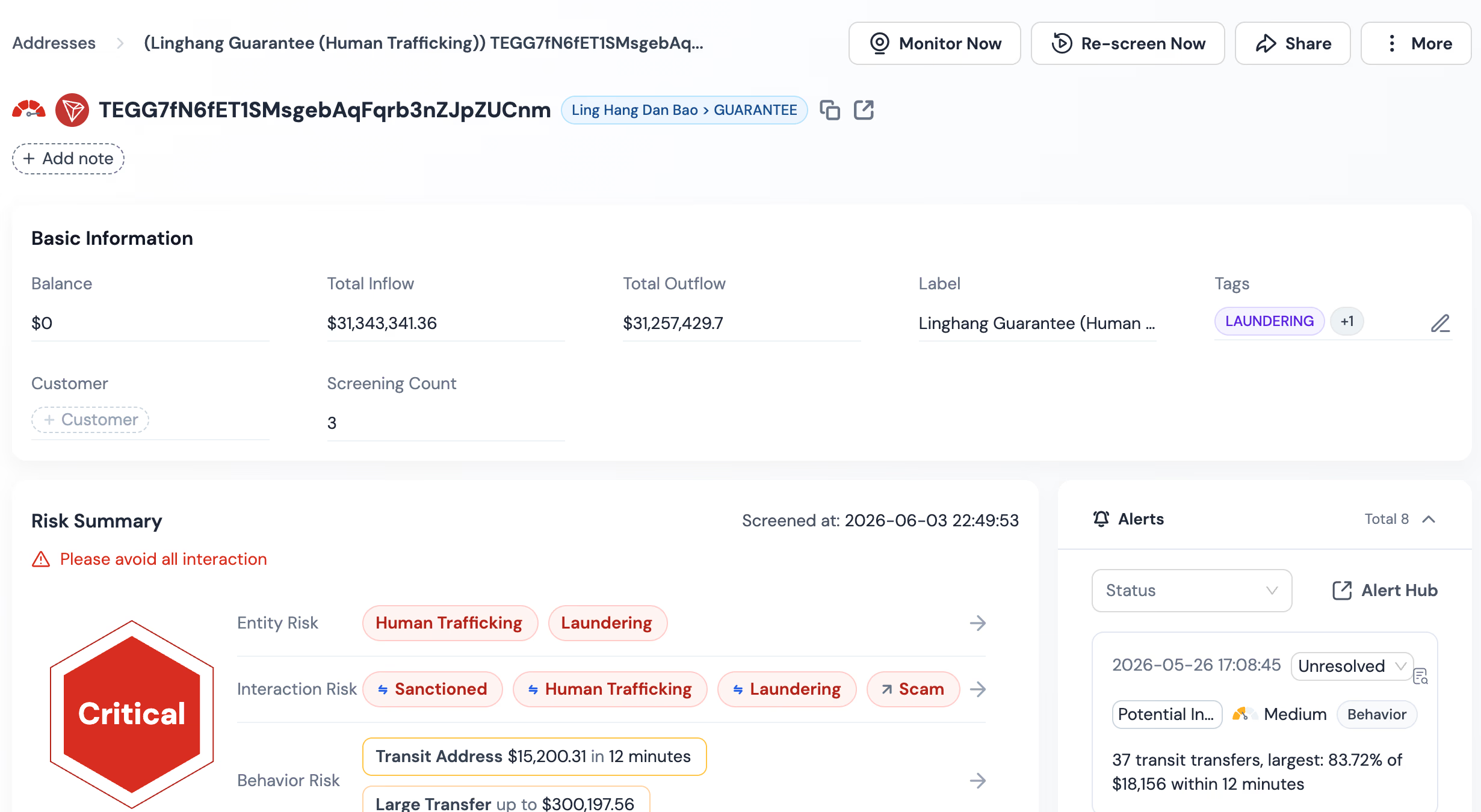
Running all of this by hand is slow. Phalcon Compliance turns the framework into a running screen.
KYA builds the picture of the other side with deep multi-hop fund tracing, which constructs a cross-chain, cross-entity risk profile for each address rather than a single-hop label. A treasury manager can see the other side's upstream sources instead of guessing. The result is a picture of the other side that spans chains and entities, not a label attached to one address.
KYT watches the behavior layer in real time. Phalcon Compliance reads risk across 17 Risk Indicator categories rather than from a single static flag. Associated-address clusters and unusual splits surface as behavior, not as a one-word verdict. An address that changes its pattern after an initial clean check is caught by the same screen.
Both layers run on a label corpus of 600M+ blockchain addresses. This is what Phalcon Compliance does. It turns path risk, behavior risk, and fund pool risk into checks a treasury team can run before funds move. The screen runs at four control points: before receiving funds, before consolidating a batch into the main pool, before an outbound transfer, and during periodic review of existing assets.
What to Do Next
Start by mapping the parties that matter most to your treasury: the largest inflows, the most frequent partners, and the addresses that feed your main pool. For each one, replace the one-time check with a repeating screen that covers path, behavior, and fund pool risk. Risk on the other side changes every time the blockchain does, so a repeating screen is the only way to keep the picture current.
Manage stablecoin freeze risk with Phalcon Compliance to run the multi-hop, behavior, and pool checks in one workflow. For the full framework, download the stablecoin freeze risk whitepaper.
For the issuer-side view of the same risk, stablecoin treasury security best practices covers the governance layer. When the budget question arrives, the best AML compliance software for stablecoin operations compares the options by category.
For the full picture of stablecoin rules, freezing risk, and payment AML, start from the Stablecoin Compliance guide.