Short Answer
For stablecoin operations, the best AML compliance software is the one that handles stablecoin-shaped risk: issuer freeze lists, multi-hop tainted paths, and high-volume transfer routes. Most compliance tools were built for general crypto investigations. They can tell you an address is risky without telling you it is one hop from a frozen wallet, or that the other side was blacklisted last night. This comparison describes each option by category rather than brand, so you can map your own shortlist onto it. The short version: pick a tool that sees issuer blacklists, traces several hops into fund sources, screens at transaction speed, and lets you start checking addresses before signing a contract.
How to Evaluate AML Software for Stablecoin Operations
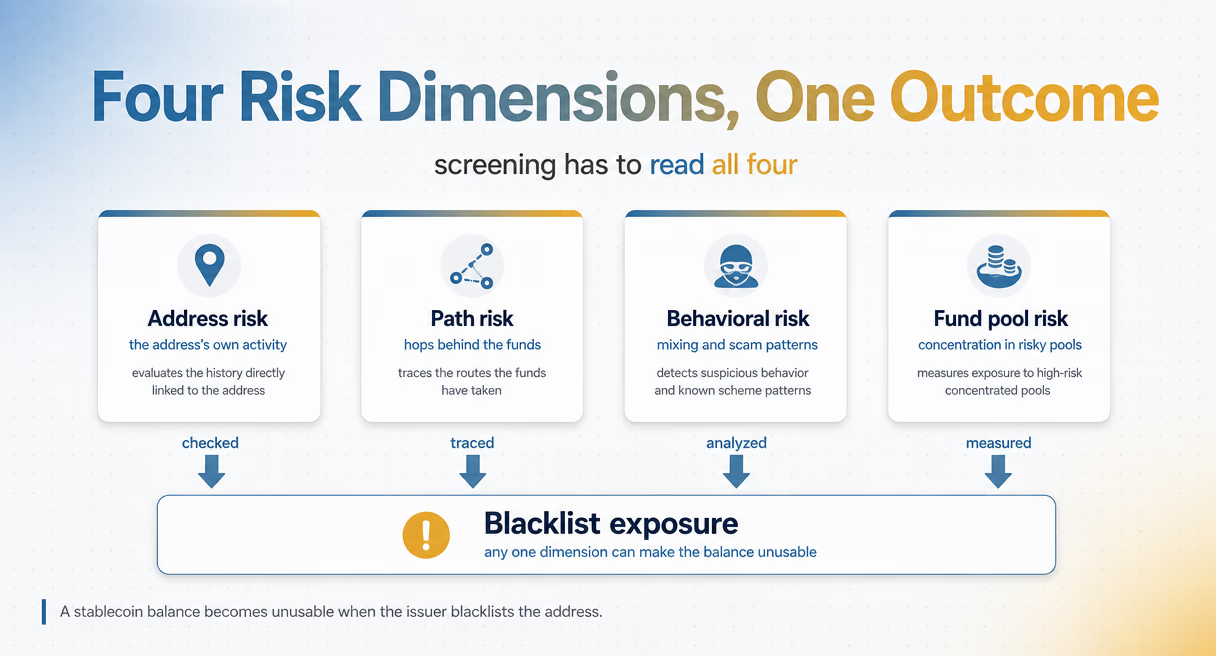
Evaluate against the four risk dimensions that actually freeze stablecoins: address risk, path risk, behavioral risk, and fund pool risk. A stablecoin balance becomes unusable when the issuer blacklists the address, and issuers blacklist for exposure in any of those four dimensions, not just for the address's own direct activity. That gives six practical test questions:
- Freeze and blacklist visibility. Does the tool track issuer blacklist changes and show frozen balances, connected to the addresses you transact with before you settle?
- Path depth. When funds arrive, does it trace multiple hops back into where they came from, or stop at the sending address?
- Behavioral and fund-pool signals. Does it flag mixing, scam patterns, and concentration in known risky pools?
- Speed. Can it screen in milliseconds at transaction speed, or only in batches after settlement?
- Sanctions alignment. Does it sync sanctions lists in real time, OFAC's SDN list included, and express risk in terms a regulator recognizes?
- Integration and entry cost. Is there an API and webhook path into your payment flow, and can you test real checks without a contract?
The Comparison: Five Options by Category
| Option by category | Freeze and blacklist visibility | Path depth | Speed at volume | Entry cost |
|---|---|---|---|---|
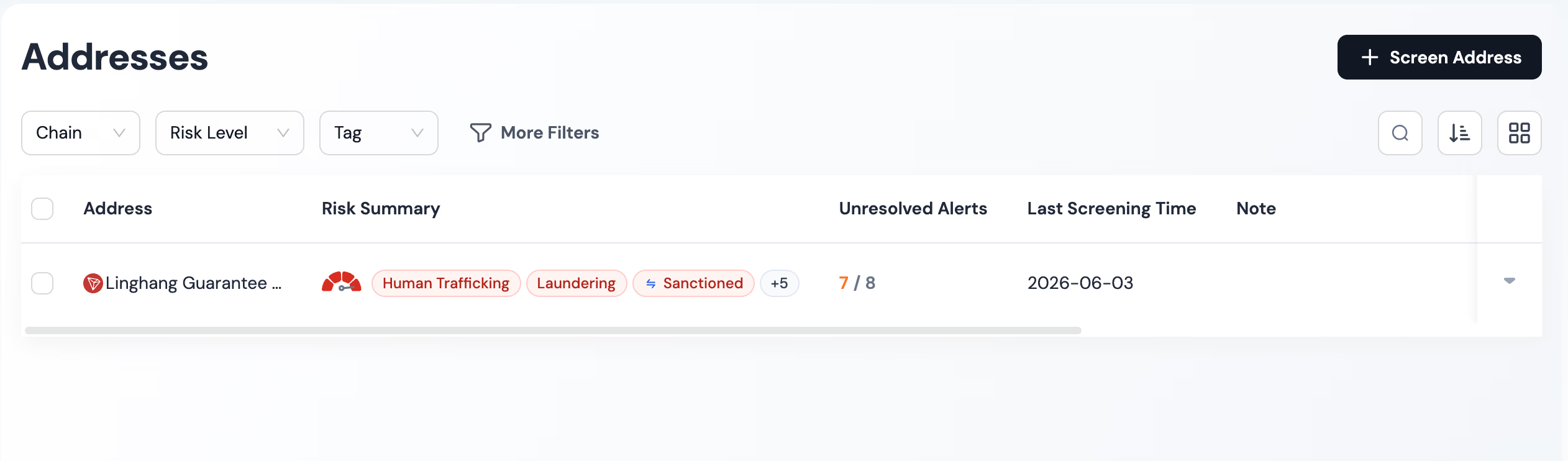
| Phalcon Compliance | Issuer blacklist events and frozen balances in the screening view | Multi-hop tracing into fund sources | Millisecond screening on stablecoin chains | No-registration scan, usage-based pricing |
| Brand A: analytics suite | Check whether freezes surface as alerts or only in manual investigations | Strong investigation tracing | Built for investigations, not payment flow | Annual enterprise agreements |
| Brand B: fintech monitoring | Case-management backbone, crypto depth varies | Some deployments trace only shallow hops | Alert-queue speed, not transaction speed | Bank-style contracts and terms |
| API-first screening | Label depth is the variable to test against stablecoin events | Multi-hop available as an add-on to verify | API speed at checkout | Crypto AML API monthly, or x402 per-call |
| Manual blacklist watching | One list, watched by hand | No hops before the blacklist | Only as fast as the watcher | Free, but it does not scale |
Phalcon Compliance (stablecoin-native screening and monitoring)
Phalcon Compliance is the option built for exactly this list's test questions: freeze visibility, multi-hop tracing, and real-time screening on stablecoin routes. Its label library covers more than 600 million addresses and refreshes around the clock. The risk engine reads 17 risk indicator categories including sanctions, scam, and mixing, and the service runs on the major stablecoin chains. Address profiling (KYA) explains who an address touches, including freeze and blacklist exposure, and transaction monitoring (KYT) screens flows in milliseconds. Two things make the entry light: the landing page scans any address or transaction with no registration, and pricing is usage-based, so screening volume drives cost. The trade-off to know: it is a screening and monitoring product, not a full case-management suite, so teams that need investigation workflows alongside screening pair it with their own case tooling.
Brand A: a general-purpose blockchain analytics suite
This category is the enterprise default: strong investigation graphics, broad chain coverage, and a familiar name in regulator conversations. It handles complex tracing investigations well and its reports are widely recognized. For stablecoin operations specifically, check two things before committing. First, whether freeze and blacklist events surface as alerts in your workflow or only inside manual investigations. Second, what the contract looks like: this category typically sells annual enterprise agreements, with pricing that assumes an investigations team, not a payments operation. Screening volume costs can climb fast on high-throughput routes.
Brand B: a transaction-monitoring platform from traditional fintech compliance
This category brings the case-management backbone that banks and licensed payment institutions already know. Customer files, alert queues, audit trails, and regulator-ready reporting are its strengths, and for a licensed operation those matter. The gap to test is crypto depth: some deployments trace only shallow hops, and label coverage of stablecoin-specific events, issuer blacklists in particular, varies. If your regulator expects the case-management shape but your risk is stablecoin routes, this category often ends up paired with a crypto-native screening API underneath.
API-first screening: the third BlockSec entry point
API-first screening is the right shape when checks have to run inside a checkout or settlement flow rather than in a console. The variable to test is label depth: where the library is thin, a risky counterparty can pass a check that only looks at the address in front of it. BlockSec offers two entry points at this layer, MetaSleuth Crypto AML API for steady monthly volume and x402 Compliance API for per-call usage with no subscription, both drawing on the same 600M+ label library as the full platform. When you compare screening APIs from any vendor, that label-depth test is the one worth running before standardizing.
Manual blacklist monitoring (free, but it does not scale)
Watching issuer blacklist contracts directly costs nothing and is better than nothing, which is the full extent of the recommendation. The largest stablecoins publish their blacklist events on-chain, and a small operation can check addresses against them by hand. What this approach misses is everything else: the hops before the blacklist, behavioral patterns, sanctions mapping beyond a single list, and any coverage while your team sleeps. Treat it as a stopgap while a real screening workflow is being set up.
How to Choose for Your Situation
Match the choice to your operation's shape, not to the biggest brand. A payments business moving stablecoin volume daily needs millisecond screening and webhook alerts, which points at a crypto-native screening API with monitoring. A licensed institution facing regulator questions built on the FATF Recommendations needs the case-management backbone, with screening depth verified underneath. A small team starting out should use free direct scans first, on real addresses you deal with, and judge label quality on its own cases before any contract. Whatever the shape, run one test before deciding: take a recent inbound transaction, and check whether the tool surfaces anything about the hops behind it. Tools that only score the final address will all look the same in that test, and the differences that matter will show.
What to Do Next
For the ongoing side, how to monitor stablecoin counterparty risk sets a re-check schedule that fits the tooling. If you sit on the issuer side of these checks, stablecoin issuer compliance under FATF and MiCA maps the duties onto one program.
Start with a real check on addresses you already transact with. The Phalcon Compliance landing page scans any address or transaction with no registration, so the evaluation takes minutes, not a sales cycle. When the checks need to live inside a payment flow, the API and webhook integration path carries them there. For the requirements that shape what the software must do, read Crypto Payment Gateway AML Compliance Requirements, and for the wider stablecoin compliance picture, start from the Stablecoin Compliance hub. To see address checks step by step, read How to Check a USDT Address.