
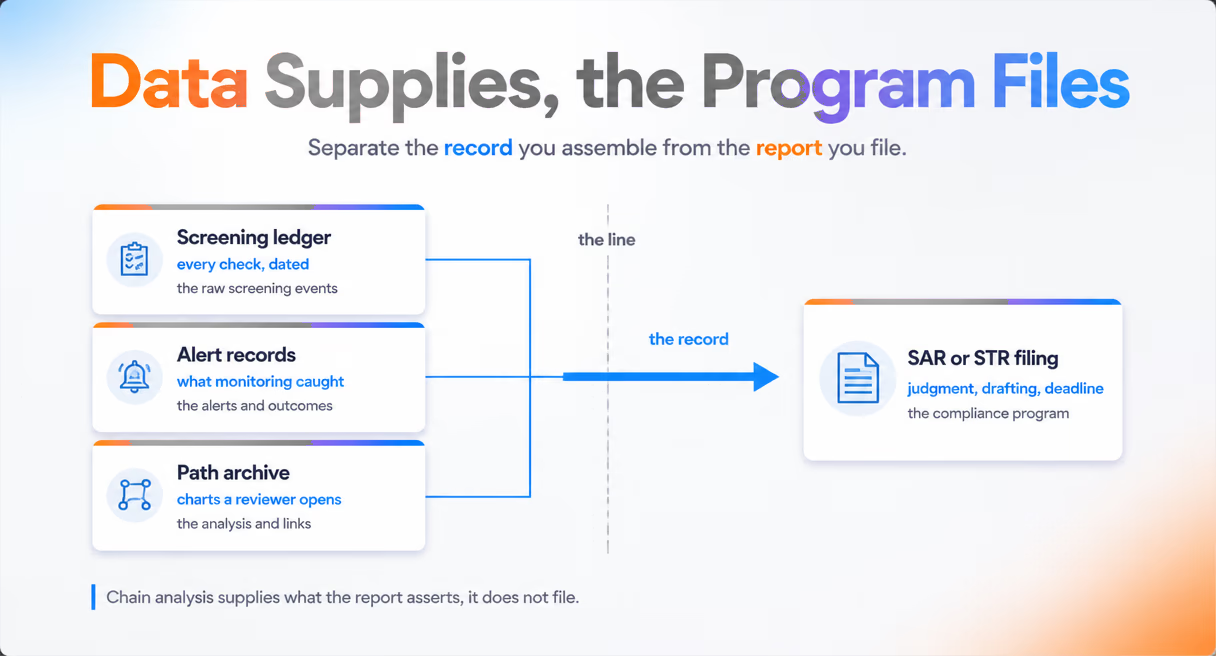
Is blockchain analytics good for regulatory reporting? On the data side, yes. Screening ledgers, alert records, and tracing archives give a filing its factual spine: which addresses were assessed, what the data said, when alerts fired, and where funds went. The travel rule gives the same records a second seat: proving who is on the other end of a covered transfer. Drafting the story the report tells, making the judgment call, and meeting the filing deadline are a separate layer of work. In the US, the filing mechanics live in FinCEN's statutes and regulations.
What Reporting Actually Requires
A regulatory filing, a suspicious activity report, a transaction report, an audit response, survives on three requirements, and each one is a data question before it is a writing question. The duties being filed against trace back to the FATF standards.
Retraceable workings: a reviewer must be able to retrace how every figure and finding in the filing was produced. A report that asserts exposure without showing its checks invites follow-up questions the program cannot answer. Timeliness: reporting requirements run on windows, and the data assembly has to fit inside them, which rules out anything assembled by hand from screenshots. Stated reasons: the filing must say why the activity is reportable, and that reason traces back to labels, clusters, and risk signals, not to an analyst's impression.
All three requirements are about inputs. That is where chain analysis enters.
The Data Side Blockchain Analytics Covers
Three kinds of records carry the load. Screening ledgers log every address assessment: the address, the date, the data version, the result. As the screening volume of record, this is what an auditor reads to confirm the program actually ran. Phalcon Compliance produces it as a byproduct of each check rather than as a separate documentation exercise.
Alert records document the monitoring layer: which watched addresses fired, when, and on what signal. In a filing, they establish that the program detected the activity in operation, not reconstructed it afterward. Path archives hold the tracing side: the fund flow charts and hop-by-hop expansions that show where the funds went. MetaSleuth's saved charts serve exactly this role, an exhibit a reviewer can open and walk through rather than a paragraph they must trust.
On the product side, the distance between data and document is shortening: Phalcon Compliance's subscription tiers include SAR and STR report generation, which assembles the screened records into the report format. The tool-category boundary still holds, though, and it matters for the category question.
The records and what each gives a filing:
| Record type | What it gives the filing | Where it comes from |
|---|---|---|
| Screening ledger | Every address assessment, with date, data version, and result | Each check, produced as a byproduct |
| Alert records | What monitoring detected, when, and on what signal | The monitoring layer in operation |
| Path archive | Where funds went, as charts a reviewer can open | Tracing work on the case |
| The report and its filing | The judgment, the drafting, the deadline | The compliance program, not the category |
The Travel Rule Seat: Checking, Messaging, and the Record
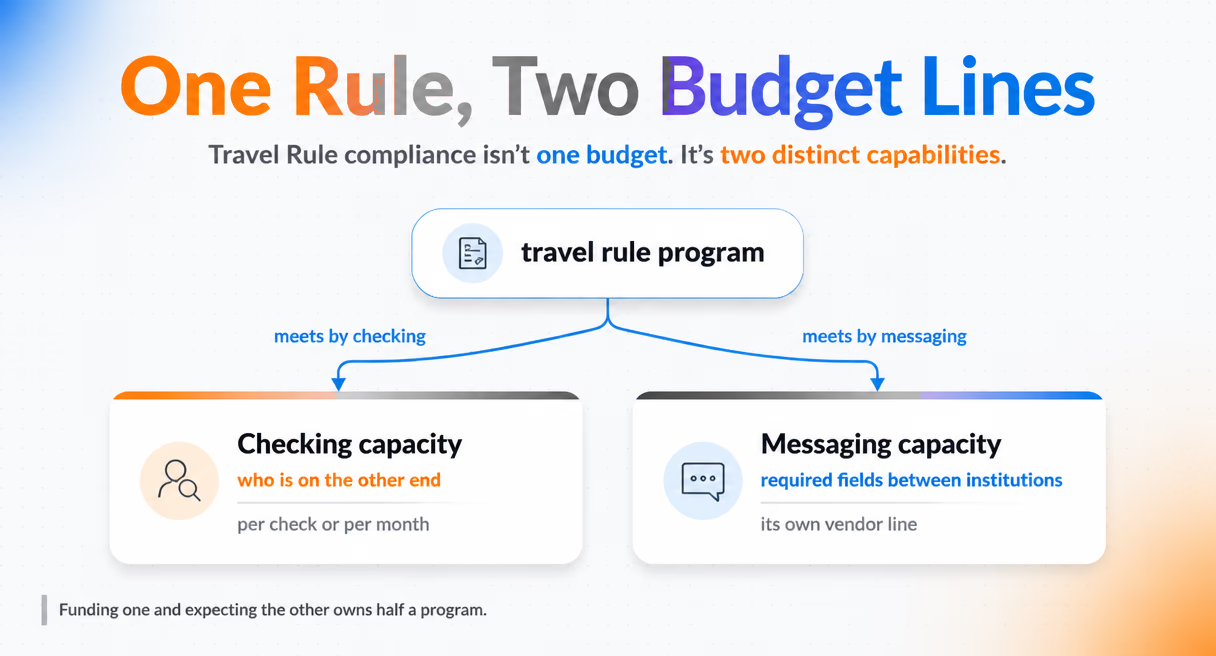
The travel rule is FATF Recommendation 16: transfers must travel with required originator and beneficiary information, so the receiving institution knows who is on the other end. Running it splits into two jobs. One is information logistics, carrying the required data fields alongside the transfer, a messaging problem with dedicated transfer-messaging solutions. The other is risk checking, establishing that the other side's addresses are acceptable to transact with, a data-and-evidence problem. Is blockchain analytics good for travel rule compliance, and is blockchain forensics software good for travel rule compliance? Both questions come down to that second half, and the answer is yes: address-layer risk is invisible without it, provided the messaging half is separately covered. Jurisdictions implement the rule through national regulators, FinCEN in the US among them.
The checking half does three jobs, and each leaves the same records a filing needs. Before the transfer, it screens the other side's addresses against labeled data, sanctions, stolen-fund origins, mixer connections, and logs an accept-or-escalate decision. During the relationship, it watches for status changes, because an address cleared last month can be sanctioned this month, and programs are examined on current practice, not point-in-time clearance. Throughout, it leaves the evidence: what was checked, against what data, with what result. Phalcon Compliance's screening draws on more than 600 million labeled addresses, per BlockSec technical specifications, with risk signals that explain their basis. When a flagged address needs a deeper look at where its funds actually went, MetaSleuth takes over, following flows across 12 chains.
Budgets should split along the same line. Checking capacity, screening volume and monitoring seats, answers the risk question and is priced per check or per month in most modern stacks. Messaging capacity, the connections that carry the required fields between institutions, is priced as its own vendor line by its own kind of provider. The buying mistake to avoid is paying for one kind of tool and expecting the other: a team that funds checking and not messaging owns half a program that fails data-field audits, and a team that funds messaging and not checking passes the data delivery while transacting with addresses it never checked. Size the two lines against transfer volume, and let each kind of tool answer the question it is built for.
| Travel rule capacity | The question it answers | What happens without it |
|---|---|---|
| Checking capacity | Who is on the other end of a covered transfer | The program transacts with addresses it never checked |
| Messaging capacity | Required sender and receiver fields carried between institutions | The program fails data-field audits with half a toolset |
The Line Between Data and Reporting
Chain analysis supplies what the report asserts. It does not decide whether the assertion meets the filing standard, does not draft the report a regulator reads, does not perform legal review, and does not file. Those steps belong to the compliance program: the officer who signs, the counsel who reviews, the channel and deadline the filing runs through. The travel rule adds one more line worth writing down: where checking ends and messaging begins, the screening result recorded before the transfer instruction is sent, the message fields filled from checked data, the whole sequence auditable end to end.
The practical division of labor is sequential. The analysis layer produces the record; the program turns the record into a filing. Teams that keep the sequence explicit answer audit questions quickly, because every sentence in the report has a document behind it. For the writing side of that sequence, see how to write a crypto SAR or STR; for how the underlying records hold up as evidence, see the crypto evidence trail.
This piece is part of the MetaSleuth investigations and forensics guide, where the tracing method, evidence handling, and tooling tiers are covered end to end.