
Is blockchain analytics good for exchange operations? For the compliance half of the desk, yes. It covers screening deposits, reviewing withdrawals, handling alerts, and investigating incidents. Stablecoin desks, issuer, treasury, or circulation partner, run a version of the same loop with their own watch planes, carried further down this page. Those desk duties implement the FATF standards at the national level. Runtime security, the systems that stop an exploit in progress, is a different half with different tooling, and the two halves together make a whole exchange risk picture.
Where Blockchain Analytics Fits in Exchange Workflows
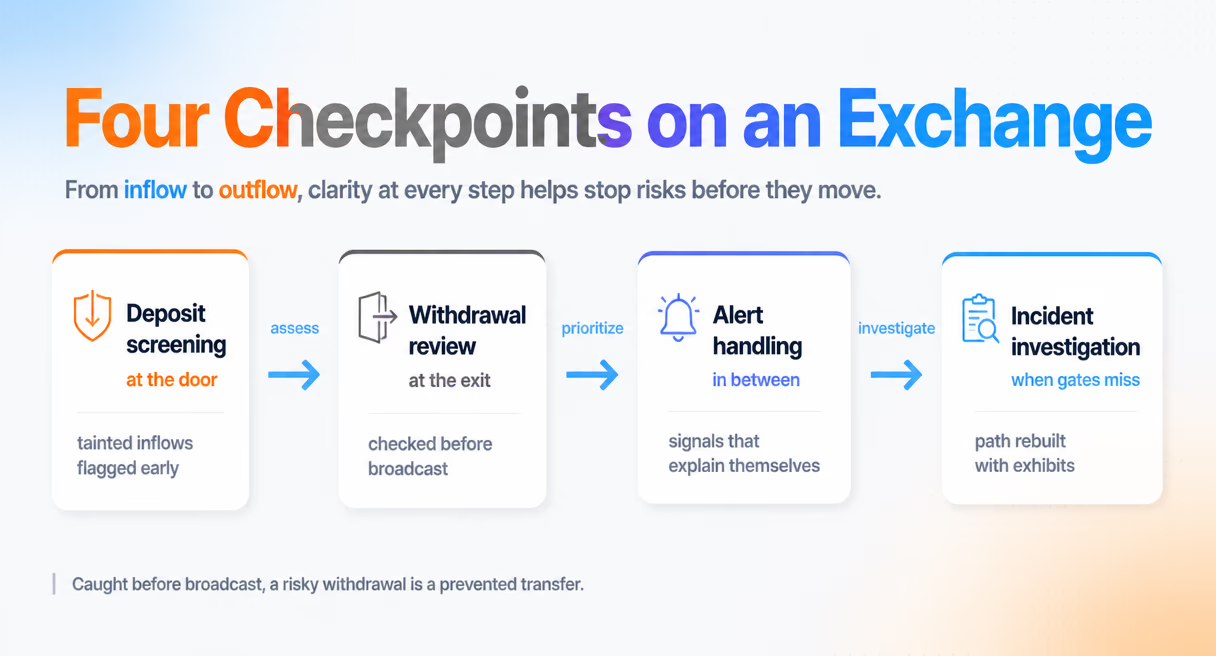
An exchange's compliance analysis runs through four recurring checkpoints, and chain analysis works all four. The US versions of those checkpoints sit in FinCEN's statutes and regulations.
Deposit screening runs at the door. When a deposit lands, the source address is assessed against labeled data before the funds are credited to a trading account. Phalcon Compliance screens deposits against a labeled-address database covering more than 600 million addresses, per BlockSec technical specifications, updated continuously. Tainted inflows are flagged at the door instead of surfacing at withdrawal, where they freeze a customer's funds and the exchange's operations at the same time.
Withdrawal review runs at the exit. Before a withdrawal is broadcast, the destination address is checked: sanctioned exposure, stolen-fund connections, mixer links. Caught before broadcast, a risky withdrawal is a prevented transfer; caught after, it is a case, a customer complaint, and possibly a frozen balance sitting on the books.
Alert handling runs in between. Monitoring seats watch listed addresses and the other parties, and when an alert fires, the desk needs the context behind it: what the signal means, how confident it is, what to do with the account. Alerts that explain their basis get handled; alerts that do not get ignored until they become findings.
Incident investigation takes over when the first three nodes miss. When funds leave in a way none of the gates caught, tracing rebuilds the path: where the value went, through which services, toward which exits. MetaSleuth follows flows across 12 chains and through bridges, and its saved charts become the exhibit file for whatever follows, recovery requests, law enforcement referral, or regulator questions.
The four compliance nodes and what each one catches:
| Exchange checkpoint | What the analysis layer does there | What it prevents |
|---|---|---|
| Deposit screening | Source address assessed before funds are credited | A tainted credit that freezes at withdrawal |
| Withdrawal review | Destination address checked before broadcast | A risky transfer that cannot be reversed |
| Alert handling | Context behind each signal, explained for a desk | Flags ignored until they become findings |
| Incident investigation | Path rebuilding with saved-chart exhibits | Recovery and referral running blind |
The Stablecoin Desk Version of the Same Loop
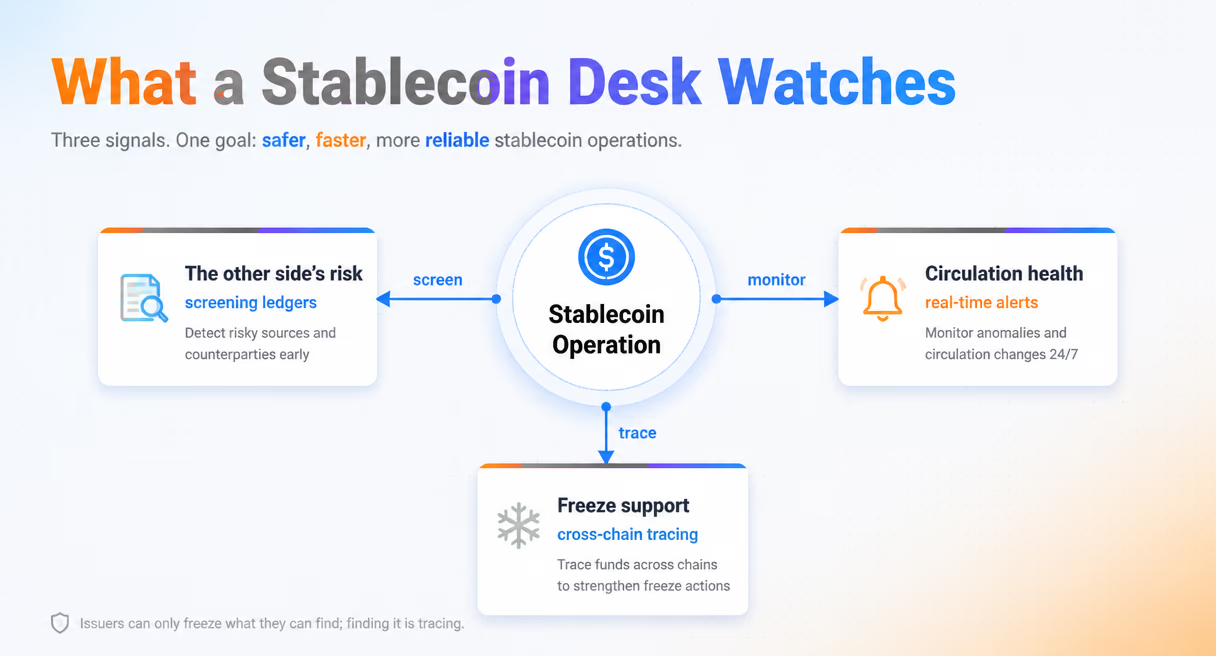
Is blockchain analytics good for stablecoin operations? The question reduces to the monitoring half of the desk, and that half watches three things, all of them address-level questions and none of them visible from a balance sheet.
The other side's risk. The addresses a stablecoin touches, minting partners, large holders, exchange flows, venues, carry risk that changes over time, and a partner that was clean at integration can be sanctioned or linked to laundering routes months later. Screening ledgers record who the operation transacted with and what was known at the time, the same discipline the four checkpoints above run, aimed at partners instead of deposits.
Circulation health. Stablecoins move in patterns, and deviations matter: a concentration building on risky venues, flows cycling through mixing services, unusual speed that signals something other than ordinary payments. Monitoring seats and alert channels flag the deviation while it is still a deviation, not after it becomes an incident.
Freeze support. When a theft or sanction event calls for freezing, someone has to work out which addresses hold the funds right now. That is a tracing problem before it is a legal one, and issuers can only freeze what they can find. MetaSleuth rebuilds where the value sits across 12 chains, and its saved charts give the response team, and any law enforcement referral, the current picture.
The watch planes and the boundary at each one:
| Stablecoin watch plane | What the analysis layer contributes | The boundary beside it |
|---|---|---|
| The other side's risk | Screening ledgers recording who was transacted with and what was known when | Relationship decisions stay with the operation |
| Circulation health | Alerts when tracked flows move to risky venues or laundering patterns | What the deviation means for the token is a policy call |
| Freeze execution | A current, cross-chain picture of where the value sits | Freeze authority belongs to contract functions and legal process |
The Halves It Doesn't Cover
Exchange operations have another half. Runtime security covers the systems that detect and stop exploits in progress. That means transaction monitoring at the mempool layer, contract risk blocking, and systems that react in the seconds an attack takes rather than the days an investigation takes. That half has its own tool category, and chain analysis does not provide it. The two halves are complementary rather than redundant: security tooling acts in real time against attacks from outside; chain analysis works the risk that arrives through ordinary transactions, the deposits and withdrawals that look like business until the data says otherwise.
The stablecoin side has its own two outside layers. Issuance compliance, the licensing, disclosure duties, and legal architecture of the token under frameworks such as MiCA in the EU, is legal and regulatory work; chain analysis feeds evidence into it but does not carry it. Reserve management, the assets backing the token, their custody, attestation, and liquidity, is treasury and audit work with its own tooling. For those layers, this site's stablecoin guides run from how to monitor stablecoin counterparty risk to how stablecoin issuers manage freeze and blacklist risk.
What Exchange Teams Should Check
Capacity comes first. Exchanges move volume, so the screening layer has to keep pace with deposit and withdrawal flow. Check rate capacity and API access, because a screening queue that backs up during peak hours quietly becomes a decision to skip checks. Scale-tier API and webhook access exists in the category precisely for this, Phalcon Compliance's Scale tier among them.
Signal quality comes second. Ask how alerts explain themselves and what the false-positive handling looks like. A desk drowning in unexplained flags stops reading them, which converts a monitoring investment into noise.
Evidence comes third. Every gate decision needs its record, and every incident needs its archive, because exchange audits ask for both. Exportable screening ledgers and saved tracing charts are the records that answer.
For the compliance program that houses these workflows, see how to build an AML compliance program for a crypto exchange. For the investigation layer these workflows hand off to, see onchain investigations and forensics: the complete guide.