A payment leaves a customer's wallet at 2:14 a.m., moves through a mixer, and lands in an address that transacted with a sanctioned exchange two days earlier. The monitoring system flags it. A SAR, or Suspicious Activity Report, flags suspicious transactions that institutions report to regulators for possible money laundering or fraud.
The acronym is easy to define and easy to misuse in practice. The question a new transaction-monitoring analyst faces is the sequence that follows: what triggers a report, who holds the obligation to file it, and where a compliance team's responsibility ends. The filing sits inside a crypto transaction monitoring workflow rather than standing alone.
The SAR Definition
A SAR is a mandatory filing that flags a suspicious transaction to a financial intelligence unit, and its legal force comes from the obligation to submit it rather than from the size of the transaction. FinCEN treats the report as the institution's signal to regulators that a transaction may involve money laundering, fraud, or terrorist financing.
"Suspicious" refers to the institution's judgment after review, not to a proven crime. The report is filed because a transaction does not fit the customer's profile. "Activity" covers a single transfer or a pattern across several. The obligation rests with the institution, and in the United States it traces to the Bank Secrecy Act.
FinCEN defines money laundering as the process of disguising criminal proceeds to make them appear legitimate. The same obligation extends to virtual asset service providers, where "activity" means an address's transaction history rather than a customer's paper trail.
SAR vs STR: Same Filing, Different Jurisdictions
The report FinCEN calls a SAR travels under a different name in Hong Kong and Singapore, where it is an STR, or Suspicious Transaction Report. A SAR mirrors the STR in Hong Kong and Singapore, each capturing granular transaction, address, and counterparty data for the same reporting purpose.
The two terms describe the same instrument. The United States casts a wider net over a customer's conduct; Hong Kong and Singapore anchor the trigger to a specific transfer. The difference is the trigger itself; the reporting obligation and the report's purpose are the same.
| Dimension | United States | Hong Kong & Singapore |
|---|---|---|
| Report name | SAR | STR |
| Receiving body | FinCEN | National financial intelligence unit |
| Trigger | Activity that may signal money laundering or fraud | A transaction that appears unusual or unjustifiable |
The international standard behind both regimes comes from the Financial Action Task Force, whose recommendations set the obligation that SAR and STR each implement. Phalcon Compliance exports the same evidence-backed draft whether the filing lands as a SAR or an STR.
Who Files a SAR
The filing party is the institution, not the software or the customer. Filing a SAR is the institution's responsibility, so a tool that generates the draft report still leaves final submission and liability with your team.
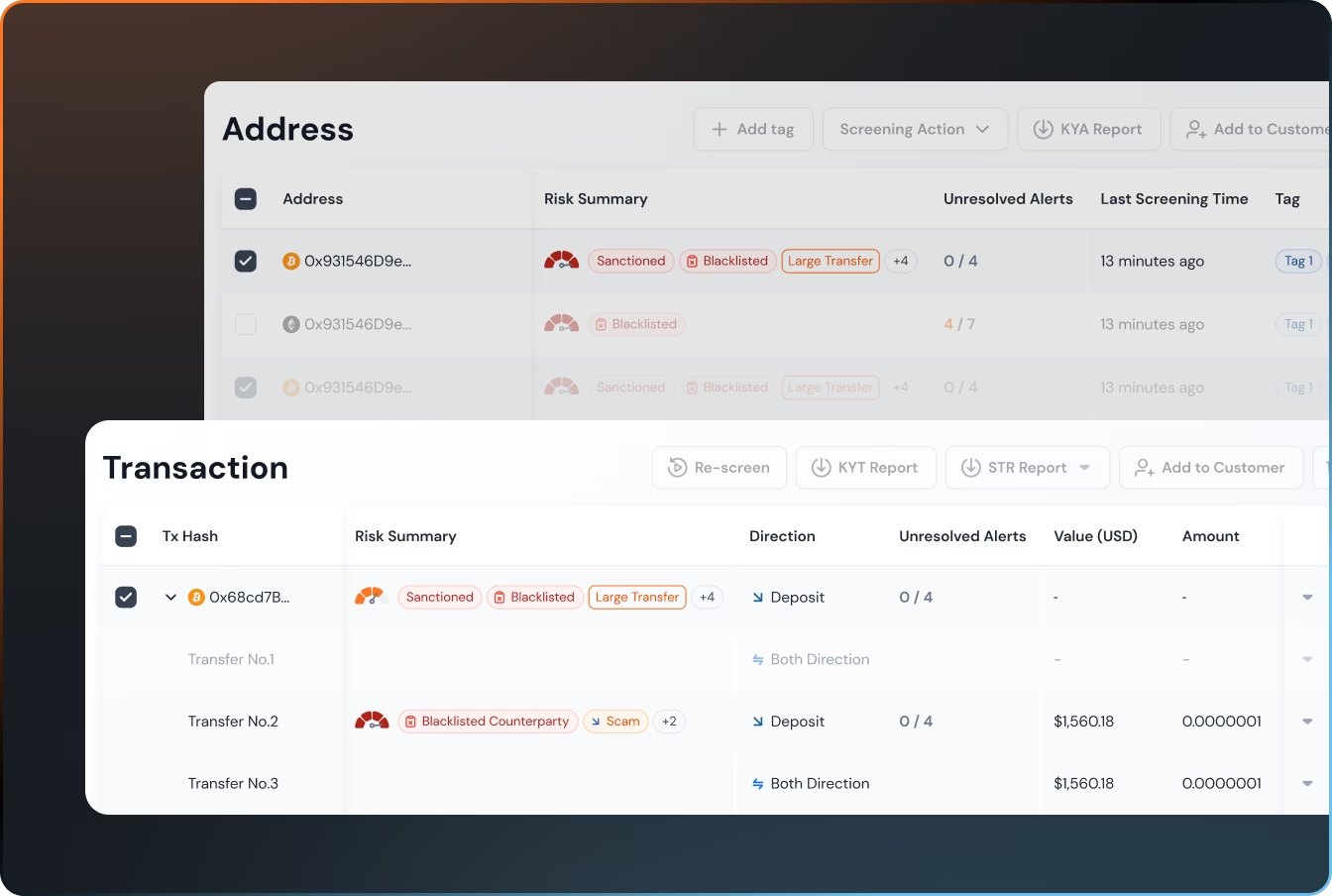
The practical split matters most in crypto. A screening tool can surface the signals (a sanctioned counterparty, a mixer link, an unusual transfer pattern) and assemble those signals into a draft with transaction hashes, addresses, and timestamps. What it cannot do is carry the legal obligation to submit. The review, the decision to file, and the submission to the regulator all sit with the institution.
The institutions covered span banks, money services businesses, securities firms, and virtual asset service providers in the crypto case. The common thread is not the business model but the obligation: any entity a regulator has designated a reporting institution must file when its review finds suspicious activity.
BlockSec positions Phalcon Compliance on the generation side of that line. The platform exports a SAR draft with the granular evidence a regulator expects; the customer reviews and files it. For the step-by-step process, see How to Write a Crypto SAR.
Filing also carries a confidentiality duty. The institution cannot tell the customer that a report has been filed; the practice known as tipping off is itself a violation under the FATF Recommendations. The customer may never learn that a review became a report, so the institution's record of who decided and on what evidence must stand on its own.
How a SAR Fits the AML Workflow
A SAR is the downstream end of a monitoring chain, not an isolated document. The chain starts when a transaction trips a rule, continues through human review, and ends at the report.
The four stages run in order: monitoring, alerting, review, and reporting. A transaction-monitoring system watches address activity against risk rules. When a rule fires, it produces an alert. A compliance analyst reviews the alert against the customer's history and the evidence the tool surfaced. If the review confirms suspicion, the platform assembles the SAR draft and the institution submits it.
The alert-to-review handoff is where the chain most often breaks. A rule fires on a transfer that turns out to be routine, while a genuinely suspicious pattern sits below the threshold because the rule was tuned for a different market. The analyst's job is to close that gap, and the report is only as good as that review. A platform that surfaces the evidence (the counterparty labels, the mixer hop, the timing) gives the analyst something concrete to decide against rather than a score with no context.
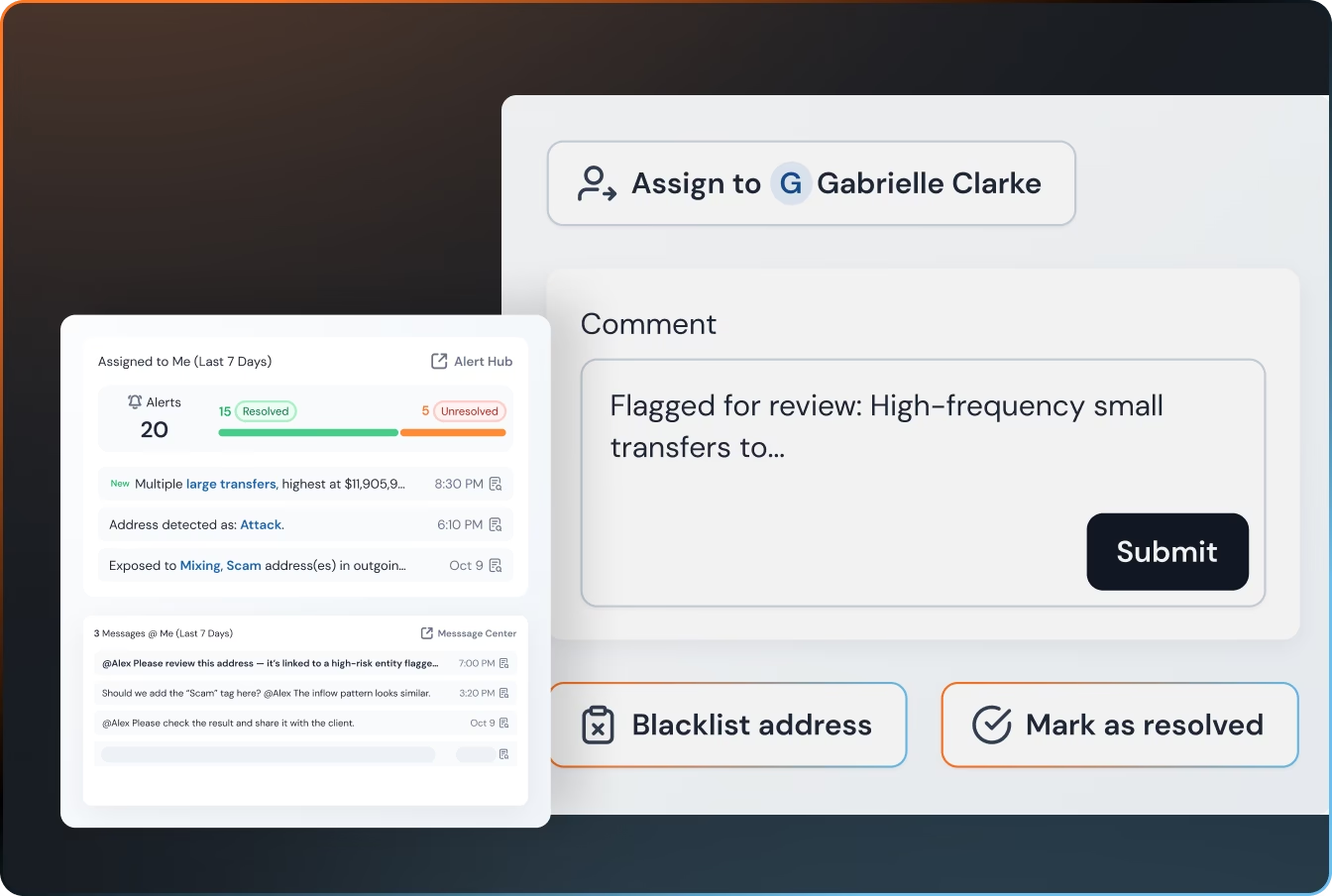
In traditional finance, the evidence lives in account statements and wire records. In crypto, it lives in the transaction graph: addresses, hops, and labels that a screening tool assembles into a narrative. The screening layer carries that on-chain evidence into the SAR draft, so the report the customer files matches the format a regulator expects while grounding every line in data that can be re-traced.
The report then feeds the next cycle. Regulators analyze filed reports to spot patterns, and institutions tune their rules around what those patterns reveal. The filing is the point where an institution's internal signal becomes a regulator's input.
Book a demo of Phalcon Compliance and follow one flagged transaction from alert to exportable SAR draft; for the risk shift that surfaces the alert in the first place, see Can a Crypto Wallet Become Risky After Being Clean?.
FAQ: SAR Basics
Is a SAR the same as an STR?
Yes. The United States calls it a Suspicious Activity Report; Hong Kong and Singapore call it a Suspicious Transaction Report. The instrument and the obligation are the same.
Is it "a SAR" or "an SAR"?
The standard form is "a SAR," because the acronym is spoken as a single word beginning with a consonant sound. "An SAR" appears in search and in informal writing, but it points to the same report.
Who actually files a SAR?
The reporting institution files it. A compliance tool generates the draft; the customer reviews, decides, and submits.
Does BlockSec file SARs?
No. The platform exports a SAR draft with the supporting evidence, and the customer's team owns the filing and the compliance responsibility.
When is a SAR required?
When a transaction review confirms activity that looks like money laundering, fraud, or terrorist financing, the institution's judgment rather than a fixed dollar threshold.