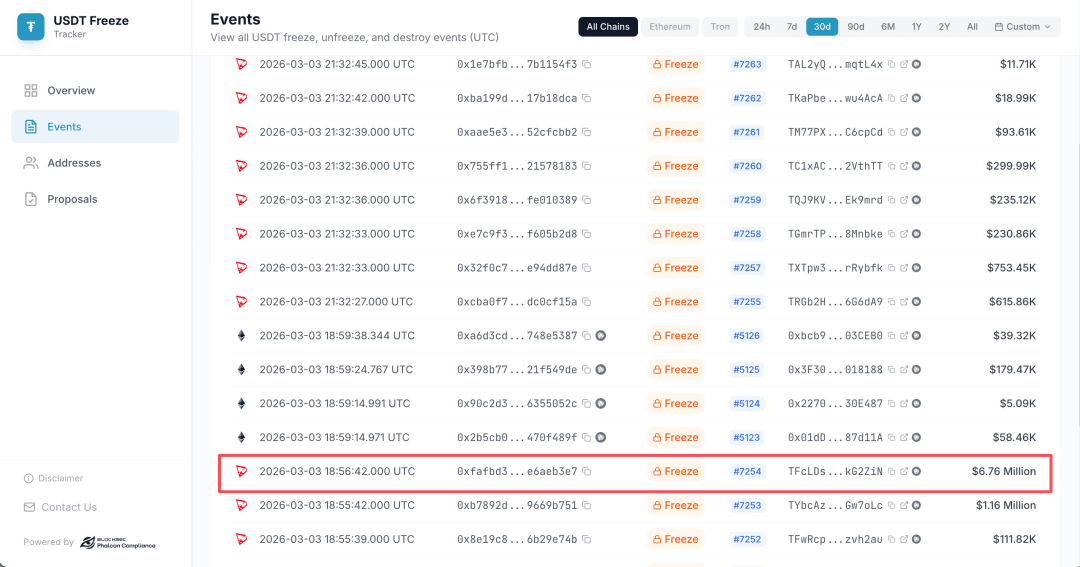
On March 3, Tether, the issuer of the world's largest stablecoin, announced the freezing of several on-chain addresses. Among them, a specific address (TFcLDs8SWxc4WoaJvk5pXuJd6wuZkG2ZiN) saw approximately $6.76 million USDT frozen.
Judging by the scale and context, this was not a routine risk control measure. Instead, it was a targeted enforcement action against a highly specific illicit financial network.
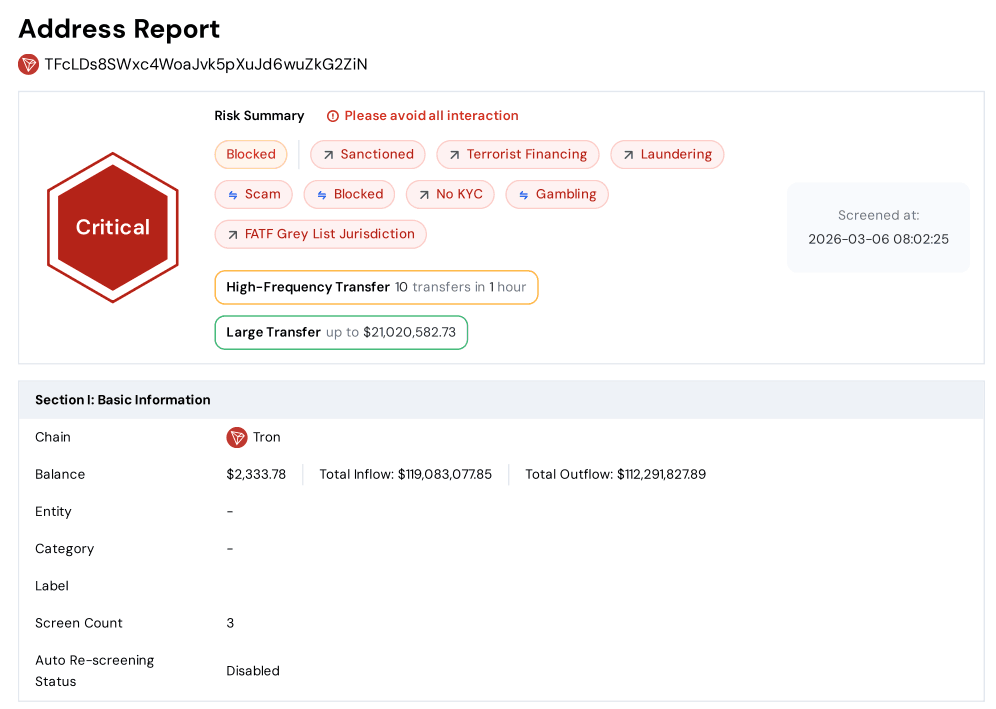
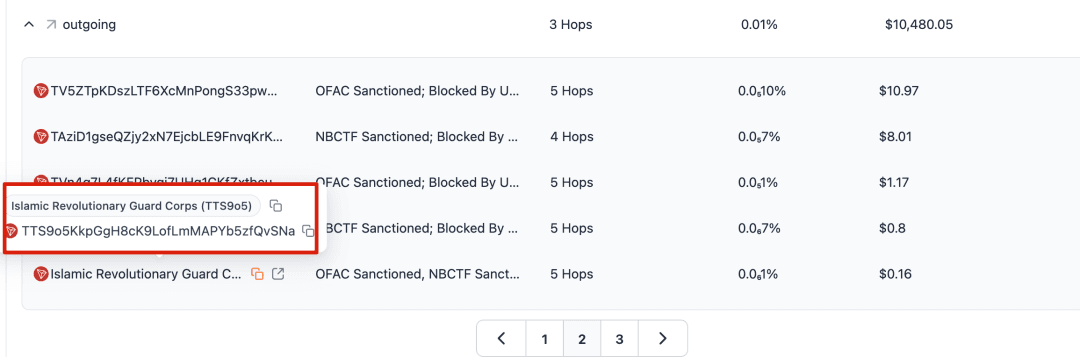
Phalcon Compliance used on-chain scanning. They found this address linked directly to Iranian financial networks. The risk tags from the system point to the IRGC (Islamic Revolutionary Guard Corps). They also highlight Houthi armed groups and shadow banking systems linked to them.
This discovery shows an important fact for 2026. Global regulations are tightening. Now, stablecoins are a key focus. They highlight geopolitical conflicts, sanctions enforcement, and cross-border financial risks.
Stablecoins: The New Battlefield for Sanctions Enforcement
If we view the "freezing of $6.76M USDT" in isolation, the amount might not seem extreme in the crypto industry. But as tensions rise in the Middle East between the US, Israel, and Iran, its importance grows even more.
Iran has faced many rounds of tough financial sanctions. These sanctions limit its access to the banking system and the US dollar clearing network. Some cross-border funds have changed to on-chain assets. They now focus on stablecoins for transfers and settlements.
Stablecoins offer distinct advantages for bypassing traditional chokepoints:
- Global Liquidity: They can be moved anywhere, instantly.
- Rapid Settlement: Transactions clear in seconds, not days.
- No Traditional Intermediaries: They bypass correspondent banks.
However, unlike traditional offshore financial networks, blockchain transactions are highly transparent. Once a relevant address is found and added to a monitoring system, its fund path can be tracked. This can lead to freezes or sanctions being enforced.
In recent years, stablecoin issuers have taken a much more proactive stance on risk control. Tether often uses its smart contract power to freeze or recover assets linked to risky addresses. This happens based on requests from law enforcement or advanced on-chain intelligence. For more details, read about how to navigate USDT freezing risks.
This represents a major shift. Freezing decisions now rely more on real-time on-chain data. This is better than using traditional offline investigations.
How Web3 Businesses Can Avoid Sanctioned Funds
For crypto exchanges, payment gateways, and stablecoin firms, this event raises a key question. What will happen next? How can we avoid high-risk, sanctioned funds?
On-chain funds differ from traditional finance. They are open and move easily across borders. A deposit may go through many wallet layers. It might also cross different blockchain networks. Then, it reaches your platform. Without a strong on-chain risk identification system, companies can easily accept assets. These assets might come from sanctioned groups, hackers, or illegal networks.
Once these "tainted" funds enter your corporate accounts, the consequences are severe:
- Immediate freezing of your operational funds.
- Intense regulatory investigations.
- Severe compliance penalties and loss of banking partners.
- Revocation of operating licenses (e.g., your "VATP or MSB licenses").
Key Risk Scenarios to Watch
In practice, this exposure typically occurs in three critical scenarios:
- The Deposit Pipeline: High-risk addresses often use multi-hop transfers. They do this to deposit funds into an exchange or custodial wallet.
- OTC and Payment Settlements: Businesses that do cross-border payments may deal with funds from banned areas.
- DeFi and Cross-Chain Routing: When funds move across different chains using bridges, it can hide their original sources. This makes manual tracking very difficult.
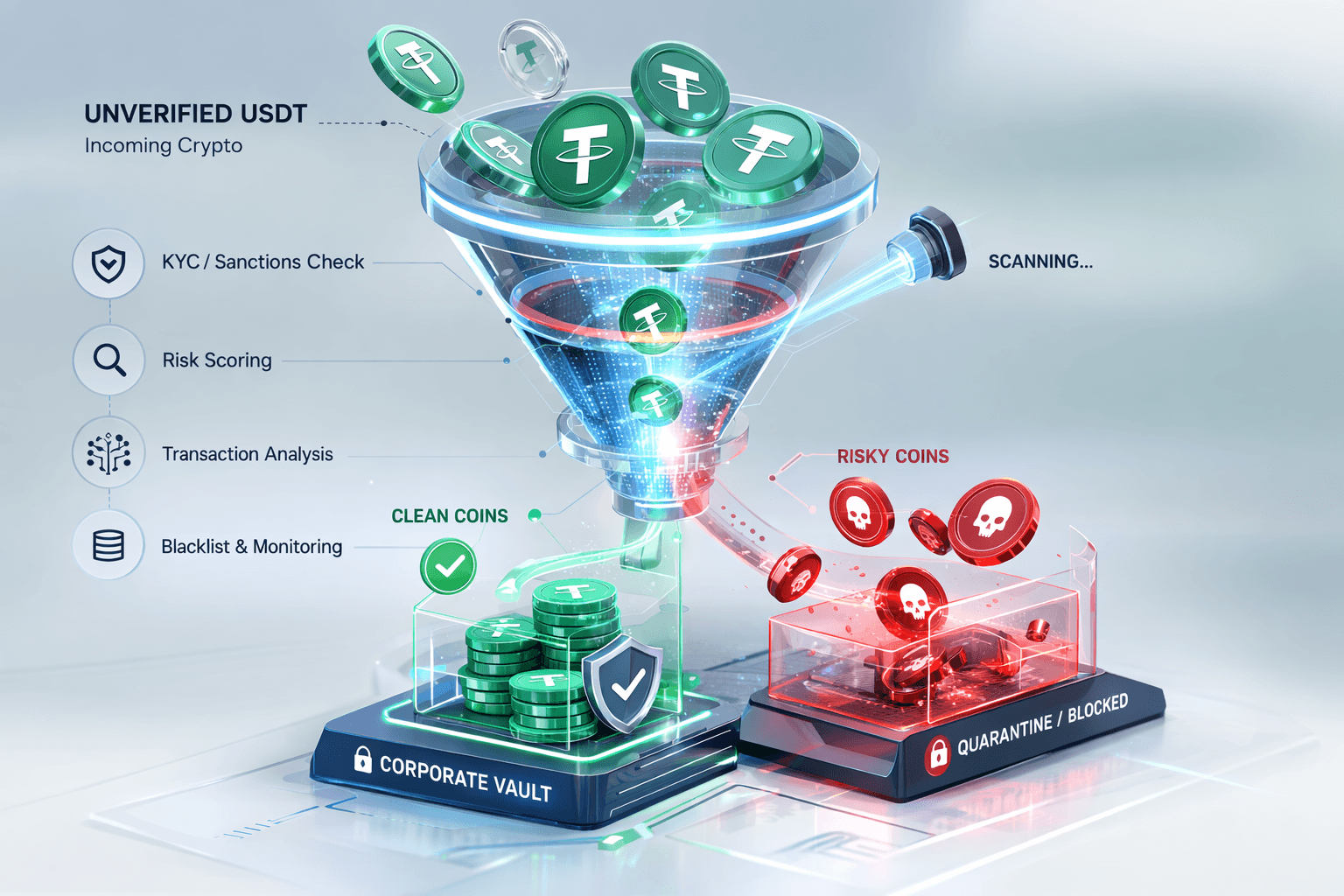
Top Virtual Asset Service Providers (VASPs) are now using "pre-transaction risk screening" to tackle this issue. This is often called Real-Time KYT. This means checking addresses before funds enter the platform. We look for any links to sanctioned entities or unusual fund routes.
On-Chain Compliance Tools Are Now Critical Infrastructure
In today's monitored world, on-chain data analysis and compliance tech are crucial. They are now critical parts of business infrastructure.
Because blockchain records are public and immutable, they offer a unique advantage for fund tracing. If a system can spot key addresses or fund entry points, it can track money flow along the transaction path. This helps create a complete network graph. This technology is now the go-to for tracing scam funds. It is also used for investigating hacks and monitoring terrorist financing.
The scan results from Phalcon Compliance perfectly demonstrate this technical approach. The system uses a large database of address labels, fund path analysis, and behavior recognition algorithms. It then assigns a changing risk score to on-chain addresses.
If an address links to a known high-risk group, like the IRGC, it raises concerns. If it spots specific risk patterns, Phalcon Compliance will generate a comprehensive risk report. It also highlights any related networks. This on-chain analysis spots risks right away. Traditional AML systems rely on slow bank reporting. This method gives quick and useful information for businesses and law enforcement.
Conclusion: A Sign of Industry Maturity
Looking ahead, targeted freezing events like this $6.76M USDT action will only become more common. As they do, it's worth being able to check whether any Ethereum or Tron address is frozen by Tether in seconds. On-chain data analysis is improving. Stablecoin issuers are also working closely with regulators. As a result, hidden illicit financial networks will be exposed.
For the crypto industry, this is both a pressure test and a mark of maturity. The digital asset market needs a strong foundation for long-term growth. This will occur when we can spot and analyze on-chain financial activities. Then, we can add them to a solid governance framework.
Frequently Asked Questions (FAQ)
1. Why does Tether freeze specific USDT addresses?
Tether freezes addresses to follow international sanctions. This helps law enforcement get back stolen funds. It also disrupts illegal money networks, like terrorism financing and big cyber hacks. They utilize their smart contract administrative privileges to execute these freezes.
2. What happens if my business accidentally receives sanctioned USDT?
If sanctioned funds enter your platform, your receiving wallet could be blacklisted or frozen by the token issuer. You could face big penalties. You might lose your local licenses. Your corporate banking relationships could be at risk too.
3. How can I detect sanctioned or Iranian-linked funds on-chain?
You cannot rely on manual checks. You need to use an automated, real-time KYT (Know Your Transaction) solution. Try Phalcon Compliance. These tools check incoming transactions against big databases of risk tags, like OFAC sanctions. They also look at past behaviors before the transaction is done.
4. Is on-chain screening different from traditional bank AML?
Yes. Traditional AML heavily relies on identity verification (KYC) and fiat transaction reporting. On-chain screening looks at wallet behavior and transaction patterns. It also checks smart contract risks. This gives real-time insight that old banking systems can't provide.
5. Can DeFi protocols also be affected by these sanctions?
Yes. DeFi protocols are decentralized. Their front-end interfaces and developers are not. Stablecoins like USDT and USDC face regulatory scrutiny. High-risk funds in a liquidity pool can "taint" it. This makes compliance tools vital, even for decentralized platforms.