Executive Summary The integration of traditional finance (TradFi) and decentralized networks (Web3) operates under strict regulatory frameworks. Market entrants need specific crypto transaction monitoring and digital asset risk management workflows to maintain operational compliance. Relying on on-chain fund tracking and blockchain anti-money laundering protocols, engineering and compliance teams must deploy automated infrastructure to handle the current transaction throughput. This guide details standard compliance mechanisms, evaluates the technical limits of manual auditing, and details the structural shifts toward unified platforms that process and secure digital asset interactions.
Core Insight TradFi and Web3 experience friction primarily at the data architecture layer. Traditional finance processes transactions through centralized ledgers, whereas blockchain environments execute via distributed networks using public addresses. This structural variance makes conventional compliance checks incompatible with on-chain data. To mitigate compliance violations and subsequent financial penalties, businesses adopt purpose-built tooling designed to output automated regulatory reports and execute real-time transaction analysis across various blockchain environments.
Demystifying Crypto Compliance for New Entrants
Both traditional financial institutions and early-stage Web3 operators require baseline crypto compliance procedures to maintain continuous operations. This section examines the structural variance between standard financial regulations and distributed ledger frameworks, detailing the technical necessity of automated screening systems in mitigating regulatory exposure and minimizing penalty risks.
Bridging the Regulatory Gap: TradFi vs. Web3
Standard financial institutions execute compliance workflows through centralized identity databases and bounded fiat transaction networks. Web3 environments, conversely, process peer-to-peer asset transfers continuously across distributed nodes. This variance forces a recalibration in how compliance checks are technically implemented. Global regulatory bodies now mandate that Virtual Asset Service Providers (VASPs) execute specific digital asset risk management protocols. Addressing this requirement involves deploying infrastructure capable of parsing raw smart contract event logs and converting on-chain transactional data into standardized, auditable compliance metrics.
Why Manual Monitoring Fails in Blockchain Environments
The transaction throughput on distributed ledgers exceeds the processing capacity of manual compliance teams. Specific decentralized exchanges frequently route over 100,000 interactions per day [1]. Tracing asset provenance manually across decentralized finance (DeFi) routing contracts, localized liquidity pools, and asset bridges produces significant tracking delays and unverified transaction paths. Entities attempting to obscure fund origins deploy methods like coin mixing contracts and cross-chain swapping, which manual review processes fail to map accurately. Depending on manual intervention drastically inflates staffing overhead while introducing critical vulnerabilities in the transaction screening process.
The Real Cost of Ignoring Digital Asset Regulations
Bypassing established regulatory protocols directly impacts an entity's financial stability and operational licensing. During the 2024 fiscal year, regulatory agencies levied approximately $4.2 billion in penalties against service providers lacking verifiable blockchain anti-money laundering infrastructure [2]. In addition to these financial levies, firms failing to meet compliance thresholds encounter fiat off-ramp terminations, IP-level API blocklisting, and executive liability constraints. Deploying structured crypto compliance architecture functions as a strict prerequisite for maintaining baseline business operations and retaining institutional banking access.
Core Concepts: What Do Crypto Compliance Tools Actually Do?
Crypto compliance software processes raw blockchain state data into distinct risk indicators. Through automated address screening, transaction behavior analysis, and systematic report generation, these platforms enable operations teams to align their daily transaction flows with current global anti-money laundering specifications and reporting mandates.
Decoding KYA (Know Your Address) and KYT (Know Your Transaction)
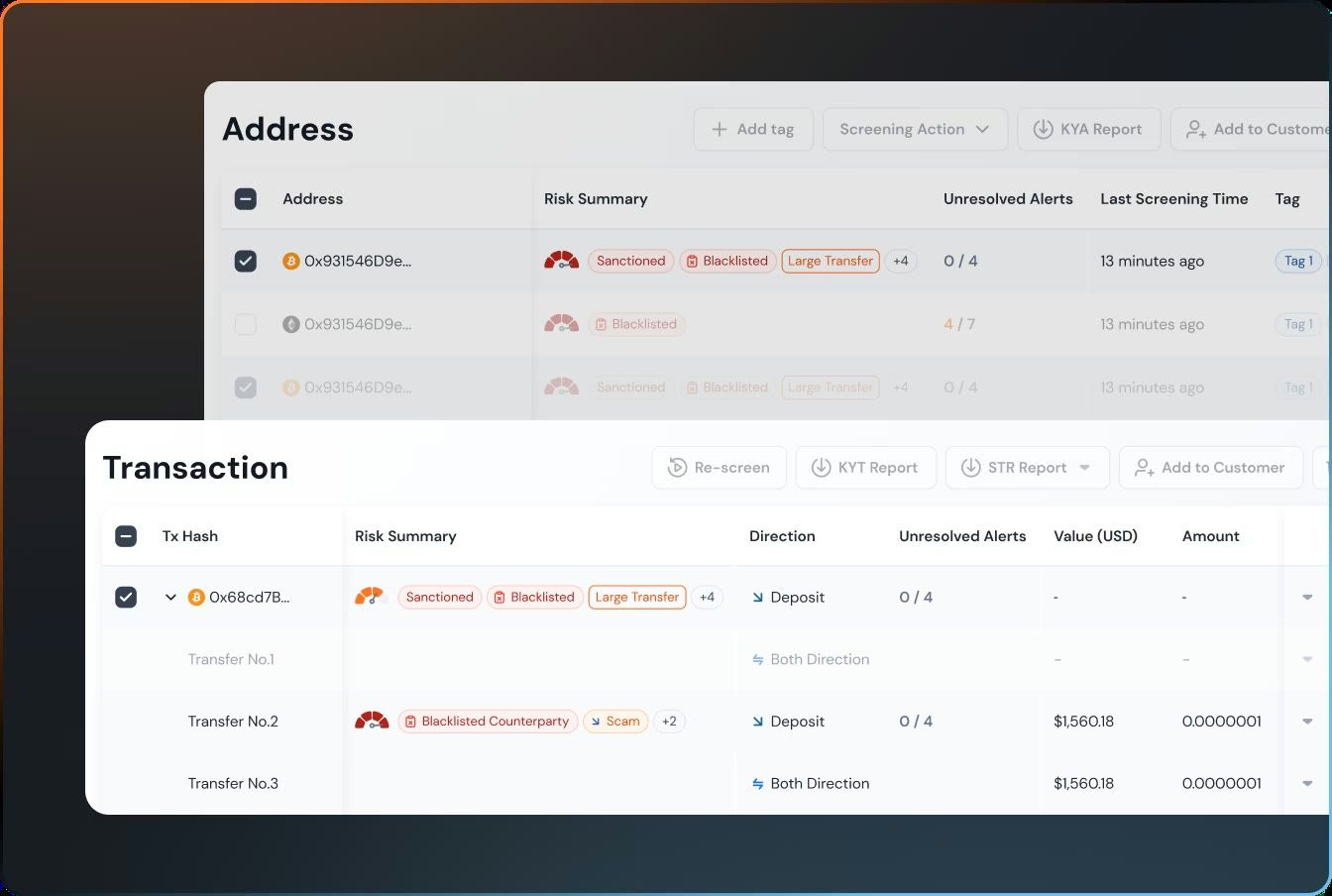
While standard KYC targets physical identity validation, on-chain compliance functions through KYA and KYT mechanisms. KYA processes the transaction history of a given wallet address to establish a baseline risk profile prior to contract interaction. It queries database endpoints to determine if the address correlates with sanction lists, prohibited marketplaces, or addresses flagged for prior exploit involvement. KYT processes the fund transfer as it occurs, parsing the behavioral variables of the execution payload. Combined, these protocols establish the baseline for on-chain fund tracking, preventing routing systems from executing interactions with flagged asset sources.
Automating AML (Anti-Money Laundering) and Risk Scoring
Automated AML infrastructure processes node data logs to calculate and assign numeric risk scores to specific addresses and their corresponding interactions. The scoring logic weighs variables such as the exact node distance from a flagged illicit origin and the specific opcodes executed within the smart contract. When a transfer payload surpasses configured risk parameters, the routing engine either diverts the transaction to a manual review queue or reverts the call entirely. This programmatic filtering reduces the volume of routine queries for compliance personnel, redirecting operational focus toward technically complex transaction investigations.
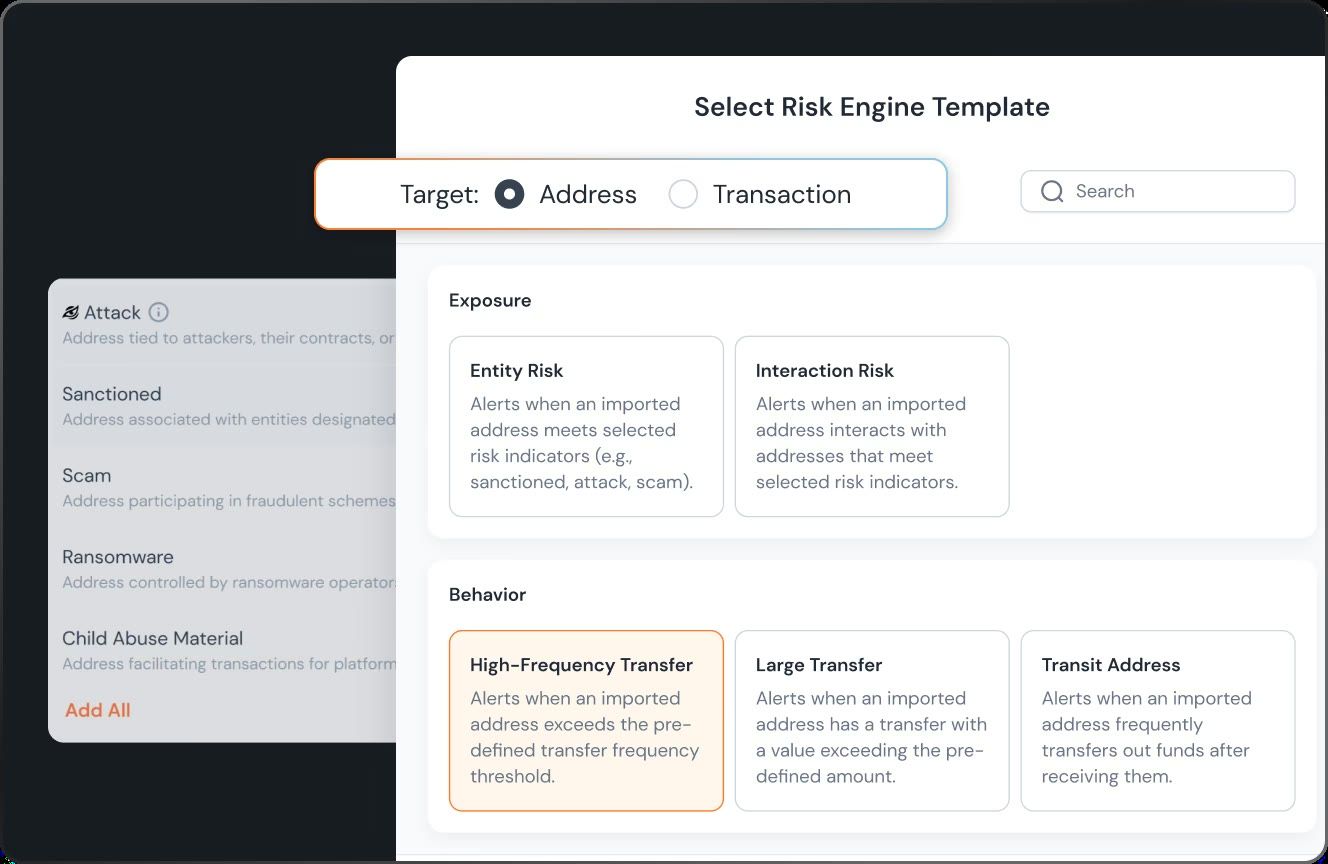
Streamlining STR (Suspicious Transaction Reports) for Regulators
Upon verifying a prohibited transaction, operating entities must submit Suspicious Transaction Reports (STR) to financial oversight bodies, operating under local jurisdictional requirements. Current compliance infrastructure executes regulatory reporting automation, directly extracting on-chain transaction hashes, rendering address relationship diagrams, and exporting timestamped execution logs into specific localized templates. This export functionality compresses the reporting timeline, allowing compliance teams to execute submissions within mandated regulatory windows and mitigate secondary reporting penalties.
How to Evaluate and Select the Right Infrastructure
Determining the correct compliance infrastructure requires an audit of the provider's technical capacity to process varied multi-chain execution environments. Engineering teams prioritize systems that plug directly into current backend workflows and output immediate transaction data, moving away from post-execution forensic limitations.
Multi-Chain Tracking and Visual Fund Flow Capabilities
As Layer 1 networks and Layer 2 rollups expand, asset routing increasingly spans multiple isolated environments. Compliance configurations require native multi-chain tracking, permitting analysts to map asset trajectories through cross-chain bridges and varied decentralized protocols. Visual fund flow rendering serves as a core technical requirement. Plotting dense transaction interactions through a node-based graphical layout enables reviewers to trace asset provenance and termination endpoints accurately, compressing the time spent parsing raw block explorers during an investigation.
API Integration Readiness for Existing Tech Stacks
Compliance components operate as direct modules within a firm's larger backend architecture. API integration readiness stands as a primary evaluation metric. Development teams utilize low-latency REST or GraphQL endpoints to insert KYA queries directly into user registration pipelines and backend withdrawal logic. When compliance endpoints fail to synchronize with internal state databases, CRM queries, or order matching engines, the resulting latency triggers transaction timeouts. To evaluate provider specifications, teams frequently consult technical breakdowns of established blockchain and crypto compliance software solutions to verify API reliability and endpoint documentation.
Assessing Real-Time Threat Detection vs. Post-Event Analysis
Earlier generation tooling relies on post-block forensic analysis, which aids in historical reporting but fails to block active transfers. Current institutional execution requires real-time threat detection capabilities. By monitoring mempool states and pending transaction arrays, these systems identify flagged parameters before the interaction is finalized in a block. Vendor assessment involves testing query latency and confirming the system's capacity to drop or revert illicit calls programmatically, shifting the compliance model from a logging function to an active filtering mechanism.
The Paradigm Shift: Unified Security and Compliance Platforms
The digital asset sector is transitioning from disparate single-function utilities to consolidated technical platforms. Consolidating active security parameter monitoring with direct compliance query logging enables engineering teams to eliminate disconnected data pipelines and stabilize broader risk management operations.
Why Siloed Blockchain Tools Are Failing Modern Teams
Web3 developers and TradFi integrators previously contracted distinct providers for code auditing, network monitoring, and AML validation. This segmented setup creates disconnected data pipelines. During a contract exploit, incident response teams identify the malicious payload, but if compliance systems cannot query the attacker's address immediately, the extracted assets route through mixers before the KYT database refreshes. Operating disconnected tooling results in duplicated alert logs, compounded API licensing expenses, and extended delays in halting transaction execution during an incident.
The Rise of One-Stop Management: Combining Defense and Compliance
To optimize processing latency, teams deploy consolidated management infrastructure. Linking security threat detection logic natively with on-chain compliance parameter tracking establishes unified data visibility. A consolidated architecture dictates that once an anomaly triggers a security alert, the originating addresses automatically write to the compliance denial list. This bidirectional state synchronization establishes a self-updating filter that maintains protocol uptime while satisfying specified regulatory logging criteria.
Leveraging Advanced Solutions like Phalcon Compliance and MetaSleuth
BlockSec has established itself at the forefront of this infrastructure consolidation, having launched its integrated compliance and security management platform in 2025. This technical ecosystem is structured to support both decentralized protocols and centralized financial operators. The architecture deploys the Phalcon Compliance APP to manage on-chain compliance risk calculations, executing automated AML checks, KYT parsing, KYA database querying, and standardized STR exports.
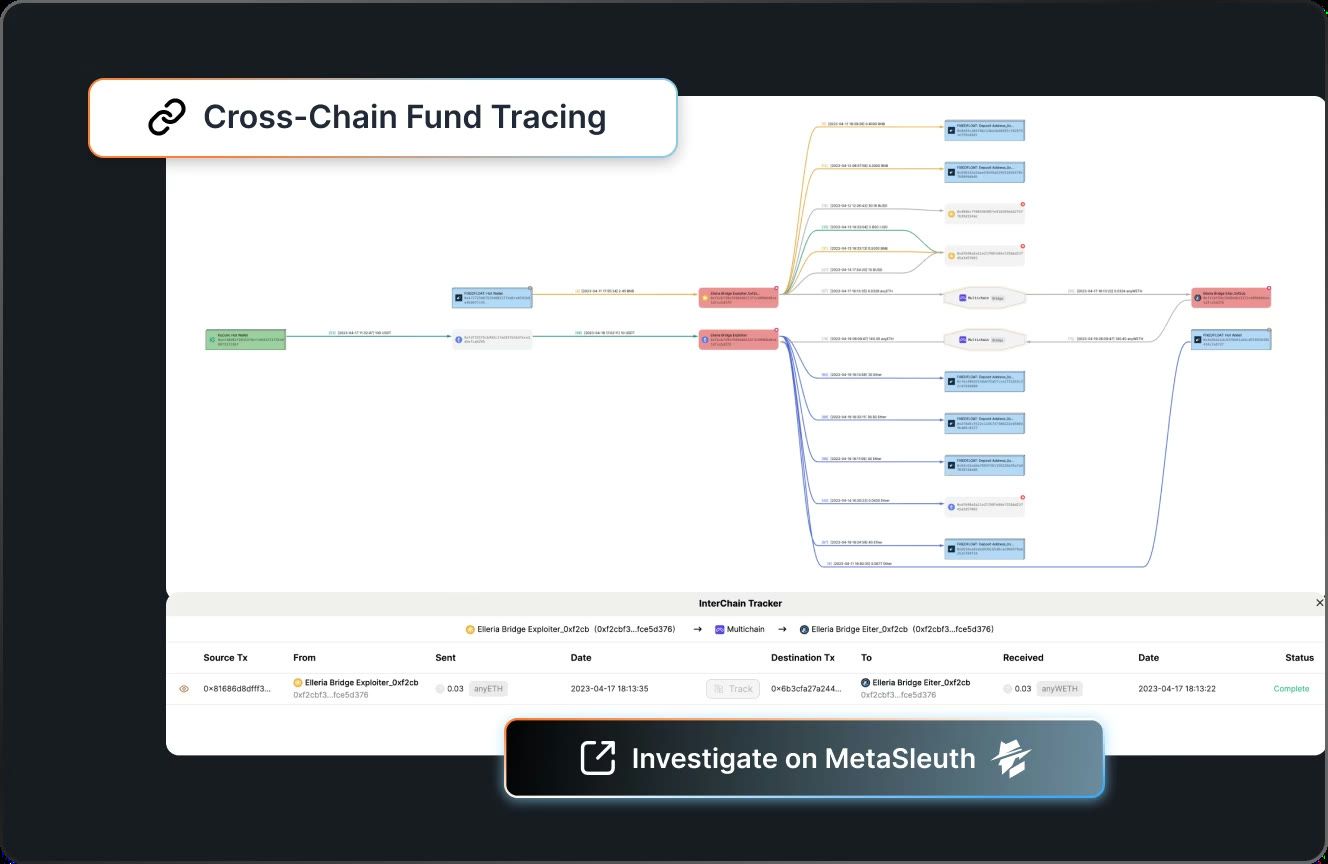
Operating alongside this module is MetaSleuth, a specialized forensic tracking utility that handles multi-chain asset routing, graphical fund flow plotting, and precise address risk scoring. By linking these components directly with the Phalcon Security APP for execution-layer attack mitigation and integrating insights from their established code audit division, BlockSec resolves disconnected operational workflows. This integrated technical stack provides institutions the infrastructure required to process decentralized transactions, adhere to strict regulatory logging mandates, and filter out unauthorized contract interactions at the node level.
Frequently Asked Questions (FAQ)
This section covers standard technical inquiries submitted by traditional financial teams and newly deployed Web3 operations. The responses define the operational necessity, specific technical differentiation, and API integration timelines associated with deploying current compliance infrastructure in production environments.
Do decentralized applications (DeFi) really need compliance tools?
Yes. While the smart contracts operate without centralized controllers, regulatory entities classify the development teams behind DeFi interfaces as liable parties for filtering illicit transaction flow. Integrating KYA endpoints and automated risk calculators allows front-end interfaces to restrict connections from sanctioned wallets, controlling regulatory exposure while the core immutable contracts remain functional.
What is the difference between traditional AML and crypto AML?
Standard AML operations rely on identity verification documents and fiat transfer logs stored on centralized banking servers. Conversely, crypto AML parses hexadecimal wallet addresses, compiled smart contract interaction logs, and public ledger states. The process demands specific node-querying tools to map asset trajectories across isolated decentralized networks, calculating risk profiles derived from on-chain execution patterns rather than localized identity files.
How quickly can a new startup integrate on-chain risk management?
Using current API-centric infrastructure, development teams can connect standard KYA and KYT endpoints to their applications within a standard sprint cycle. Consolidated platforms supply structured developer environments and pre-configured REST/GraphQL calls, enabling backend engineers to route user registration data or withdrawal requests through risk screening logic without dedicating extensive engineering hours to custom database development.
Conclusion
Deploying products in Web3 environments requires a structural adjustment to risk monitoring workflows. For financial institutions and blockchain developers, relying on manual transaction audits and disconnected software stacks introduces severe operational latency. Integrating consolidated platforms that execute automated transaction parsing, active contract security filtering, and formatted regulatory exports allows technical teams to stabilize production scaling. As jurisdictional rules become stricter, implementing structured tooling like Phalcon Compliance and MetaSleuth ensures compliance operations function as an automated checkpoint rather than a resource-intensive development blocker.