We are excited to announce the launch of Phalcon Compliance, a brand-new addition to the BlockSec Phalcon suite. This innovative platform is designed to help Virtual Asset Service Providers (VASPs) identify potential risk exposures and suspicious user activities through address screening and real-time transaction monitoring, empowering them to meet AML/CFT compliance requirements with ease.
The Compliance Era: Opportunities and Challenges
In recent years, the global trend toward cryptocurrency compliance has become increasingly apparent. Regulatory frameworks are advancing steadily: the EU's MiCA is being implemented step by step; Singapore has introduced new regulations to align AML/CFT requirements with FATF standards; and the US Congress also introduced the GENIUS Act and the STABLE Act this year, providing clear frameworks for stablecoin issuance, AML, and consumer protection.
A more robust regulatory framework provides clearer guidelines, mitigates risks, and fosters greater user confidence, unlocking new growth opportunities for the crypto industry. Increasingly, institutions are shifting their perspective on compliance, viewing it not as a hurdle but as a strategic advantage. By proactively adopting measures such as KYC, customer due diligence, address screening, and transaction monitoring, they are significantly enhancing compliance capabilities across the board.
However, blockchain’s anonymity and the complexity of on-chain interactions—especially cross-chain activities—pose significant challenges for institutions in risk assessment, team collaboration, and report generation.
Phalcon Compliance: Your Solution for Managing Compliance Risks
To address the growing global compliance demands, we at BlockSec have developed Phalcon Compliance, a powerful tool that helps VASPs efficiently identify and manage risks related to addresses and transactions—fully aligned with AML/CFT regulations.
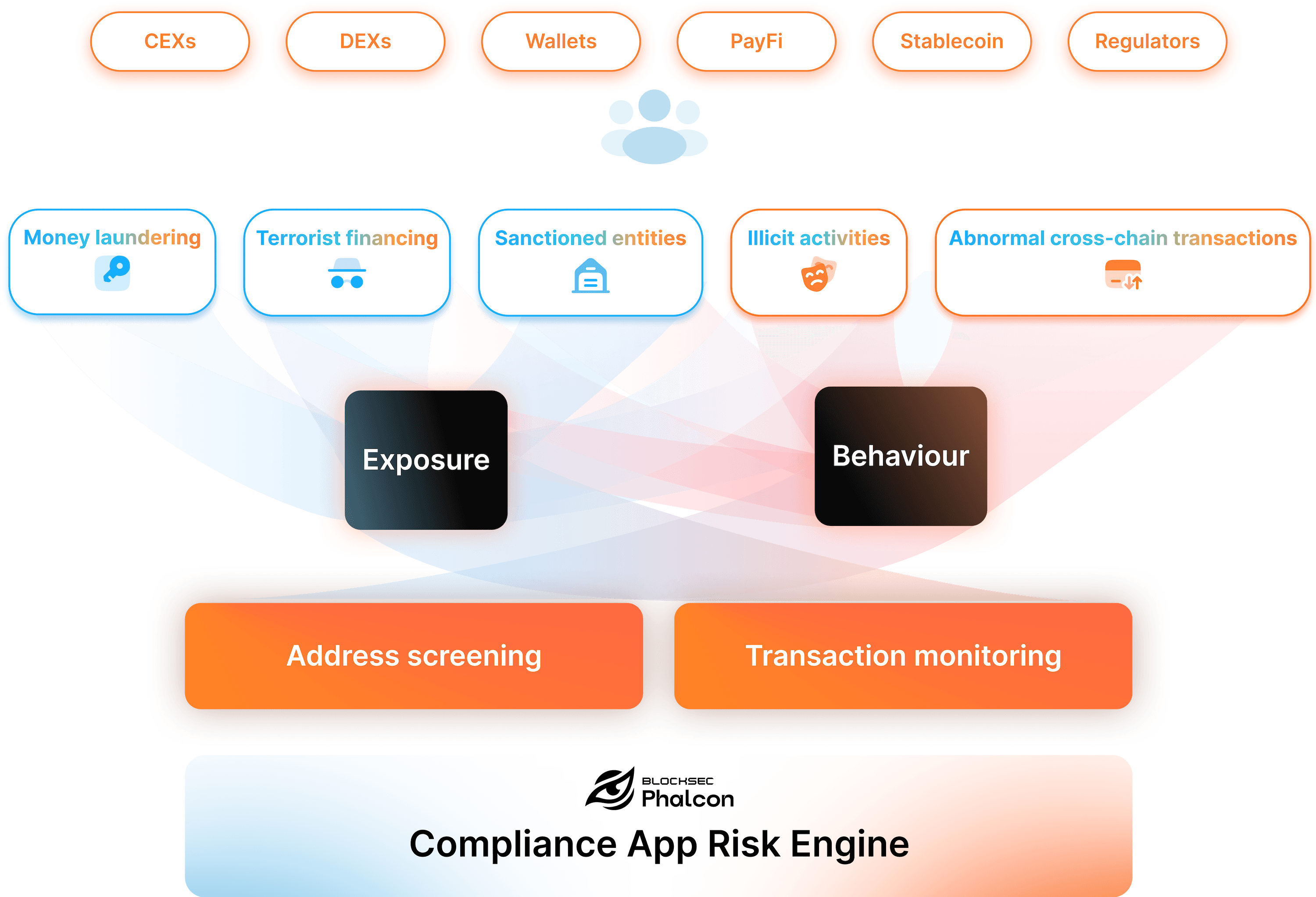
📍 Accurately Detect Illegal Activities
- Risk Exposure Identification: With a database of over 600 million address labels updated in real-time, the platform can identify high-risk entities (e.g., sanctioned entities). It supports limitless hops of transaction tracing, quickly identifying addresses that may interact with high-risk entities.
- Behavioral Pattern Analysis: Powered by an AI-based behavioral analysis engine capable of processing over 500 transactions per second, the platform accurately uncovers hidden anomalies and complex patterns like fund splitting and transit transactions.
🌐 Pre-set + Customizable Risk Engines
- Pre-Set Risk Engine: The platform comes with default FATF-compliant risk engines that cover major risk types, including entity risk, interaction risk, high-frequency transfers, large transfers, and transit addresses, making it easy for institutions to meet global compliance standards.
- Customizable Risk Engine: Institutions can also customize risk rules based on their jurisdiction and business type, ensuring compliance strategies are tailored to their needs.
🚨 Continuous Screening and Real-Time Alerts
Users can schedule periodic address screenings or trigger re-screening with a single click. If a new risk arises or an address's risk level changes, the platform can send real-time alerts via 7 channels, including Telegram, email, and Lark, ensuring rapid management of potential risks.
👥 Address and Customer Management
Phalcon Compliance provides a clear view of address risk levels and historical alerts, offering insights into the overall risk profile of specific addresses. It also allows users to link multiple addresses to a single entity, enabling a comprehensive analysis of customer risks for more effective risk management.

🤝 Boost Team Efficiency
With features like task delegation, commenting, and blacklist management, the platform enables teams to collaborate effectively, ensuring timely responses to risk alerts and improved operational efficiency.
✅ One-Click STR Generation
Users can generate audit logs and Suspicious Transaction Reports with just one click, simplifying both internal management and external compliance review processes.
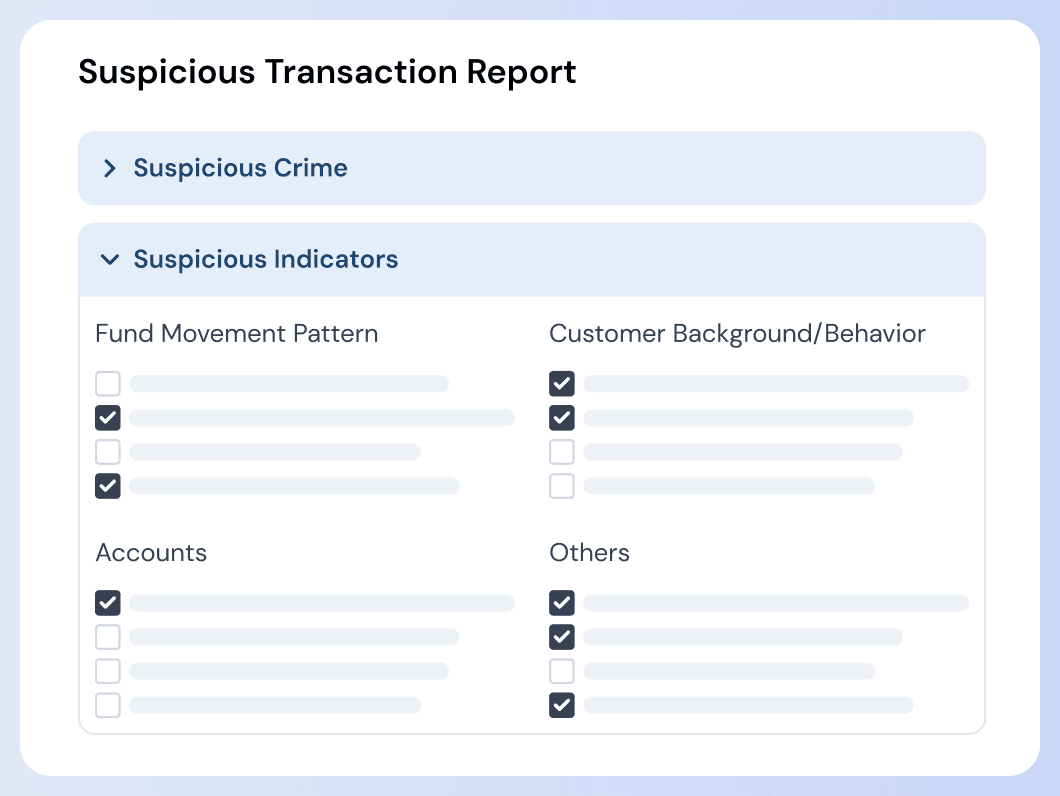
As regulations tighten and illicit activities evolve, Phalcon Compliance offers VASPs a comprehensive solution. From real-time monitoring to report generation, it builds a dynamic framework to mitigate risks like money laundering and terrorist financing, ensuring efficient compliance.
BlockSec Phalcon: The All-in-One Platform for Security and Compliance
With the launch of Phalcon Compliance, the BlockSec Phalcon suite has evolved into a comprehensive platform that combines Security Threat Prevention (Phalcon Security) and Compliance Risk Management (Phalcon Compliance). This integrated solution delivers a seamless "security and compliance in one" experience for our users.
🔥 Experience It Today!
Phalcon Compliance covers Bitcoin, Ethereum, TRON, Solana and the major EVM chains, and every plan—including the free tier—works across all supported chains. The documentation always carries the current network list.
You don’t need a sales call to start: self-serve registration gets you a free tier plus a 7-day Monitor trial. Plans and pricing shows what each tier includes.