Is Bitcoin traceable? Yes, completely. Every transaction is published to a public ledger that anyone can read, permanently. What makes tracing hard is not hiding the transactions, it is connecting addresses to people. That gap is what tracing tools work to close.
Traceable: The Ledger Claim Versus the Identity Claim
Traceable needs unpacking, because the word carries two different claims. The ledger itself is fully transparent: every Bitcoin transaction ever made is public, timestamped, and immutable, and nothing in the protocol hides amounts, addresses, or timing. In that sense Bitcoin is more traceable than cash and most bank systems, where records exist but sit behind institutional walls.
The harder claim is identity. Bitcoin addresses are not name-tagged, so linking an address to a person or entity requires evidence beyond the chain itself: exchange records, operational slips, clustering analysis, or law-enforcement process. So the accurate statement is: transactions are fully traceable, identities are traceable with evidence. Both halves matter, and conflating them is why people who thought Bitcoin was anonymous got caught. FinCEN's 2019 guidance on convertible virtual currencies treats convertible virtual currency activity as subject to the same recordkeeping and reporting architecture as other value transfer. The FATF standards for virtual assets and VASPs extend that expectation to licensed platforms worldwide.
How Bitcoin Tracing Works: Three Layers
The first layer is UTXO follow-through. Bitcoin works on unspent outputs rather than account balances: each transaction consumes previous outputs and creates new ones, and because those outputs are unique, value flows form chains an investigator can walk. Following the outputs is the mechanical half of tracing.
The second layer is address clustering. Heuristics group addresses that behave as one actor: common spending in a single transaction, change-address patterns, and repeated behavior. A cluster turns hundreds of addresses into one operational entity, which is what makes a trail readable at all. Clustering is probabilistic work, and the quality of the heuristics is the quality of the investigation.
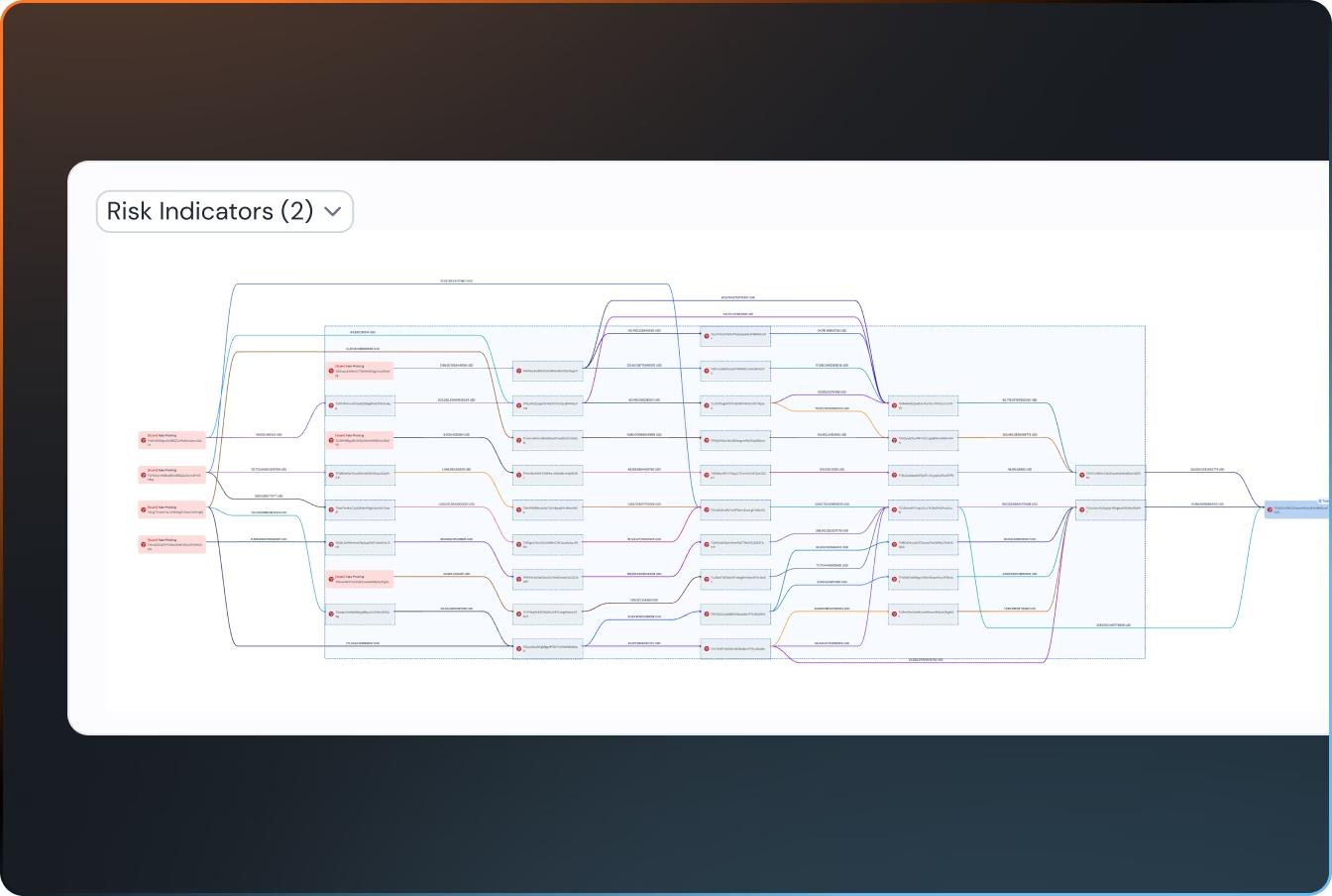
The third layer is label intelligence. Addresses get attributed to exchanges, mixing services, sanctioned entities, and illicit operations through investigation and intelligence work, and those labels give the trail its meaning. Label libraries maintained at scale, covering hundreds of millions of addresses with continuous updates, are what let a tracer look at an address and know what it is rather than start from zero. Per BlockSec, Phalcon Compliance screens Bitcoin among its supported chains with continuously updated labeled intelligence, and MetaSleuth traces Bitcoin alongside Ethereum, TRON, Solana and major EVM chains.
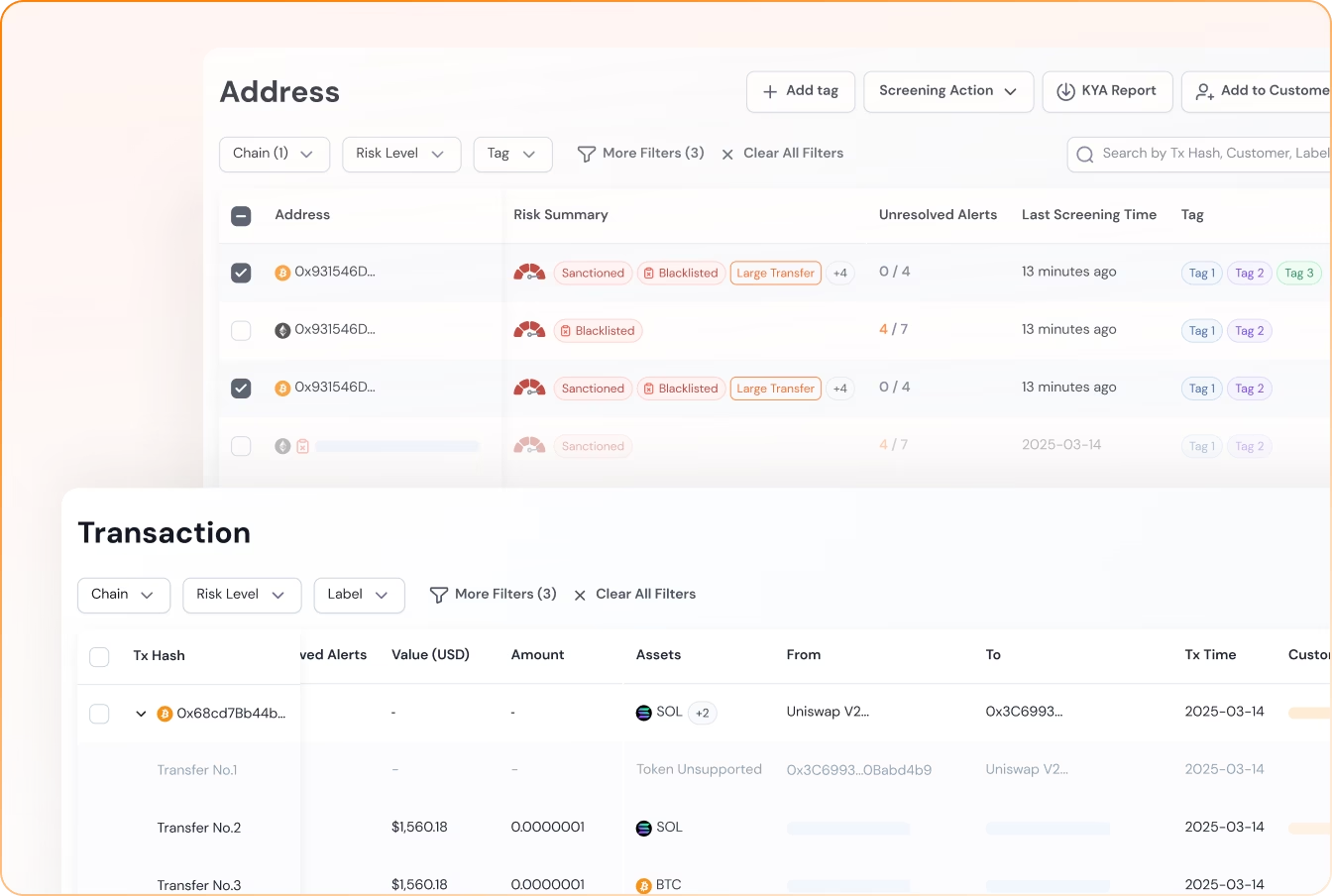
For screening and compliance, the traceability question is operational rather than academic. The three layers differ in what they deliver and what they depend on:
| Layer | What It Does | What It Depends On | Compliance Use |
|---|---|---|---|
| UTXO follow-through | Walks value from output to output mechanically | Public ledger only; always available | Establishes the raw path any finding rests on |
| Address clustering | Groups addresses behaving as one actor into a single entity | Heuristics quality; probabilistic | Turns hundreds of addresses into one reviewable counterparty |
| Label intelligence | Attributes addresses to exchanges, mixers, sanctioned and illicit actors | Investigation and intelligence work; freshness | Answers the risk question before funds move |
Where Tracing Gets Hard
Honesty about the hard parts is what separates useful guidance from hype. Mixing services accept Bitcoin from many users and return different coins to different users, which breaks direct output-following at the mix boundary. The practical response is to trace to the mixer, document it, and watch identified exits. Chain-hopping moves value to other blockchains with different address spaces, so single-chain tracing stops at the bridge. And new addresses are free: an actor using a fresh address for every interaction scatters the trail into dust, though clustering heuristics frequently reassemble exactly that behavior, because perfect fresh-address discipline is hard to sustain.
None of these break traceability in principle. They raise the cost and push the work toward the layers above, clustering and intelligence, which is where professional tooling earns its place.
Why This Matters for Compliance Teams
If Bitcoin flows into your platform, you can know the risk of the counterparty addresses: labeled intelligence answers sanctioned, stolen, or illicit exposure before value moves. If an incident happens on your watch, the trail exists to be reconstructed, because the ledger kept every record. And if a regulator asks how you know, the tracing method, the labels and their basis, is documentable evidence.
The short version: yes, Bitcoin is traceable, and the tracing is only getting better as label intelligence deepens. For tracing through the hardest obfuscation layer, see How to Trace Stolen Crypto Through a Mixer. To put that intelligence on your own counterparty addresses, book a demo of Phalcon Compliance.
FAQ: Bitcoin Traceability
Is Bitcoin anonymous? No. It is pseudonymous: addresses are not name-tagged, but all activity is public and addresses get attributed through clustering and investigation.
Can deleted wallets or old transactions be hidden? No. Confirmed transactions are permanent. The ledger's immutability is exactly why trails survive for years.
Do mixers make Bitcoin untraceable? They break direct output-following at the boundary, not the traceability of the whole path. Entries, exits, and amounts remain public evidence.
Can compliance teams screen Bitcoin addresses before transacting? Yes. Screening tools evaluate Bitcoin addresses against labeled intelligence, covering sanctioned and illicit exposure, before funds move.
Is tracing Bitcoin legal? Reading the public ledger and analyzing it is legal and standard practice for compliance, investigation, and law enforcement worldwide.