What does crypto AML software do? It carries the anti-money-laundering workflow end to end: from raw transactions through alerts and cases to filings that survive supervisory review. The category is usually described by features, screening, monitoring, reporting, but features are the wrong lens. What a compliance team actually operates is a pipeline, and the software either keeps evidence flowing through that pipeline or it does not. This guide walks the pipeline stage by stage, showing where software earns its place and where the operator's judgment takes over.
What the AML Workflow Actually Is
The workflow starts well before any alert fires. Transactions and counterparty addresses flow in, screened against labeled intelligence covering sanctioned entities, hacking operations, phishing infrastructure, and the wider risk taxonomy. Most activity passes; some raises signals. The signals become alerts, alerts become cases when a reviewer judges them worth pursuit, cases accumulate evidence, and evidence supports the filing a regulator receives, or the documented decision not to file. FinCEN's published materials frame the obligations, and the FATF Recommendations set the standard the workflow serves.
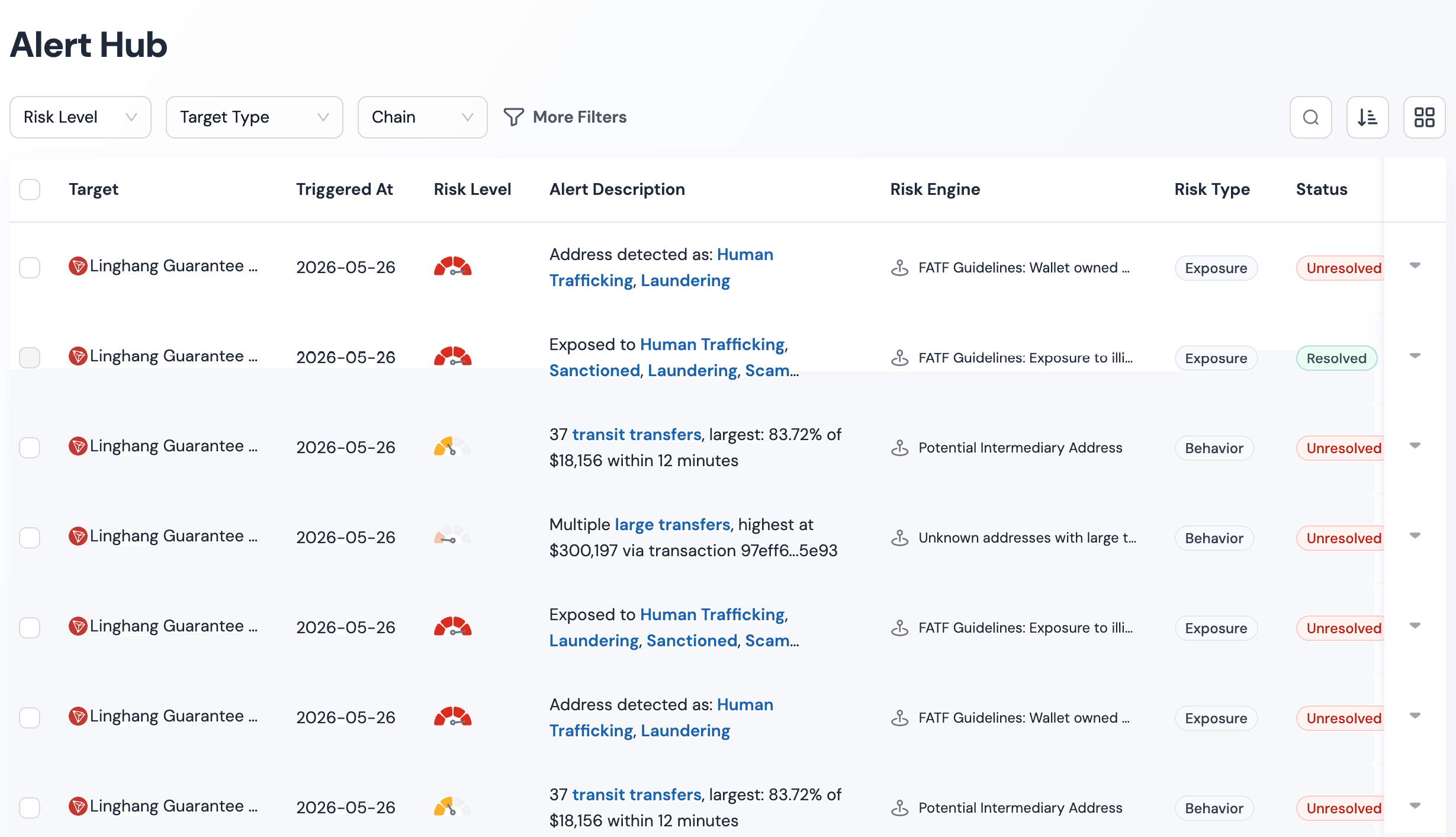
Each stage has a failure mode, and the failure modes are what the software category exists to eliminate. The scale of the intelligence layer determines what screening sees: Phalcon Compliance evaluates transactions against a labeled library exceeding 600 million addresses. Depth at the screening stage is what keeps the alert stage honest downstream.
Where the Workflow Breaks Without Software
The workflow lens matters because AML failures are workflow failures: an alert nobody triaged, a case nobody documented, a filing assembled by hand at the deadline. Compliance operators describe the manual version without affection: suspicious-activity filings that consume hours of manual assembly, evidence scattered across screenshots and spreadsheets, audit trails reconstructed from memory when an examiner asks. None of those failures is a knowledge failure; they are pipeline failures, and pipelines are what software fixes.
Three breaks recur. Alert drowning: unfiltered signal volume pushes teams toward auto-closing alerts wholesale, and real risk gets buried in the closed pile. Evidence fragmentation: when the case file lives in one system and the screening basis in another, every filing becomes an archaeology project. Deadline compression: when assembly is manual, filing quality degrades exactly when volume rises, which is when it matters most.
Software closes the breaks by making the evidence machine-generated at every stage: what was screened, against what intelligence, what was found, what was decided, each timestamped. The filing then becomes assembly rather than authorship, and the examination answer becomes a query rather than a project.
Trace One Transaction Before You Buy
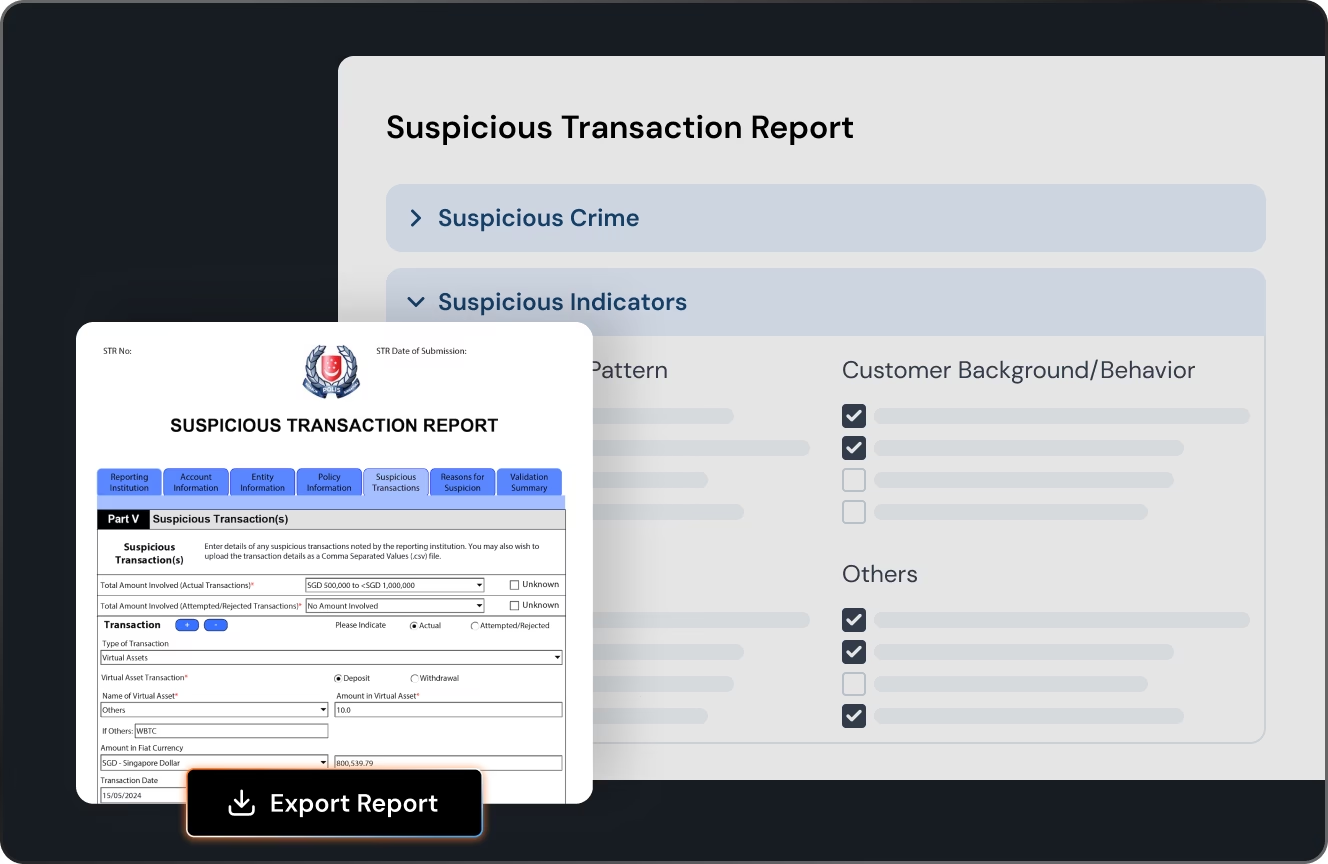
Before purchase, trace one suspicious transaction through the product end to end: if the evidence trail needs manual reassembly anywhere, the filing will too. Concretely: take a flagged transaction, follow it from the alert through case documentation to the export the filing would consume, and check that each step carries its intelligence basis forward automatically. That single walkthrough predicts the operating experience better than any feature list, because it tests the pipeline rather than the parts. For how this layer fits into a full VASP compliance stack, see the compliance software stack engineering guide.
| Workflow stage | What software must hold | Red flag |
|---|---|---|
| Alert | Tiered signals with visible basis | Untiered firehose |
| Case | Auto-accumulated evidence trail | Manual screenshot assembly |
| Filing | Structured export aligned to report formats | Free-text reconstruction |
| Examination | Queryable history of every check | Quarterly scramble |
The boundary statement that belongs in every purchase decision: the software produces signals, evidence, and drafts; the operator decides and files, and keeps the accountability. Teams that hold that boundary get a workflow that is fast where machines are fast and careful where judgment is required. For the tooling layer that carries the workflow, book a demo of Phalcon Compliance and trace one suspicious transaction from alert to export.
FAQ: Crypto AML Software
Does AML software file reports for us? Phalcon Compliance drafts them with the supporting evidence; the review, the decision, and the submission stay with your institution.
How much does it cut filing time? Manual assembly drops out: filings compress toward review time when the evidence trail is machine-generated from the start.
What is the first thing to verify in a trial? That a flagged transaction's evidence carries forward automatically from alert to export without reassembly.
Does it replace our transaction-monitoring rules? It carries them: rule configuration stays yours, the software supplies the intelligence and the evidence layer underneath.