For technical teams supporting Virtual Asset Service Providers (VASPs), engineering a scalable compliance architecture requires shifting from localized manual reviews to system-level integrations. Maturing regulatory frameworks force engineering units to process high-frequency on-chain data streams under strict latency constraints. In this breakdown, we examine the deployment phases of a native compliance infrastructure. By indexing real-time blockchain telemetry, mapping cross-jurisdictional AML schemas, and automating suspicious activity documentation, engineering leads can unblock compliance bottlenecks and align the reporting stack with business transaction volumes.
Mapping the VASP Regulatory Landscape and System Prerequisites
Deploying a functional virtual asset compliance architecture starts with mapping technical capabilities against specific regional reporting rules. Misalignment between database schemas and local regulatory schemas directly increases processing overhead, escalates audit failure rates, and risks immediate suspension of operational licenses.
Global Reporting Obligations (FinCEN, JFIU, STRO, etc.)
The baseline specification for a compliance deployment is parsing the distinct structural mandates of over 13 major jurisdictions. FinCEN (US) requires Suspicious Activity Reports (SARs) detailing specific asset flow paths. In Hong Kong, the JFIU enforces standard Suspicious Transaction Report (STR) formats, while Singapore's STRO expects defined risk typologies. Engineering challenges arise from edge cases: AUSTRAC (Australia) enforces a 24-hour submission window for terrorism-financing indicators, and FINTRAC (Canada) mandates logging rejected transactions. Translating these diverse requirements means the software layer must support dynamic rule configurations and schema adaptations [1].
The Legal Risks: Criminal Liabilities and License Revocation
Software reliability in the compliance domain directly correlates with corporate risk exposure. Unresolved systemic delays or missing reporting queues trigger formal administrative actions, and increasingly, regulators hold technical directors accountable for failing to maintain adequate oversight protocols. Beyond personal liability, system downtime or low alert fidelity leads to calculable revenue loss via fines and license suspension. Consequently, system uptime, false positive reduction, and reporting data completeness operate as hard engineering Service Level Agreements (SLAs).
Bridging the Gap Between On-Chain Data and TradFi Standards
A primary integration challenge is standardizing pseudonymous blockchain outputs to match legacy traditional finance (TradFi) formats. Regulatory databases expect fiat equivalents, named counterparties, and linear chronological logs. Conversely, native on-chain data operates with hex addresses, nested contract calls, and decentralized routing paths. The compliance infrastructure must function as an intelligent parsing layer, decoding multi-level smart contract executions and mapping them into standardized, fiat-denominated fields without losing the underlying cryptographic proofs.
Core Modules of a Modern Crypto Compliance Software Stack
A scalable reporting stack connects independent technical modules designed to evaluate on-chain states continuously. Implementing low-latency monitoring heuristics, probabilistic risk models, and robust API endpoints minimizes data synchronization delays during cross-border compliance routing.
Real-Time Blockchain Transaction Monitoring (KYT)
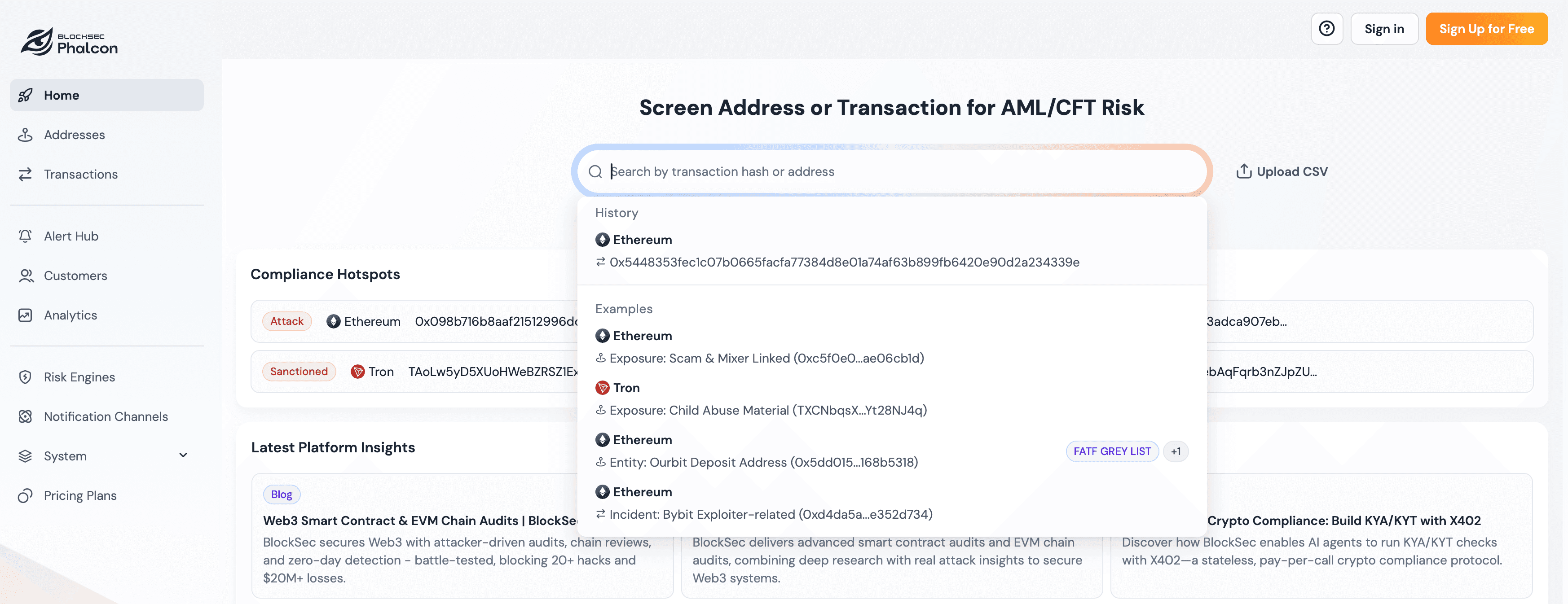
Indexing continuous ledger data serves as the data layer for risk evaluation. Know Your Transaction (KYT) pipelines must ingest transaction events across multiple mainnets concurrently. Moving beyond static block queries, these services analyze historical address interactions, tracking asset routes across mixing protocols, sanctioned endpoints, and unregulated exchanges. The processing engine needs sub-second latency to flag non-compliant deposits or intercept outgoing transfers before ledger finality is reached.
Automated Alert Generation and Risk Scoring Systems
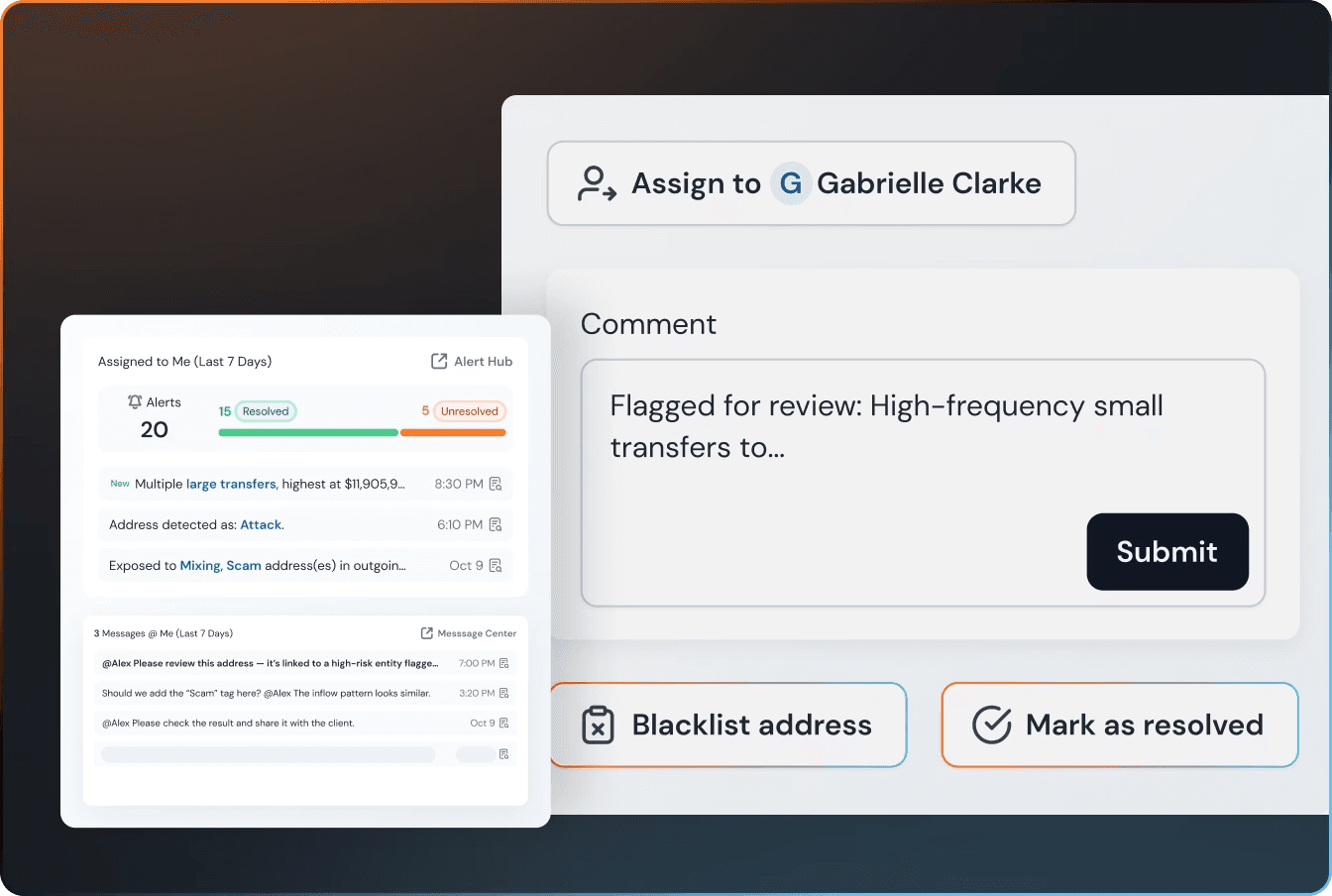
Unfiltered block data creates operational noise. The architecture requires a risk scoring mechanism to evaluate transactions against documented threat vectors. Using rule-based and probabilistic models, the system applies a quantitative risk parameter to interacting addresses. Hitting specific parameter thresholds triggers automated alerts. To mitigate alert fatigue, which slows down compliance operations, the scoring logic requires modular configurability, enabling technical leads to adjust specific behavioral weights according to the VASP's historical transaction profile and local compliance requirements .
API-Driven Cross-Border Data Synchronization
Operating a VASP across multiple regions introduces data consistency problems. Establishing a centralized API gateway maintains synchronization for user risk states and alert histories among distributed regional clusters. This configuration ensures an entity restricted in the European cluster is concurrently flagged by the Asian deployment. The API mesh must handle field-level encryption to satisfy regional privacy frameworks, such as GDPR, while keeping relational databases synchronized across the global infrastructure.
Step-by-Step Guide to Building Your Architecture from Scratch
Deploying this infrastructure demands methodical execution starting from explicit technical documentation. Engineering teams must integrate high-availability analytics APIs and manage continuous data ingestion protocols to handle on-chain volume spikes without degrading system performance.
Step 1: Defining Multi-Jurisdiction Technical Requirements
The initial sprint involves mapping operational jurisdictions into database specifications. Technical leads document reporting thresholds, data retention periods, and privacy restrictions for every active region. This mapping dictates the database architecture, detailing how identity records, wallet addresses, and transaction hashes relate. It also determines the role-based access control (RBAC) permissions, ensuring compliance personnel only interact with data structures permitted by their regional authorization.
Step 2: Integrating High-Throughput Analytics APIs
Deploying proprietary indexing nodes for every blockchain represents a high maintenance overhead. Efficient architectures utilize established, high-throughput analytics APIs for data enrichment. These external endpoints supply contextual on-chain intelligence, such as address clustering and illicit exposure metrics. Engineering efforts should focus on designing resilient middleware to handle API rate limiting, implement circuit breakers during third-party service degradation, and cache frequent queries to reduce redundant external calls.
Step 3: Managing 24/7 Blockchain Data Ingestion Pipelines
Digital asset networks produce continuous block data, necessitating round-the-clock data ingestion mechanisms. The infrastructure typically utilizes event-driven architectures, utilizing messaging queues like Apache Kafka or AWS Kinesis to buffer incoming transaction streams before distributing them to analytical workers. Engineers configure automated horizontal scaling rules and health monitoring to handle sudden increases in network congestion, guaranteeing that risk evaluation latency does not slow down the primary exchange matching engine.
Tackling the Core Bottleneck: STR and SAR Reporting Pain Points
While monitoring heuristics are mature, mapping complex blockchain variables into legacy regulatory structures persists as an operational blocker. The structural overhead of compiling detailed narrative reports consumes engineering and compliance bandwidth, reducing overall processing throughput.
Translating Complex On-Chain Data into TradFi Templates
The workflow friction between identifying an anomalous interaction and submitting a formal report remains high. While KYT modules generate alerts for unusual contract executions within milliseconds, compliance analysts manually extract this raw output and map it onto rigid legacy templates. These forms demand traditional banking identifiers—clearing paths, branch codes, and SWIFT numbers—which lack direct equivalents in decentralized protocols. Analysts allocate hours mapping cryptographic proofs from block explorers to standardized regulatory fields.
Structuring Narratives: Facts, Basis, Suspicion, and Timeline
Regulatory agencies require formatted, logically sequenced documentation rather than raw telemetry. A compliant SAR or STR must explicitly detail the transaction Facts, the statutory Basis, the specific Suspicion rationale, and a chronological Timeline. Writing this manually demands cross-disciplinary expertise. Analysts explain fund movements through routing obfuscation tools or cross-chain protocols in plain text for non-technical investigators. Translating cryptographic topology into standard prose introduces high rates of formatting and factual errors.
The Manual Time-Drain of Multi-Region Filing for Single Transactions
Current operational metrics indicate a severe imbalance: while a system flags an on-chain event quickly, compiling a regulatory-compliant STR/SAR takes hours or even entire shifts. This processing delay compounds in cross-border deployments. A single flagged event from an international user may require concurrent submissions to FinCEN, JFIU, and STRO. Since each authority maintains different structural preferences, compliance teams waste bandwidth on repetitive, manual formatting for the same underlying transaction data [3].
Streamlining Workflows with Automated Reporting Solutions
Resolving the documentation delay requires integrating on-chain data pipelines directly with specific regulatory forms. Implementing dedicated reporting solutions enables VASPs to replace manual data entry with standardized, automated generation workflows.
Deep Integration of Global Compliance Rule Bases
To optimize the reporting pipeline, the software layer must advance past simple alert notifications. Modern architecture incorporates global compliance schemas directly into the application layer. By maintaining a centralized, version-controlled library of statutory templates, the application automatically maps detected on-chain parameters to the corresponding regulatory inputs. This automated mapping removes the manual decision-making process regarding specific field requirements for FinCEN compared to FINTRAC.
Auto-Generating Jurisdiction-Specific Drafts (US, SG, HK)
System efficiency improves significantly when narrative construction is automated. Specialized modules process raw transactional data—such as tracking asset flows through a mixing protocol—and programmatically compile a structured text narrative. This logic ensures the facts, basis, suspicion, and timeline sections are populated accurately based on the transaction hash. Generating region-specific drafts for authorities in the US, Singapore, or Hong Kong reduces the manual drafting burden on compliance analysts.
Achieving One-Click Reporting with Phalcon Compliance
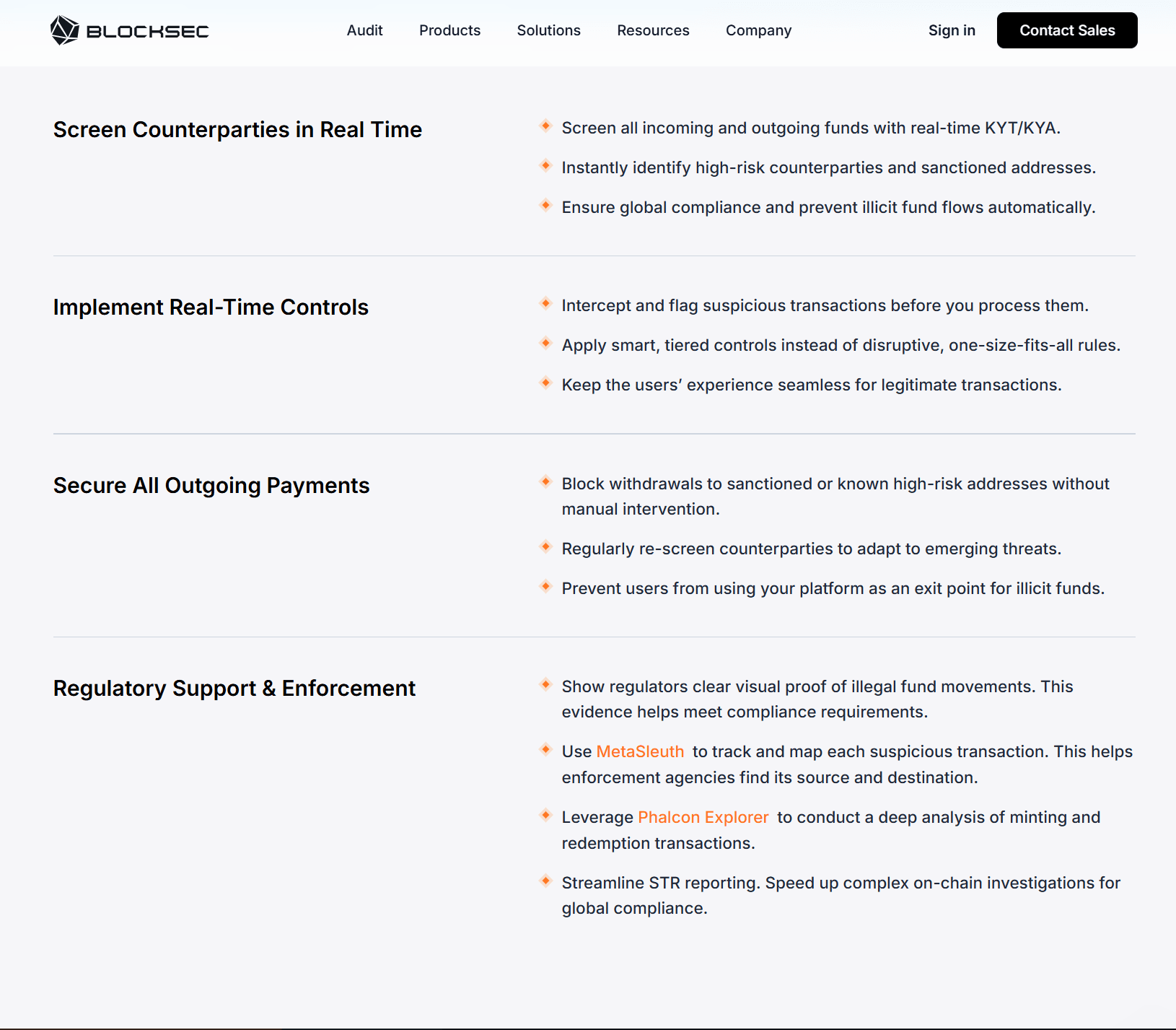
For technical leaders aiming to unblock this workflow, integrating specialized tools like Phalcon Compliance provides a direct resolution. Phalcon Compliance functions by coupling on-chain analytics with maintained global regulatory formatting rules. It tracks asset lineage, maps risk variables, and programmatically generates a compliant suspicious activity narrative generation document formatted for the specified jurisdiction. This shifts compliance staff from executing repetitive data entry tasks to performing higher-level quality assurance checks prior to submission. This integration converts a historically resource-intensive STR/SAR filing pipeline into an optimized operation, aligning system throughput with regulatory demands.
FAQ on Scaling VASP Compliance Technology
Technical directors face predictable deployment hurdles when scaling risk infrastructure. Identifying necessary system features, parsing overlapping cross-border mandates, and optimizing false positive ratios are critical steps for maintaining functional compliance operations over time.
What is the most critical feature in crypto compliance software?
The primary requirement is technical interoperability between real-time data ingestion and the regulatory reporting layer. Generating alerts is functionally incomplete; the capability to automatically map detected on-chain variables into structured, region-specific reports is the mechanism that mitigates regulatory exposure and prevents operational backlog.
How do systems handle overlapping STR requirements across borders?
Scalable deployments manage overlapping mandates through a unified data processing layer connected to modular output templates. The infrastructure indexes the transaction telemetry once, parses the required variables, and routes the dataset through specific jurisdictional rule engines. This configuration allows simultaneous generation of a FinCEN SAR and a JFIU STR from a single incident without duplicate manual entry.
How can tech teams reduce the time spent on false positive alerts?
Engineering teams lower false positive ratios by deploying probabilistic risk scoring models that evaluate historical wallet behaviors instead of static identifier lists. Incorporating feedback mechanisms—where analysts input false positive markers to adjust algorithm weights—allows the system to calibrate its detection thresholds over time, ensuring manual review queues are reserved for high-probability incidents.
Conclusion
Engineering a native compliance architecture requires aligning high-throughput data processing with stringent regulatory schemas. By documenting the technical obligations across operational jurisdictions and deploying integrated systems that index, flag, and automatically format suspicious activity logs, VASPs maintain operational continuity. Integrating automated documentation features into the reporting pipeline serves as the primary technical strategy for managing compliance volume in expanding financial deployments.