
Explainable crypto AML risk scoring returns the named signals, the quantified exposure, and the behavioral pattern behind every decision. It replaces a bare risk level a compliance team cannot defend. The model is sometimes called glass-box scoring, because an auditor, a regulator, or a senior analyst can retrace exactly why an address or transaction was flagged. It helps compliance teams review alerts, document decisions, and prepare for audits. This page is part of the AML Compliance Hub.
What Explainable Risk Scoring Means
Explainable risk scoring, sometimes called glass-box scoring, is a model where each risk decision returns the named signals and the quantified exposure behind it, so the result can be retraced and independently re-checked. The defining property is not the score itself but the audit trail attached to it: which indicator fired, how much exposure it represents, and which behavioral pattern was matched.
A black-box score, by contrast, returns a risk tier or a number with no usable basis. A compliance officer sees "high risk" and cannot tell whether the trigger was a sanctions hit, a mixing service, or a dark-market cluster. The decision is real, but the reasoning is sealed inside the model.
Crypto AML decisions are not pure machine-learning outputs. They feed SAR filings, account closures, transaction freezes, and regulator correspondence. Each of those downstream actions demands a defensible basis.
Why Explainability Matters
The cost of a black-box score is paid downstream: in false-positive triage, in automated disposition that cannot be audited, and in effectiveness reviews that cannot be independently run. When a flagged address turns out to be an exchange hot wallet, a team that cannot see why the score fired has no fast path to clear it.
Compliance officers voice a recurring pain that a black-box risk score cannot be triaged when a false positive lands and cannot be defended in an audit or examination. The pain is not theoretical. It shows up as alert queues that drain slower than they fill, as auto-block rules (a rule the firm implements in its own gate) that no one will sign off on, and as metrics that collapse the moment a supervisor asks for the underlying reasoning.
A risk-based AML program is expected to substantiate its screening decisions to a supervisor, which makes an inspectable decision basis a regulatory expectation rather than a product preference. The FATF risk framework treats the risk-based approach as the default for virtual asset businesses, and FinCEN guidance on virtual currency reinforces the same expectation at the national level. A risk-based approach is credible only when each decision can be explained.
How Explainable Scoring Works
Explainable scoring is defensible by construction because every decision returns a traceable judgment basis, a quantified exposure figure, and an explainable behavioral pattern. These are the same three properties an auditor asks for when reviewing a filing. Explainability and audit defensibility are the same property seen from two sides.
Audit defensibility is the angle that separates an explainable model from a marketing claim. An auditor reviewing a flagged transaction does not ask whether the score is high. The auditor asks which signal fired, how much exposure it represents, and whether the behavioral pattern that triggered the alert can be inspected. Phalcon Compliance makes the decision basis inspectable by exposing 200+ signal types organized into 17 Risk Indicator categories as a transparent set, where every risk decision returns the named indicator IDs that drove it. Risk Exposure Engine quantifies exposure as Exposure Value in USD and Exposure Percentage, so the size of a risk reads as a number that can be re-checked rather than inferred from a tier label. Behavioral Risk Engine ships 3 address behavior templates and 2 transaction behavior templates, each detected anomaly traceable to the template that produced it. These are the three properties an auditor can re-trace. The exposure signals that feed a score, and how risk propagates from direct and indirect contact, sit on their own page.
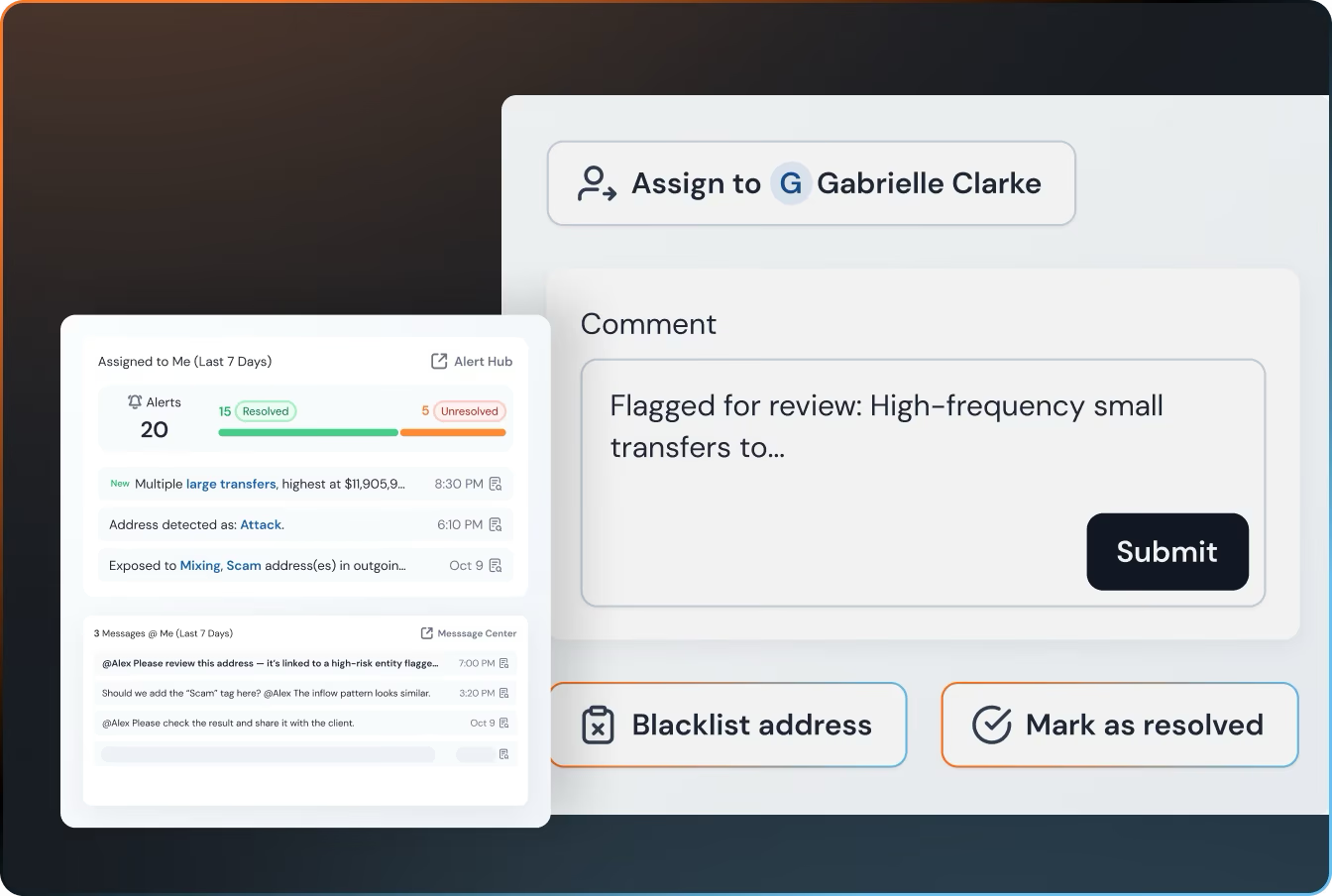 Phalcon Compliance draws on a database of more than 600 million labeled addresses and a corpus of more than 200 signal types, refreshed around the clock.
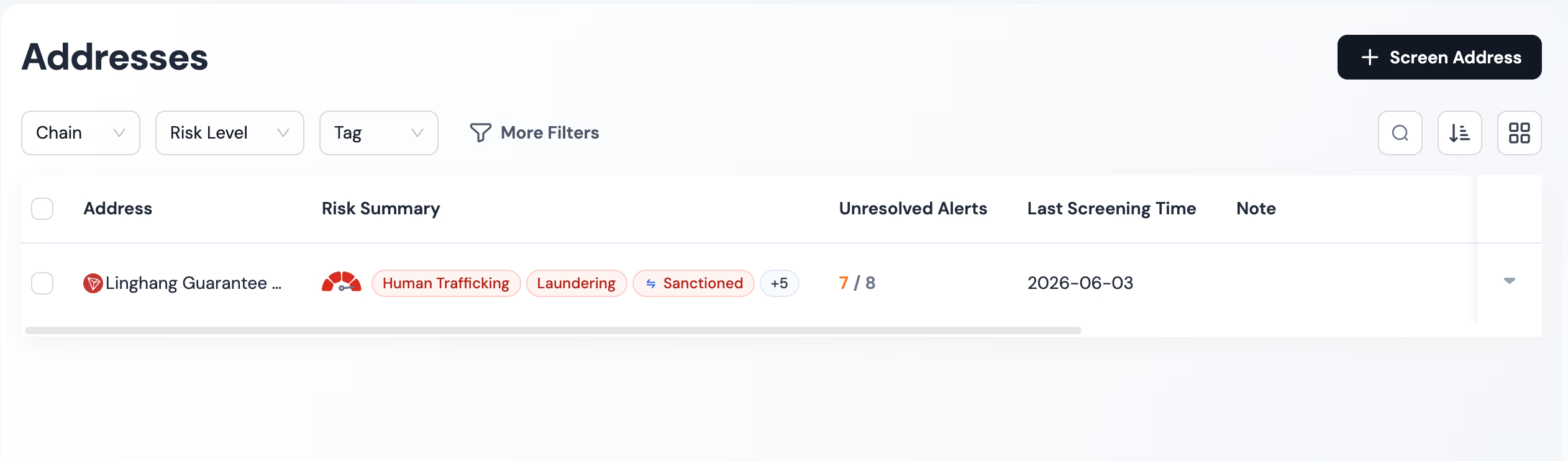 API responses return the decision basis and data provenance behind each risk judgment, so a compliance officer or auditor can independently re-check how a screening result was reached. The full product specification of the risk engine, including the indicator taxonomy and the API response shape, is documented in the crypto AML compliance platform reference. This page focuses on why those properties make a score defensible, rather than restating every parameter. Phalcon Compliance is the example of an explainable risk-scoring model: 17 Risk Indicator categories with each ID traceable, Risk Exposure quantified in USD and percentage terms, and Behavioral Risk patterns each tied to a named template.
Explainable Scoring vs Black-Box AI
What is the real difference between explainable scoring and black-box AI? The axis that matters for audit defensibility is what the auditor can re-trace without invoking vendor authority. The gap is not academic. It determines whether a team can clear a false positive in minutes, whether an auto-block rule can be signed off, and whether a regulator question can be answered from the system of record.
| Auditor question | Black-box answer | Explainable answer |
|---|---|---|
| Which signal fired? | "High risk" tier, no detail | Named Risk Indicator ID, traceable |
| How much exposure? | Implicit in the tier | Exposure Value in USD and Exposure Percentage |
| What pattern triggered it? | Hidden weight | Address or transaction template, inspectable |
| Can I re-check this? | Only by trusting the vendor | Yes, via API response with provenance |
The practical difference is simple: an explainable score shows the evidence behind the result. A compliance team reviews that evidence before it uses the score for an automated or manual decision.
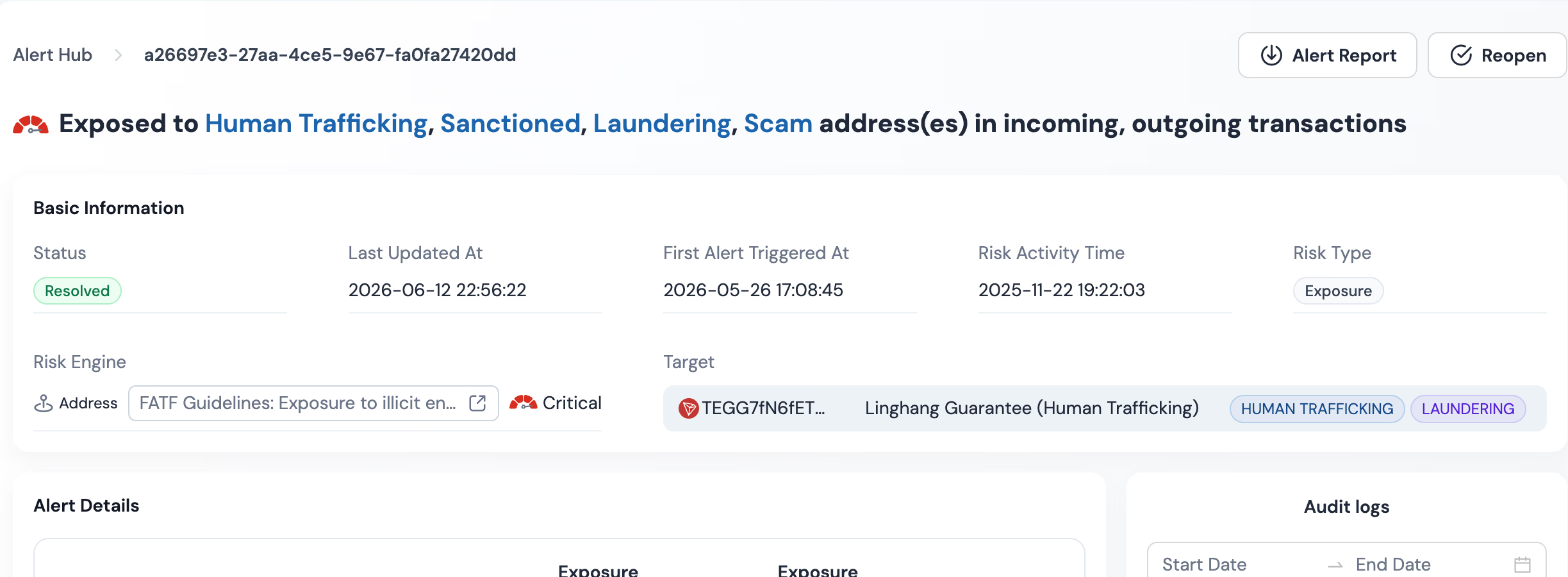
See Phalcon Compliance Explainable Risk Scoring
If your team needs a risk score that survives an audit, the next step is to see the explainable risk-scoring model run on real data. Check how 200+ signal types across 17 Risk Indicator categories surface inside a real screening response. Review Risk Exposure in USD and percentage terms and the Behavioral Risk templates behind each alert, with regional applicability across multiple key jurisdictions. See Phalcon Compliance explainable risk scoring and decide whether the decision basis is defensible enough to put into production. For the broader question of whether the tool actually works on your own data, the independent verification procedure is covered in a separate guide.