
Crypto AML false-positive rates routinely run so high that real risks get buried under noise. Cutting them is the largest lever a compliance team has to make monitoring scale. The core problem is structural. List-based and rule-based screening misses behavioral anomalies. Black-box scoring flags risk without explaining why, so analysts cannot confidently auto-close the low-risk alerts. Reducing false positives means solving both sides: detecting what rules miss, and making every judgment traceable enough to act on. That is what crypto AML compliance platforms are being asked to do. This page is part of the AML Compliance Hub.
Why Crypto AML False-Positive Rates Are So High
Crypto AML false-positive rates routinely overwhelm compliance teams, as industry reports and practitioner forums consistently describe. The volume is not a sign of poor tooling alone. Static, rules-based screening simply cannot keep up with how fast on-chain laundering tactics evolve. Two forces compound the problem: behavioral risk that no static list can catch, and scoring outputs that give compliance officers no basis to auto-close the noise.
The first force is that rule-based and sanctions-list screening is reactive. Static lists flag known bad addresses, but chain-hopping, mixer routing, and improvised layering move faster than list updates. A wallet that is clean on a list today can transact with a mixer tonight, and the list will never show it. The behavior is the risk, and the behavior is exactly what a static rule cannot see. That propagation is also where most false positives originate, which is why how risk propagates from direct and indirect contact determines where tuning must focus.
The second force sits inside the scoring layer. When a model returns only a risk tier without the evidence behind it, the compliance officer reviewing the alert has no defensible basis to close it. Closing an unexplained alert is itself a compliance risk, so the safer move is to escalate and review by hand. That choice is rational for the analyst and unsustainable for the program. FinCEN's AML program rule (31 CFR 1022.210) and suspicious activity reporting rule (31 CFR 1022.320), taken together, are what makes continuous monitoring necessary, which puts money services businesses in the bind of detecting more while being able to close less.
Two Root Causes: Missed Behavioral Anomalies vs Un-Closeable Black-Box Alerts
Where does the noise come from? Two separate failures drive it. On the missed-alert side, rules and lists cannot detect behavioral patterns like smurfing, rapid layering, or sudden emergence, so risky wallets pass through unscreened. On the noise side, black-box scoring flags risk without exposing the reason. Analysts must then review every alert by hand, because closing one without justification is an audit liability. The two failures push in opposite directions and both inflate the queue.
The missed-alert side is a detection gap. Pure list matching catches addresses that already appear on a sanctions or risk list. It cannot catch a wallet that fragments deposits into many small transfers to evade thresholds, or one that receives funds and moves them on within minutes. These are behavioral signals, not identity signals. A program that relies on rules alone will under-detect precisely the patterns examiners now expect covered.
The noise side is a closure gap. A black-box score of "high risk" tells an analyst that something is wrong but not what. To close that alert, the analyst needs a reason that survives an audit: which indicator fired, which interaction triggered it, and how much exposure is involved. Without that, the alert stays open, gets escalated, and consumes review time even when the underlying activity is benign. Alert fatigue, analyst burnout, and a queue that never clears are the downstream symptoms.
| Dimension | Rules / Lists Only | Black-Box AI Score | Explainable Score |
|---|---|---|---|
| Behavioral anomaly detection | Cannot detect | Detects | Detects |
| Traceable judgment basis | None | Black box | Each hit tied to a Risk Indicator |
| Exposure quantification | None | Tier only | Exposure Value and Percentage |
| Auditable auto-close | No | No, analyst cannot justify | Yes, explanation enables auto-disposition |
Explainable Scoring: Traceable Judgments and Quantified Exposure
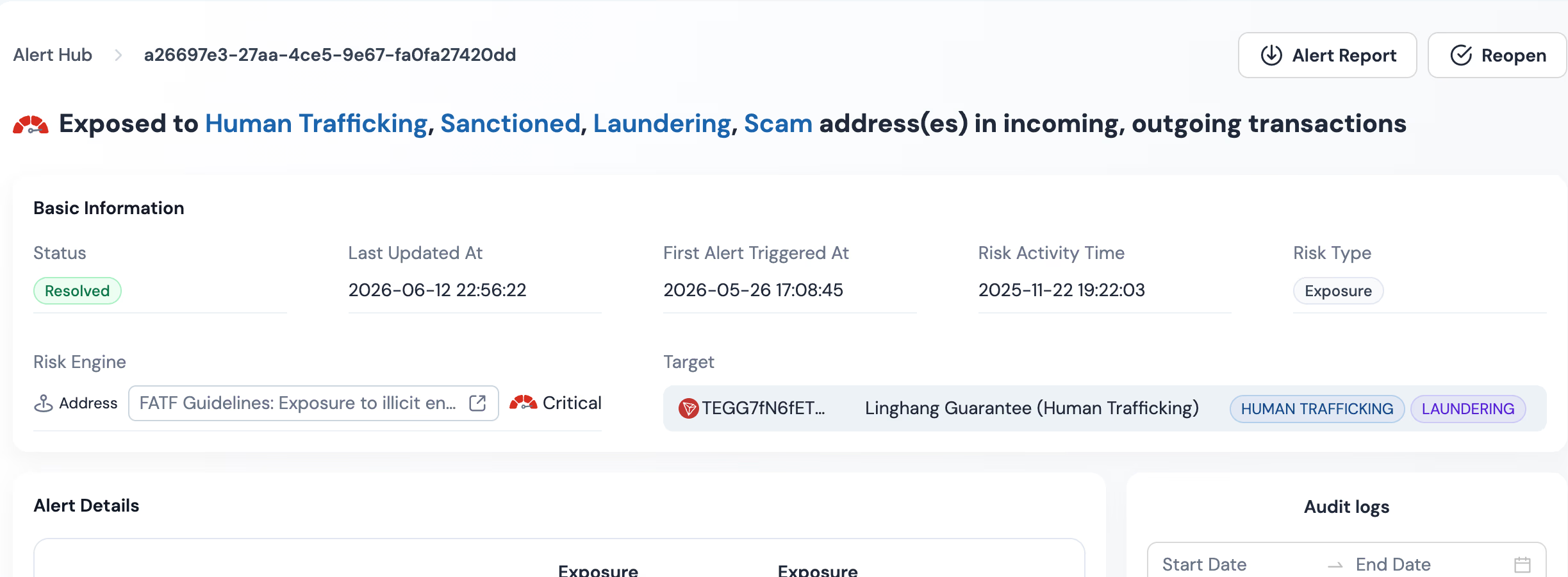
Reducing false positives requires scoring that an analyst can defend without re-investigating each alert. Phalcon Compliance makes every judgment traceable through 17 Risk Indicator categories. It quantifies how much of a wallet's flow is tainted through a Risk Exposure Engine, and it detects the behavioral patterns rules miss through a Behavioral Risk Engine. Each alert carries its evidence with it, so low-risk alerts can be triaged or auto-closed on a documented basis while high-risk ones are escalated.
The 17 Risk Indicator categories are the taxonomy behind every judgment: Sanctioned, Terrorist Financing, Human Trafficking, Drug Trafficking, Attack, Scam, Ransomware, and Child Abuse Material. The rest are Laundering, Mixing, Dark Market, Darkweb Business, Blocked, Gambling, No KYC Exchange, FATF High Risk Jurisdiction, and FATF Grey List Jurisdiction. Each indicator is independently traceable, so when an alert fires the compliance officer sees which indicator triggered and the underlying address interactions behind it. That is what separates an explainable score from a black-box tier: the reason is attached to the alert, not hidden behind it.
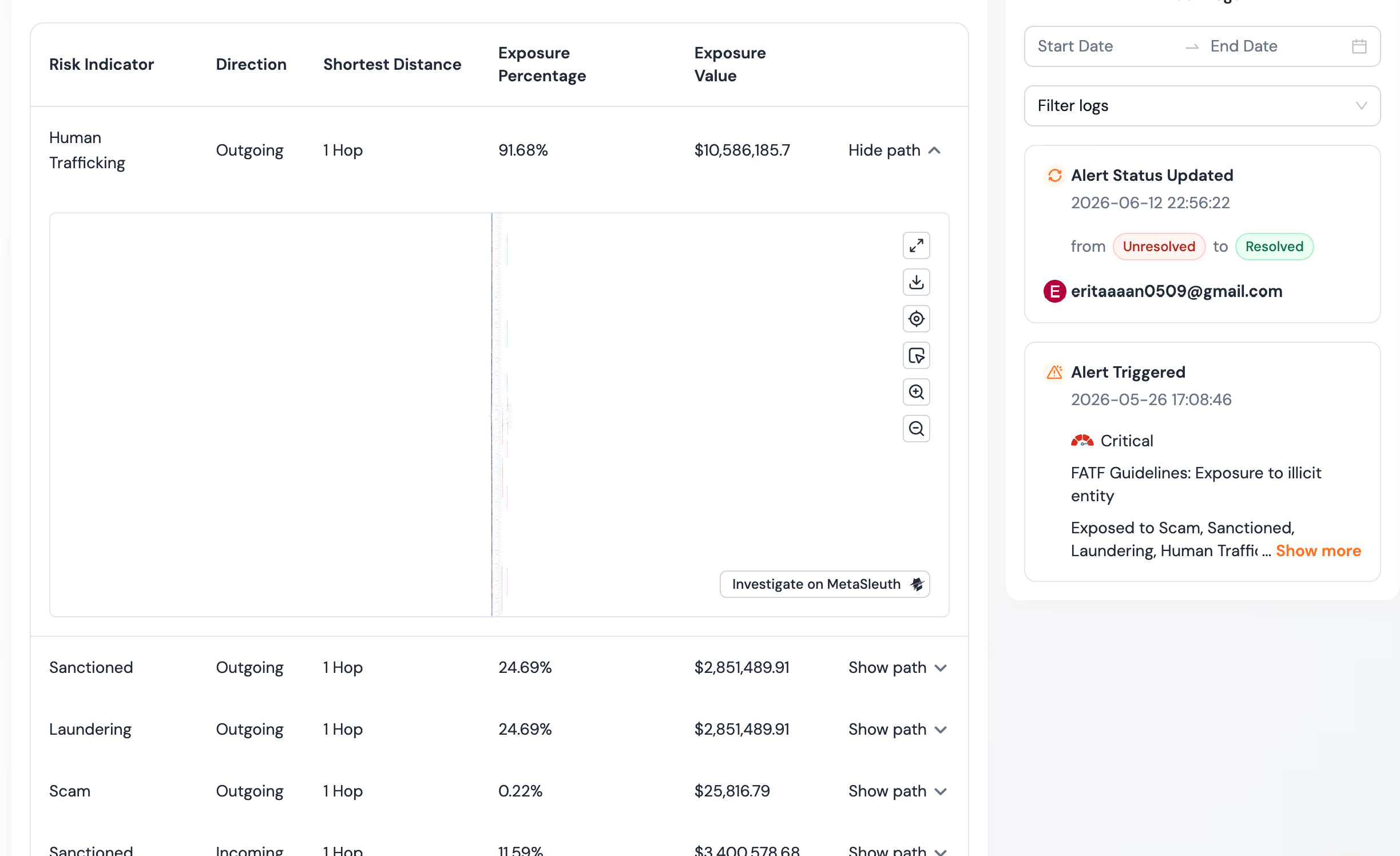
The Risk Exposure Engine turns a qualitative risk read into an auditable number. Exposure Value quantifies the total USD value of assets that originated from or interacted with a risk source, and Exposure Percentage expresses the tainted share of total inflows or outflows. A wallet flagged for mixer exposure is no longer just "high risk." It carries a documented figure that an analyst can review, a regulator can read, and a disposition rule can act on. That is what makes exposure a quantified input to triage rather than a label.
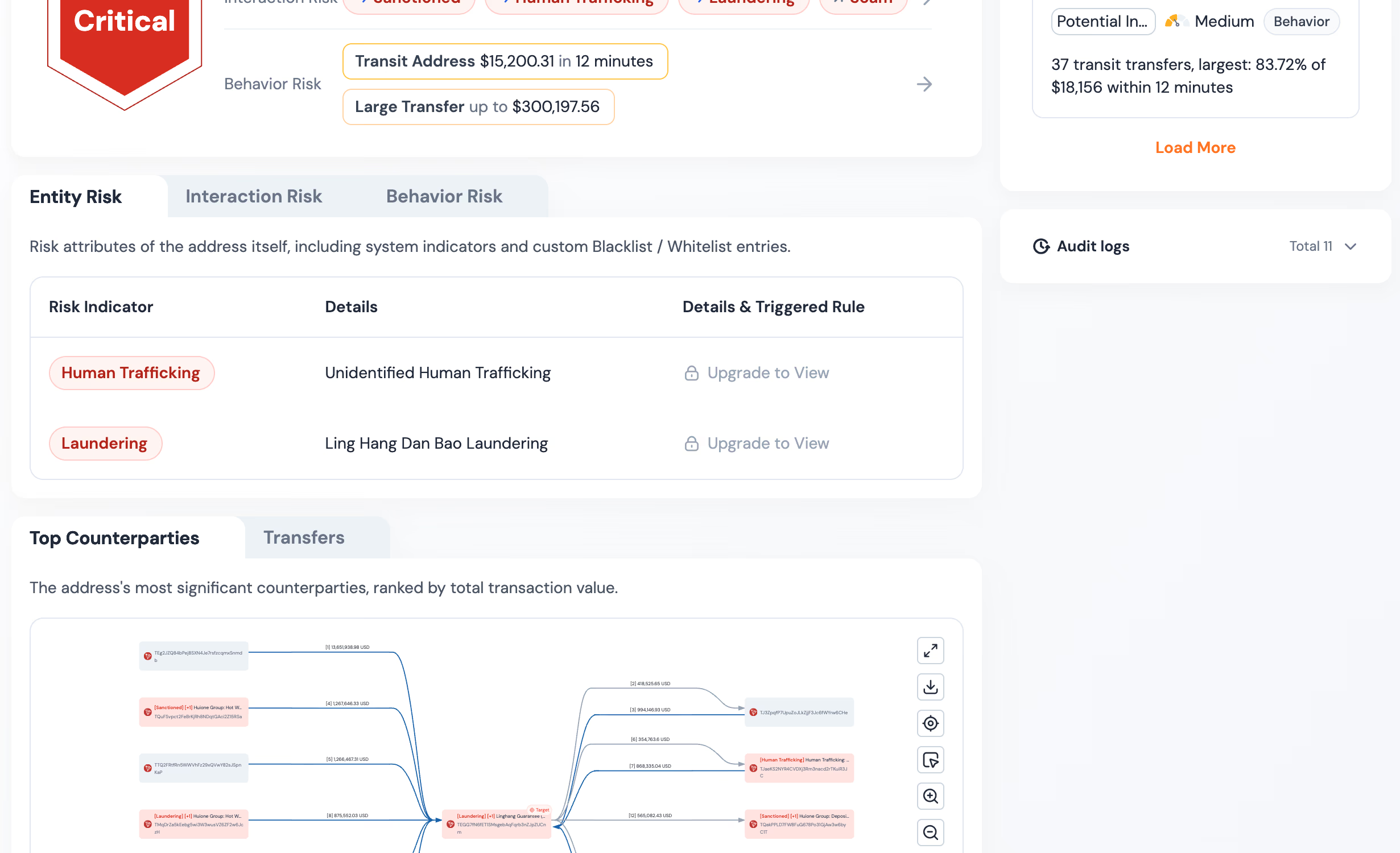
The Behavioral Risk Engine detects the patterns that static lists cannot. On the address side, three templates flag wallets that move large values above a threshold, transact in small amounts consistent with smurfing, or pass funds through rapidly. On the transaction side, two templates flag transfers that cross a value threshold or move on within a short window after arrival. Together these five templates cover the layering and structuring behaviors that rules miss. They attach the matched pattern to the alert, so the closure is documented.
Every alert arrives with its evidence attached. The Risk Indicator states what was found, the Risk Exposure quantifies how much is involved, and the Behavioral match states which pattern triggered. An analyst reviewing the alert can confirm the basis, apply a disposition, and move on. The review is faster, the audit trail is intact, and low-risk alerts stop consuming the time reserved for genuine investigations. That is the operating premise of the Phalcon Compliance platform: every alert carries the indicator, exposure, and behavioral basis needed to triage or auto-close it on a documented footing.
The Legal Boundary of Auto-Closing Alerts: Explainability as Prerequisite
Can a compliance team legally auto-close alerts? Yes, but only when each closed alert carries a traceable explanation. A risk-based approach does not require a compliance team to review every alert manually. It requires every decision, including a decision to close, to be explainable on examination. Explainable scoring makes that possible. Low-risk alerts with documented evidence can be auto-dispositioned, while high-risk alerts are escalated with their audit trail intact. Workload drops without breaking defensibility.
Whether auto-closing alerts is lawful is a live debate among compliance practitioners. The regulatory baseline is not that every alert must be manually reviewed. It is that every disposition must be defensible. A program that auto-closes alerts without recording why has no audit trail to show an examiner. A program that records the indicator, the exposure, and the matched pattern behind every closure does.
The FATF risk-based approach for virtual asset service providers makes the principle explicit. Regulators do not expect perfection. They expect each decision to be explainable, proportionate to the risk identified, and documented. Auto-disposition is compatible with that standard when the scoring layer exposes its reasoning. A low-risk alert closed on the basis of a traceable indicator and a low exposure percentage is a documented decision. A low-risk alert closed on the basis of an opaque tier is not.
This is how false-positive volume comes down without crossing the compliance line. Explainability enables auditable auto-close. Auditable auto-close removes low-risk alerts from the manual queue. The manual queue shrinks to the alerts that genuinely need a human, and each of those arrives with its evidence already attached. The workload reduction is a consequence of the explanation, not a workaround.
Disclaimer: This section addresses the auto-close debate in general terms. It is not legal advice. Automated disposition rules and their acceptability vary by jurisdiction, by the underlying obligation, and by the specific facts of a program. Consult qualified compliance and legal counsel before adopting or retiring any auto-close policy.
Reduce Alert Noise With Explainable Scoring
The path to fewer false positives runs through explainability. Rules and lists miss behavioral risk. Black-box scores generate alerts that analysts cannot safely close. Explainable scoring closes both gaps: every alert carries the Risk Indicator that fired, the quantified exposure behind it, and the behavioral pattern that triggered it. Low-risk alerts can be triaged or auto-closed on a documented basis. High-risk alerts are escalated with their audit trail intact.
See how Phalcon Compliance's explainable risk scoring reduces alert noise, and evaluate it against your own transaction flow.