
The Short Answer
Your seed phrase is the one thing that recreates your wallet, so whoever holds it holds your money. Safe storage comes down to four words: offline, spread out, recoverable, and never digitized. Most stolen wallets trace back to breaking one of those rules, and the five mistakes below are simply the common ways people break them.
A seed phrase is your private keys written as ordinary words. It is not a password that protects the wallet; it is the wallet, in recoverable form. That is why the rules are strict: a photograph of the phrase is a permanent copy you cannot recall, and a cloud backup is a copy you handed to strangers.
Nothing on this page requires a product. Storage is a discipline, and it is yours alone. One of the five mistakes does connect to a separate problem, signing things you cannot read, and that one has a tool side to it, which the last section marks out honestly.
Five Mistakes That Empty Wallets
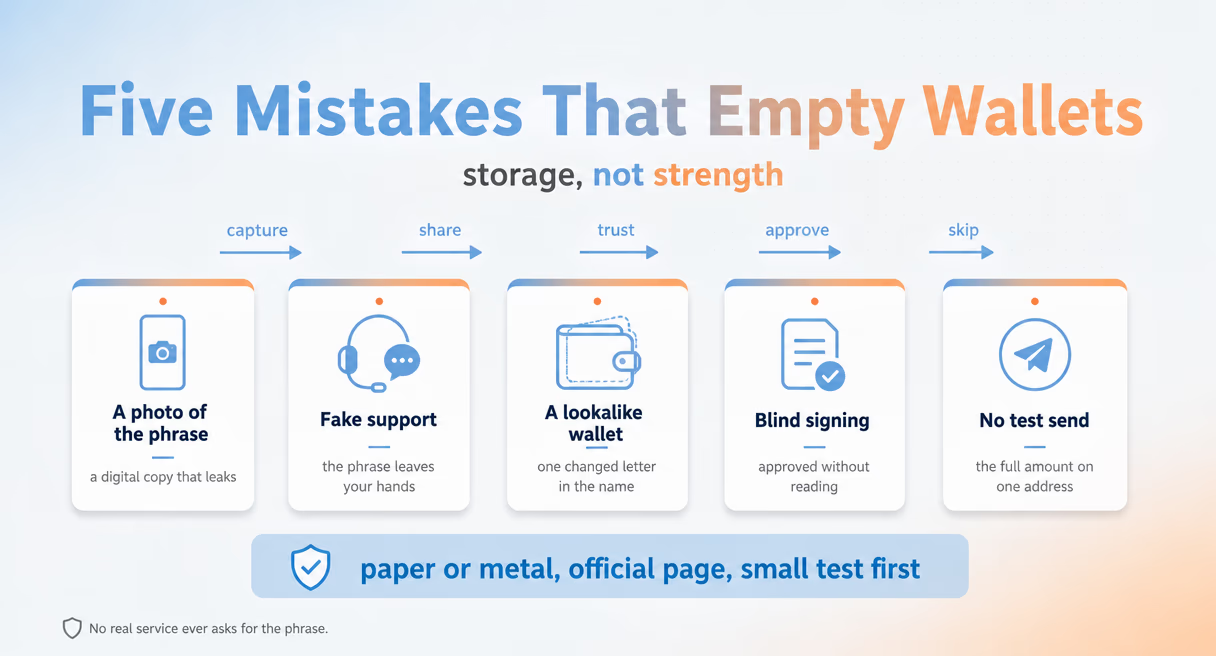
Five errors show up again and again in lost and stolen wallets: photographing the seed phrase, trusting fake support, installing a fake wallet, blind signing transactions, and skipping the test transaction. The first three hand your keys to someone else. The fourth approves a transaction you never read. The fifth sends real money to an unconfirmed address.
| Mistake | What goes wrong | The fix |
|---|---|---|
| Photographing the phrase | A permanent digital copy you cannot recall | Keep it on paper or metal only |
| Trusting fake support | The phrase leaves your hands entirely | No real service ever asks for it |
| Installing a fake wallet | A lookalike app harvests the phrase | Download from the official page only |
| Blind signing | A signature approves content you never read | Read or translate before approving |
| Skipping the test transaction | The full amount rides on one address | Send a small amount first |
Photographing your seed phrase turns your recovery words into a digital file, and digital files leak: phone backups, cloud photo sync, malware, or the next person who scrolls your gallery. The phrase was designed to live on paper and metal, not in a camera roll.
Trusting fake support is the second. No legitimate service will ever ask for your seed phrase: not to check identity, not to fix a problem, not to unlock funds. Anyone who asks for it is running a scam, full stop. The Federal Trade Commission publishes regular consumer warnings on fake support and impersonation tricks of exactly this kind, and the FBI's Internet Crime Complaint Center is where the losses get reported and counted.
Installing a fake wallet is the third. App stores carry lookalikes built to harvest phrases, and a convincing clone with one changed letter in the name is enough. Download wallet software only from the official project page, and treat an unfamiliar store listing as hostile until proven otherwise.
Blind signing is the fourth: approving a transaction your screen shows as raw data you cannot read. A single signature can grant a contract unlimited access to your tokens or perform an upgrade you never intended. This one deserves its own page, and it has one: What Is Blind Signing in Crypto?.
Skipping the test transaction is the fifth. Sending the full amount to a fresh address in one move gambles everything on the address being right and the network behaving. Send a small amount first, confirm it arrived, then send the rest.
How to Store a Seed Phrase Safely
Write the phrase on something that survives a house fire and keep copies in separate places. Two or three copies, different locations, no digital duplicates anywhere, and one rehearsal to prove you can actually recover the wallet. If you use multisig, add the wallet descriptor to the list of things you must back up.
Metal plates beat paper for the simple reason that paper burns and floods; any stamped or engraved steel plate from a reputable maker does the job, and the material matters more than the brand. Whatever the medium, write it once, carefully, and check it against the screen before you finish.
Copies exist because one copy is one disaster away from total loss. Two or three, stored in genuinely different places, is the standard shape: not two drawers of the same desk. Each new copy adds a place the phrase can be found, so the number stays small on purpose.
Where copies live follows the same logic. A home safe and a bank box in another district is the classic pair; a copy with a trusted family member works if the trust is real and the instructions are written down. The test for any location is simple: could one event, a fire, a flood, a burglary, reach both copies at once?
Never digitize means never: no photos, no cloud notes, no messages to yourself, no password manager entry containing the words. The moment the phrase exists as data, it can be copied without you knowing, and undoing that is impossible.
Rehearse the recovery. After storage is set, restore the wallet once from the physical backup in a clean environment, then move a small amount through it. A backup you have never tested is a hope, not a backup. And if you run a multisig wallet, remember that the seeds alone are not enough. The descriptor holding the xpubs and the policy is part of the backup, a cost the multisig decision page covers in detail.
Where Monitoring Helps, and Where It Cannot
A monitoring tool covers one of the five mistakes: the blind signing one. Safe{Wallet} Monitor translates what a transaction will do into readable language and warns before signing completes. It does not store your phrase, cannot stop you following a fake support chat, and will not catch a fake wallet install. Storage discipline and signing checks are different jobs.
That boundary is worth saying plainly because security advice often blurs it. How you store your phrase, whether you click a scammer's link, and what you install are operator decisions; a monitor watching transactions cannot see any of them. What it can see is the content of what you are about to sign, which is the one mistake on the list that hides inside a legitimate wallet doing its normal job.
So the routine splits cleanly. Storage: offline, spread, rehearsed, never digitized, descriptor included if multisig. Signing: read what you approve, with translation and warnings where the screen cannot help you. The wallet risk hub collects the full family, from the blind signing deep dive to the multisig decision page.