
What Crypto Sanctions Are
Crypto sanctions are the same legal restrictions the U.S. Treasury imposes everywhere else, pointed at blockchain property: designated addresses, blocked entities, and prohibited dealings that apply to coins as fully as to dollars. The rules are not crypto-shaped, but their effects on exchanges and wallets are, and that gap is what this page explains. The OFAC sanctions hub collects the related guides.
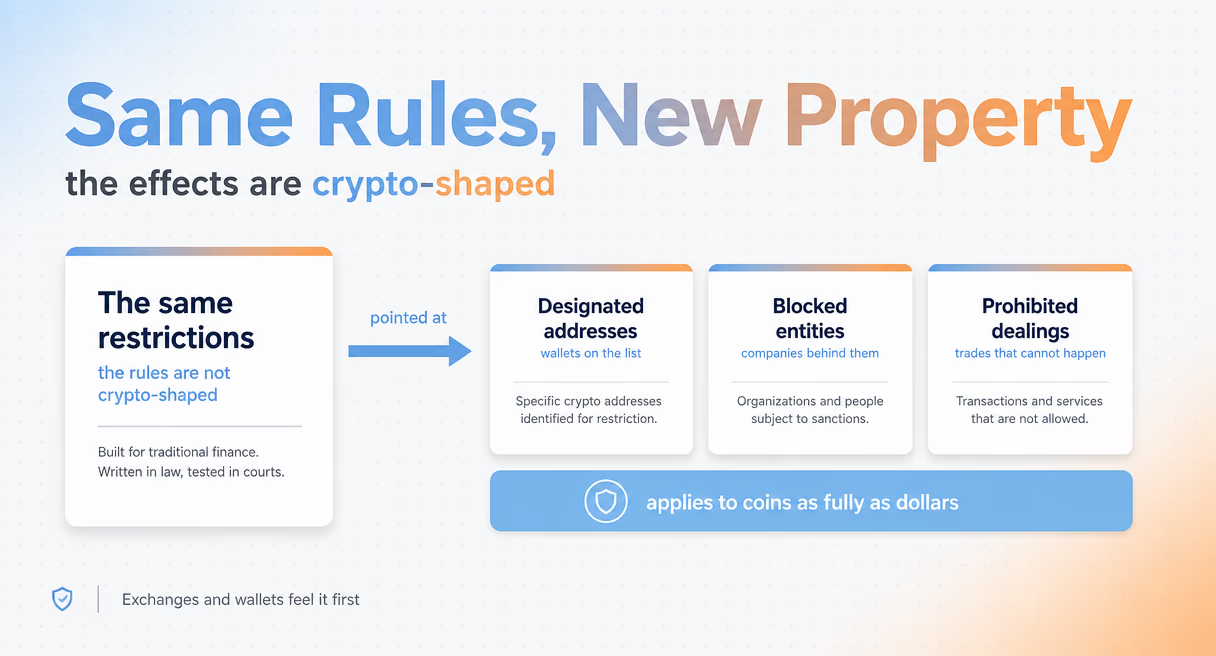
Start from the plain base. Sanctions programs define who is cut off; the SDN list names them; dealing with them becomes illegal for any business with a U.S. nexus, and none of that changes when the asset is a token. What changes is the surface: a chain address can hold blocked value, a service can sit in a listed cluster, and a wallet can route around borders faster than any bank.
OFAC put the sector on written notice with the sanctions compliance guidance it published for the virtual currency industry. That guidance applies the standard program frame, risk assessment through training, to firms whose customers arrive as addresses. The message in one line: same duties, new identifiers.
So the working definition for a crypto team is two-sided. Sanctions reach your customers when a person or company is designated, the SDN list side. They reach your chain when an address appears on a listed entry, the address side this page spends its middle sections on. Both sides are one duty.
How Sanctions Reach Blockchain Addresses
Addresses reach the list through designation: what OFAC publishes is an entry for a person or entity, and digital currency addresses attach to that entry as identifiers. Transfers touching them are blocked property for U.S.-nexus businesses. Listing is public and per-identifier, which turns the list into data a pipeline can check.
The mechanics are concrete. A designated service or person has wallet addresses published in the listing, those addresses join the sanctions data files, and screening systems compare every incoming deposit and outgoing withdrawal against them. The official Sanctions List Search tool makes the same data human-checkable, and it accepts digital currency addresses as a search input. OFAC also notes that the addresses on any entry are not likely to be exhaustive (FAQ 562).
What blocking means on chain is the part with teeth. Assets at a listed address are blocked, not deleted: they sit on the ledger, untouchable, and any business that moves them for a customer is handling blocked property. A service is restricted when it is itself designated, or when the ownership shadow from the 50 percent rule reaches the entity behind the address, so a clean-looking wallet can belong to a blocked tree.
| Layer | What a listing does | What your control checks |
|---|---|---|
| Address | Transfers become blocked property | Deposit and withdrawal screening |
| Entity | Dealings prohibited, assets frozen | Name and ownership screening |
| Service | Itself designated, or blocked via the 50 percent rule | Cluster and label screening |
The honest limit: addresses are many, spinoffs are cheap, and a listed actor's next wallet starts unlisted. That is why address screening is one layer of a stack that also watches clusters, labels, and behavior. It is also why the moment of designation, not the moment of your last check, is what the record must speak to. The mechanics of keeping current belong to the sanctions screening guide in this family.
How those rules reach addresses and dealings fills this page, with the OFAC sanctions hub one click away.
Crypto Sanctions Screening for Exchanges and Wallets
Screening for crypto sanctions means checking names, addresses, and clusters against current list data, at onboarding and inside every flow that moves value. Exchanges screen customers and deposits; wallet services screen counterparties; both keep records. The design question is where the check lives, and the answer is inside the pipeline.
For an exchange, three points carry the weight. Onboarding: the customer's name and identifiers against the list. Deposits: the sending address against listed and labeled addresses. Withdrawals: the destination address, again, at request time. A wallet service or payment product runs the same triangle smaller: counterparty names, source and destination addresses, and the chain of custody between them.
The record requirement does not shrink with the product. Every check that mattered must be reconstructable later: input, list evidence, outcome, owner, date. Checks integrated into deposit and withdrawal flows can record screening events automatically. The institution still has to preserve the relevant list evidence, human reasoning, and approvals, which is the design argument for capturing records in the pipeline rather than reconstructing them after value has moved.
The two halves meet at the deposit address, which is why exchanges treat it as the hinge of the whole flow. A name can be verified once and trusted for a season; an address is new every time it appears, and the sending side is never yours to check in advance. Screening at arrival is the only point where both halves are visible at once.
Phalcon Compliance screens this exact surface on both sides, checking the address and the transaction, the KYA and KYT halves of the same flow, with sanctioned entities among the risk categories it flags. Risk levels come back human-readable, so the alert that reaches your analyst carries the context a decision needs, and the check sits inside the approval path rather than beside it.
The piece tooling does not replace is judgment at the edge: a hit is a question and triage is the answer. The Phalcon Compliance page covers the plans and the pipeline details.
What Crypto Sanctions Mean for Off-Ramps
Off-ramps, the points where coins become bank money, are where crypto sanctions stop being a chain topic and become a banking one. The bank asks where the funds came from, and the answer must include sanctions screening. Exchanges feel listing pressure exactly there, which is why off-ramp design and screening design are the same conversation.
The pressure path is short. A listed or tainted source surfaces at the off-ramp, the bank flags it, and the exchange must show its screening history for the funds in question, or lose the rail. That is the practical meaning of enforcement reaching crypto, which the enforcement guide in this family documents with current numbers: the settlement is the end of a chain that usually starts with a records question.
Off-ramps also concentrate timing risk. Value moves toward cash at designation speed, and the screening that covers the moment is the screening that runs at withdrawal time against the current list, not yesterday's snapshot. Teams that pair deposit-side and withdrawal-side checks close the window; teams that screen only at onboarding leave it open for the life of the account.
For self-custody users the exposure is smaller but real. A wallet that received traced value can find itself refused at every ramp, with no violation and no recourse, which is why even non-institutional readers watch the address layer. The institutional summary is stricter: off-ramp access is earned with records, and records are written by pipeline screening.
The full picture, from the office that issues the lists to the programs examiners read, starts at the OFAC sanctions hub.