
To trace a crypto wallet address, read its inflows and outflows first, then expand the outgoing side one hop at a time. At each hop, read the label on the other side, group addresses that behave as one actor, and repeat until the funds reach a known exit, an exchange, a mixer, or a bridge. The incoming side tells you where funds came from; the outgoing side tells you where they went, and it is the outgoing side that leads to the person, service, or exchange behind the address.
Trace the Outgoing Side, Not Just the Incoming
Money moves forward, and the interesting part of the story is almost always downstream. A single hop shows you one address on the other end. A multi-hop path tells you where the money actually ended up. That second question is the one that matters for an investigation.
Think of an address as a junction, not a destination. Most investigations fail by stopping at the first hop. A hacker who drains a wallet rarely parks the proceeds in the same address: the funds hop through intermediate wallets before they settle somewhere that can be acted on. Record only the first hop and you record the middle of the story, not the ending. A mixer or a bridge in the middle of a path is not the answer, either; it is a sign that the person behind the funds is trying to make the answer harder to find.
What a Blockchain Explorer Shows (and Misses)
A blockchain explorer answers one question well: what did this address do in a single transaction. The input address, the output address, the amount, and the token all fit on one screen. That is where the picture stops. Explorers show single-hop data, not the path that follows: if funds leave a wallet and split across several addresses, an explorer shows the first hop only. It does not connect those next addresses into one graph, and it does not follow the trail across time or across chains. An explorer scoped to one network drops a path out of view at the bridge the moment it crosses chains.
The gap is not the data, because the data is all on-chain. The gap is the shape. An explorer gives you receipts; a tracing tool gives you a map. When the map feeds a compliance decision, the obligation behind it traces to the FATF standards. The difference matters the moment a path goes deeper than one hop.
The Wallet Tracing Workflow: Four Moves
Start from the anchor address. Read its inflows and outflows to understand what entered and what left, then expand the outgoing side one hop at a time. The loop has four moves. First, read the label on the other side: an address that carries a known service name is a finding, not just a string. Second, expand the outgoing side again and see where that address sends funds. Third, repeat until the path dead-ends, loops, or lands somewhere recognizable. Fourth, locate the exit: the end of most traces is an exchange deposit, a mixer, or a bridge, the point where the on-chain trail hands off to an off-chain party.
Two patterns keep the trail readable as it grows. Fan-out, one address splitting across many, often signals distribution or peel behavior; fan-in, many addresses converging on one, usually marks a consolidation point or a service deposit. And when several addresses behave as one actor, treating them as a single unit keeps both the path and the reasoning sound.
Labels are what turn the loop from mechanical into meaningful. A labeled database kept at the scale of hundreds of millions of addresses is what makes this layer usable on real cases rather than as one-off research. And a hop that lands on an address already named as an exchange, a mixer, or a known actor is the moment naming replaces guessing.
Reading Dead Ends: Mixers, Bridges, and Honest Limits
Every tracer hits the same three walls, and each has a standard treatment. Mixing services shatter paths into statistically anonymous fragments. Follow the funds up to the mixer's entry, write down exactly what you saw, and resume from the exits you have identified instead of guessing inside the pool. For the full boundary method, see How to Trace Stolen Crypto Through a Mixer. Cross-chain bridges move value into a different chain's address space, and that ends a single-chain trace. Continuing needs tooling that follows value across the major bridging routes, covered in How to Trace Stolen Crypto Funds Across Chains. Privacy coins sit outside this workflow entirely, and honest tracing practice says so plainly.
The habit that holds all of this together is cross-checking. Material findings deserve a second read before action, and confirming the timestamp and amount of the key transaction on a public block explorer is a zero-cost way to get one, recorded alongside what was checked. The US reporting side of those decisions sits with FinCEN.
How MetaSleuth Makes Wallet Tracing Actionable
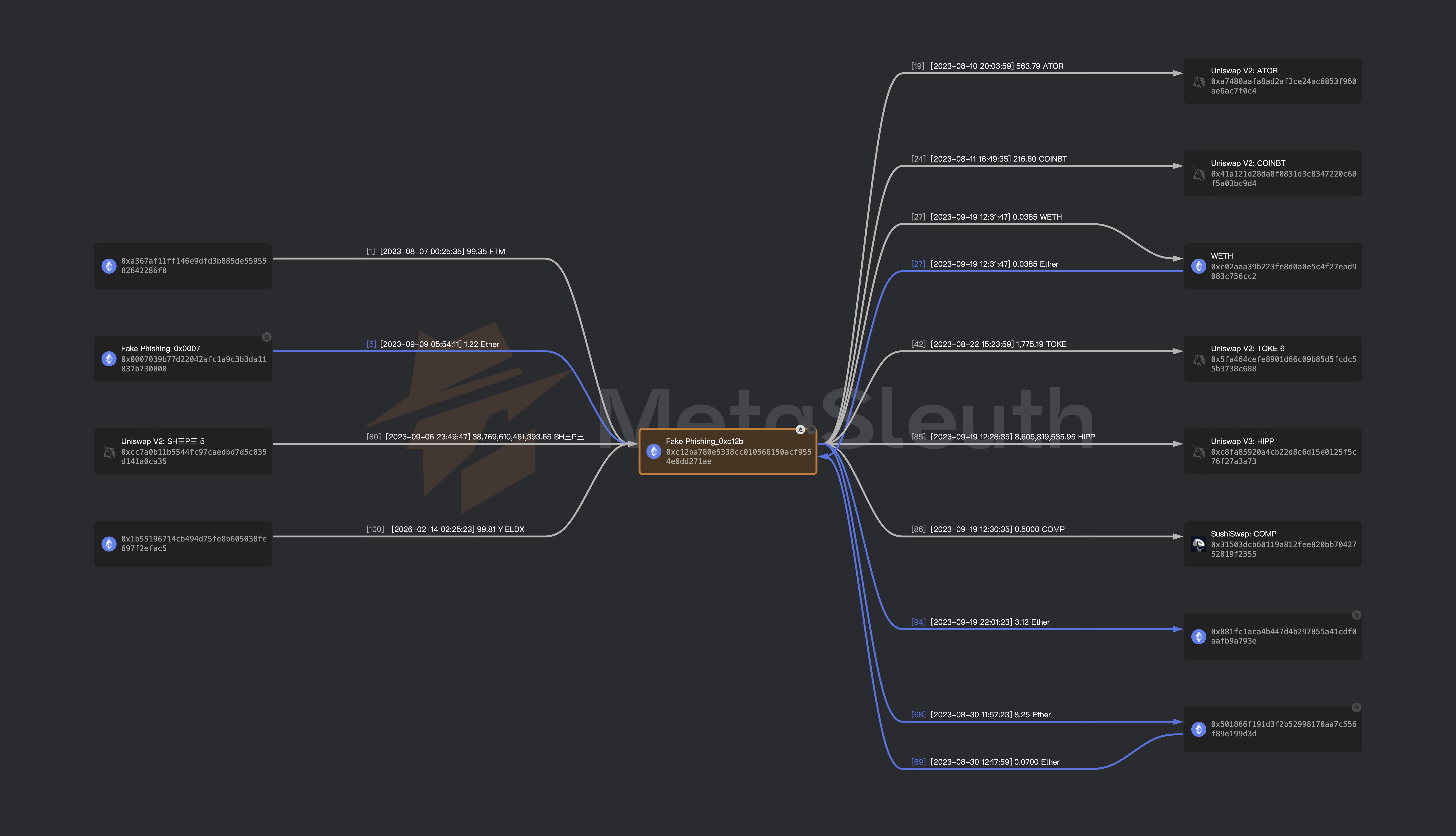
This is what MetaSleuth does when you trace a wallet. Instead of copying addresses between explorer tabs, an investigator expands each hop inside one graph and watches the trail unfold. MetaSleuth's Expand Outgoing feature expands the flow of funds from an address step by step, and two design choices keep the graph readable. Multiple transactions of the same token between the same pair of addresses merge into a single edge. And more than 600 million address labels name services directly, turning an anonymous address into a named stop on the path. On Solana, MetaSleuth automatically maps a token account to the wallet that owns it, so the path reads as wallets rather than scattered accounts.
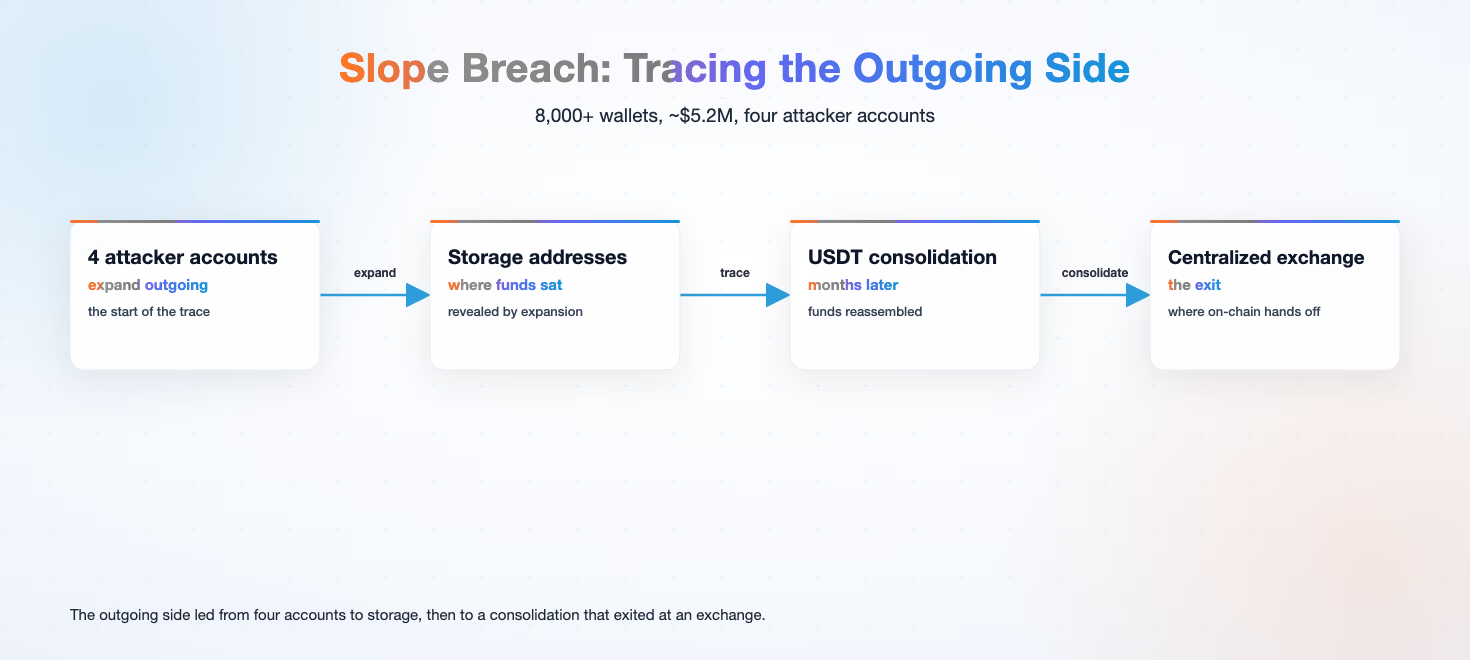
Real investigations show the workflow in action. In the Slope wallet breach, MetaSleuth traced more than 8,000 drained Solana wallets and roughly 5.2 million dollars in losses. Expanding outgoing transactions from four attacker accounts led to the storage addresses that held the funds. Months later the stolen USDT consolidated and moved into a centralized exchange, where the on-chain trail handed off to an off-chain process. In the SHAR dump, MetaSleuth followed 14 controlled addresses as they spread SHAR across 104 dispersed addresses, and minutes later it all consolidated at a single address that sold the entire position. The two cases share the same shape: a wide spread, a quiet period, then a sudden consolidation at one recognizable address. The single-hop view misses all of it; the expanded graph turns it into a signal a human can read in seconds.
What to Do Next
Tracing a wallet is a skill that improves with one habit: always expand the outgoing side before you declare the trail cold. Start with the address in front of you, follow each hop, and keep going until the funds land somewhere recognizable. The fastest way to practice is on a real address: trace a wallet with MetaSleuth and watch the outgoing side unfold into a multi-hop path with named addresses at every hop.
This piece is part of the MetaSleuth investigations and forensics guide, where the tracing method, evidence handling, and tooling tiers are covered end to end.