
The Short Answer: Real-Time Monitoring Closes the Response Gap
After a theft, the question that decides the outcome is where the funds are now, not what was taken. A retrospective review reconstructs the path after the funds have already settled into a mixer, a bridge, or an exchange. Real-time monitoring inverts that sequence. It watches the stolen address the moment it moves, so the response team acts while the funds are still in motion.
The difference between the two approaches is the response gap. When tracking is retrospective, the gap between the theft and the first actionable picture can stretch from hours to days. By the time the path is clear, the funds are gone. When tracking is continuous, the gap compresses to the time it takes for the next hop to appear. The value of real-time monitoring is that it removes the wait for the next transaction entirely, not that it makes an analyst faster.
This matters most for the two groups who inherit a theft. A DeFi protocol team needs to pause a contract or contact an exchange. A law enforcement investigator needs a current address to include in a freeze request. In the US, the filing side runs through FinCEN. Both groups act on the same question. Where are the funds now? A historical picture answers a question that no longer matters.
Why Stolen Funds Move Fast
Stolen funds move fast because the attacker races to swap, bridge, or mix the proceeds before a freeze or an interception can land. The thief knows that every second the funds stay in the theft address is a second in which an exchange, a protocol, or law enforcement can act. So the money does not sit still.
The escape sequence is mechanical. The attacker swaps the stolen asset into a liquid base token, then bridges it to another chain. Next they split it across a dozen fresh addresses. Finally they mix the batches or feed them into an exchange with weak or no identity checks. Each hop adds distance between the funds and their origin. It also shortens the time the tracker has to act.
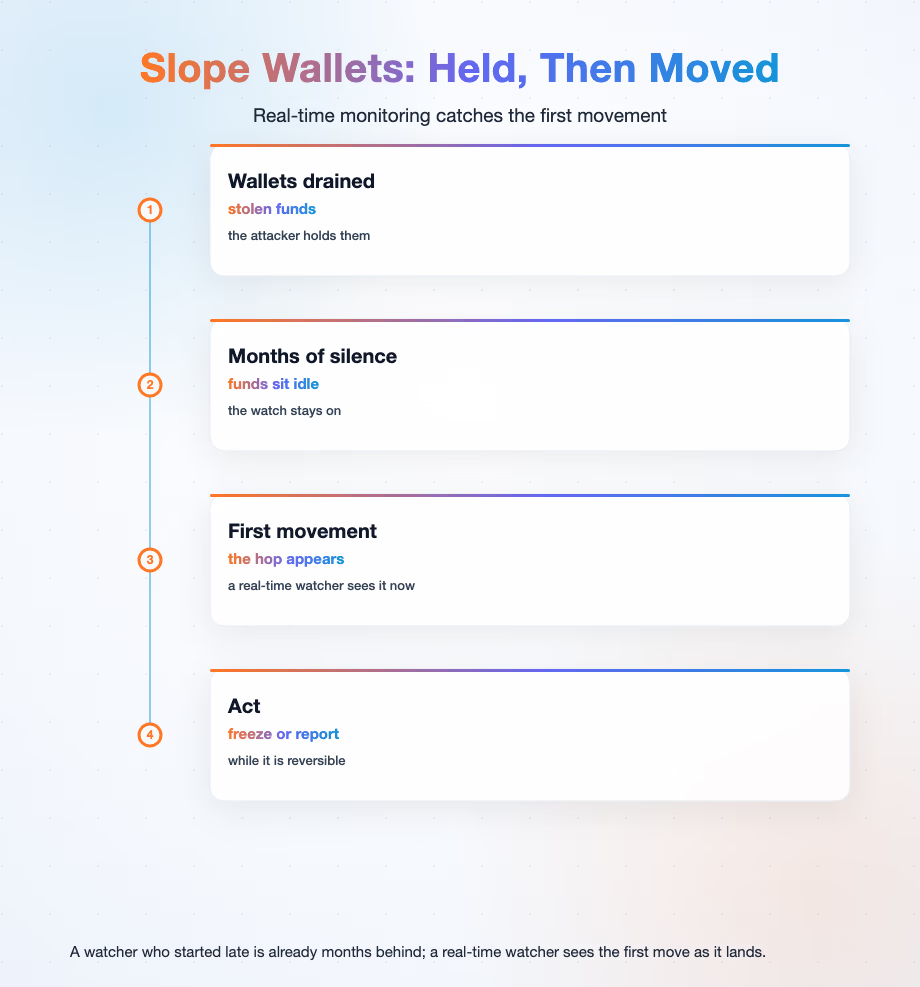
Some attackers do not even start moving immediately. In the Slope wallet incident, the attacker held the stolen funds for months before beginning to launder them. A tracker who watched from the start saw the first movement the moment it began. A tracker who started only after the movement began was already months behind.
The result is that a tracker who runs only after the fact sees the end of the chain. The funds have already been swapped, bridged, and mixed. A tracker who runs in real time sees the chain form, one hop at a time, while each hop is still reversible. That is the difference between an investigation and an intervention.
The Real-Time Monitoring Workflow
Real-time monitoring is a workflow, not a single tool. The workflow is flag the stolen address, watch its activity continuously, spot the new exit, trigger an alert, then freeze or report. The report half answers to the FATF standards behind national rules. Each step has a clear owner and a clear trigger, and the whole sequence runs as a loop until the funds are either recovered or written off.
First, flag the theft address and its known downstream addresses the moment the incident is confirmed. The earlier this happens, the fewer hops the attacker gets for free. Second, watch that set continuously, so that any outgoing hop registers as it settles rather than hours later. Third, spot the new exit. This is the swap, the bridge, the mixer deposit, or the exchange deposit that would carry the funds out of reach.
Fourth, trigger an alert to the person who can act. For a protocol team, that person might pause a contract or notify a partner exchange. For an investigator, the same alert means a freeze request or a legal notice. Fifth, freeze or report through the channel that applies. The loop then restarts from the new address the funds just moved to, because the attacker keeps moving the funds for as long as the watch is the only thing chasing them.
The order matters because each step depends on the previous one being fast. A workflow that flags quickly but watches slowly still loses the funds. When the watching is fast but the alerting is slow, the minutes that matter are gone. Speed in one step cannot compensate for a slow step later in the chain.
How MetaSleuth Makes Real-Time Tracking Possible
MetaSleuth includes real-time transaction monitoring that continuously watches the movement of stolen funds. Once the theft address is added to a chart, the investigator does not have to manually re-run the trace after every block. The platform keeps watching the movement and surfaces the next hop as it appears.
This is what MetaSleuth does. It turns the workflow from a series of manual lookups into a continuous watch, so the response team is chasing the funds rather than reconstructing them. In the Euler Finance incident, MetaSleuth enabled near real-time tracking of the stolen funds. That near real-time framing is the event's own description of what the tool delivered: it is a pace the tracking team could observe during a live incident, not a guaranteed speed figure.
Near real-time means the picture updates close to the moment a transaction settles, rather than only after an analyst re-runs the trace. It is the practical middle ground between a historical report and a live per-block feed. For a response team, it is the difference between knowing where the funds were and knowing where they are now.
The same watch carried the team through the Ronin Bridge case, where the stolen funds were monitored as they moved through a long chain of intermediate addresses. What a continuous watch delivers is the absence of a gap between the theft and the first picture of where the funds are going, not a single dramatic alert.
The practical effect is that the analyst moves from asking where were the funds to asking where are the funds now. The first question is answered by a history view. The second is answered by a live view. Only the live view gives a response team a chance to act before the funds leave the last address they can still reach.
What to Do Next
If your team still tracks stolen funds by reconstructing the path after the fact, the next step is to move the watch to the front of the incident. Pick the theft address the moment you confirm the loss, add it to a live watch, and route the alerts to someone who can freeze, pause, or report.
Monitor stolen funds with MetaSleuth, and turn an active theft into a continuously tracked case from the first minute.
This piece is part of the MetaSleuth investigations and forensics guide, where the tracing method, evidence handling, and tooling tiers are covered end to end.