
After a theft, almost every victim asks the same two questions. Can anyone see where the funds went, and can I get them back? The honest answer splits into two parts. Stolen crypto is traceable more often than most people assume, but tracing and recovery are not the same thing. Tracing is frequently possible. Recovery is not. This article explains what tracing can and cannot do, where the trail breaks, and what a victim should do next.
The Short Answer: Often Yes, but Not Always to Recovery
Yes, stolen crypto can usually be traced, at least for part of the journey. A blockchain records every transaction permanently, so an investigator can follow stolen funds from one address to the next and see the services they touch. That visibility is real, and it has supported some high profile law enforcement outcomes. The patterns investigators walk overlap with the FATF red-flag indicators for virtual assets. What it does not provide is a promise that the money comes back.
Tracing tells you where the stolen funds went. Recovery means getting them back, and the first does not guarantee the second. An investigator can watch the money move, name every address it touches, and still hit a breakpoint that stops the trail. The distinction matters because victims often treat the two words as synonyms, and they are not. Knowing where the funds went is evidence. Getting them back requires an exchange to freeze the assets, law enforcement to act, or a civil recovery process to succeed, and none of those steps is automatic. In the US, the reporting that starts those steps runs through FinCEN. This is why a fair answer to the question is honest about the gap: tracing is frequently possible, recovery is not.
What Makes Stolen Crypto Traceable
Stolen crypto is traceable because a blockchain is a public ledger: every transaction is recorded, and an investigator can follow funds hop by hop as long as the trail has not been broken. There is no private vault to hide in, only addresses, and each address leaves a permanent transaction history that anyone can inspect with the right tooling.
The work of tracing rests on two ideas. The first is multi-hop tracking, which means following funds step by step from the victim's address through each intermediate address to wherever they eventually land. The second is labeling, which means attaching known identities to addresses so a transfer to an exchange, a mixer, or a known attacker wallet becomes a named destination instead of an anonymous jump.
Real cases show how far that can go. In the March 2022 Ronin Bridge incident, attackers used compromised private keys to forge two withdrawal transactions and moved out 173,600 ETH and 25.5 million USDC. In the August 2022 Nomad Bridge incident, attackers took roughly $190 million, and 16 profit addresses moved about $17 million into Tornado Cash that is unlikely to be recovered. Investigators followed both trails across dozens of addresses and produced maps of where the funds went, which is the core promise of onchain tracing.
What Breaks the Trail
The trail breaks when funds enter a place that severs the link between an address and the person behind it. The most common breaker is a mixer. A mixer such as Tornado Cash pools deposits from many users and lets them withdraw equivalent amounts to fresh addresses, which cuts the onchain connection between the deposit and the withdrawal.
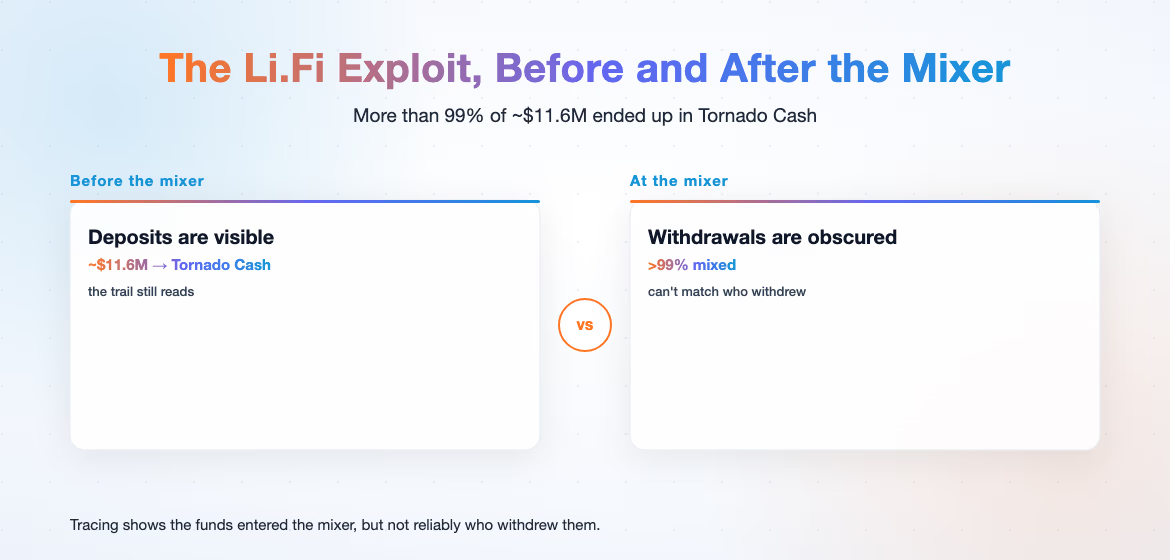
The Li.Fi exploit shows what that looks like in practice. In the July 2024 Li.Fi exploit, more than 99% of the roughly $11.6 million in stolen stablecoins was eventually moved into Tornado Cash. Once funds reach that point, tracing can show that they entered the mixer, but it cannot reliably show who took them out the other side. The trail has hit a breakpoint; it is not gone.
Two other breakpoints matter. An exchange without identity checks lets an attacker swap stolen funds into another asset without a name attached to the withdrawal. A cross-chain bridge moves funds to another blockchain, where the investigator must restart the trail under a different set of tools and labels. None of these stop tracing entirely, but each one makes the outcome less certain. That is the honest ceiling on traceability: the public ledger is transparent, but the points where crypto meets anonymity are not.
How MetaSleuth Improves Traceability Odds
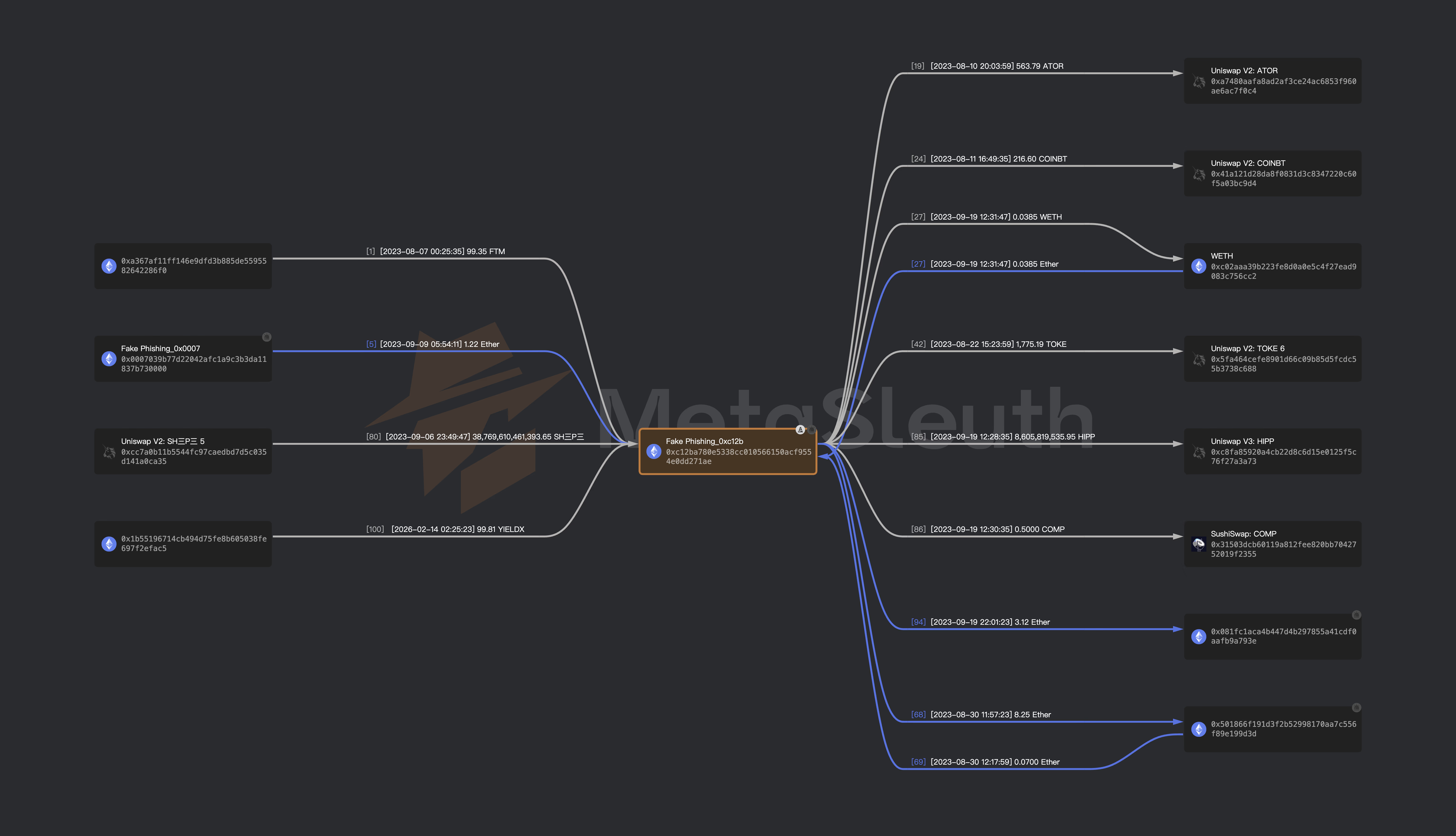
A dedicated tracing tool changes how much of the trail an investigator can recover before a breakpoint. MetaSleuth is a crypto tracking and investigation platform built by BlockSec that follows funds across multiple hops, visualizes fund flows, and lets investigators save and share their analysis. This is what MetaSleuth does. Instead of reconstructing a trail by hand across separate explorers, an investigator expands each hop outward and watches the flow take shape as a graph.
MetaSleuth carries more than 600 million address labels, which turns many anonymous destinations into named ones before the investigator has to stop and research them. It also keeps a public case library, which is how the Ronin, Nomad, and Li.Fi examples above were documented. ZachXBT has repeatedly recommended MetaSleuth for onchain fund analysis in his public investigations. In a March 2026 case, ZachXBT first spotted about $23 million in abnormal transfers out of a US government custody wallet, and the suspect was later accused of stealing more than $46 million.
To be clear, a tracing tool improves traceability. It does not turn traceability into recovery, and it cannot undo a mixer breakpoint. When more than 99% of the funds in a case like Li.Fi enter Tornado Cash, the platform can document exactly where the trail ended, but it cannot fabricate the next hop. That honesty is the point. A good tracing tool tells an investigator precisely where the evidence stops, so the next decision about recovery is based on facts rather than hope.
What to Do Next
If you have lost funds, move quickly. Traceability decays as the attacker moves the money through mixers, bridges, and exchanges without identity checks, so the earlier a trace begins, the more of the path survives. Start by collecting every transaction hash, the destination address, and the exact time of the theft, then open the trail in a tracing tool and follow it as far as it goes before it breaks.
Trace stolen funds with MetaSleuth, and see how far the trail can take you.
This piece is part of the MetaSleuth investigations and forensics guide, where the tracing method, evidence handling, and tooling tiers are covered end to end.