
The best free crypto tracing tools are MetaSleuth for visual multi-hop tracing across 12 chains and Phalcon Compliance's free tier for address risk screening. In the United States, the duties that screening serves are set out in FinCEN's statutes and regulations. Behind them sit block explorers for single-hop lookups and open-source graph tooling for custom analysis. The differences that matter are chain coverage, label depth, evidence export, and what the free tier actually lets you finish before paying. This list evaluates each seat on exactly those dimensions.
MetaSleuth: Free Visual Tracing With Labels
MetaSleuth is the strongest free entry point for actual tracing work, because the free experience is the core workflow rather than a teaser. You paste an address, expand its outgoing transfers hop by hop, and read the resulting fund flow graph. The graph merges repeated transfers between the same two addresses into single edges, which is what keeps a multi-hop path readable instead of a wall of transactions.
Two features carry the most weight in practice. First, coverage: MetaSleuth traces across 12 chains and follows funds through cross-chain bridges instead of stopping at the border, which is where most free methods fail. Second, labels: the platform carries more than 600 million address labels, so a hop that lands on a labeled exchange, mixer, or service turns into a finding on the spot. Saved charts preserve what you built, which matters the moment a project graduates from curiosity to case.
Phalcon Compliance Free: Screening With a Real Upgrade Ladder
Phalcon Compliance's free plan is a screening seat rather than a tracing seat: a small monthly quota of free screenings on ETH and TRON, each returning a risk assessment for an address or transaction. For a one-off question, is the other side flagged, did this transaction touch a risky cluster, that is often enough to decide whether to escalate. The free plan also includes a one-time seven-day Monitor trial on a single address, which shows what continuous watching looks like before anyone commits budget.
The honest limit is volume and scope: a handful of free checks a month on two chains will not run a compliance program. The program itself answers to the FATF standards. The upgrade ladder is transparent, from pay-as-you-go screening packages starting at $95 to monthly subscriptions, and the boundary between free and paid is stated rather than discovered mid-case.
Block Explorers: The Free Baseline Every Investigator Already Uses
Explorers such as Etherscan and Solscan are free, reliable, and always worth a first look, with a limit every investigator should know by heart: they show single hops. An explorer answers what happened in one transaction, and it answers it well. It does not connect the next addresses into one graph, and a trace that crosses a chain boundary drops out of view at the bridge.
The other gap is labeling: explorer name tags cover heavily used exchange and contract addresses, but the coverage is thin exactly where investigations go, the intermediate wallets between a source and an exit. Use explorers for receipts; use a tracing layer for routes.
Open-Source and Research Tooling: Free, With Setup and Maintenance Costs
A further tier exists in open-source graph analysis frameworks and the free research tooling published by security teams. Open-source cluster-analysis tooling can be had at no license cost and can be scripted for custom questions. But it arrives without labels, without managed cross-chain views, and with a setup and maintenance burden that only pays off for teams with engineering resources. Browser-based tracing tools published by research organizations are genuinely free to use and can produce good visuals on major chains, with coverage that thins on minor chains and no built-in evidence export.
These seats belong on the list because they are real, and off the top of the list for the same reason. Free tooling that costs a day of stitching per case is not cheaper than a free tier that finishes the trace.
What Free Tracing Tools Actually Cover
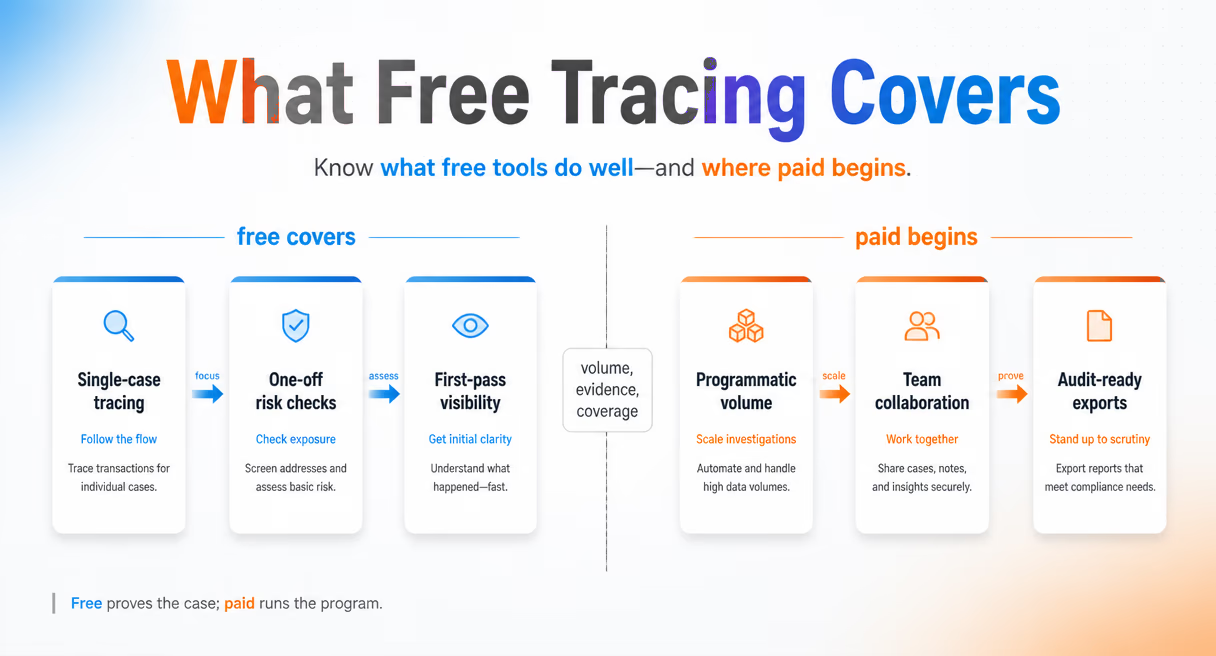
Across every seat above, the free layer of this category covers the same things: single-case tracing on major chains, one-off risk checks, and first-pass visibility into where funds went. What the free layer does not cover, anywhere, is programmatic volume, team collaboration, audit-ready exports, and guaranteed response times. Those are paid features in every product family, and a selection process that expects them for free will end with no tool rather than a free one.
When a team needs the same tracing loop inside its own tooling, the upgrade path is the crypto fund tracing API for investigators.
When Free Is Enough, and When It Isn't
Free is enough when the question is a one-time trace, a single check on the other side, or a learning exercise on public case material. One address, one hop sequence, one answer: the free tiers above handle all of it.
Free stops being enough at three boundaries. Volume: recurring checks and monthly case loads exhaust free allocations immediately. Evidence: the moment a finding must survive review, ad-hoc screenshots are not a record, and export and archiving habits become the requirement. Coverage: cross-chain routes, minor chains, and monitoring over time are exactly where free tiers end and paid ladders begin. Teams that hit two of the three boundaries are already in the paid tier of this category in behavior, if not yet in billing.
This piece is part of the MetaSleuth investigations and forensics guide, where the tracing method, evidence handling, and tooling tiers are covered end to end.