2024年、Solanaは最も人気のあるブロックチェーンの一つとして台頭してきました。その電光石火のスピードと低手数料は卓越したユーザー体験を提供し、高いスループットと低レイテンシにより、分散型アプリケーションにとって最適なプラットフォームとなっています。
BlockSecは、Phalcon ExplorerがSolanaを完全にサポートしたことを発表できることを大変嬉しく思います!
他のSolanaスキャンと比較して、Phalcon Explorerは以下を提供します:
一般ユーザー向けには、以下によってSolanaのトランザクションをより理解しやすくします:
- アカウント間の関係を明確化し、アカウント所有者のトークン保有状況と変化を表示
- MEVトランザクションのタグ付けやアドレスラベリングなどの便利な機能を提供
開発者向けには、以下によって関数呼び出し関係の明確かつ包括的なビューを提供します:
- より正確な関数呼び出し階層を表示し、結果を意味的に提示し、情報表示に最高の画面効率を使用
🧐 このトランザクションを例に、Phalcon Explorerがもたらす利点を見てみましょう。
アカウント関係とトークンの変化の簡素化
他のブロックチェーンネットワークと比較して、Solanaには独自の「トークンアカウント」設計があります。例えば、MonicaがMikeにUSDTを送金したい場合、4つのアカウントが関与します:
- A(Monicaのアカウント)
- B(Mikeのアカウント)
- C(MonicaのUSDTアカウント)
- D(MikeのUSDTアカウント)
これを残高変化と資金フローで説明しましょう。
残高変化
残高変化を例にとると、Phalcon Explorerは複数のアカウント間の関係を自動的に整理し、アカウントAとC、BとDの間の内在的なつながりを識別します。トークンアカウントという概念を排除し、トランザクション内の2つの主要なエンティティであるAとBのUSDTの変化のみを表示します。
例えば、Solscan上でsexbot.solアカウントの残高変化を確認する際、SOL Balance ChangeページとToken Balance Changeページの両方を確認する必要があります:
SOL Balance Changeページでは、「Address」は所有者のアカウントを表します。

Token Balance Changeページでは、「Address」はトークンアカウントを表し、「Owner」は所有者のアカウントを表します。
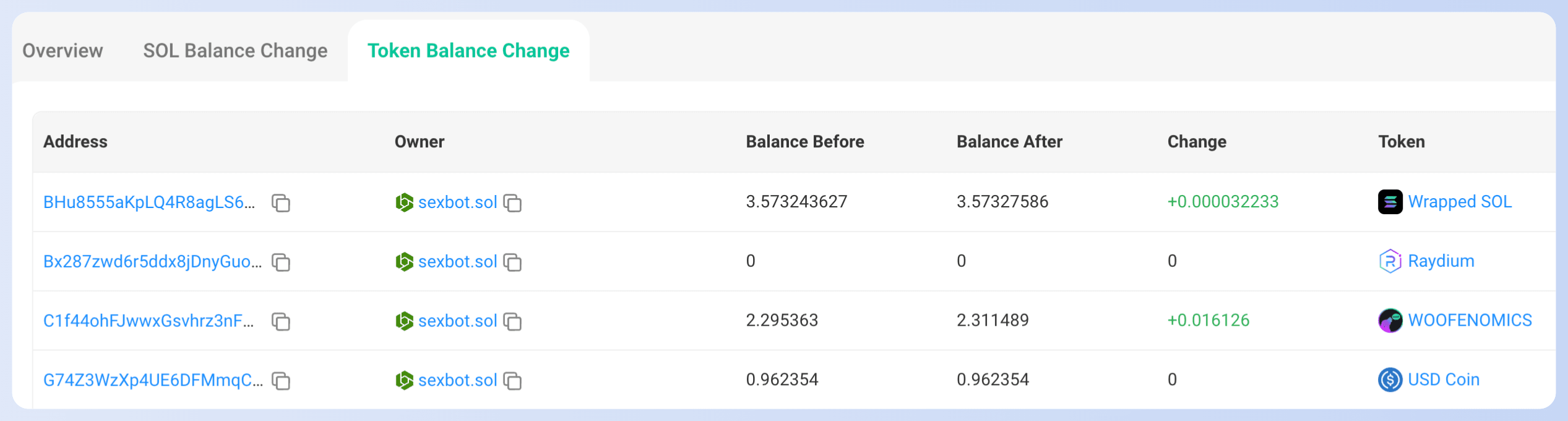
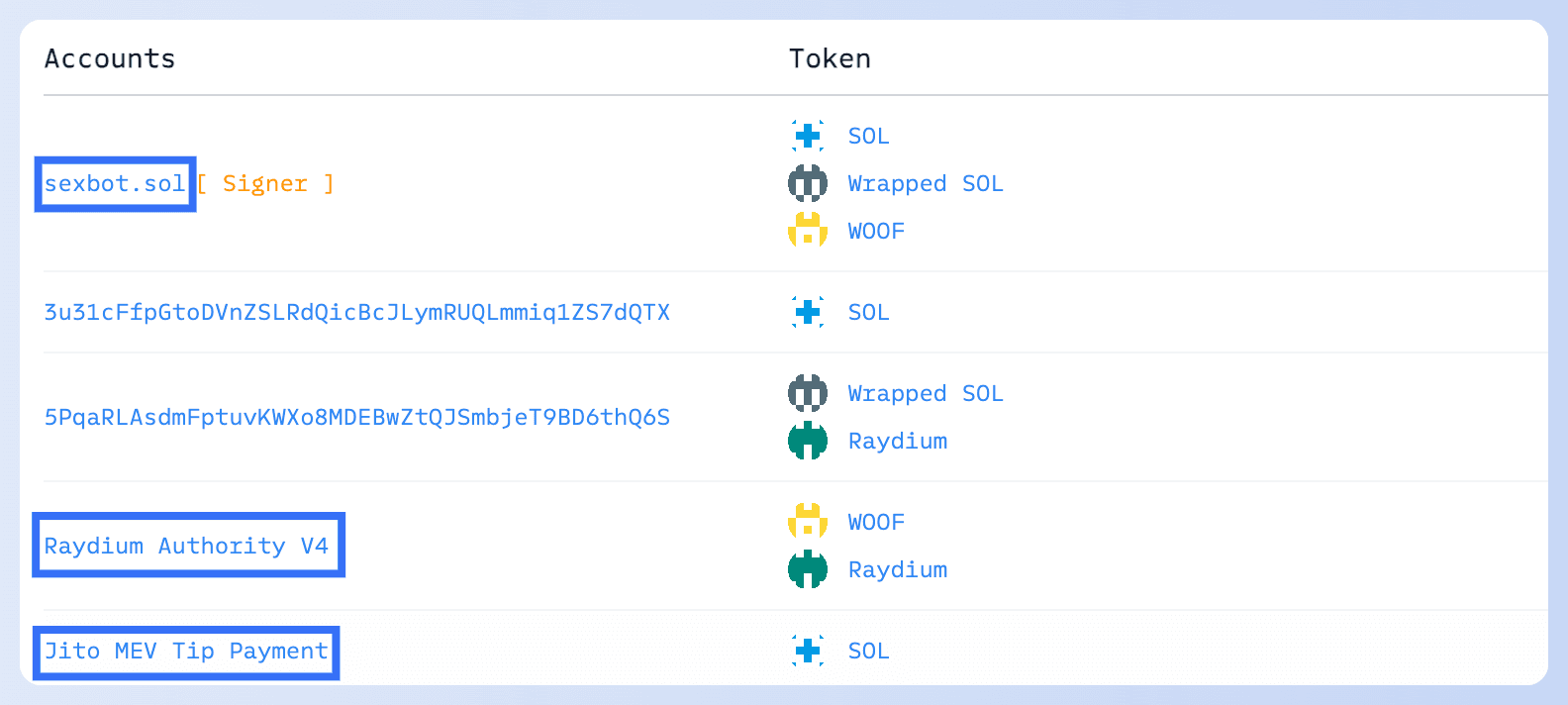
Phalcon Explorerは、以下の表を通じて同じ情報をより簡潔に伝えます:

アカウント関係を整理した後、トークンアカウントのデータは「Token」セクションに表示されます。これにより情報の複雑さが軽減され、より明確で簡潔になり、Etherscanのようなブロックチェーンエクスプローラーを使用するユーザーの長年の習慣により良く合致します。
資金フロー
資金フローチャートも同様の原則に従います。アカウント関係を整理した後、トークンアカウントは所有者のアカウントと同じレベルのノードとしては表示されなくなります。代わりに、トークン量の変化として直接表示され、資金フローの明確さが向上します。
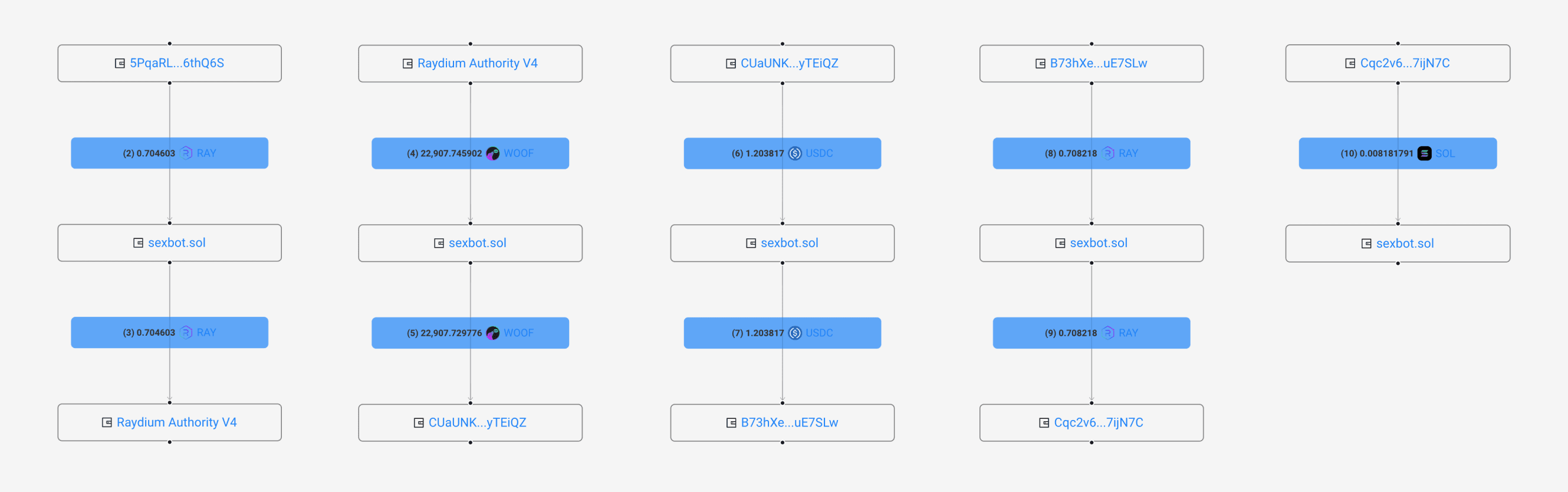
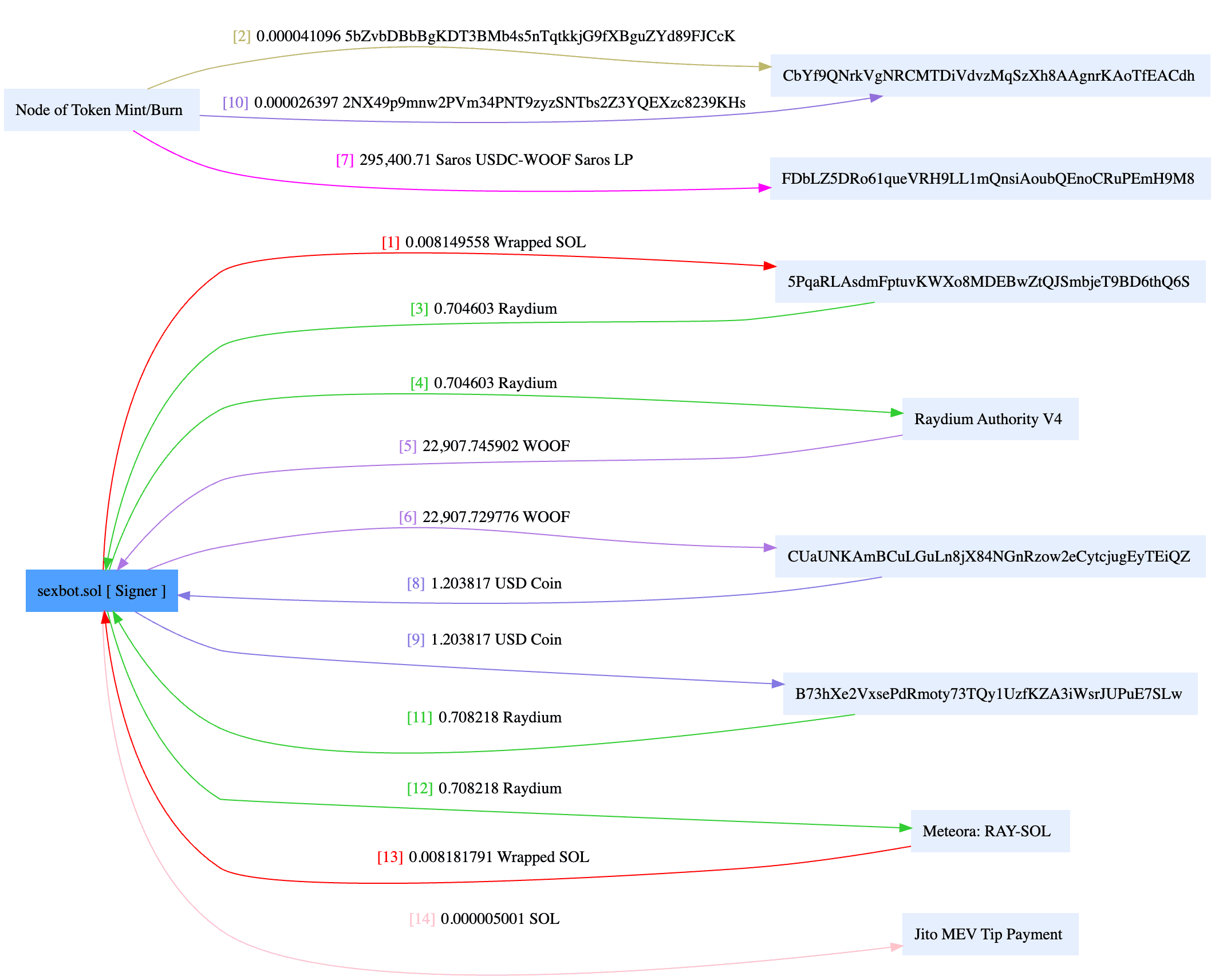
アドレスラベルとその他の便利な機能
6億以上のアドレスラベル
BlockSecは、20以上の主要なブロックチェーンをカバーし、6億以上のアドレスラベルを含む巨大なデータベースを構築しています。ユーザーがPhalcon ExplorerでSolanaのトランザクションを閲覧する際、取引所の入出金アドレス、プロジェクトアドレス(DeFiやNFTプロジェクトアドレスなど)、ブラックハット・ホワイトハットハッカーのアドレス、プロキシコントラクトアドレスなどを簡単に識別できます。
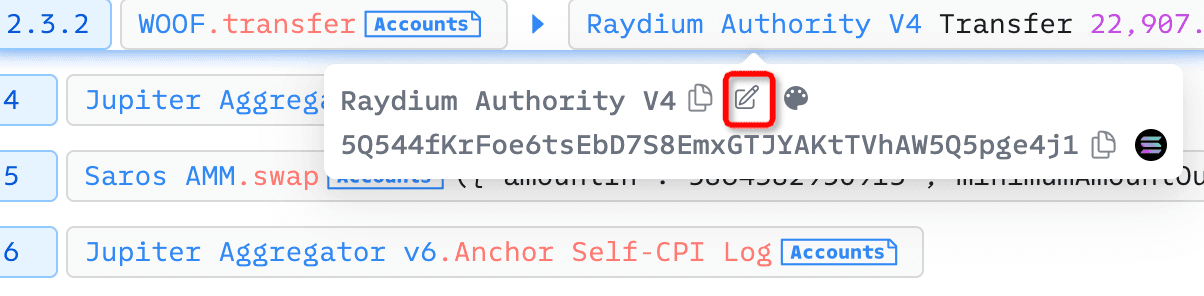
ユーザーは必要に応じてラベル名を変更することで、アドレスラベルをカスタマイズすることもできます。
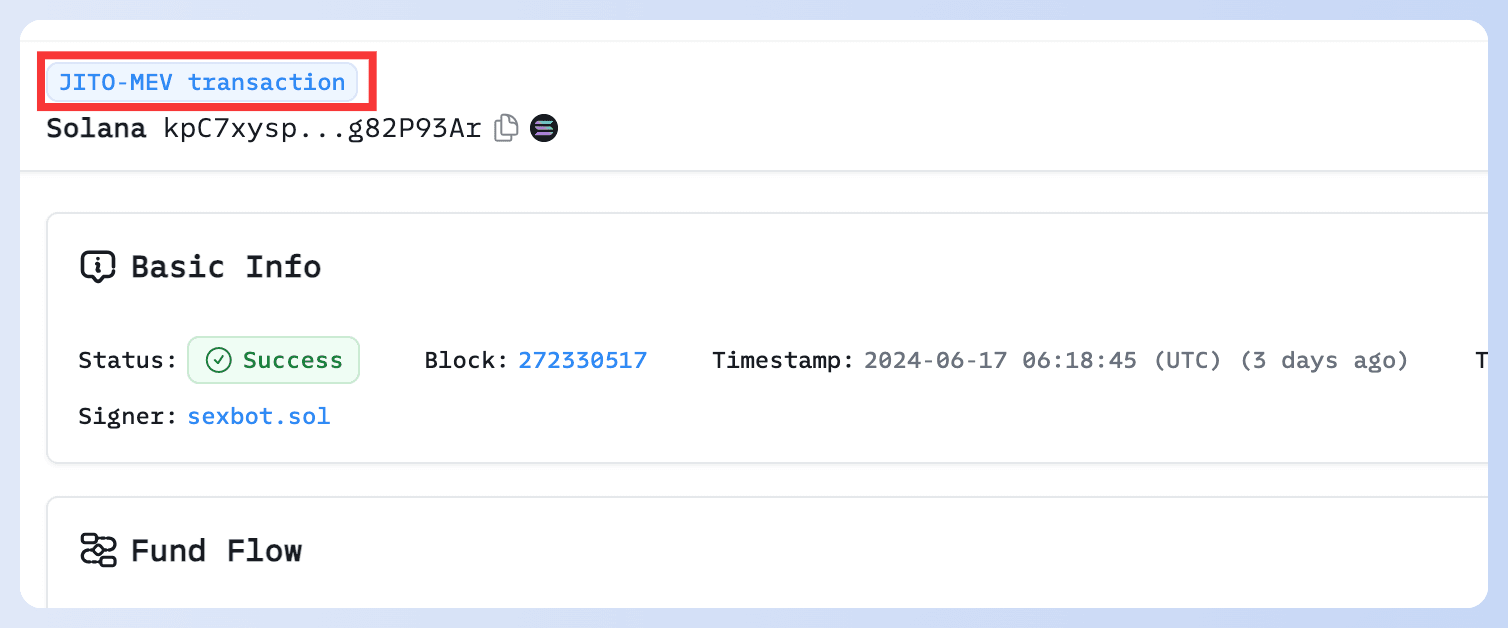
MEVトランザクションの識別
Phalcon ExplorerはMEVトランザクションを識別し、ページの左上隅にタグを表示できます。
Solscanへのクイックアクセス
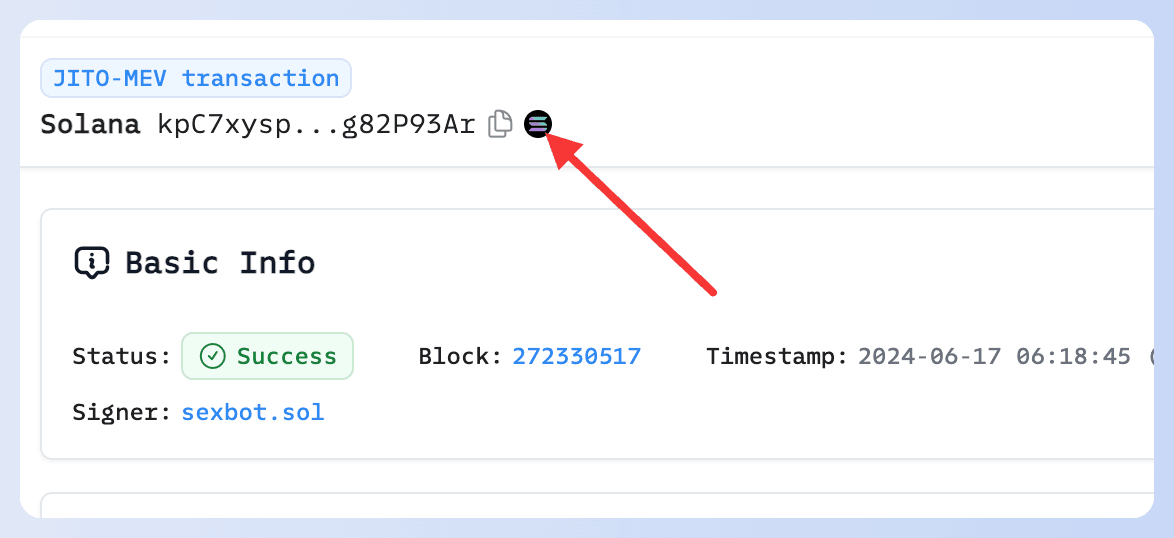
Phalcon Explorerは、Solscanへのクイックリンクも提供しています。ページの左上隅にあるアイコンをクリックすることで、ユーザーは簡単にSolscanに移動できます。
明確で包括的な関数呼び出し
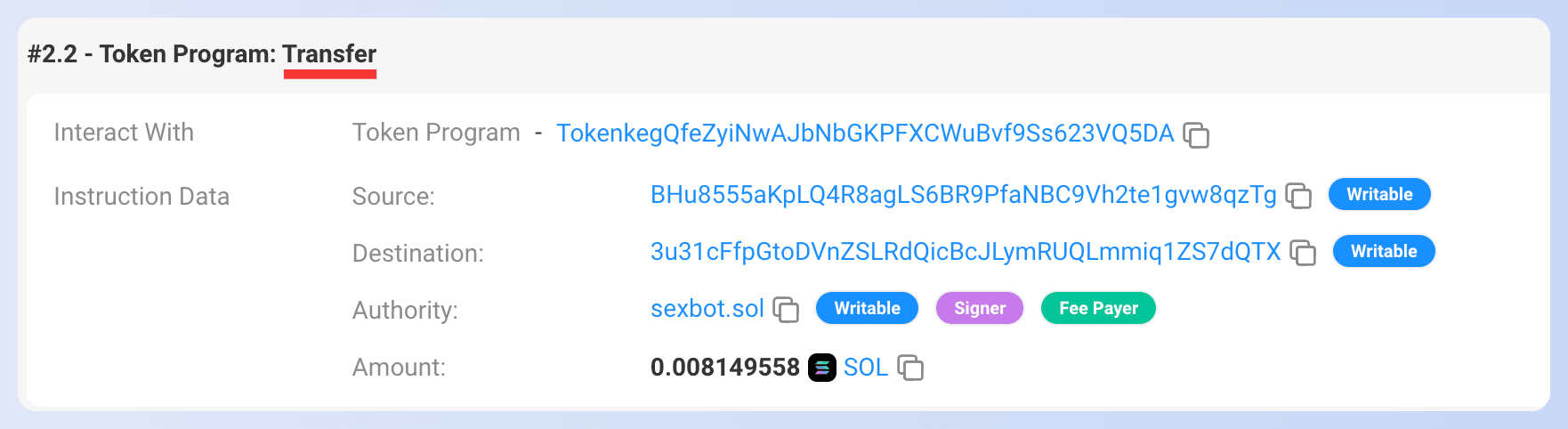
2つのレベルの呼び出し深度しか提供しない他のエクスプローラーと比較して、Phalcon Explorerは真の深度と呼び出し関係を提供します。さらに、関数呼び出しフローを意味的かつ構造化された方法で提示し、より正確で明確、理解しやすくします。

さらに、関数呼び出しの典型的な垂直配置とは異なり、Phalcon Explorerは各レベルの展開と折りたたみをサポートしています。アカウントとパラメータの情報は折りたたみ可能な形式で表示され、クリックするとポップアップウィンドウで詳細が表示されます。
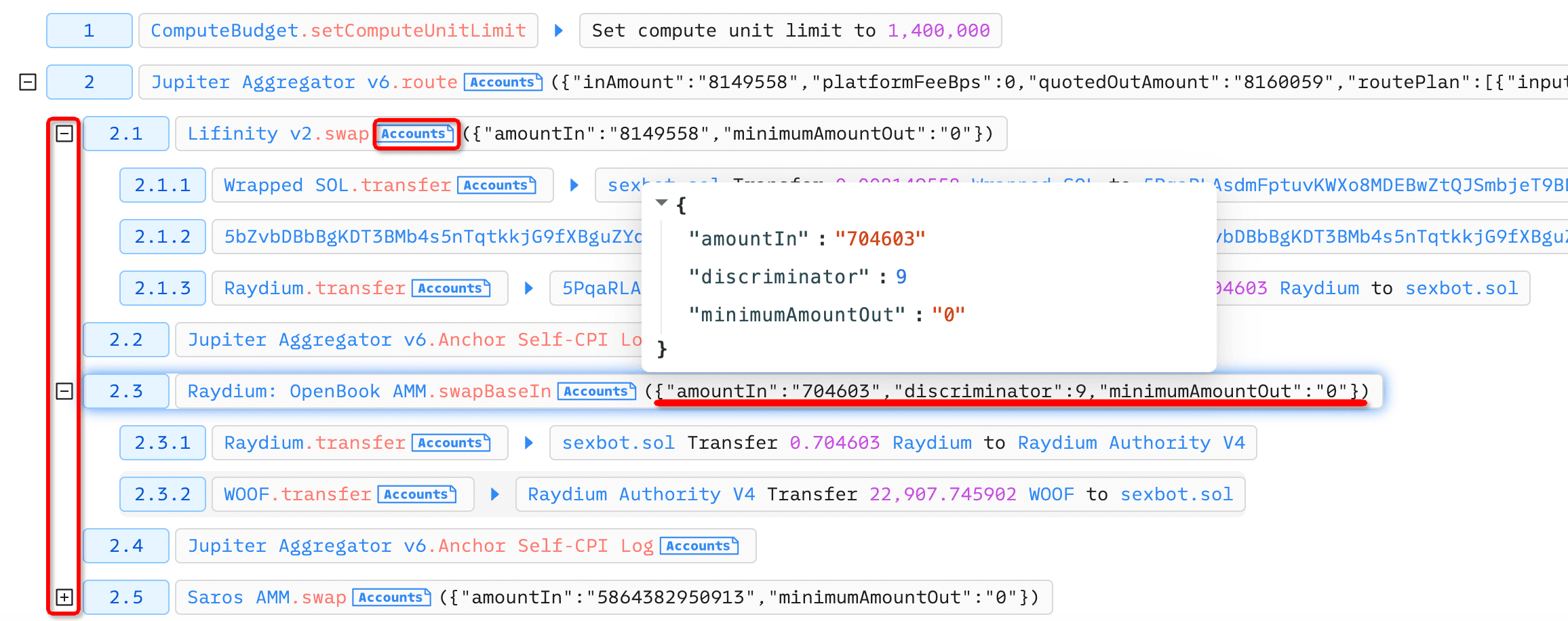
このアプローチは、現在のSolanaエクスプローラーの中で最高の画面効率比を提供し、読みやすさを向上させ、開発者が関数呼び出し関係の明確で包括的なビューを得るのに役立ちます。
結論
Solanaがユーザーと開発者の間でますます人気を集めるにつれ、BlockSecはユーザーの要望に積極的に応え、Solanaを完全にサポートするために製品ファミリーを迅速に拡大してきました:
3月:MetaSleuth
3月、私たちの暗号資産追跡・調査プラットフォームであるMetaSleuthがSolanaをサポートしました。複数のトークンアドレスを単一のウォレットアドレスにマッピングする独自の設計を採用し、Solanaのトークンアカウントメカニズムに合わせた明確で簡潔な資金フローを提供します。
5月:MetaSuites
5月、ブロックチェーンエクスプローラー拡張機能であるMetaSuitesが主要なSolanaスキャンのサポートを追加しました(Solana Explorer、Solscan、SolanaFMを含む)。このサポートにより、ユーザーは資金フロー図を閲覧し、複数のプラットフォーム間でカスタムアドレスラベルを自動的に同期できるようになります。
6月:Phalcon Explorer
6月、Phalcon Explorerの完全なサポートは、Solanaユーザーと開発者に大きな利便性をもたらしました。ユーザーは、より明確なアカウント関係、MEVトランザクションの識別、膨大なアドレスラベルデータベースへのアクセスを通じて、複雑なトランザクションを簡単に理解できます。開発者は、より正確な関数呼び出しレベルと効率的な情報提示の恩恵を受け、スマートコントラクトのデバッグと分析がより直感的かつ効果的になります。
コミュニティ向けの今後のコンテンツ
私たちは今後も、Solanaに関するより魅力的なコンテンツをコミュニティにお届けしていきます。「Solana Simplified」シリーズの第1回目の記事「一読でSolanaの中核概念を習得する」では、Solanaネットワーク内の重要な概念、その運用の仕組み、アカウントモデル、トランザクションについて紹介しました。
明日のブログでは、環境構築から始めて、記事の公開と表示のためのSolanaプログラムの書き方をご案内します。お楽しみに!
Phalconについて
Phalconは、ハッキングを監視・阻止するためにBlockSecが開発したセキュリティプラットフォームです。このシステムは不審なトランザクションを検出し、即座にユーザーに警告し、それに応じて自動化されたアクションを実行します。
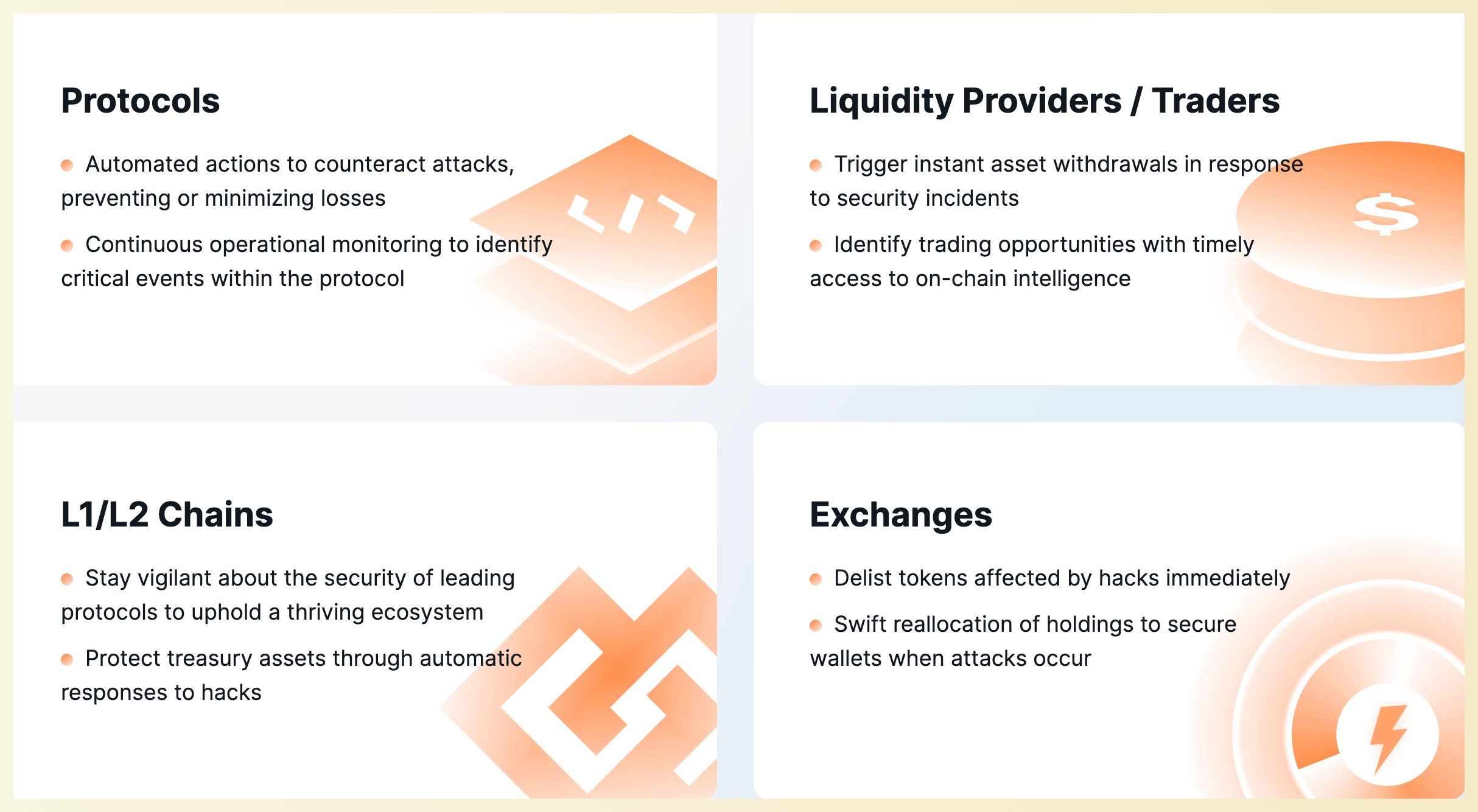
Phalconの主な利点:
- 誤検知がほぼゼロの正確な検出。
- ハッキングと権限変更などの運用リスクの両方を監視。
- ユーザー定義の対応をサポートしつつ、自動アクションを開始。
- コード不要でモニターとアクションを設定可能。
Phalconは、ユーザーが公式ウェブサイトから直接ログインして、さまざまな料金プランと機能を確認し、すぐに購読できるSaaSプラットフォームです(クレジットカードと暗号資産の両方の支払いをサポート)。ご質問がございましたら、お気軽にセキュリティ専門家とのデモを予約してください。ご懸念にお答えいたします。
補助ツール:Phalcon Explorer
Phalcon Explorerは、Phalconプラットフォームの補助ツールです。この強力なトランザクションエクスプローラーは、DeFiコミュニティ向けに設計されています。呼び出しフロー、残高変化、トランザクション資金フローに関する包括的なデータを提供し、トランザクションシミュレーションもサポートしています。これにより、開発者、セキュリティ研究者、トレーダーがトランザクションをより直感的に理解できるようになります。