Back to Blog

Phalcon、Mantle Networkをサポート:破壊不能なエコシステムセキュリティの先駆者

July 31, 2024
3 min read

この度、当社の攻撃監視・ブロックプラットフォーム「Phalcon」がMantle Networkに対応したことをお知らせいたします。これにより、ローンチ後のMantleエコシステムに対し、ハッキングフリーのセキュリティを提供します。

Phalcon:Mantleエコシステムのセキュリティを新たな高みへ

コード監査はプロトコルのセキュリティを大幅に向上させます。しかし、DeFiプロトコルが稼働を開始すると、外部依存性、ゼロデイ攻撃、未監査のスマートコントラクトアップグレードなど、数多くのリスクに直面します。これらのリスクを認識し、コード監査だけでは不十分であると理解するブロックチェーンが増えています。その結果、ローンチ後のエコシステムを保護するために、プロアクティブな防御策を採用する動きが広がっています。

現在、ローンチ後のセキュリティソリューションのほとんどは、攻撃監視プラットフォームに依存しています。しかし、攻撃を検知しても、プロトコルチームが複数の関係者と協議し、手動で対応を承認する必要があり、しばしば手遅れになってしまいます。

当社の攻撃監視・ブロックプラットフォームである**Phalcon**は、Mantleに対応し、Mantleエコシステム全体に堅牢なセキュリティを提供します。Phalconは、攻撃を監視するだけでなく、自動的にブロックする世界初かつ唯一のプラットフォームです。この機能は実戦で証明されており、20件以上のハッキングをブロックし、2,000万ドル以上の資産を救済した実績があります。
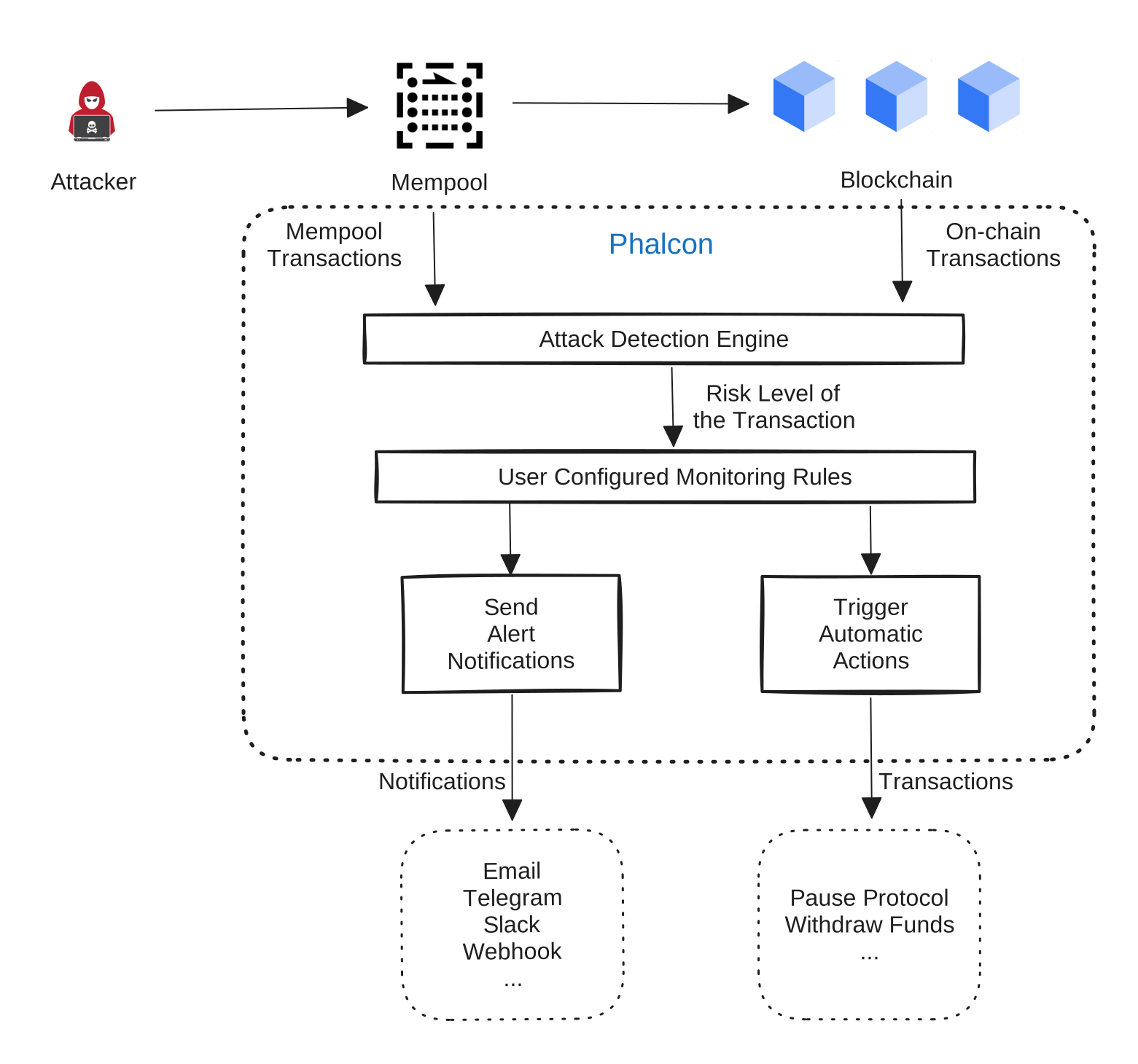
Phalconのアーキテクチャ
Phalconのアーキテクチャ

PhalconがMantleエコシステムを強化する方法

  • エコシステム向け:MantleはMantle Network上のプロトコル監視を展開でき、不審なアクティビティを即座に検出し、プロトコルチームに対応を促すことができます。

  • プロトコル向け:Mantle上のプロトコルはPhalconを使用して攻撃を監視し、攻撃が検出された場合はプロトコルを自動的に一時停止できます。さらに、プロトコルオペレーターはPhalconを活用して、管理者キーの変更、ロールの付与、主要な変数などの機密性の高い操作を監視できます。

  • LP向け:流動性プロバイダーは、投資しているプロトコルがハッキングされた場合に通知を受け取るためにPhalconを使用できます。同時に、システムは自動的に資金を引き出し、潜在的な損失を最小限に抑えます。

PhalconはSaaSプラットフォームであり、ログイン後に価格を確認し、サブスクライブできます。 また、セキュリティ専門家によるデモを予約していただき、Phalconがプロトコルや資産をどのように保護できるかについて詳細をご覧ください。

Phalconの優れたセキュリティと使いやすさを実現する組み込みツール

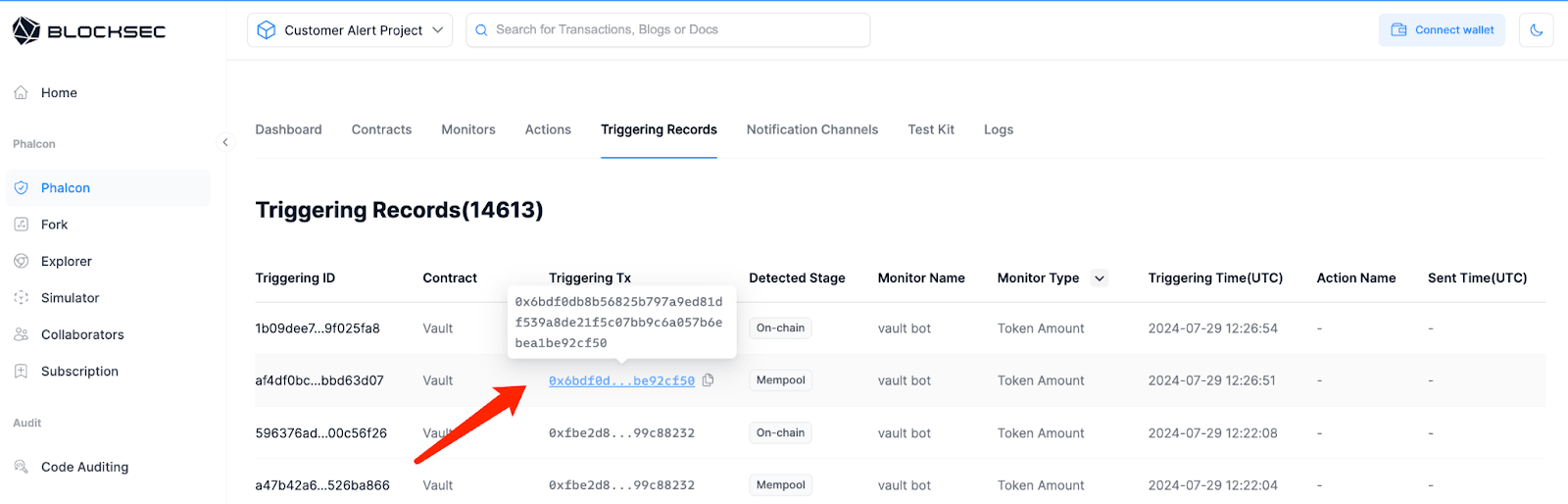
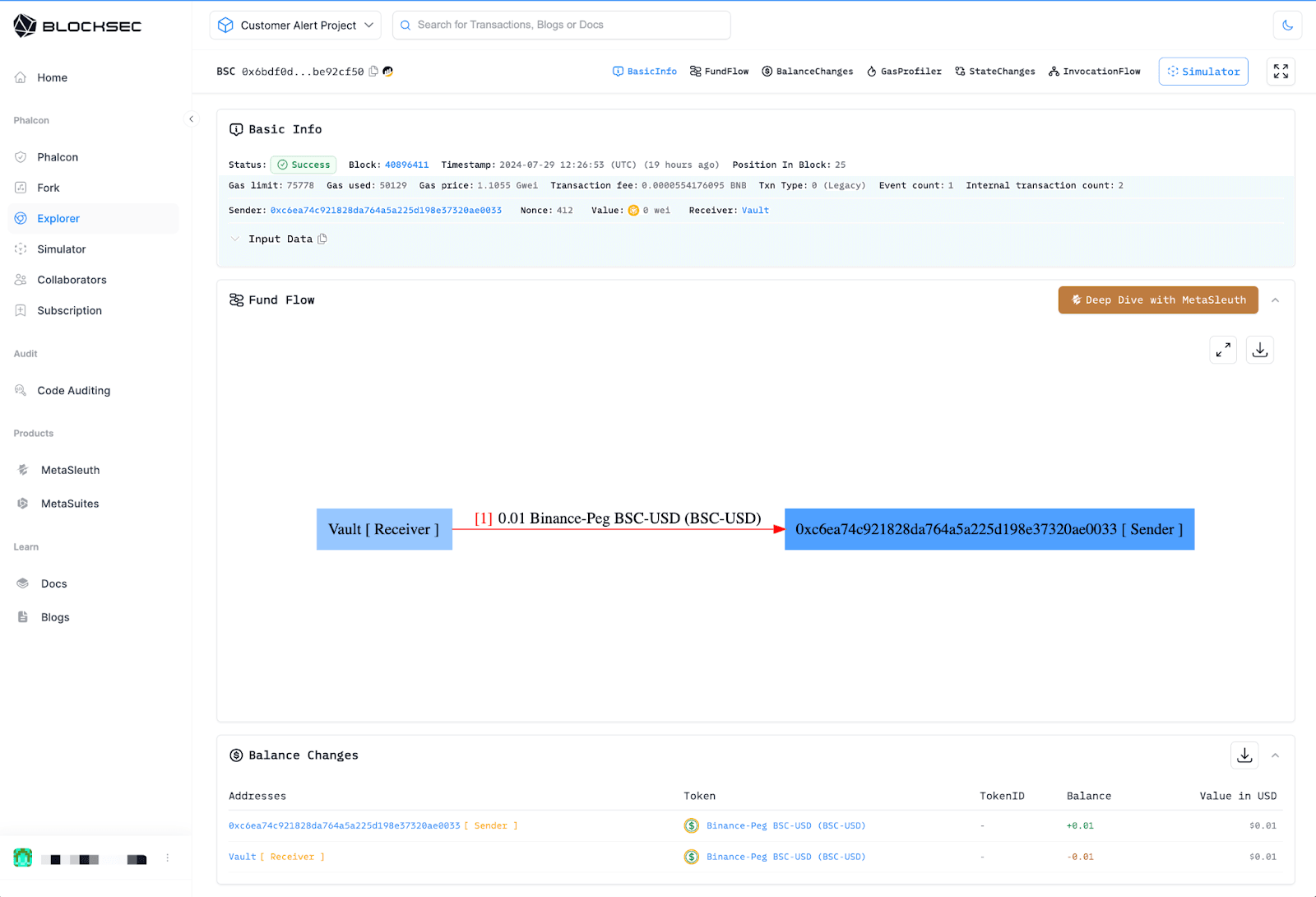
各トリガーされたトランザクションで何が起こったかをプロジェクトチームが容易に理解できるように、PhalconにPhalcon Explorerを統合しました。これにより、ユーザーはPhalcon Explorerにシームレスに切り替えて、呼び出しフロー、残高の変更、資金の流れ、その他のトランザクションの詳細を確認できます。

トリガーされたトランザクションをクリック:

Phalconのトリガーレコードダッシュボード

そして、Phalcon Explorerのトランザクションページにジャンプします:

Phalcon Explorer:Phalconの組み込みトランザクション可視化ツール

結論

Phalconの使命は、最先端の攻撃監視・ブロックプラットフォームを通じて、比類のないエコシステムセキュリティを提供することです。Mantle Networkをサポートすることで、そのエコシステム参加者に比類のない保護を提供し、潜在的な脅威から効果的に守ります。当社の実戦で証明されたソリューションは、数多くの実際のハッキングを成功裏に防止しており、その有効性を裏付けています。今後も、このパートナーシップは、ブロックチェーンセキュリティにおける新しい基準を設定し、革新を続けることになるでしょう。

関連記事

Sign up for the latest updates
The Decentralization Dilemma: Cascading Risk and Emergency Power in the KelpDAO Crisis
Security Insights

The Decentralization Dilemma: Cascading Risk and Emergency Power in the KelpDAO Crisis

This BlockSec deep-dive analyzes the KelpDAO $290M rsETH cross-chain bridge exploit (April 18, 2026), attributed to the Lazarus Group, tracing a causal chain across three layers: how a single-point DVN dependency enabled the attack, how DeFi composability cascaded the damage through Aave V3 lending markets to freeze WETH liquidity exceeding $6.7B across Ethereum, Arbitrum, Base, Mantle, and Linea, and how the crisis forced decentralized governance to exercise centralized emergency powers. The article examines three parameters that shaped the cascade's severity (LTV, pool depth, and cross-chain deployment count) and provides an exclusive technical breakdown of Arbitrum Security Council's forced state transition, an atomic contract upgrade that moved 30,766 ETH without the holder's signature.

Weekly Web3 Security Incident Roundup | Apr 13 – Apr 19, 2026
Security Insights

Weekly Web3 Security Incident Roundup | Apr 13 – Apr 19, 2026

This BlockSec weekly security report covers four attack incidents detected between April 13 and April 19, 2026, across multiple chains such as Ethereum, Unichain, Arbitrum, and NEAR, with total estimated losses of approximately $310M. The highlighted incident is the $290M KelpDAO rsETH bridge exploit, where an attacker poisoned the RPC infrastructure of the sole LayerZero DVN to fabricate a cross-chain message, triggering a cascading WETH freeze across five chains and an Arbitrum Security Council forced state transition that raises questions about the actual trust boundaries of decentralized systems. Other incidents include a $242K MMR proof forgery on Hyperbridge, a $1.5M signed integer abuse on Dango, and an $18.4M circular swap path exploit on Rhea Finance's Burrowland protocol.

Weekly Web3 Security Incident Roundup | Apr 6 – Apr 12, 2026
Security Insights

Weekly Web3 Security Incident Roundup | Apr 6 – Apr 12, 2026

This BlockSec weekly security report covers four DeFi attack incidents detected between April 6 and April 12, 2026, across Linea, BNB Chain, Arbitrum, Optimism, Avalanche, and Base, with total estimated losses of approximately $928.6K. Notable incidents include a $517K approval-related exploit where a user mistakenly approved a permissionless SquidMulticall contract enabling arbitrary external calls, a $193K business logic flaw in the HB token's reward-settlement logic that allowed direct AMM reserve manipulation, a $165.6K exploit in Denaria's perpetual DEX caused by a rounding asymmetry compounded with an unsafe cast, and a $53K access control issue in XBITVault caused by an initialization-dependent check that failed open. The report provides detailed vulnerability analysis and attack transaction breakdowns for each incident.