Back to Blog

BlockSec USDT冻结トラッカー稼働開始

February 3, 2026

アドレスの凍結・解除チェックは、USDTユーザーにとって頻繁かつ実用的なニーズです。しかし、長らくこのタスクは従来のチャネルでは扱いにくいものでした。TronScanやEtherscanでは凍結ステータスが明確に表示されません。一部のエンタープライズKYTツールはこのデータを提供しますが、シンプルでオープンな検索インターフェースを欠いていることがよくあります。

BlockSecは「約12.6億ドルの凍結USDTに関するレポート」と、凍結リスクを低減する方法を発表しました。それ以来、アドレスが凍結されているかどうかを確認する方法について、多くのユーザーからのリクエストを受けました。この問題に対処するため、私たちはUSDT Freeze Trackerをローンチしました。ここでは、4つのコアページのうち最初のページを詳しく見ていきます。

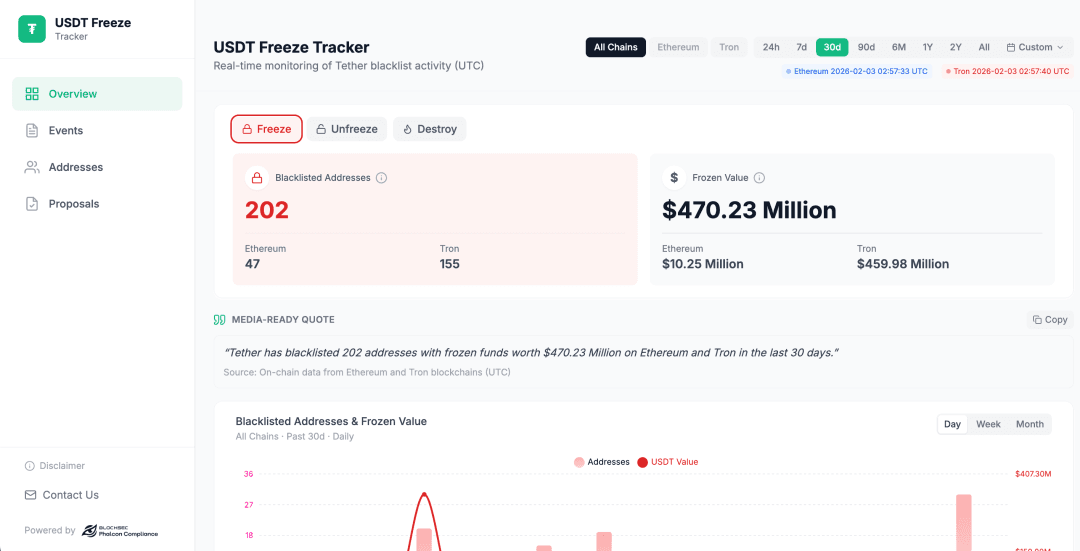
概要:全体像を一目で把握

概要ページはメインダッシュボードとして機能します。USDTアドレスの凍結、解除、破棄イベントに関する完全なデータを集約します。過去24時間、7日間、30日間、90日間、6ヶ月、1年、2年、または全期間など、さまざまな期間で結果をフィルタリングできます。

複雑な設定なしに、選択した期間中のアクティビティを素早く理解できます。データは明確で読みやすく、全体的なトレンドが一目でわかるため、情報に基づいた迅速な意思決定に役立ちます。

概要
概要

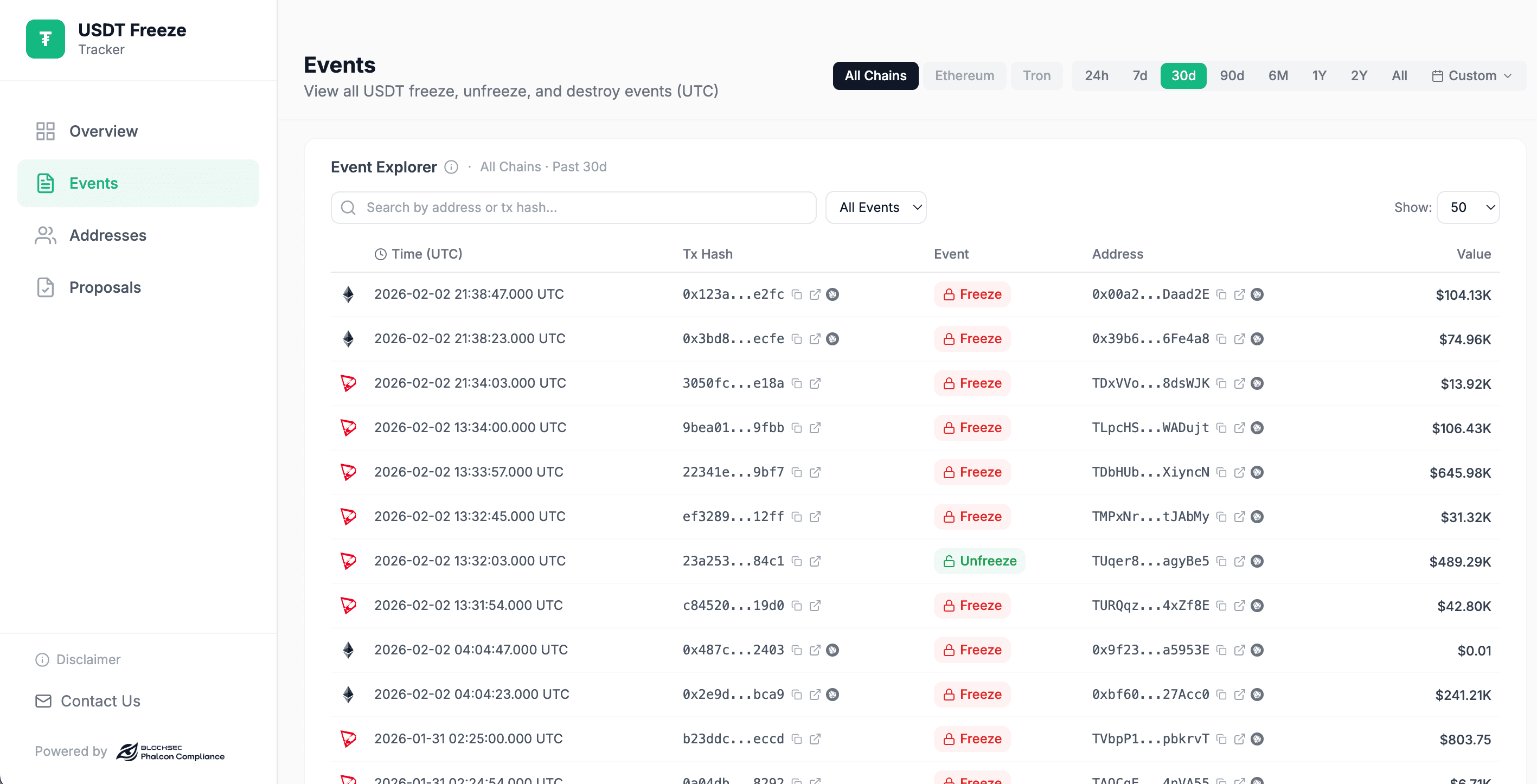
イベント:アドレスアクティビティを一つずつ追跡

イベントページは、アドレスアクティビティを時間順に並べた明確なリストで表示します。各行には、単一の凍結、解除、または破棄イベントが詳細とともに表示されます。これにより、何がいつ起こったのかを簡単に追跡できます。

各イベントについて、Phalcon Explorerで関連トランザクションを開き、オンチェーンの詳細を確認できます。影響を受けたアドレスをクリックしてPhalcon Complianceを開き、リスクスキャンを実行することもできます。これにより、アドレスが凍結、解除、または破棄された理由と、リスクがどこから来るのかを理解するのに役立ちます。

イベント
イベント

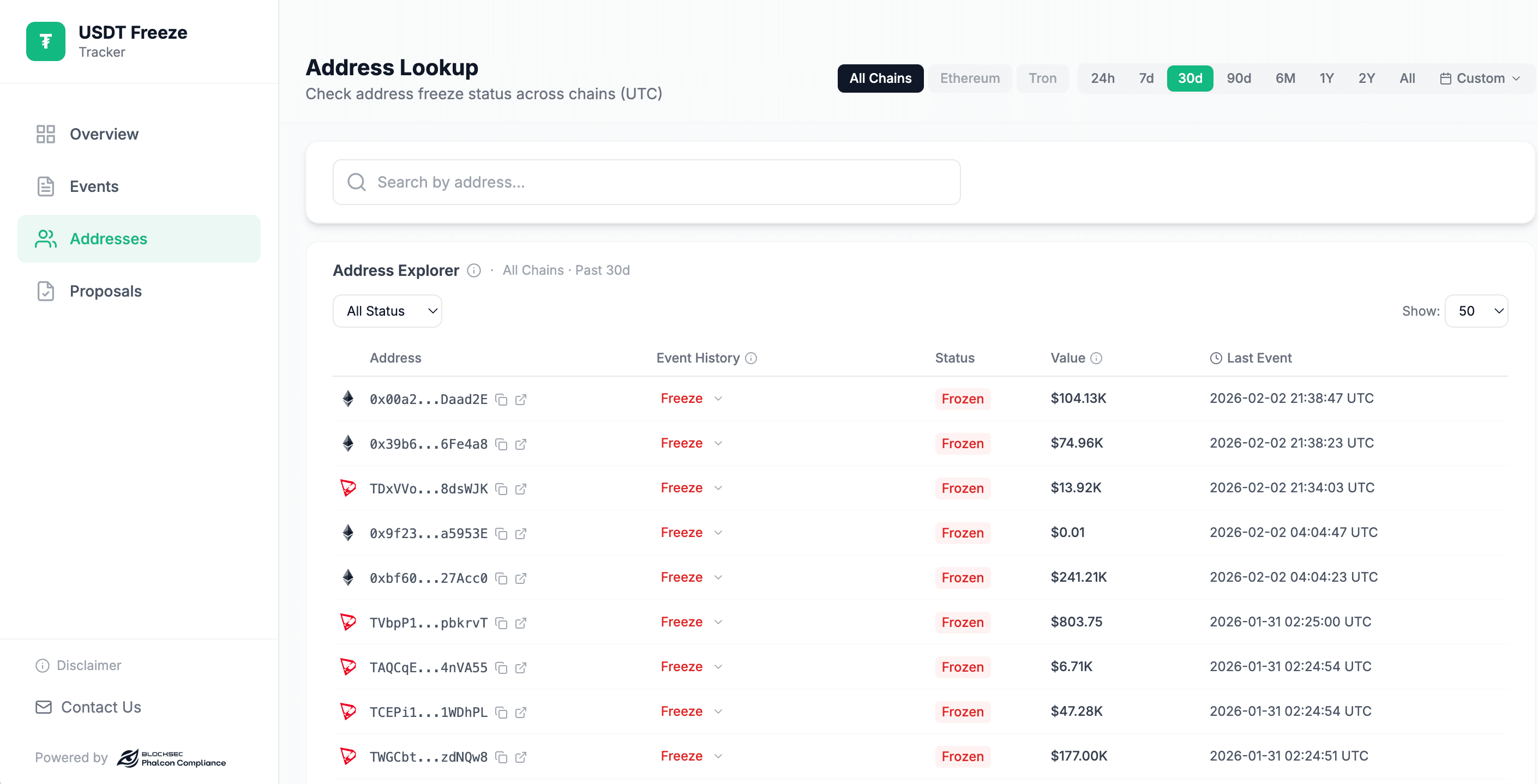
アドレス:検索して即座に結果を取得

アドレスページでは、ウォレットアドレスを入力して直接検索を実行できます。システムは、アドレスがブラックリストに載っているかどうかを迅速にチェックし、現在の凍結または解除ステータスを表示します。

これにより、特定のアドレスのステータスをすぐに確認し、USDTの制限の影響を受けているかどうかを理解できます。

アドレス
アドレス

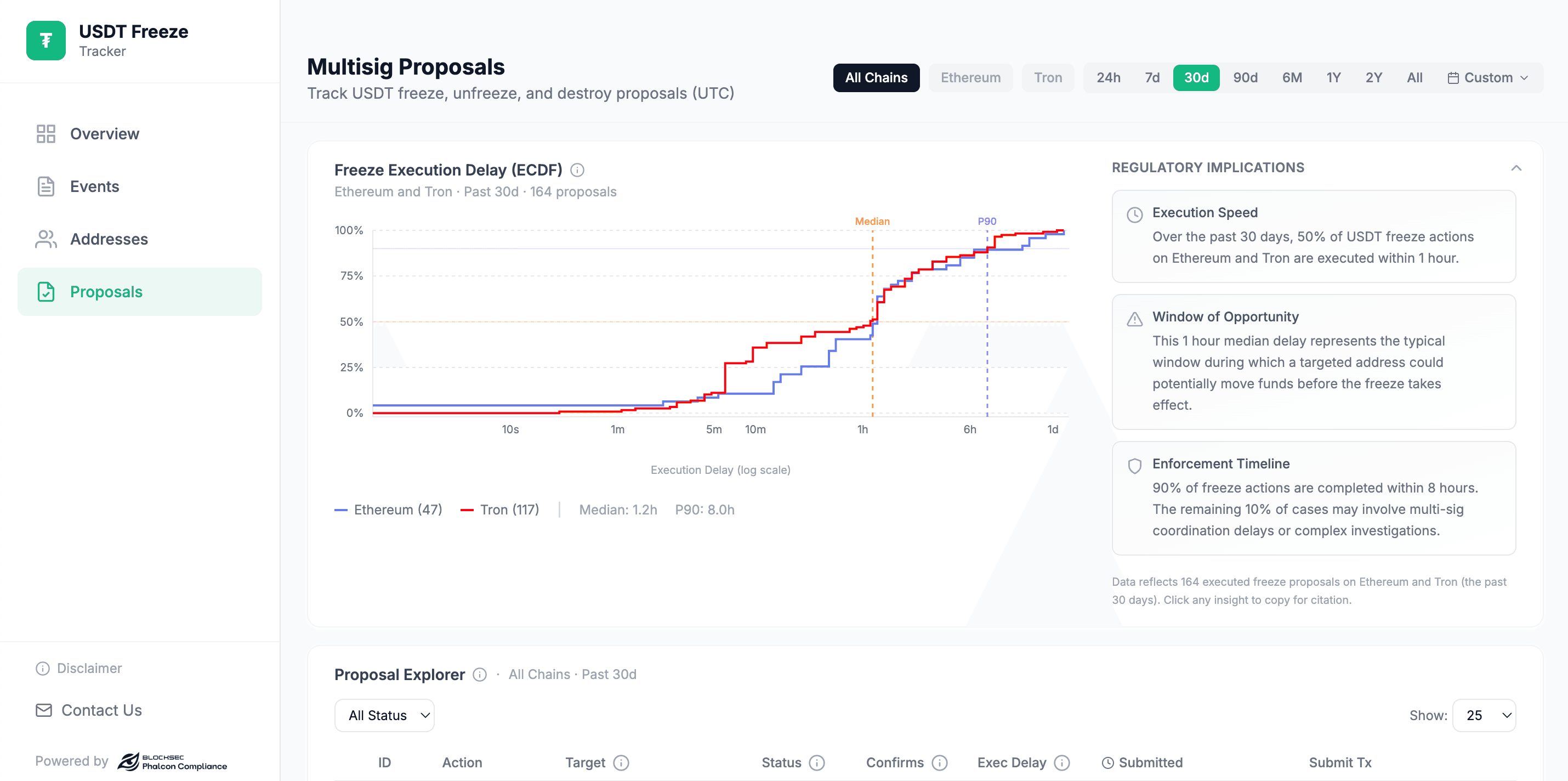
プロポーザル:関連するガバナンスアクションを追跡

プロポーザルページには、USDTの凍結および解除に関連する完了したマルチシグネチャプロポーザルが表示されます。また、各プロポーザルが何を意味するのかを説明するための詳細な規制上の影響も提供します。

実行速度、アクションウィンドウ、強制タイムラインなどの主要情報を確認できます。これにより、凍結決定がどのように実行され、暗号通貨業界のより広範な規制慣行とどのように関連しているのかがより明確にわかります。

プロポーザル
プロポーザル

このツールは、一般的な概要から特定のアドレス検索まで、あらゆるものをカバーしています。イベントの追跡を支援し、凍結の背後にあるルールを説明します。カジュアルユーザーと、USDTアドレスの検索を必要とする業界専門家の両方に最適です。すべてのデータは、ネイティブのEthereumおよびTronのオンチェーンソースから直接提供されます。これにより、精度が保証され、リアルタイムの更新が提供されます。

プラットフォームをより適切に保護し、シームレスなコンプライアンスを確保するために、Phalcon Complianceがリアルタイムでリスクを特定、分析、軽減するのにどのように役立つかをご覧ください。今日からあなたの暗号資産運用を保護しましょう。

Sign up for the latest updates
Tether Freezes $6.76M USDT Linked to Iran's IRGC & Houthi Forces: Why On-Chain Compliance is Now a Geopolitical Battlefield
Security Insights

Tether Freezes $6.76M USDT Linked to Iran's IRGC & Houthi Forces: Why On-Chain Compliance is Now a Geopolitical Battlefield

Looking ahead, targeted freezing events like this $6.76M USDT action will only become more common. On-chain data analysis is improving. Stablecoin issuers are also working closely with regulators. As a result, hidden illicit financial networks will be exposed.

Weekly Web3 Security Incident Roundup | Mar 2 – Mar 8, 2026
Security Insights

Weekly Web3 Security Incident Roundup | Mar 2 – Mar 8, 2026

During the week of March 2 to March 8, 2026, seven blockchain security incidents were reported with total losses of ~$3.25M. The incidents occurred across Base, BNB Chain, and Ethereum, exposing critical vulnerabilities in smart contract business logic, token deflationary mechanics, and asset price manipulation. The primary causes included a double-minting logic flaw during full token deposits that allowed an attacker to exponentially inflate their balances through repeated burn-and-mint cycles, a price manipulation vulnerability in an AMM-based lending market where artificially inflated vault shares created divergent price anchors to incorrectly force healthy positions into liquidation, and a flawed access control implementation relying on trivially spoofed contract interfaces that enabled attackers to bypass authorization to batch-mint and dump arbitrary tokens.

Weekly Web3 Security Incident Roundup | Feb 23 – Mar 1, 2026
Security Insights

Weekly Web3 Security Incident Roundup | Feb 23 – Mar 1, 2026

During the week of February 23 to March 1, 2026, seven blockchain security incidents were reported with total losses of ~$13M. The incidents affected multiple protocols, exposing critical weaknesses in oracle design/configuration, cryptographic verification, and core business logic. The primary drivers included oracle manipulation/misconfiguration that led to the largest loss at YieldBloxDAO (~$10M), a crypto-proof verification flaw that enabled the FOOMCASH (~$2.26M) exploit, and additional token design and logic errors impacting Ploutos, LAXO, STO, HedgePay, and an unknown contract, underscoring the need for rigorous audits and continuous monitoring across all protocol layers.