Der innovative Restaking-Mechanismus von EigenLayer nutzt Ethereums Staking-Pool, um die Kapitaleffizienz zu verbessern und das Problem des „Fractured Trust“ im Blockchain-Ökosystem zu lösen. Dieses neue Paradigma bringt jedoch einzigartige Sicherheitsrisiken mit sich, die robuste Audits, kontinuierliches Monitoring und proaktive Verteidigungsstrategien erfordern, um das Netzwerk und seine Teilnehmer zu schützen.
Einführung
EigenLayer, das auf Ethereum aufbaut, führt das Konzept des Restaking ein, das es Teilnehmern ermöglicht, ihr gestaktes ETH wiederzuverwenden, um zusätzliche verteilte Protokolle zu unterstützen, ohne ihren ursprünglichen Stake oder ihre Belohnungen zu verlieren. Dies maximiert die Kapitaleffizienz und stärkt das gesamte Vertrauensmodell im Blockchain-Ökosystem.
Das schnelle Wachstum des Total Value Locked (TVL) von EigenLayer — von 1 Milliarde US-Dollar Anfang 2024 auf 15,3 Milliarden US-Dollar — verdeutlicht seine Marktwirkung. Es ist mittlerweile das zweitgrößte Protokoll in DeFi nach Lido. Projekte wie Puffer Finance und Renzo haben durch den Aufbau auf EigenLayer schnell an Bedeutung gewonnen und das Ökosystem weiter gefestigt.
Was ist Restaking?
Restaking nutzt das durch Ethereums Proof-of-Stake (PoS)-Staking-Pool gesicherte Vertrauen, um umfassendere Herausforderungen zu lösen. Es schafft einen neuen Markt für die freie marktwirtschaftliche Steuerung des Konsenses (Free-Market Governance of Consensus) und ermöglicht den bidirektionalen Handel von Vertrauen auf Basis von Ethereums gebündelter Sicherheit.
EigenLayer adressiert ein makroökonomisches Sicherheitsproblem im Ethereum-Ökosystem namens Fractured Trust. Dieser Artikel untersucht dieses Konzept und wie das Design von EigenLayer darauf abzielt, es zu lösen.
Wer sind die Teilnehmer im freien Markt?
Im Marktplatz von EigenLayer gibt es:
- Verkäufer: Ethereum-Validatoren oder Staker, die PoS-Vertrauen bereitstellen.
- Käufer: Actively Validated Services (AVSs), die dezentrale Vertrauensnetzwerke benötigen.
AVSs kaufen Vertrauen von Stakern, um ihre Dienste abzusichern, und schaffen so einen dynamischen Markt für verteilte Sicherheit.
Welche Probleme adressiert dieser Markt?
Unbefriedigte Innovationsbedürfnisse
Ethereum innoviert hauptsächlich auf der Smart-Contract-Ebene. Entwickler suchen jedoch nach tiefergehenden Innovationen, wie etwa Änderungen an der Ethereum Virtual Machine (EVM) oder den Konsensprotokollen selbst. EigenLayer erfüllt diese Nachfrage, indem es die Wiederverwendung von Ethereums Vertrauen ermöglicht und so die Hürden für grundlegende Blockchain-Innovationen senkt.

Die Gründer von EigenLayer haben den Wunsch der Entwickler nach grundlegenden, systemnahen Innovationen als ein unbefriedigtes Marktbedürfnis erkannt. Sie begegnen diesem, indem sie einen freien Markt für die Wiederverwendung von Ethereums Vertrauen bereitstellen.
Fractured Trust im Ethereum-Ökosystem
Ethereums PoS-Sicherheit hängt von der Höhe des gestakten Kapitals und der Anzahl der Validatoren ab. Neue Projekte benötigen oft eigene Staking-Token, wodurch gestaktes Kapital vom Ethereum-Mainnet abgezogen wird, was die Gesamtsicherheit schwächt.
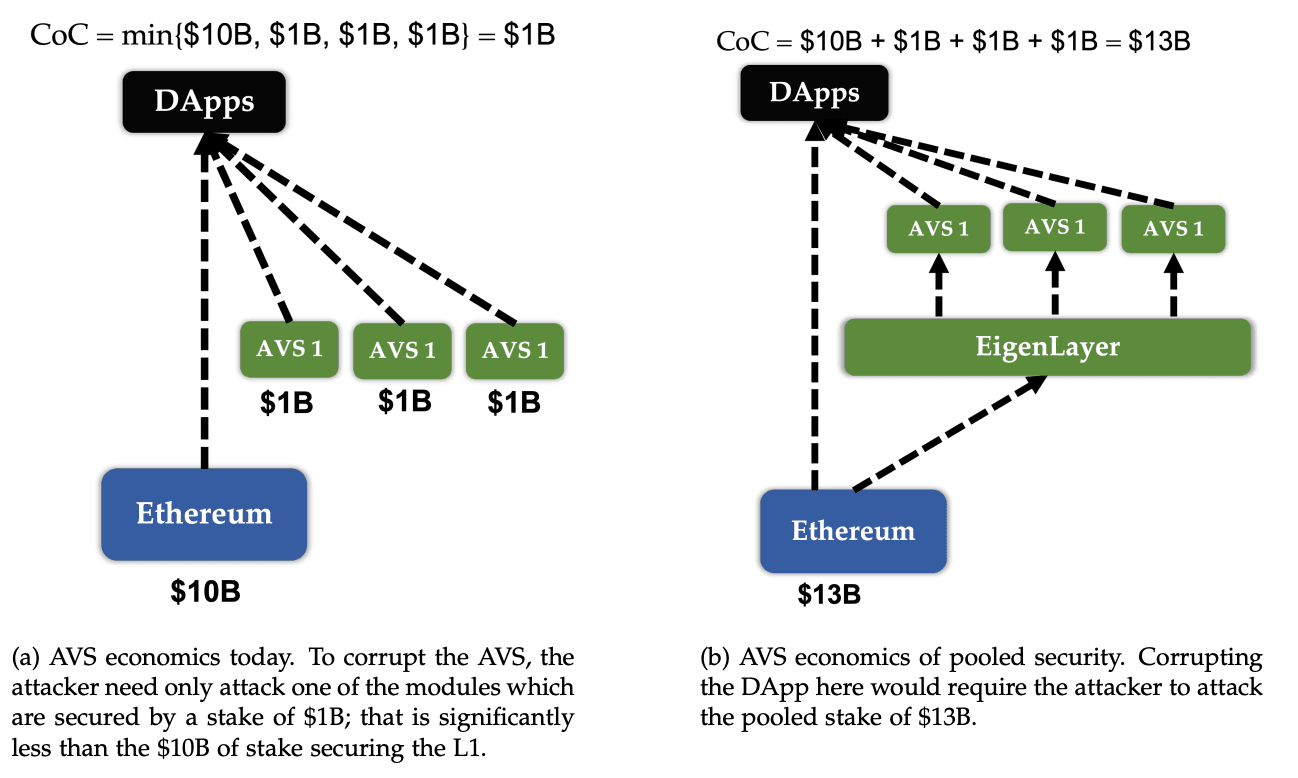
Wenn beispielsweise im Ethereum-Mainnet 10 Milliarden US-Dollar gestaked sind, aber 3 Milliarden US-Dollar in drei separaten Sub-Diensten gebunden sind, sichert dieser Betrag von 3 Milliarden US-Dollar nicht direkt das Ethereum-Mainnet ab. Diese Fragmentierung erhöht die Sicherheitsrisiken, da Angreifer weniger gesicherte AVSs ins Visier nehmen könnten, was potenziell zu kaskadierenden Ausfällen führen kann.
Zusammenfassend steht Ethereum vor zwei miteinander verknüpften Herausforderungen: eingeschränkter Innovation und Fractured Trust. EigenLayer zielt darauf ab, beide zu lösen.
Wie geht EigenLayer mit diesen Problemen um?
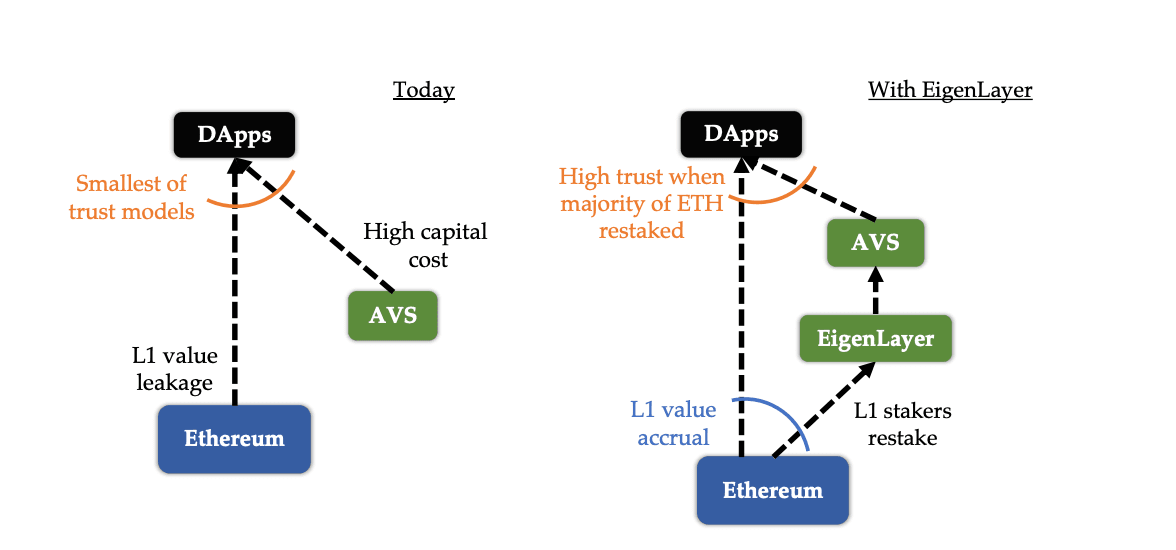
EigenLayer fungiert als Middleware und ermöglicht es AVSs, durch Restaking auf Ethereum-Staking-Pools zuzugreifen. Validatoren können an mehreren AVSs teilnehmen, indem sie dedizierte Slashing- und Payment-Verträge einsetzen und Dienste basierend auf Profitabilität auswählen.
Dieser Ansatz:
- Reduziert die Bootstrapping-Kosten für neue Dienste durch die Nutzung von Ethereums Vertrauen.
- Erleichtert den Rückfluss von gestakten Geldern von dezentralen AVSs zurück in Ethereums Staking-Pools.
- Senkt die Validierungskosten für AVSs, zieht mehr re-gestakte Vermögenswerte an und stärkt die Netzwerksicherheit.
Im Gegensatz zu Projekten wie Cosmos IBC oder OP Stack, die die Kosten für den Start einer Blockchain senken, aber das Problem des Fractured Trust nicht lösen, mindert EigenLayer dieses Problem direkt und bietet gleichzeitig höhere Renditen (und Risiken) für ETH-Validatoren.
Neue Sicherheitsbedenken im EigenLayer-Ökosystem
Das Ökosystem von EigenLayer besteht aus drei Haupteinheiten, von denen jede einzigartige Sicherheitsrisiken aufweist:
- Operators: ETH-Validatoren oder Staker, die Vertrauen verkaufen.
- AVSs: Käufer, die dezentrales PoS-Vertrauen benötigen.
- EigenLayer-Plattform: Der Marktplatz, der die Interaktionen ermöglicht.
Geringere Kosten für böswillige Operators
Restaking ermöglicht es Validatoren, die Renditen aus einem einzigen Stake zu vervielfachen, was die Kapitalnutzung erhöht und die Eintrittsbarrieren senkt. Dies verringert jedoch auch die Kosten für Fehlverhalten böswilliger Operators.
Das Whitepaper von EigenLayer schlägt ein öffentlich zugängliches Dashboard vor, mit dem AVSs die Restaking-Aktivitäten der Operators überprüfen können. Da der Markt frei und bidirektional ist, könnten AVSs sich dafür entscheiden, Risiken für höhere Renditen einzugehen, was die Notwendigkeit fundierter Entscheidungsfindung unterstreicht.
Böswillige AVSs
AVSs definieren ihre eigenen Belohnungs- und Bestrafungsmechanismen über Ethereum-Smart-Contracts. Obwohl Open-Sourcing und Audits gefördert werden, verfügen nicht alle Operators über die Kapazität, die Zuverlässigkeit von AVSs zu überprüfen. Böswillige AVSs könnten Schwachstellen in Verträgen ausnutzen oder irreführende Informationen bereitstellen, was zu unbeabsichtigtem Slashing und Verlusten für Operators führt.
Um dies abzumildern, werden Sicherheitsaudits von AVS-Verträgen und die Einrichtung von Regulierungsausschüssen für Slashing-Mechanismen empfohlen.
Sicherheit der EigenLayer-Plattform
Als eine auf Smart Contracts basierende Plattform nimmt die Komplexität von EigenLayer mit angepassten Schnittstellen für Operators und AVSs zu. Diese Komplexität kann Schwachstellen einführen, die das gesamte Ökosystem und Ethereums PoS-Konsens gefährden.
Code-Audits und kontinuierliches Sicherheitsmonitoring nach der Bereitstellung sind unerlässlich, um die Integrität der Plattform zu wahren.
Lösungen und Empfehlungen
Der Restaking-Mechanismus von EigenLayer optimiert die Kapitalnutzung und adressiert Fractured Trust, führt jedoch neue Sicherheitsherausforderungen ein, wie geringere Kosten für böswillige Operators und komplexe Plattformrisiken.
Um dieses Ökosystem abzusichern, sollten Blockchain-Entwickler, Investoren und Sicherheitsexperten:
- Gründliche Smart-Contract-Audits der Belohnungs- und Bestrafungsmechanismen von AVSs durchführen.
- Kontinuierliches Sicherheitsmonitoring und Angriffserkennung implementieren.
- Transparenz und Open-Source-Praktiken für AVS-Verträge fördern.
- Governance-Ausschüsse einrichten, um Slashing und Anreize zu regulieren.
BlockSec bietet umfassende Sicherheitsdienstleistungen, die Audits vor dem Start und Monitoring nach dem Start abdecken. Unsere Phalcon Security-Plattform bietet kontinuierliches Sicherheitsmonitoring und automatische Angriffsblockierung, um Nutzern, AVSs und Liquiditätsanbietern zu helfen, das EigenLayer-Ökosystem zu schützen.
Über BlockSec
BlockSec ist ein Full-Stack-Web3-Sicherheitsdienstleister, der sich der Verbesserung der Blockchain-Sicherheit und Benutzerfreundlichkeit für die breite Akzeptanz widmet. Unser Angebot umfasst:
- Smart-Contract-Audits und Infrastruktur-Audits für DeFi-Protokolle, L1/L2-Chains und zentralisierte Börsen.
- Die Phalcon Security-Plattform für proaktives Sicherheitsmonitoring und Bedrohungsblockierung.
- MetaSleuth für die On-Chain-Verfolgung und Untersuchung von Geldern.
- Die MetaSuites-Browsererweiterung für effiziente Web3-Navigation.
Wir haben über 1.000 Kunden bedient, darunter Uniswap Foundation, Compound, Forta und PancakeSwap, unterstützt von führenden Investoren wie Matrix Partners und Fenbushi Capital.
Erfahren Sie mehr:
- Website: https://blocksec.com/
- E-Mail: [email protected]
- Twitter: https://twitter.com/BlockSecTeam
- MetaSleuth: https://metasleuth.io/
- MetaSuites: https://blocksec.com/metasuites