An issuer launches a dollar-backed stablecoin and the question follows within hours: which regulator owns it? In 2026 the answer depends on the jurisdiction. Stablecoin regulation now spans the US GENIUS Act, the EU's MiCA framework, and parallel rules in Hong Kong and Singapore. The on-chain AML layer sits beneath all of them.
Why Stablecoins Face Regulation
Stablecoins sit where crypto meets fiat, which makes them the first crypto asset regulators reach for. A token that promises one dollar is only worth one dollar if the reserves and redemption right hold. If they do not, the failure lands on ordinary users and the financial system.
The concerns are concrete: reserve transparency, redemption runs, money laundering, and systemic risk. Stablecoin regulation converges on reserve backing, redemption rights, and issuer licensing, even though each jurisdiction phrases the rules differently. The Financial Action Task Force applies its virtual-asset standards to stablecoin issuers.
US: The GENIUS Act
The United States anchors its stablecoin rules in one federal law. The GENIUS Act, signed into law on July 18, 2025 (P.L. 119-27; official text), sets the regime for payment stablecoins: issuer approval, reserves, and redemption. Related market-structure legislation stalled in the Senate on a procedural vote in September 2026, so stablecoin-specific obligations rest on the GENIUS Act alone. For issuer-side freeze exposure under this regime, see the stablecoin freeze risk whitepaper.
EU: MiCA
The European Union got there first with MiCA, the Markets in Crypto-Assets regulation, which treats stablecoins as e-money tokens or asset-referenced tokens with reserve, redemption, and licensing requirements. Unlike the US federal-state layering, MiCA is a single passport regime. Stablecoin regulation keeps evolving, so issuers and exchanges must track each jurisdiction's rules rather than assume one framework applies everywhere. OFAC adds the sanctions-compliance layer for any issuer touching US-dollar rails.
Asia and Other Jurisdictions
Hong Kong and Singapore sit 12 to 18 months apart. Hong Kong's Stablecoin Ordinance (Cap. 656) took effect on August 1, 2025, and the first two licenses, from 36 applicants, were issued on April 10, 2026. Singapore is still in legislative consultation: its Payment Services Act amendment consultation opened on September 1, 2026 and runs to October 16, 2026, with implementation expected in 2027 or later.
| Region | Core framework | Key requirements |
|---|---|---|
| United States | GENIUS Act | Federal issuer regime, reserve standards |
| European Union | MiCA | EMT/ART licensing, redemption, passporting |
| Hong Kong | Stablecoin Ordinance (Cap. 656), in force | Issuer licensing live: 2 of 36 applicants approved (April 2026) |
| Singapore | Payment Services Act amendment | Draft rules in consultation until October 2026, implementation 2027+ |
The convergence is real (reserves, redemption rights, and issuer licensing appear in every framework), but the compliance work is local. An issuer operating across regions holds multiple licenses and answers to multiple regulators, which is why tracking each jurisdiction's changes is a standing obligation rather than a one-time task. Phalcon Compliance monitors issuance and redemption flows on-chain against that standing obligation, with the labeled-address intelligence behind each check updated continuously.
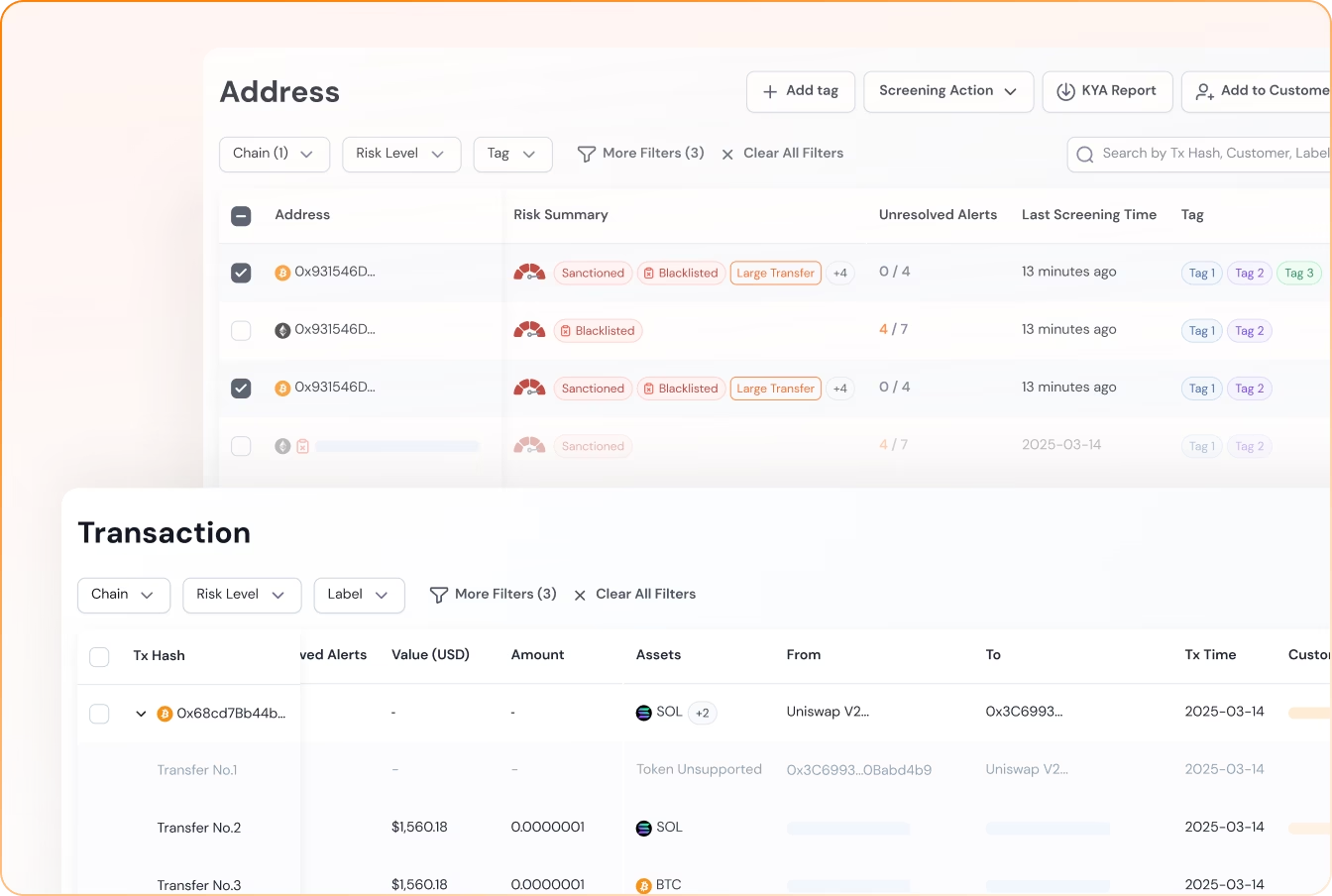
Book a demo of Phalcon Compliance and check your issuance and redemption flows against the obligations above; for the screening architecture issuers plug into, see Onchain AML: Screening, Monitoring, and Investigations.
FAQ: Stablecoin Regulation
What is stablecoin regulation?
It is the set of rules governing who can issue stablecoins and how, centered on reserve backing, redemption rights, and issuer licensing.
What is the GENIUS Act?
The US legislation that establishes a federal regime for payment stablecoins, covering issuer oversight and reserve standards.
What is MiCA?
The EU's Markets in Crypto-Assets regulation, which licenses stablecoin issuers as e-money or asset-referenced token providers under a single passport.
Do stablecoin rules apply everywhere?
No. Each jurisdiction has its own framework, and issuers must track each one rather than assume a single set of rules applies. Phalcon Compliance keeps the labeled-address screening current as those frameworks move.