Back to Blog

BlockSec 发布 Safe{Wallet} 安全监控解决方案

March 6, 2025

近期,Bybit 事件引起了广泛关注。据第三方对 Bybit 的报告显示,此次事件的发生源于黑客入侵了一名 Safe 开发者电脑,篡改了 Bybit 签名者在发起交易时打算签名的数据,最终执行了一次恶意升级交易。此次事件导致了近 15 亿美元的资产损失。事实上,去年已发生过两次类似的攻击,包括 Radiant(损失约 5800 万美元)和印度交易所 WazirX 黑客事件(损失超 2 亿美元),均是由通过 Safe 钱包签署恶意交易所致。

Dune 的最新数据显示(3 月 4 日),总共有超过 3914 万个 Safe 钱包已部署,管理的资产价值达 549 亿美元。为了满足用户需求并加强 Safe 钱包使用全生命周期的风险控制,BlockSec 推出了 Safe{Wallet} Monitor。该解决方案为用户提供交易详情、风险评估和交易模拟的全面可见性,以帮助保护资产并防止潜在损失。

Safe TVL over time_Dune

Safe{Wallet} 交易签名风险

  • 主要攻击目标:Safe 钱包通常管理着大量资产,使其成为黑客的主要攻击目标。例如,Bybit 事件是一次精心策划的攻击,黑客提前两天部署并测试了恶意合约。
  • 冗长的安全链:整个操作涉及的安全链非常长。用户需要信任 Safe 的智能合约、官方网站/应用程序、前后端、自己的电脑、浏览器,最后是用于签名的钱包。然而,攻击者可以瞄准 Safe 或单个签名者。任何一个环节的泄露,例如诱骗用户签署一个伪装成普通转账的升级交易,都可能导致灾难性后果。
  • 硬件钱包的局限性:大多数硬件钱包无法解读 Safe 交易。如果用户被 Safe 界面误导,在使用硬件钱包签名时将无法进行交叉验证。再加上签名者对先前批准的固有信任,这种“盲签”很容易导致严重的疏忽和安全事件。

Safe{Wallet} Monitor

BlockSec 的 Safe{Wallet} Monitor 实时跟踪整个交易签名过程,显示交易详情,识别风险,模拟结果,并提供以下功能:

  • 在执行前预警风险:我们的系统对 Safe 钱包交易的所有阶段进行持续监控,包括发起、签名和执行。如果检测到风险交易,会在签名过程完成和交易广播之前向用户发出警报。
  • 详细的交易洞察:我们的系统会拦截复杂的交易,并将其翻译成清晰、人类可读的解释,从而做出明智的决策,并消除盲签风险。
  • 风险分析与执行模拟:我们的系统会分析每笔交易的相关风险,并在交易执行前模拟交易结果,以防止签署不受欢迎的交易。
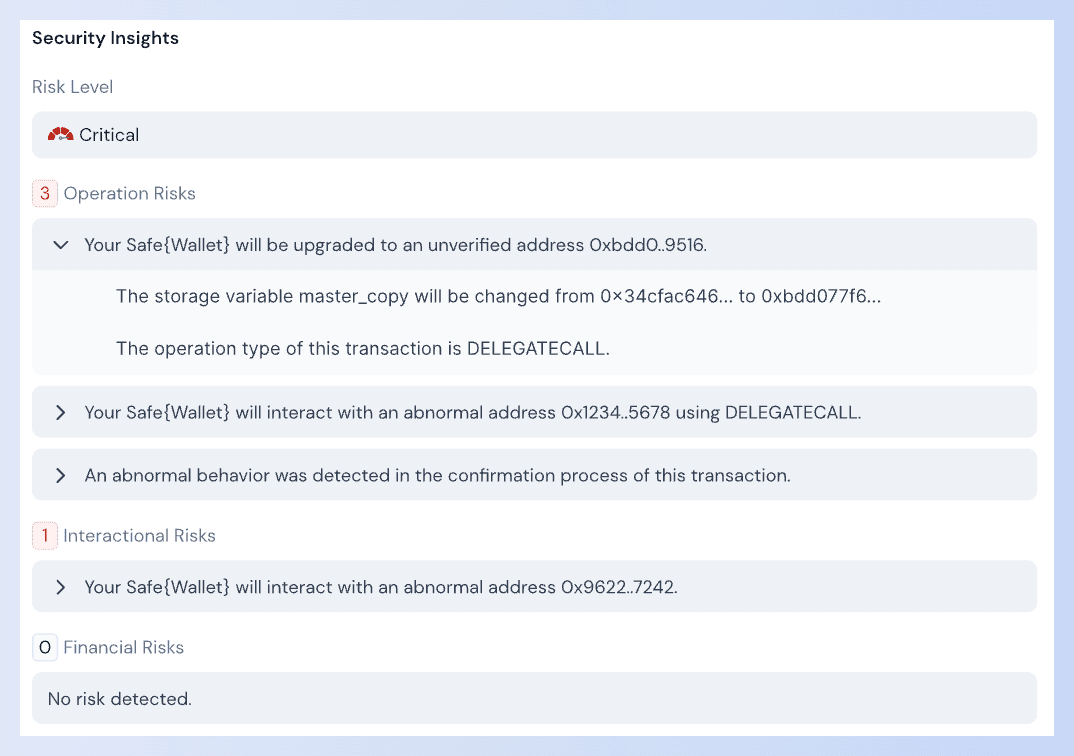
Security Risks_Safe{Wallet} Monitor
  • 多渠道验证:警报可以发送给签名者和非签名者进行额外验证,提供额外的监督,确保彻底的交叉检查。
  • 白名单机制:用户可以将交互限制在特定的合约。系统会立即检测配置更改并做出响应。
  • 自动化响应:在检测到有害交易时,自动触发预设的响应机制来阻止攻击。

预定演示

任何使用 Safe 钱包的个人或机构,特别是管理大量资产的机构,如交易所、协议、L1/L2 网络、投资机构和投资者,都可能面临资金被盗的风险。

我们诚挚邀请您预定演示,了解 Safe{Wallet} Monitor 如何帮助您预防潜在风险并保护您的资产。

BlockSec Phalcon:威胁监控与预防

Safe{Wallet} Monitor 是 Phalcon 的一个重要模块。Phalcon 是 BlockSec 推出的安全监控和阻止平台,为协议提供全面的上线后安全保护,帮助流动性提供者、DAO、基金经理等保护其资产。除了 Safe{Wallet} Monitor,Phalcon 还包括:

  • 攻击交易的实时监控
  • 操作、交互和财务风险的实时监控
  • 代币数量/价格、关键变量、敏感事件和函数调用的灵活监控
  • 安全专家提供的定制监控解决方案
  • 使用多重签名钱包进行自动化响应
  • 紧急响应 SOP 和作战室服务
  • 根本原因分析
  • 固定智能合约代码审计
  • ...

结论

在加密世界中,安全不是一种选择,而是基础。BlockSec 的 Safe{Wallet} Monitor 构建了多层防御,以确保每一笔 Safe{Wallet} 交易都能抵御不可预见的风险,从而保护您的资产。
Sign up for the latest updates
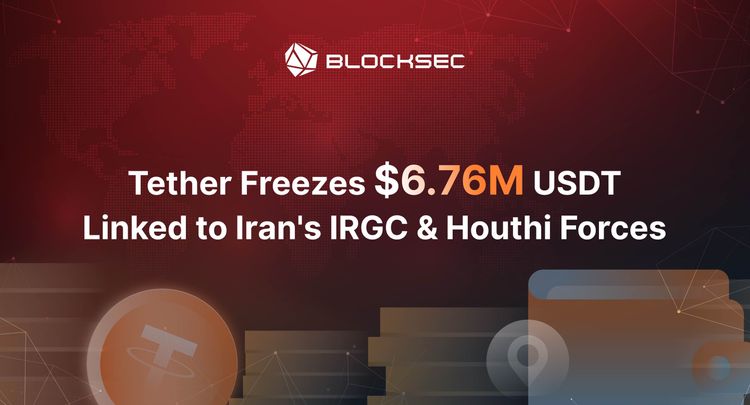
Tether Freezes $6.76M USDT Linked to Iran's IRGC & Houthi Forces: Why On-Chain Compliance is Now a Geopolitical Battlefield
Security Insights

Tether Freezes $6.76M USDT Linked to Iran's IRGC & Houthi Forces: Why On-Chain Compliance is Now a Geopolitical Battlefield

Looking ahead, targeted freezing events like this $6.76M USDT action will only become more common. On-chain data analysis is improving. Stablecoin issuers are also working closely with regulators. As a result, hidden illicit financial networks will be exposed.

Weekly Web3 Security Incident Roundup | Mar 2 – Mar 8, 2026
Security Insights

Weekly Web3 Security Incident Roundup | Mar 2 – Mar 8, 2026

During the week of March 2 to March 8, 2026, seven blockchain security incidents were reported with total losses of ~$3.25M. The incidents occurred across Base, BNB Chain, and Ethereum, exposing critical vulnerabilities in smart contract business logic, token deflationary mechanics, and asset price manipulation. The primary causes included a double-minting logic flaw during full token deposits that allowed an attacker to exponentially inflate their balances through repeated burn-and-mint cycles, a price manipulation vulnerability in an AMM-based lending market where artificially inflated vault shares created divergent price anchors to incorrectly force healthy positions into liquidation, and a flawed access control implementation relying on trivially spoofed contract interfaces that enabled attackers to bypass authorization to batch-mint and dump arbitrary tokens.

Weekly Web3 Security Incident Roundup | Feb 23 – Mar 1, 2026
Security Insights

Weekly Web3 Security Incident Roundup | Feb 23 – Mar 1, 2026

During the week of February 23 to March 1, 2026, seven blockchain security incidents were reported with total losses of ~$13M. The incidents affected multiple protocols, exposing critical weaknesses in oracle design/configuration, cryptographic verification, and core business logic. The primary drivers included oracle manipulation/misconfiguration that led to the largest loss at YieldBloxDAO (~$10M), a crypto-proof verification flaw that enabled the FOOMCASH (~$2.26M) exploit, and additional token design and logic errors impacting Ploutos, LAXO, STO, HedgePay, and an unknown contract, underscoring the need for rigorous audits and continuous monitoring across all protocol layers.