A deposit lands at 03:14 AM on a CEX hot wallet. The transfer is small, under the platform's reporting threshold, and the source address has no flags in the local sanctions file. The system credits the user's account. Twenty minutes later, an external intelligence feed updates that same source address to a sanctioned entity. The exchange is now holding illicit funds, the onboarding happened before anyone could intervene, and the audit log shows a clean approval. This is the deposit-screening failure pattern that regulators consistently cite in enforcement actions against virtual asset service providers.
The reason is structural. Deposits are the first moment external funds touch a platform-controlled wallet, which makes them the highest-exposure node in any exchange's money-laundering kill chain. The Financial Action Task Force expects VASPs to apply a risk-based approach to every incoming transfer, and FinCEN's Bank Secrecy Act obligations extend that expectation to US-registered platforms. This article walks through how to implement deposit-side AML screening in four steps, from mapping the deposit flow to building a defensible audit trail.
Why Deposit-Side AML Screening Is Your First Line of Defense
Consider a common enforcement pattern: an examiner reviewing a digital asset firm finds that approval decisions on incoming deposits carry no documentation of source-address screening. The finding was not about identity verification, which the firm had handled separately. It was about the absence of any control that evaluated the wallet sending the funds before those funds were credited and swept into the exchange's consolidated hot wallet.
Deposit screening is the control that closes that gap, and it operates at the address and transaction layer rather than the identity layer. KYC verifies the customer at onboarding. KYA, Know Your Address, evaluates the blockchain address that is actually delivering value to the platform. KYT, Know Your Transaction, monitors the movement of funds at confirmation time. AML screening for deposits is built on KYA and KYT, not on identity checks the platform may have already completed.
The reason deposits are the first line of defense is timing. Once funds are credited and consolidated into a shared hot wallet, tracing them back to a specific source becomes significantly harder. Sanctioned funds commingled with clean deposits can taint downstream withdrawals, and a single missed screening at the deposit stage can surface weeks later as a regulatory finding.
Step 1: Map Your Deposit Flow and Identify Screening Trigger Points
Begin by drawing the deposit flow end to end, from the moment a user generates a deposit address to the moment the funds are credited and made available for trading. Most CEX pipelines pass through four distinct control points where screening can be deployed, and each carries a different risk profile.
The four trigger points are clear. First, screening at address generation, before the platform ever hands a deposit address to a wallet linked to illicit activity. Second, screening at the first on-chain confirmation, which evaluates the actual transfer. Third, a pre-sweep check before funds are consolidated into the hot wallet, the last technical checkpoint before commingling. Fourth, a threshold-based review for large or unusual deposits that pass automated checks but exhibit patterns worth a human look.
Different business models distribute these controls differently. A spot exchange with retail flow may deploy automated screening at confirmation and reserve manual review for large deposits. An OTC desk may require a pre-trade screening pass before quoting a price. A payment institution handling both deposits and withdrawals may treat the deposit-screening layer as one module inside a broader compliance pipeline. The mapping exercise forces the team to decide, before writing any integration code, where each control actually lives in the existing codebase and who owns it.
Step 2: Integrate Address Screening API into Your Deposit Pipeline
Once the trigger points are mapped, the next step is wiring a screening API into each one. The integration sequence is consistent regardless of where the call sits. First, normalize the address format. Second, submit it to a KYA engine. Third, receive a risk level with category context. Fourth, branch the deposit workflow according to that level.
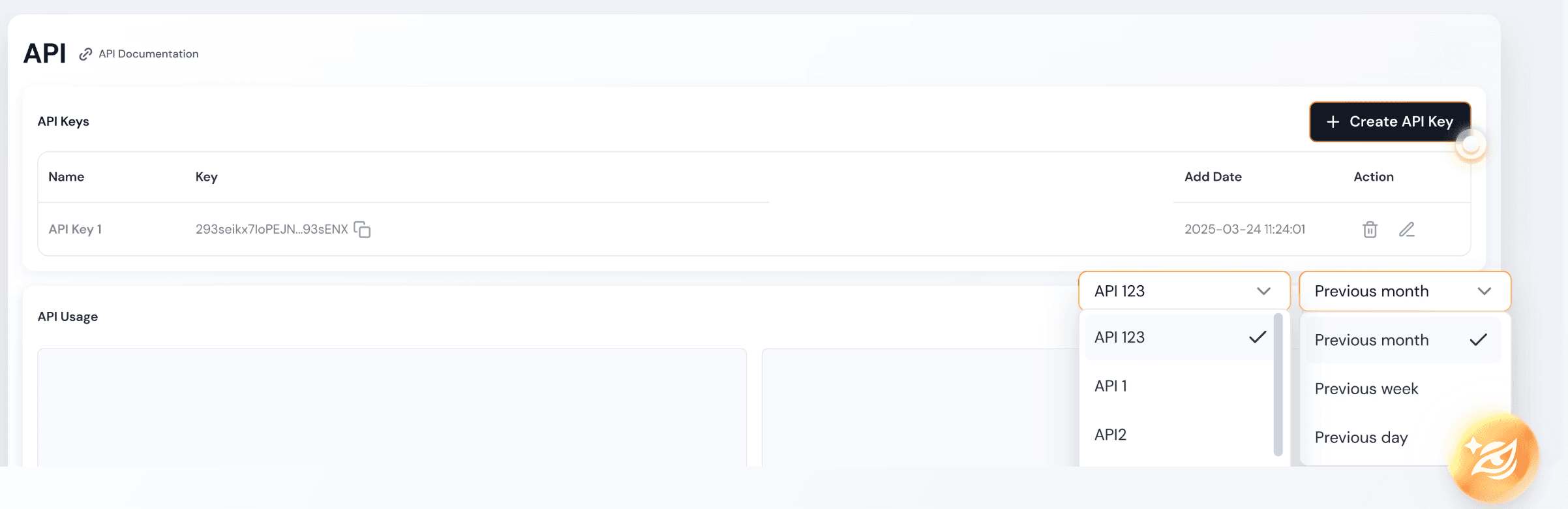
Normalization matters more than it sounds. An Ethereum address can appear in checksummed, lowercase, or EVM-aliased form, and a Tron address uses base58 rather than hex. The screening call must pass the address in the format the engine expects for the chain, or the verdict will silently fail. After normalization, the engine resolves the address against a pre-built label graph and returns a risk level plus the label categories that drove it. BlockSec's KYA engine resolves against more than 600 million pre-built labels and over 200 risk signals with millisecond-level response (Phalcon Compliance Docs). That response feeds directly into the deposit pipeline's Allow, Review, or Block branch.
The pipeline itself is where most implementations leak. If the screening call sits on a synchronous path between transaction confirmation and account credit, latency directly affects the user experience. If it sits on an asynchronous queue that processes in batches, a sanctions designation issued between batches leaves the platform exposed. Production deployments typically use a synchronous pre-credit check for the initial verdict and an asynchronous re-screen pass for label updates that arrive later.
Step 3: Define Risk Thresholds and Response Actions
With screening integrated, the platform needs a policy that maps each risk level to a concrete action. Without thresholds, the screening output is unactionable; with thresholds, it becomes an enforceable control.
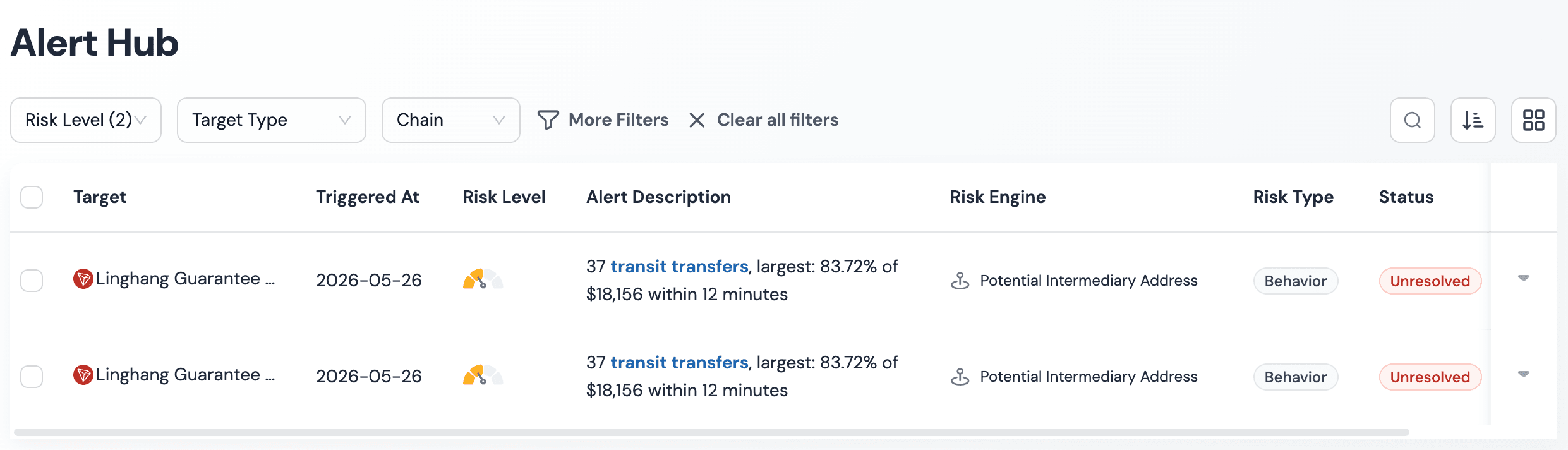
Phalcon Compliance returns one of five risk levels for each screened deposit: Critical, High, Medium, Low, or No Risk. Each organization configures what each tier means against its own compliance policy and risk appetite. A common mapping for deposits is: Critical routes to auto-block and immediate investigation; High and Medium route to manual review or hold; Low continues with ongoing monitoring; No Risk auto-credits.
| Risk level | Typical system action | Analyst action | Evidence retained | Regulatory trigger |
|---|---|---|---|---|
| Critical | Auto-block, escalate | Investigate immediately, file STR if warranted | Full screening trail, decision chain | Suspicious activity reporting |
| High | Hold credit, route to queue | Review label context, decide within SLA | Analyst ID, decision rationale | Enhanced due diligence file |
| Medium | Hold credit, route to queue | Review label context, decide | Analyst ID, decision rationale | Enhanced due diligence file |
| Low | Auto-credit, ongoing monitoring | None required | Level, categories, timestamp | Standard record-keeping |
| No Risk | Auto-credit | None required | Level, timestamp | Standard record-keeping |
Two threshold pitfalls dominate enforcement findings. The first is a static configuration that never adjusts as threat patterns shift; a sanctions surge may require temporary tightening of the Critical or High bands. The second is a Medium band that funnels every ambiguous deposit into a queue the team cannot staff, which forces analysts to rubber-stamp decisions and defeats the purpose of manual review. Phalcon Compliance supports configurable risk policies so each tier's mapping can be tuned to the platform's risk profile and adjusted as exposure changes.
Step 4: Build a Compliance Audit Trail for Deposit Screening
The final step is the one regulators examine first: the audit trail. A screening decision that cannot be reconstructed months later is, for examination purposes, a screening decision that did not happen.
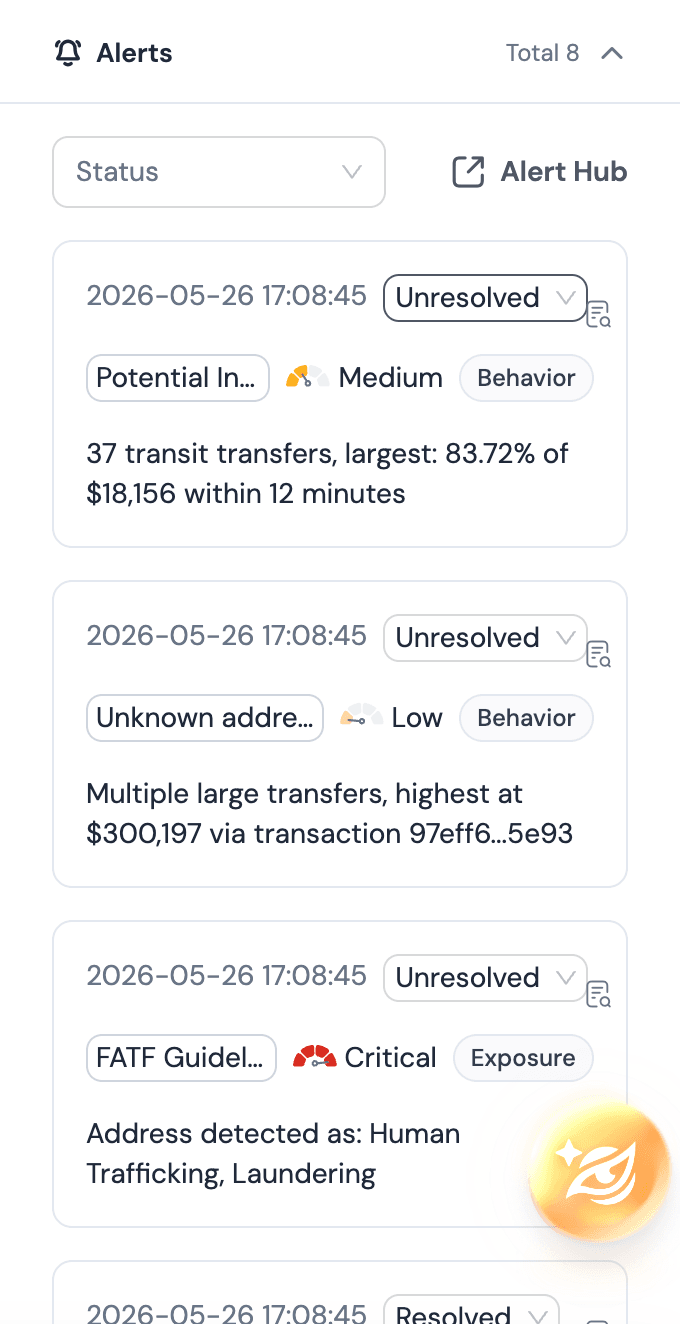
Every screening event must be logged with the address screened, the timestamp, the risk level returned, the label categories that drove the assessment, and the resulting decision. The log must be tamper-evident and exportable on demand. When an examiner asks why a specific deposit was allowed through on a specific date, the response is not a narrative explanation; it is the screening record from that timestamp, reproduced exactly. Phalcon Compliance's platform writes each verdict to a compliance log that can be exported for examination and supports one-click STR generation aligned with major regulatory jurisdictions (Phalcon Compliance Docs, Risk Levels).
The audit trail also enables longitudinal review. A single deposit screened once is a point-in-time decision. A deposit address screened continuously across its lifetime becomes a risk history. When a label update designates an address that has interacted with the platform before, the audit trail exposes that prior relationship. The compliance team can then reconstruct every deposit from that source and decide whether retroactive action is warranted.
For a broader treatment of how deposit screening fits into the full AML compliance program for exchanges and VASPs, see Crypto AML Compliance. The Phalcon Compliance platform executes the steps above in production.
FAQ
How is deposit-side AML screening different from KYC? KYC verifies customer identity at onboarding and lives at the document layer. Deposit-side AML screening runs at the address and transaction layer, evaluating the blockchain source of each incoming transfer rather than the person initiating it. The two are complementary controls in a complete AML program.
At what point in the deposit flow should screening run? Screening should run at least once at transaction confirmation, before funds are credited to the user's account. Many platforms add a pre-sweep check before consolidation into the hot wallet and a threshold-based review for large or structurally unusual deposits.
What happens when a risk level updates after the deposit is already credited? The audit trail lets the compliance team identify prior deposits from the same address and assess retroactive action. A continuous monitoring layer, running alongside deposit-time screening, catches label updates that arrive after the initial verdict and surfaces them for re-evaluation.
Does deposit screening slow down the user experience? A screening engine returning millisecond-level responses does not introduce perceptible latency on the deposit path. The bottleneck is usually the blockchain confirmation time, not the screening call, which runs in parallel with confirmation polling.
What should the audit trail contain for each deposit? At minimum: the address screened, the timestamp, the risk level, the risk categories that drove the assessment, the decision taken, and the policy version applied. For Medium and High bands, the analyst identity and decision rationale should also be retained.