
A vendor-neutral crypto AML certification teaches methods and knowledge, not the buttons on one platform. That is what keeps a career portable across employers and tools. Vendor-specific training, by contrast, ties a practitioner to a single product. For one thing, supervisors look for demonstrated competence an AML program lead can actually defend, not just time spent on the job, and a recognized credential is one common way to evidence it, which is why the vendor-neutral route is the career-first choice. This guide explains how to compare the two and build practical investigation skills through certifications, public research, and hands-on tools. This page is part of the AML Compliance Hub.
Why Certification Matters for Crypto AML Professionals
Certification in crypto AML matters for three reasons that have nothing to do with marketing. First, regulators expect the person running an AML program to be qualified and able to demonstrate competence, not just accumulate on-the-job exposure; a recognized credential is one common way to evidence that. The FATF training resources describe the risk-based standard supervisors reference when they assess whether a program and its staff are credible. FinCEN's AML rules and guidance set the US floor a credentialed practitioner must be able to defend. Second, the field changes faster than traditional financial crime work, so a structured body of knowledge keeps a practitioner current rather than reactive. Third, certification produces a paper trail a practitioner can show a new employer, an auditor, or a regulator. Regulators expect crypto AML work to be defensible, and defensible work needs a credential that survives a change of employer, a change of tooling, and an auditor's questions. A practitioner who skips certification and learns only on the job inherits one team's habits, with no external check on whether those habits still match current supervisory expectations.
Vendor-Neutral vs Vendor-Specific Certifications
A vendor-neutral certification teaches a body of knowledge that no single product owns. A vendor-specific certification teaches one product's workflow. The first is portable. The second is not. Programs from bodies such as ACAMS and the ICA sit in the vendor-neutral camp. Their curriculum covers risk frameworks, investigation method, and regulatory expectations that hold up across employers and across whichever analytics tool an organization licenses. A vendor-specific certification, by contrast, trains a practitioner to operate one supplier's platform, and that training loses most of its value the moment the practitioner moves to an organization using a different tool.
Practitioners who complete a vendor-specific certification often find that their skills do not transfer when they change employer or when their organization switches to a different analytics tool. The cost is not only the training fee. It is the lost time and the narrowed career options that come from building expertise that only one buyer values. The table below captures the structural difference.
| Dimension | Vendor-neutral certification | Vendor-specific certification |
|---|---|---|
| Knowledge base | Shared body of knowledge | One product's workflow |
| Portability | Travels across employers and tools | Tied to one supplier's platform |
| Career value | Compounding | Resets when tooling changes |
| Defensibility | Recognized by regulators and auditors | Recognized mainly by the supplier |
Building Transferable Investigation Skills
The most durable crypto AML skill is the ability to read an on-chain fund flow and explain it to a regulator, not the ability to click through one analytics dashboard. Transferable skill is built from public research, peer-reviewed method, and free-to-start investigation tools, and that is where a career-first practitioner should invest time. BlockSec contributes the kind of vendor-neutral, peer-reviewed research a practitioner can actually learn from: papers at ACM CCS, the NDSS Symposium, and ACM SIGMETRICS, covering transaction phishing, Drainer-as-a-Service ecosystems, and on-chain risk measurement. Reading that research teaches investigation method that no single platform owns. The company also offers MetaSleuth, a free-to-start on-chain investigation tool that lets a practitioner track crypto funds and visualize transaction flows without buying a paid compliance platform. For practitioners who want a deeper workflow, BlockSec's compliance platform draws on a database of more than 600 million labeled addresses and a corpus of more than 200 signal types, refreshed around the clock. It is introduced through the crypto AML compliance platform page.
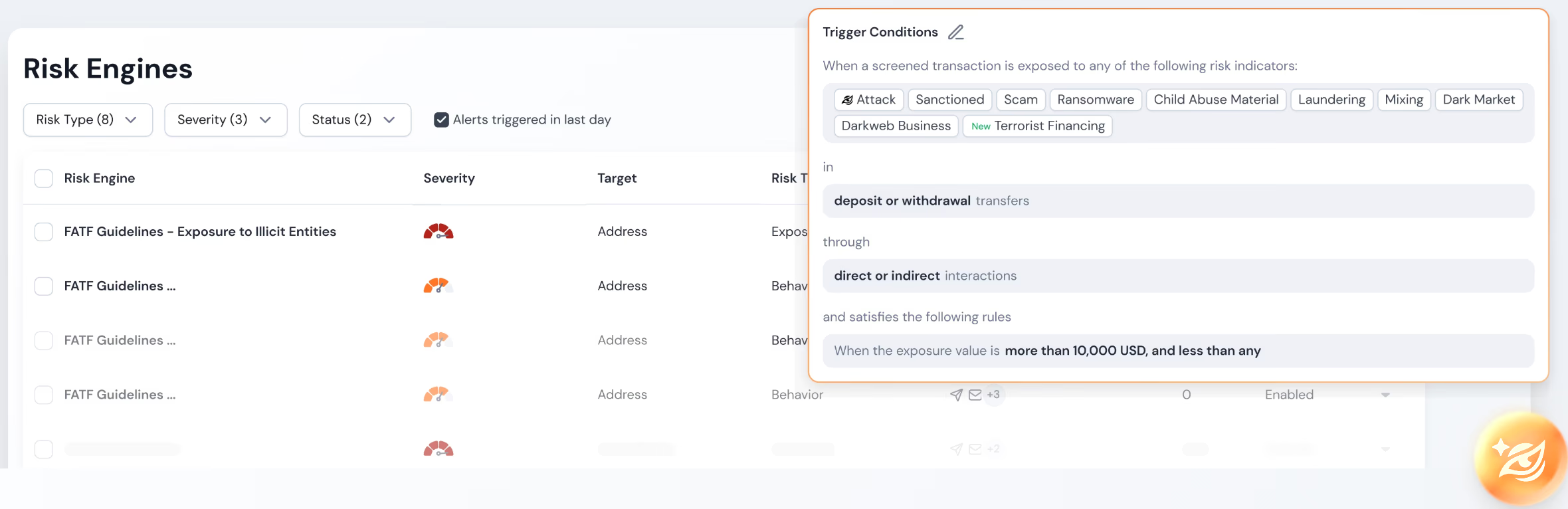
The point is not that any one tool replaces a certification. The point is that transferable skill compounds. A practitioner who learns fund-flow analysis from peer-reviewed research and practices it on a free-to-start tool carries that skill into every future role. It does not matter which paid platform the next employer licenses.
Career Path From Banking AML to Crypto
Compliance professionals moving from banking AML into crypto often assume their existing credential covers the new ground. It covers the principles of risk-based AML. It does not cover the mechanics of chain-specific laundering behavior, mixer flows, or the investigation of illicit stablecoin movement. A career-first transition pairs the transferable banking credential with crypto-specific investigation skill built from public research and hands-on tool use. The combination is what makes a candidate credible to a crypto-native employer, and it is also what keeps the practitioner from being locked into whichever analytics tool the first crypto employer happens to use. When that employer later asks the practitioner to justify a platform choice, how to evaluate a crypto AML compliance vendor is the companion evaluation skill.
Read the BlockSec Research Library
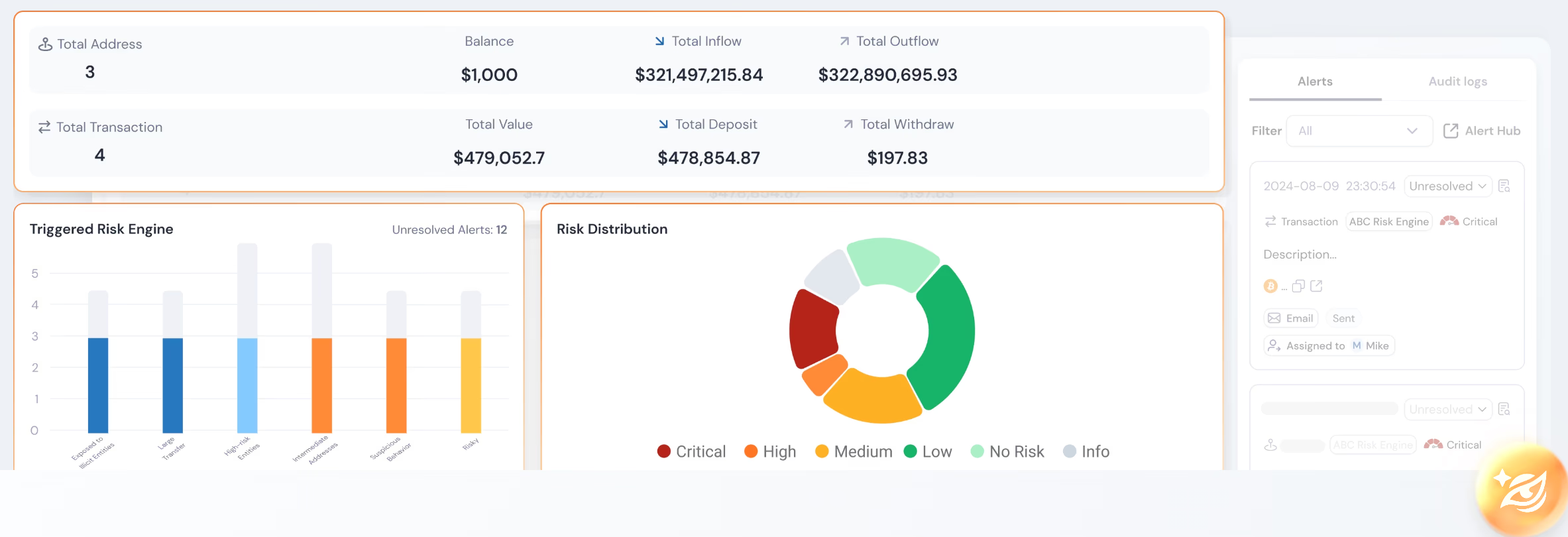
A vendor-neutral certification protects career mobility, and transferable investigation skill protects it further. Both grow stronger when fed by current research. The team publishes its peer-reviewed work and its on-chain investigation writing in the BlockSec research library, where practitioners moving into crypto AML can read method that no single supplier owns. It is a free starting point for any compliance professional who wants a career-first path through crypto AML.