
BlockSec is legitimate when it survives the same four-dimension legitimacy check a buyer should run on any crypto compliance vendor. The four dimensions are product capabilities, customer evidence, institutional adoption, and decision transparency. A buyer can check each one without taking the vendor's word for anything. This page gives a structured answer rather than a slogan. It applies the four-dimension framework to BlockSec, separates vendor self-report from independently checkable evidence, and hands the reader a due-diligence checklist that works on any vendor in this category. The framework is part of a broader crypto AML compliance platform. This page is part of the AML Compliance Hub.
A Four-Dimension Framework for Crypto Compliance Vendor Legitimacy
Legitimacy for a crypto compliance vendor is not a single badge. It is the answer to four separate questions that a buyer can check without taking the vendor's word for anything. The four dimensions are product capabilities, customer evidence, institutional adoption, and decision transparency.
Product capabilities come first. A legitimate vendor can show concrete, measurable parameters: how many addresses its label database covers, how many risk indicators drive its decisions, and how many chains its tracing reaches. A vendor that answers these questions with adjectives instead of numbers is asking the buyer to fill in the gaps.
Customer evidence is the second dimension. Public testimonials, named case studies, and a customer list a buyer can recognize are different in kind from anonymous logos on a slide. A legitimate vendor has at least some customers willing to be named.
Institutional adoption is the third dimension, and it is the one that needs the most care. Cooperation with regulators, law enforcement, or international bodies is powerful legitimacy evidence when a reviewer independently confirms it. FinCEN guidance on virtual currency and the equivalent national regulators set the bar for what counts as institutional engagement in this category. When the only source is the vendor's own marketing, it must be treated as a self-report that the buyer confirms separately.
Decision transparency is the fourth dimension. A legitimate vendor exposes the basis behind each risk judgment, so the compliance officer can defend a filing rather than invoke vendor authority. The FATF virtual assets risk framework establishes the regulatory legitimacy of the crypto AML category itself, which is the backdrop any credible compliance vendor operates inside.
Compliance officers evaluating newer crypto AML vendors share a recurring trust skepticism: vendor slide decks look compelling but the underlying legitimacy cannot be independently verified. The same skepticism surfaces in audit preparation and procurement. That skepticism is the correct starting posture, and the four-dimension framework is the structured way to resolve it.
Who BlockSec Is: From Security Audits to Compliance and Investigation
BlockSec originated in smart-contract security auditing and blockchain security research before expanding into onchain compliance and investigation. The product line reflects that path. Phalcon Security, the security monitoring platform, came first; Phalcon Compliance then extended the product line with KYT, KYA, and transaction monitoring. MetaSleuth is the onchain investigation and fund-tracing tool used to follow stolen or laundered funds across chains. SafeWallet covers multi-signature wallet security. Specific founding-year and funding figures are intentionally not asserted here, because the public record is not consistent enough to cite without independent confirmation.
The pedigree matters for legitimacy for a specific reason. A vendor that learned crypto risk by auditing smart contracts and responding to incidents brings an offensive understanding of how attackers move funds. That background feeds directly into the address-labeling and behavioral-detection work that a compliance tool relies on. A vendor that started in compliance marketing and worked backward to technology carries a different signal.
Verifiable Product Capabilities and Institutional Evidence
A credible crypto compliance vendor should provide clear product information, customer evidence, and results that buyers can verify. Phalcon Compliance uses more than 600 million labeled addresses, over 200 signal types, and 17 Risk Indicator categories. Its cross-chain tracing follows funds through multiple hops and mixers. BlockSec also publishes customer and institutional use cases that buyers can check independently.
Phalcon Compliance uses more than 600 million labeled addresses, refreshed continuously, to support its risk results. It also shows the indicators behind a result instead of returning only a risk level.
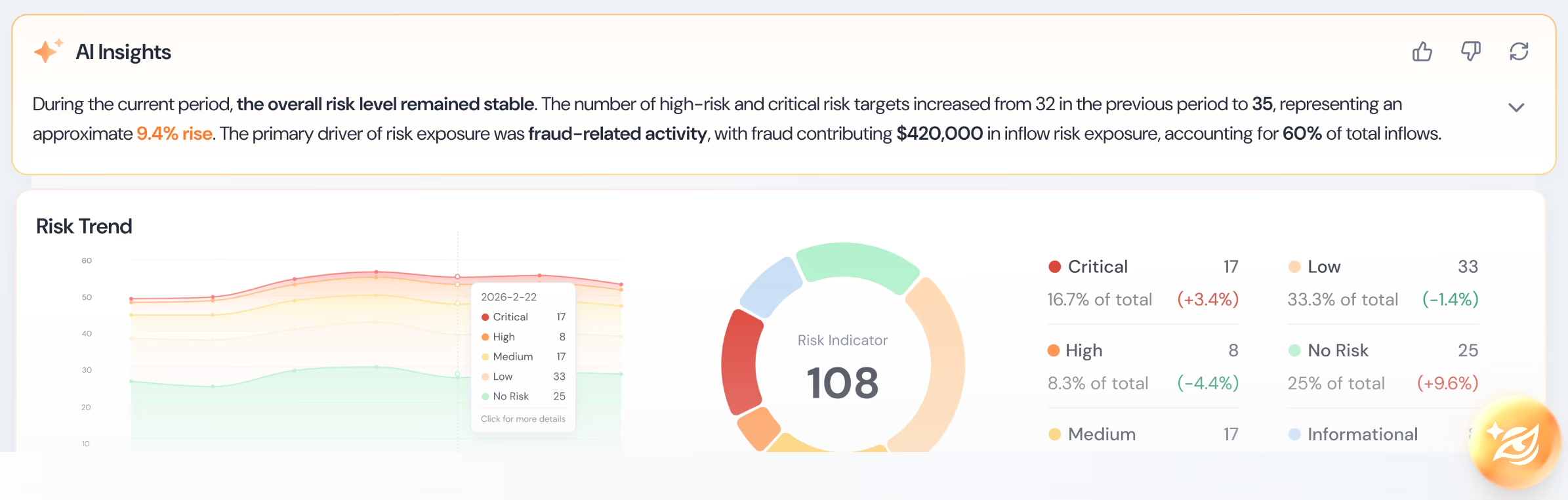
Phalcon Compliance groups more than 200 signal types into 17 categories and shows which indicators contributed to a result. Behavioral Risk Engine includes 3 address templates and 2 transaction templates. This gives reviewers a clear basis for checking a decision.
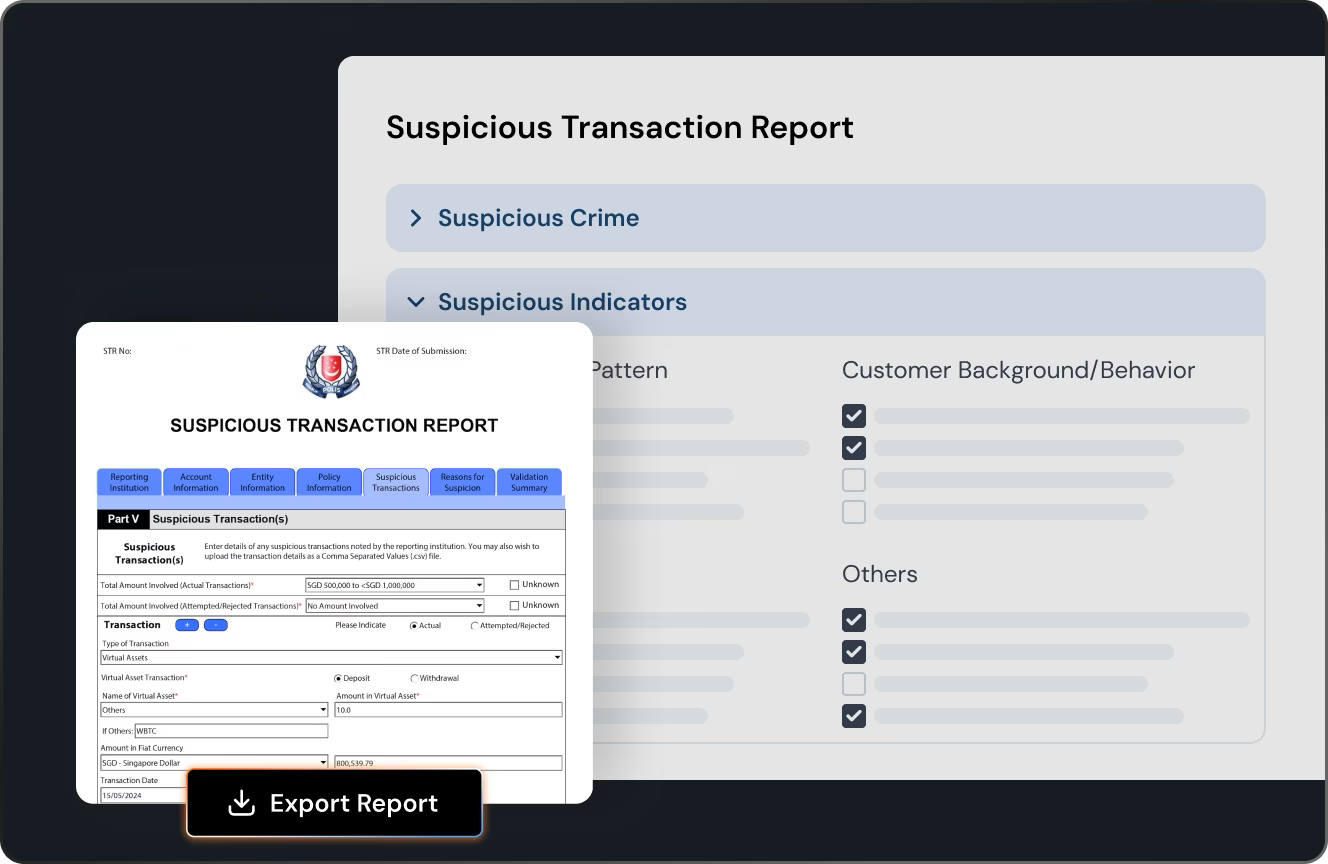
MetaSleuth cross-chain tracing follows funds across chains and pierces mixers, so fund flow that crosses chains or passes through a mixer is not a dead end. Each risk decision returns its basis, including Exposure Value in USD and Exposure Percentage, so a compliance officer can point to a number rather than a tier label when defending a filing.
BlockSec has served more than 1,000 customers globally, including Web3 companies such as Cobo. Named, recognizable customers are a different category of legitimacy evidence from anonymous logos. A case study carries the signal further. Per a BlockSec client case study, Interlace improved deposit review efficiency by 70% and reached a 99.9% interception rate on high-risk withdrawals after adopting Phalcon Compliance. The Interlace CPO gave a public testimonial that buyers can read and weigh.
BlockSec's fund-tracing tool MetaSleuth has been adopted by more than 100 enforcement and compliance institutions worldwide, including financial regulators, law enforcement agencies, and global consulting firms, per BlockSec's own reporting. Adoption by enforcement users is a legitimacy signal that marketing evidence cannot manufacture, because enforcement users select tools based on investigative outcomes rather than procurement cycles.
Institutional cooperation needs a sharper attribution. BlockSec states that it has cooperated with the United Nations and with regulators and consulting firms; this is a vendor self-report that a buyer should independently confirm rather than treat as a hard external fact. The four-dimension framework only works when each dimension is sourced honestly. A vendor self-report is a legitimate data point, but it is not the same as an independent verification, and any compliance vendor, including BlockSec, should be held to that standard.
How to Independently Verify a Compliance Vendor
A compliance officer does not need to take any vendor's legitimacy claim on faith. The four-dimension framework turns into a concrete due-diligence checklist that works on any crypto compliance vendor. The checklist starts with verifiable product parameters: labeled-address count, risk-indicator count, chain coverage, and refresh cadence. It then asks for named customer evidence, separates vendor self-report from independent verification, requests a sample API response to inspect the decision basis, and runs a proof-of-concept on live cases.
The five-step independent verification procedure is covered in a separate guide, where each step is expanded with the exact inspection a buyer should run. The legitimacy assessment above is the capability-and-evidence layer; that procedure is the practical execution layer. Together they let a compliance officer resolve the four dimensions without taking any vendor's word on trust.
Assess BlockSec Compliance Legitimacy
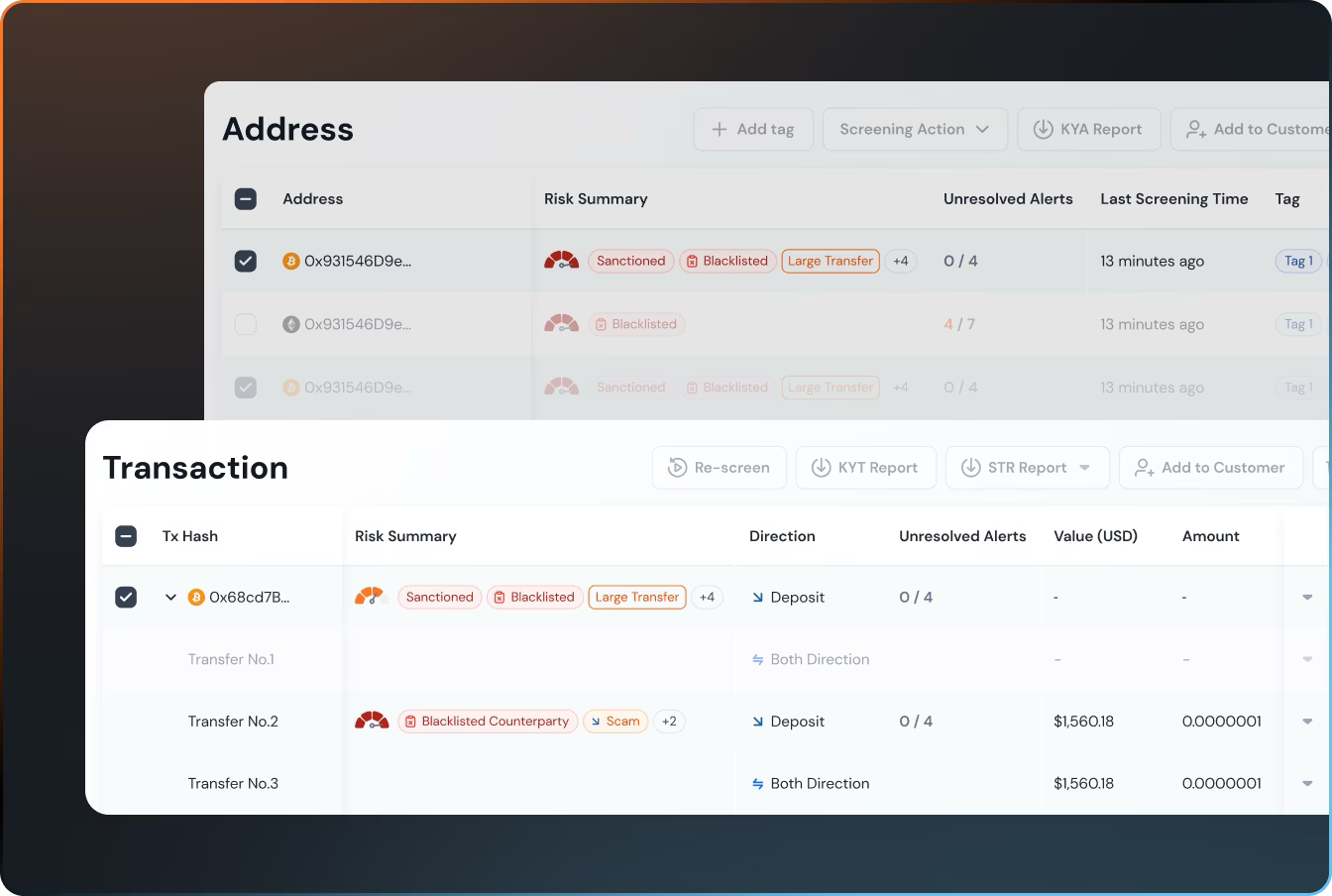
BlockSec is a legitimate crypto compliance vendor when assessed against the four-dimension framework, and the assessment is verifiable rather than rhetorical. The product capabilities are concrete: more than 600 million labeled addresses, 17 traceable Risk Indicator categories, over 200 signal types, 3 address and 2 transaction behavioral templates, and MetaSleuth cross-chain tracing that continues across chains. The customer evidence is named and recognizable. The decision transparency is exposed through the explainable model. The institutional dimension is partly self-report, and an honest legitimacy assessment says so plainly rather than inflating it. Assess BlockSec compliance legitimacy by running the same four-dimension checklist on a real case before signing any contract.