Back to Blog

保护您的资产:防范 Web3 钓鱼诈骗

MetaSleuth
December 14, 2023
4 min read

Web3 中的网络钓鱼是什么?

随着用户通过区块链交易进行代币交易,一种新型网络钓鱼诈骗已经出现。与旨在获取受害者个人或财务信息的传统网络钓鱼诈骗不同,这种特定的网络钓鱼方法旨在通过利用交易来窃取用户的资产。本质上,诈骗者欺骗受害者签署交易或消息,使他们能够提取受害者的代币。 在接下来的章节中,我们将深入探讨 Web3 中各种普遍存在的网络钓鱼诈骗,并学习实用的策略来保护您的资产免受其侵害。

Web3 中普遍存在的网络钓鱼诈骗类型

1. 直接代币转账

这种诈骗操纵用户直接将其资产转账到恶意地址。这些诈骗的成功通常依赖于复杂的社会工程技术。一种常见的变种包括欺骗用户在“安全更新”或“领取”的幌子下签署交易,最终导致其资产被盗。此类诈骗通常通过使用虚假接口诈骗来实现。

2. 代币批准 / 授权

批准和授权方法允许其他人(称为支出者)代表您使用您的代币。用户通常会向 DApp 授予代币批准以方便交易活动。但是,向网络钓鱼地址等恶意参与者授予批准可能导致财务损失。如果受害者未能意识到并撤销批准,网络钓鱼攻击可能会持续很长时间。
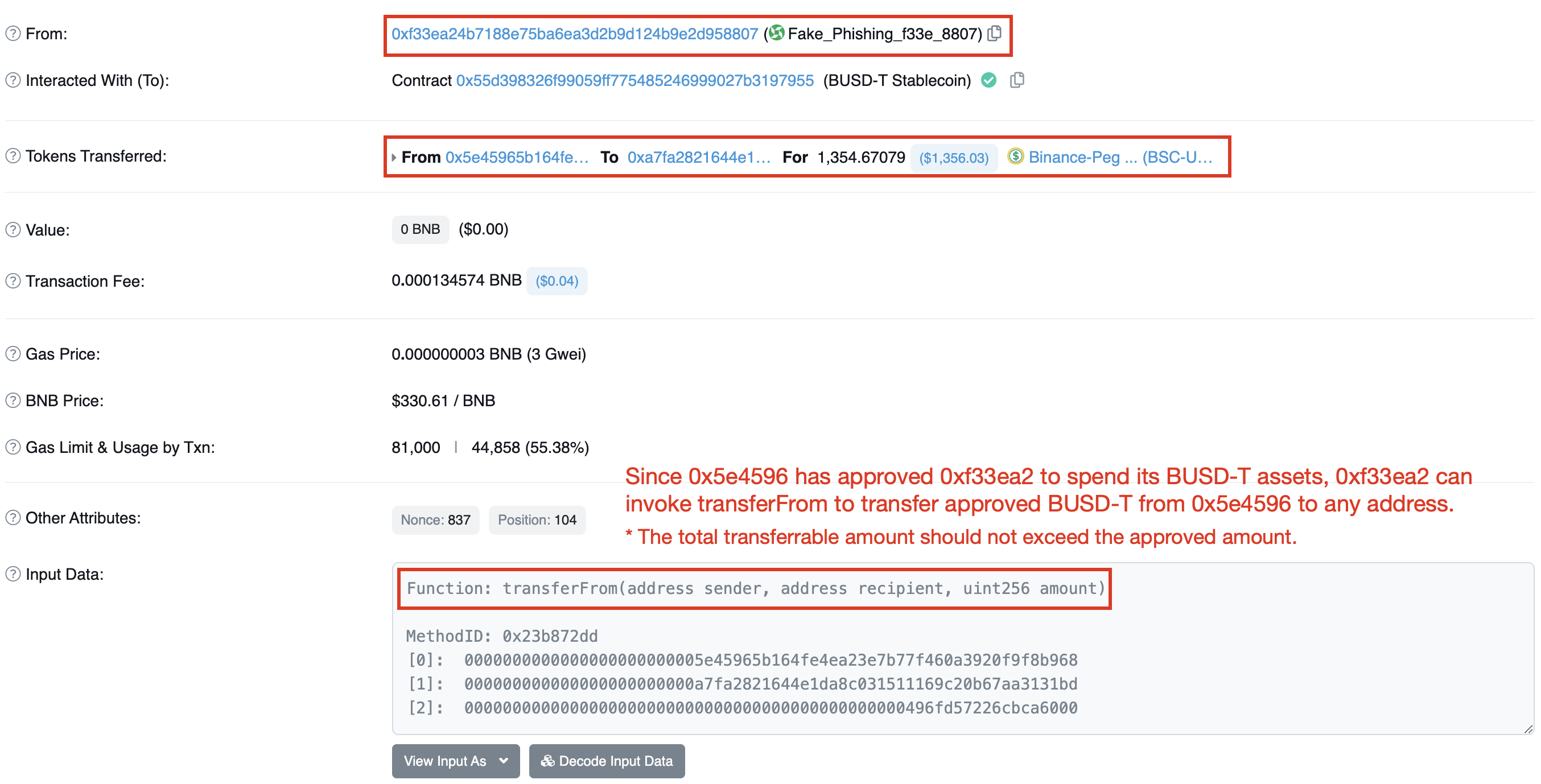
攻击交易示例

3. 攻击交易示例

零价值转账诈骗,也称为“投毒”,当网络钓鱼者操纵从受害者地址到与受害者之前互动过的合法地址相似的网络钓鱼地址进行零价值转账时发生。这种欺骗策略旨在诱骗受害者错误地将资金转账到这些网络钓鱼地址,从而导致大量资产损失。
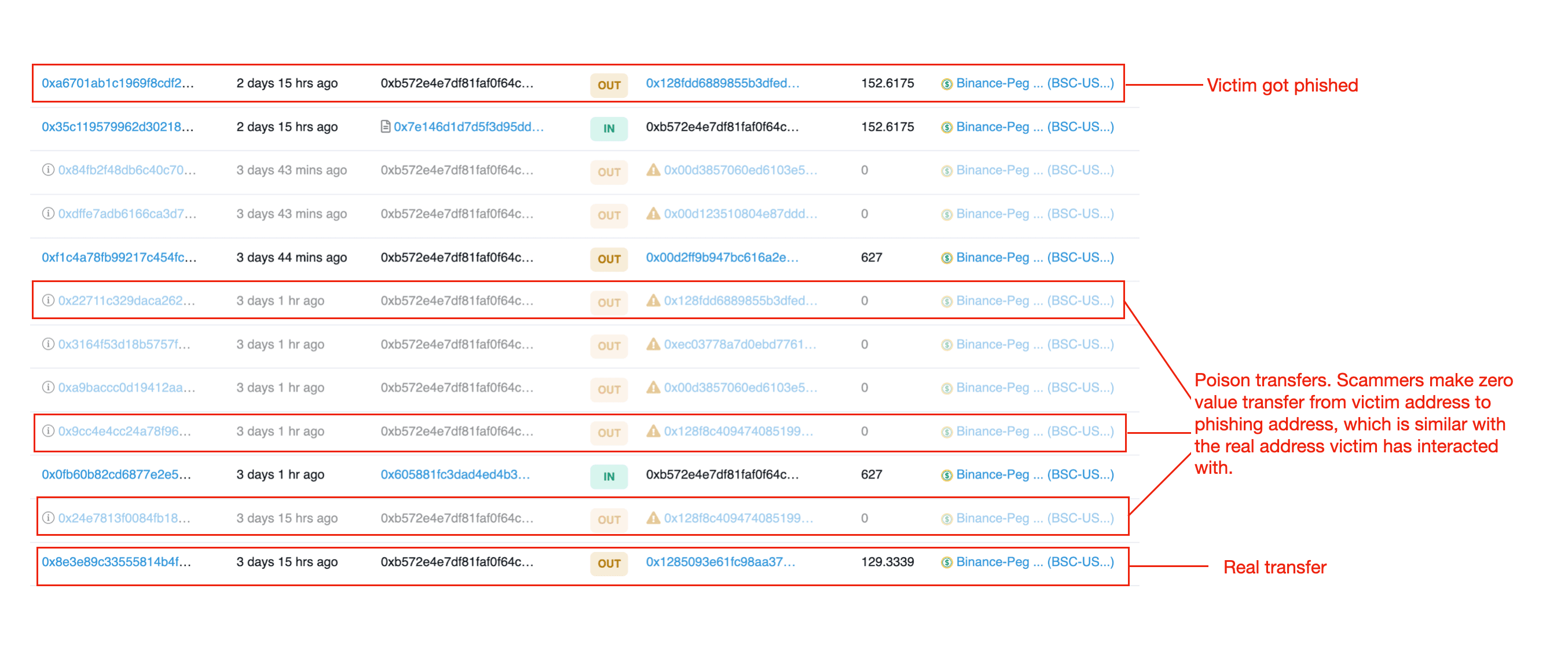
受害者地址示例

4. Gas 代币诈骗

在币安智能链 (BSC) 上,某些网络钓鱼者使用空投诈骗,向受害者分发欺诈性代币,并说服他们批准或转账这些代币。令人遗憾的是,受害者在与这些诈骗代币互动时会不知不觉地承担巨额费用。这些费用用于铸造给诈骗者地址的 gas 代币,随后这些代币被兑换成利润。

网络钓鱼交易示例

5. NFT 市场诈骗

NFT 是一种独特的虚拟资产。同一集合的 NFT 价格差异很大,使得通过去中心化交易所 (Dex) 进行自动化交易不切实际。因此,NFT 市场应运而生,为用户提供了一个以更便捷的方式下订单和进行购买的平台。然而,诈骗者利用这些市场创建恶意订单并窃取受害者的 NFT。
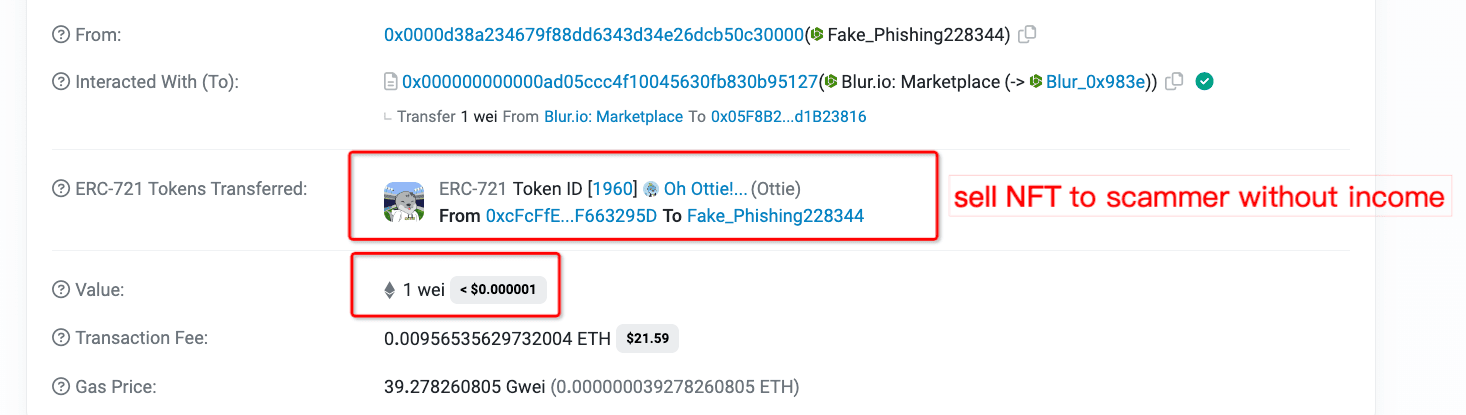
网络钓鱼交易示例

6. 虚假接口诈骗

用户通过接口调用与链上合约(如 DApps)进行交互。为了增强用户的理解,这些接口通常以方法名称的形式呈现。但是,需要注意的是,方法名称并不一定能准确地表示方法的具体实现。例如,一个名为“SecurityUpdate”的方法不一定涉及安全升级,而可能涉及调用者资产的转账。

网络钓鱼交易示例

如何避免 Web3 网络钓鱼

  • 避免访问来自不可信来源的可疑网站,并对需要连接钱包的网站格外小心。 许多钱包和浏览器扩展可以提醒您网络钓鱼网站。MetaMask 等工具可以提供帮助。

  • 仔细检查您与之交互的地址,包括 EOA 和合约。 不要仅仅因为地址的前几个和后几个字符看起来很熟悉就认为它们是正确的。对于您首次与之交互的地址,请使用工具检查其风险,例如 AvengerDAO 的风险扫描器和 MetaDock。

  • 定期检查和撤销代币授权。 许多工具可以帮助您完成此操作。例如,MetaDock 是一款浏览器扩展程序,通过改进区块链浏览器的代币批准管理功能,帮助用户识别有风险的批准。

  • 使用多个钱包并分散您的资产。 仅在热钱包中存储日常使用所需的资产。将绝大部分资产存放在更安全的冷钱包中,例如硬件钱包。

关于 MetaSleuth

MetaSleuth 是 BlockSec 开发的一个综合平台,旨在协助用户有效追踪和调查所有加密货币活动。通过 MetaSleuth,用户可以轻松追踪资金、可视化资金流、监控实时资金流动、保存重要信息并与他人共享其发现以进行协作。目前,我们支持 13 种不同的区块链,包括比特币 (BTC)、以太坊 (ETH)、波场 (TRX)、Polygon (MATIC) 等。

网站:https://metasleuth.io/

Twitter:@MetaSleuth

Telegram:https://t.me/MetaSleuthTeam
Sign up for the latest updates
Newsletter - April 2026
Security Insights

Newsletter - April 2026

In April 2026, the DeFi ecosystem experienced three major security incidents. KelpDAO lost ~$290M due to an insecure 1-of-1 DVN bridge configuration exploited via RPC infrastructure compromise, Drift Protocol suffered ~$285M from a multisig governance takeover leveraging Solana's durable nonce mechanism, and Rhea Finance incurred ~$18.4M following a business logic flaw in its margin-trading module that allowed circular swap path manipulatio

~$7.04M Lost: GiddyDefi, Volo Vault & More | BlockSec Weekly
Security Insights

~$7.04M Lost: GiddyDefi, Volo Vault & More | BlockSec Weekly

This BlockSec weekly security report covers eight attack incidents detected between April 20 and April 26, 2026, across Ethereum, Avalanche, Sui, Base, HyperLiquid, and MegaETH, with total estimated losses of approximately $7.04M. The highlighted incident is the $1.3M GiddyDefi exploit, where the attacker did not break any cryptography or use a flash loan but simply replayed an existing on-chain EIP-712 signature with the unsigned `aggregator` and `fromToken` fields swapped out for a malicious contract, demonstrating how partial signature coverage turns any historical signature into a generic permit. Other incidents include a $3.5M Volo Vault operator key compromise on Sui, a $1.5M Purrlend privileged-role takeover, a $413K SingularityFinance oracle misconfiguration, a $142.7K Scallop cross-pool index injection, a $72.35K Kipseli Router decimal mismatch, a $50.7K REVLoans (Juicebox) accounting pollution, and a $64K Custom Rebalancer arbitrary-call exploit.

The Decentralization Dilemma: Cascading Risk and Emergency Power in the KelpDAO Crisis
Security Insights

The Decentralization Dilemma: Cascading Risk and Emergency Power in the KelpDAO Crisis

This BlockSec deep-dive analyzes the KelpDAO $290M rsETH cross-chain bridge exploit (April 18, 2026), attributed to the Lazarus Group, tracing a causal chain across three layers: how a single-point DVN dependency enabled the attack, how DeFi composability cascaded the damage through Aave V3 lending markets to freeze WETH liquidity exceeding $6.7B across Ethereum, Arbitrum, Base, Mantle, and Linea, and how the crisis forced decentralized governance to exercise centralized emergency powers. The article examines three parameters that shaped the cascade's severity (LTV, pool depth, and cross-chain deployment count) and provides an exclusive technical breakdown of Arbitrum Security Council's forced state transition, an atomic contract upgrade that moved 30,766 ETH without the holder's signature.

Go Deeper with MetaSleuth Investigation

Extend your crypto compliance capabilities with Blocksec's MetaSleuth Investigation, the first platform for tracing funds, mapping transaction networks and revealing hidden on-chain relationships.

Move from detection to resolution faster with clear visual insights and evidence-ready workflows across the digital assets ecosystem.

MetaSleuth Investigation