
The Short Answer: An Explorer Shows One Hop, a Tool Traces the Whole Path
Investigators keep weighing a free blockchain explorer against a purpose-built investigation tool. An explorer confirms a single transaction or balance, while an investigation tool follows the funds across every subsequent address. In the US, the programs needing that depth answer to FinCEN's statutes and regulations.
A blockchain explorer answers a narrow question about a single transaction or a single address. It tells you that address A sent tokens to address B on one chain, at one point in time. An investigation tool takes that same starting point and follows the money forward and backward, across chains and across many addresses, until the path is clear.
The two tools are not rivals, and the choice comes down to which one matches the question in front of you rather than which one is better in general. The rest of this article explains what each one does well, where an explorer stops, and when a purpose-built tool earns its place. The duties that create the need start from the FATF standards.
That single distinction drives the rest of the decision. It also explains why the two tools often show up in the same workflow rather than replacing each other.
What a Blockchain Explorer Does Well (and Where It Stops)
A blockchain explorer is a lookup tool, built for speed and clarity on one question: what happened in this transaction, on this address, on this chain. For that job it is excellent. Paste a transaction hash into Solscan or Etherscan and you get the transfer details, the fee, and the balances involved in seconds.
That design is a strength and a limit at the same time. Solscan shows only the first hop of a SOL or SPL token transfer, and it cannot trace a multi-hop path. An ordinary blockchain explorer shows single-transaction data and does not provide a multi-address, cross-time, cross-chain fund graph.
The explorer stops at the edge of a single hop or a single chain. When funds move once and then stop, the explorer is enough. When funds move three, five, or ten times through intermediary wallets, the explorer gives you one step and asks you to reconstruct the rest by hand. That manual work is exactly where an investigation slows down, and where the trail is most likely to be lost.
None of this is a flaw in the explorer. It is the difference between a reference tool and an analysis tool. A reference answers the question you already know how to ask. An analysis tool helps you answer the question you cannot yet see.
A second limit is context. An explorer names an address but does not tell you who sits behind it or how it connects to other actors. Without entity labels and a graph view, every hop after the first has to be researched and remembered by hand.
What an Investigation Tool Adds
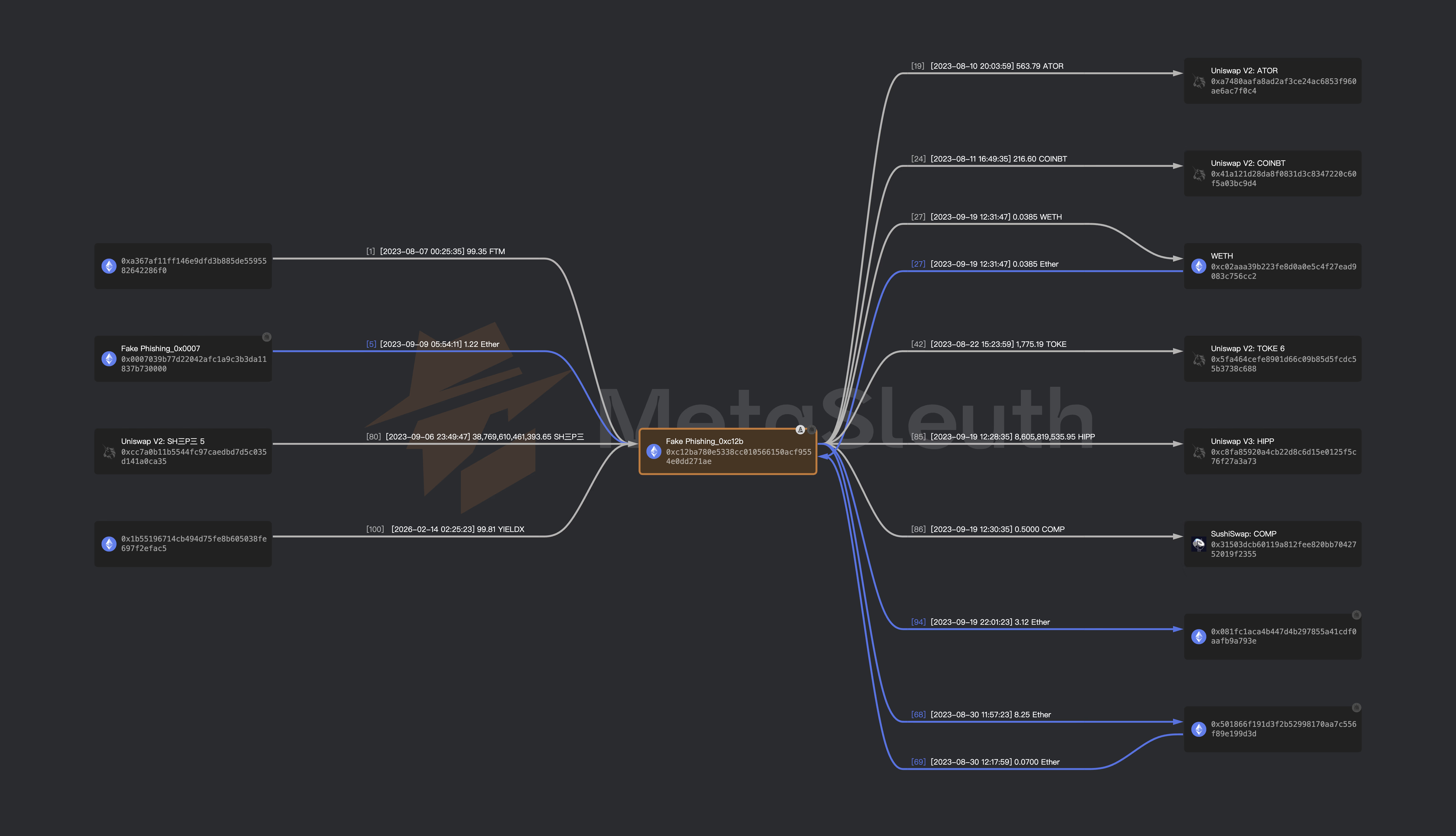
An investigation tool starts where the explorer stops. MetaSleuth traces a wallet across multiple hops and renders an aggregated token-flow visualization, merging several same-token transactions between two addresses into a single edge. Instead of ten separate transfer lines, the investigator sees one clear edge with the summed value.
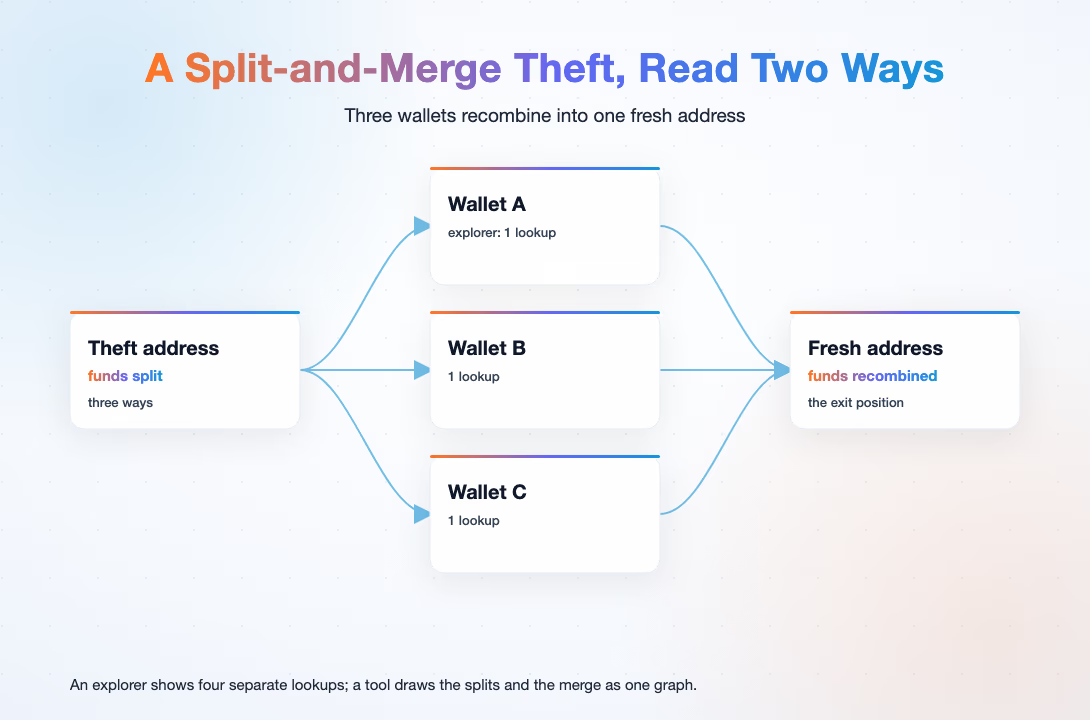
Imagine a theft that splits funds into three wallets, then recombines them into one fresh address. On an explorer, that is four separate lookups with no picture of how they connect. In MetaSleuth, it is one graph with the splits and the merge drawn as edges.
The second difference is cross-chain scope. MetaSleuth supports 12 chains and cross-chain tracing, while Solscan is limited to Solana. That matters because real laundering paths hop chains. Money moves from Ethereum to a Solana token account to a fresh wallet, and a single-chain explorer loses the trail at the first bridge.
The third difference is labeling. MetaSleuth overlays more than 600 million address labels, so a traced address is shown with entity names such as a Binance hot wallet or Fake_Phishing. This is what MetaSleuth does. Labels turn a bare address into a named party, which is often the difference between a dead end and a lead.
MetaSleuth also adds real-time transaction monitoring, saved charts and shared links for sharing analysis results, and an API for teams that want to automate the workflow. Those features matter because an investigation is rarely finished in one sitting. A case needs to be saved, shared, re-opened, and watched as new activity arrives.
The combined effect is the difference between reading a record and working a case. A record shows what happened. A working investigation shows what happened, who was involved, where the funds went, and what is still moving.
The contrast is easiest to read side by side:
| Feature | Blockchain explorer | Investigation tool (MetaSleuth) |
|---|---|---|
| Fund tracing | Single hop, single chain | Multi-hop, across chains |
| Chain coverage | One chain (Solscan covers Solana) | 12 chains with cross-chain tracing |
| Fund view | One transaction at a time | Aggregated token-flow graph |
| Address context | Bare address string | 600M+ labels with entity names |
| Monitoring | None | Real-time transaction monitoring |
| Sharing a case | Manual | Saved charts and shared links |
| Best fit | Confirming one transaction or balance | Tracing theft, laundering routes, due diligence |
When to Reach for a Tool Over an Explorer
The choice comes down to the shape of the question. If the question is a single lookup, an explorer is the right tool. If the question is a path, an investigation tool is the right tool.
Reach for a tool when you are tracing a theft, following a money-laundering route, or doing due diligence on the other side of a deal. Those jobs need multiple hops, cross-chain views, and entity labels. Reach for an explorer when you only need to confirm one transaction or one balance.
A simple rule helps. If the answer can be read off one transaction page, stay with the explorer. If the answer requires knowing where the funds went next, open the tool. The cost of guessing wrong is usually time: an investigator burns an hour hand-linking hops that a tool would connect in a few clicks.
Start from the kind of output you need. A receipt is a single reading. A trail is a sequence. If your deliverable is a receipt, an explorer is enough. If your deliverable is a trail that holds up to review, an investigation tool is the one that gets you there.
Consider a due-diligence question: does this new party receive funds from a known mixer? An explorer can confirm one incoming transaction. It cannot follow the funds one hop further to see where they came from before that. A tool answers the second question, which is usually the one the review actually needs.
What to Do Next
If your current workflow keeps hitting the explorer's one-hop wall, try following one multi-hop path in a tool instead. Pick a transaction that has already moved two or three times, and trace it to the end.
Try MetaSleuth instead of an explorer, and see the whole path instead of the first hop.
This piece is part of the MetaSleuth investigations and forensics guide, where the tracing method, evidence handling, and tooling tiers are covered end to end.