Funds cross a bridge and the source chain's risk label stops following them. The wallet that looked clean on Ethereum can carry contamination two or three hops away on another chain. That is the core cross-chain blind spot. A single-chain screen reads the wallet as clean while the same funds are tainted across the bridge. Cross-chain KYT is the practice of tracing funds across bridges, mixers, and DeFi hops so the risk label survives the hop. This page expands the cross-chain KYT platform hub and covers the bridge blind spot, the tracing methodology, and the audit value of a single-canvas path reconstruction.
Why Bridges Become a KYT Blind Spot
The mechanism is mechanical. A bridge locks value on the source chain and mints a wrapped equivalent on the destination chain. The destination address is new. It has no history and inherits no labels. Risk intelligence attached to the source address does not transfer. A compliance program that screens only the deposit address on its own chain sees a clean wallet and approves the transaction.

This is like airline baggage rechecked at a layover. The original carrier's routing tag no longer applies once the bag is rechecked at the transfer desk. The new label carries none of the original routing. Cross-chain movement works the same way. The bridge is the transfer desk. The destination address is the new tag, and the history resets with it.
Bridges also concentrate risk in a way single-chain screening does not model. Liquidity pools, router contracts, and aggregator hops layer on top of the bridge itself. Funds can move through a swap, into a bridge, out to a second chain, and through a mixer before they reach a counterparty. A screen that stops at the direct sender misses the full path. The deeper the path, the cleaner the wallet looks to a single-chain tool. For the regulatory view of why cross-chain and DeFi paths create an illicit-finance gap, see the Treasury illicit finance risk assessment of DeFi.
The Cross-Chain Tracing Methodology
Closing the bridge blind spot requires two moves: score the bridge for the risk it concentrates, then reconstruct the fund path across chains so a label can be carried hop by hop. The first move is bridge risk scoring. The second is cross-chain path reconstruction.
Bridge risk scoring groups cross-chain exposure into three gap types. The first is loss of trace: funds cross the bridge and the source-chain label does not survive. The second is mixer transit: funds pass through a mixer on one chain before or after the bridge, adding an anonymity layer. The third is anonymity enhancement: funds fragment across many destination addresses or route through swap services that skip identity checks. Each type maps to a distinct control gap, and each calls for a different tracing response.
Cross-chain path reconstruction works against those gaps. The first technique is shared-deposit-address clustering. Many cross-chain flows pass through a small set of bridge router contracts or shared liquidity pools. Clustering around those shared entry points reconstructs the path even when destination addresses are new. The second technique is multi-hop expansion. Starting from a known address, an analyst expands outgoing transfers hop by hop, following funds through swaps, bridges, and mixers rather than stopping at the first counterparty. The third technique is bridge-end pairing. The lock event on the source chain and the mint event on the destination chain share a deterministic relationship. Pairing the two ends ties the destination address back to the source.
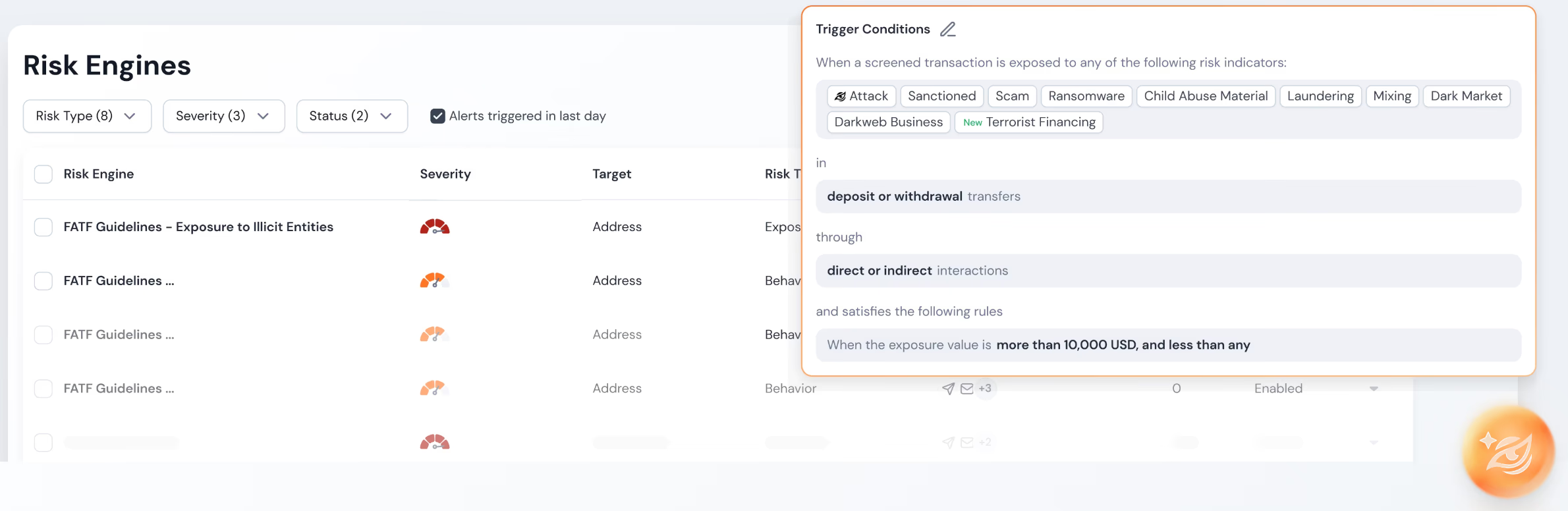
Phalcon Compliance operationalizes this with unlimited-hop cross-chain tracing that penetrates DeFi paths, mixers, and bridges. It tracks fund flows across 20+ cross-chain bridges to identify cross-chain laundering. The Risk Exposure Engine's Interaction Risk traces funds across multiple transaction hops. If any address in the fund flow carries a risk label, from sanctioned to mixing, the engine flags it under customizable rules. Exposure Value quantifies the tainted amount in USD. Exposure Percentage shows how much of the inflow or outflow is contaminated. For the detection-architecture side of this problem, including mixer modeling and real-time scoring, see the real-time transaction risk scoring architecture page.
MetaSleuth: A Single Canvas for the Whole Cross-Chain Path
While MetaSleuth is BlockSec's forensic investigation tool for retrospective tracing, its cross-chain canvas illustrates the same tracing methodology that powers Phalcon Compliance's real-time cross-chain KYT screening. The following case shows how the tracing layer looks when investigators run it after the fact—the same graph, in real time, is what stops the flow at deposit or withdrawal.
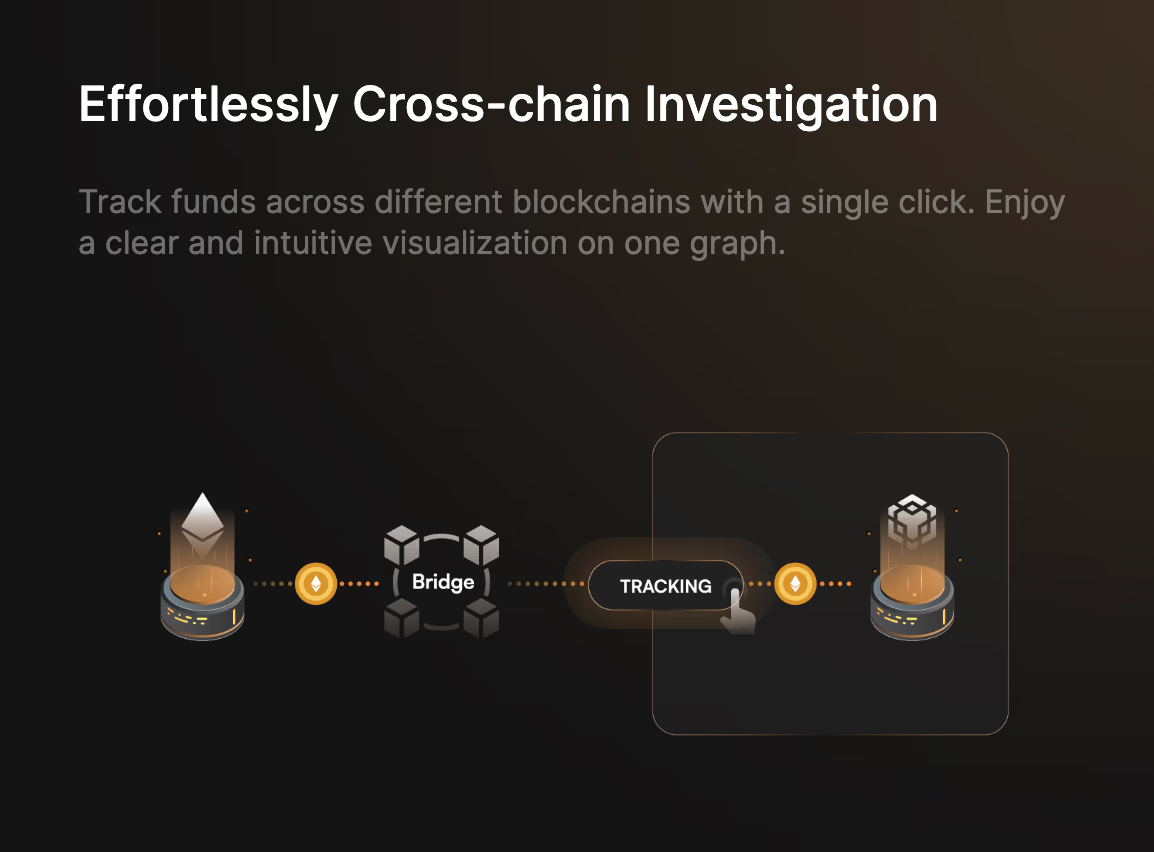
Reconstructing a cross-chain path is only useful if the analyst can see the whole path at once. MetaSleuth, BlockSec's fund tracing and investigation platform, renders a cross-chain flow on a single visual canvas. The canvas is the artifact. It shows every hop, every swap, and every bridge crossing in one graph rather than split across chain explorers.
The analogy is a transit map that shows multiple cities and lines on one sheet. A rider can trace a route across transfers without switching maps. MetaSleuth works the same way. An investigator follows funds from a source chain, through a swap, across a bridge, and into a destination-chain address without leaving the canvas.
MetaSleuth supports 15 blockchains, including Bitcoin, Ethereum, and Solana, as of late 2024. Its address label database holds more than 300 million entries. The Expand Outgoing function steps outward hop by hop. The visualization aggregates multiple transfers between the same address pair into a single edge, so the canvas stays readable even on long paths. Cross-chain analysis support lets the canvas follow funds across chain boundaries rather than breaking at the bridge.
The methodology is field-tested. In one cross-chain case, funds moved through 20 hops across swaps and a mixer before reaching an exchange. The single canvas held the full path. For a readable walkthrough of that case, see the MetaSleuth cross-chain fund flow tracing (LI.FI case) write-up.
The Compliance Value of Cross-Chain Tracing
Cross-chain tracing matters for compliance only when the output is something a regulator or examiner can audit. A path reconstruction that lives in an analyst's head, or in a chat thread, is not an artifact. The audit value comes from a shareable canvas and a documented decision trail.
Multiple regulatory and enforcement agencies have adopted MetaSleuth, including financial regulators and global consulting firms. Adoption at that scale is itself a signal. When investigators across jurisdictions use the same tracing canvas, the reconstructed path carries weight in cross-border collaboration.
The audit mechanic is the Saved Charts and Shared Links feature. An analyst saves the canvas and generates a view-only link that a reviewer, a regulator, or a partner can open without logging in. The path is the evidence. In one representative engagement, BlockSec used this approach to support a U.S. Department of Justice matter. The reconstruction mapped a large network of transfers, hundreds of counterparties, and a multi-hundred-million-dollar total flow, tying it to mainstream exchanges and an underground payment service. The structured, explainable output is what makes a cross-chain trace usable in a proceeding.
This value is distinct from the monitoring obligation itself. The obligation to monitor in real time and retain records sits in the FATF risk-based approach. Cross-chain tracing is what makes the record complete when funds cross a bridge between monitoring points. For the regulatory baseline on virtual-asset risk, see the FATF virtual assets risk framework.
Close the Cross-Chain Gap
The bridge blind spot does not close by screening harder on one chain. It closes by tracing across chains, scoring the bridge, and rendering the full path on a canvas a regulator can read. MetaSleuth carries the investigation side, with a single canvas that follows funds across 15 chains. Phalcon Compliance carries the monitoring side, with cross-chain tracing that penetrates bridges and mixers without a hop limit and Interaction Risk that carries a label across every hop.