Back to Blog

1月におけるDeFiインシデントトップ3

Code Auditing
February 1, 2026

Truebit Protocol:約2600万ドル

2026年1月8日、イーサリアム上のTruebit Protocolがエクスプロイトされ、約2600万ドルの損失が発生しました。

根本原因は、TRUトークン購入価格設定機能における整数オーバーフローの脆弱性でした。コントラクトはSolidity v0.6.10でコンパイルされており、デフォルトではオーバーフローチェックが強制されませんでした。攻撃者は、購入コスト計算における大きな中間値がオーバーフローし、はるかに小さい数値にラップアラウンドするような入力パラメータを細工しました。これにより、攻撃者は最小限またはゼロに近いETHコストで大量のTRUトークンを購入することができました。

攻撃者は、単一の攻撃トランザクション内で複数のアービトラージラウンドを実行し、TRUトークンの売買操作を繰り返し行いました。特に、プロトコルは即時売買アービトラージを防ぐために、意図的に売買間の価格設定に非対称性を持たせていました。しかし、脆弱なコントラクトは、オーバーフロー保護のない古いSolidityバージョンを使用してデプロイされており、攻撃対象領域を露呈し、最終的にプロトコルのリザーブから8,535 ETHが流出する結果となりました。

詳細な攻撃分析を読む

SwapNet & Aperture:約1700万ドル

2026年1月25日、SwapNetとAperture Financeが攻撃を受け、共通の脆弱性に起因する合計約1700万ドルの損失が発生しました。この攻撃はMatcha Metaユーザーに深刻な影響を与え、被害額は1300万ドルを超えました。

影響を受けた両方のコントラクトはクローズドソースでしたが、攻撃経路は、逆コンパイルされたバイトコードとオンチェーンのトランザクショントレースを分析することで再構築可能でした。根本原因は、脆弱な関数内の重要なユーザー入力に対する検証が不十分であったことで、攻撃者は悪意のあるパラメータで任意のコールを実行することができました。一連の攻撃トランザクションにおいて、攻撃者はERC20 transferFrom()の呼び出しを構築し、脆弱なコントラクトにトークン承認を付与していたユーザーからトークンをドレインしました。

この攻撃に関与した両方のプロトコルは、コードをオープンソース化していなかったため、コミュニティが公開レビューを通じてセキュリティ脆弱性を特定することが困難でした。一方、承認ベースの攻撃アプローチは業界にとって警鐘となります。ユーザーはトークン承認を慎重に管理する必要があり、プロトコルは時間ロックまたは上限付き承認などの保護メカニズムを実装して、このような攻撃のリスクを根本的に軽減する必要があります。

インシデントの詳細はこちら

Saga:約700万ドル

2026年1月21日、SagaエコシステムのSagaEVMがエクスプロイトされ、不正なトークンミントと約700万ドルの損失が発生しました。

根本原因はまだ完全に開示されていませんが、公式情報によると、SagaEVMが継承したEthermintとCosmosEVMコードの共通の脆弱性が攻撃につながったことが確認されています。攻撃者は悪意のあるスマートコントラクトをデプロイしてエクスプロイトを実行し、大量のSaga Dollarsをミントしました。攻撃成功後、盗まれた資金のほぼ全額がクロスチェーンブリッジを経由してイーサリアムネットワークに迅速に転送されました。

このインシデントは、ブロックチェーンエコシステムにおけるコード継承のリスクを浮き彫りにしています。基盤となるコードベースに脆弱性が存在する場合、そのコードを継承するすべてのプロジェクトが同じ脅威に直面する可能性があり、連鎖的なセキュリティ脆弱性を生み出します。
Sign up for the latest updates
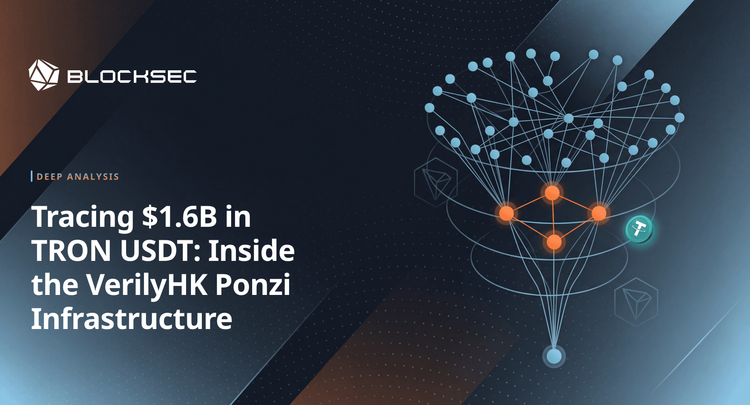
Tracing $1.6B in TRON USDT: Inside the VerilyHK Ponzi Infrastructure
Case Studies

Tracing $1.6B in TRON USDT: Inside the VerilyHK Ponzi Infrastructure

An on-chain investigation into VerilyHK, a fraudulent platform that moved $1.6B in TRON USDT through a multi-layered fund-routing infrastructure of rotating wallets, paired payout channels, and exchange exit funnels, with traced connections to the FinCEN-sanctioned Huione Group.

Weekly Web3 Security Incident Roundup | Mar 30 – Apr 5, 2026
Security Insights

Weekly Web3 Security Incident Roundup | Mar 30 – Apr 5, 2026

This BlockSec weekly security report covers nine DeFi attack incidents detected between March 30 and April 5, 2026, across Solana, BNB Chain, Arbitrum, and Polygon, with total estimated losses of approximately $287M. The week was dominated by the $285.3M Drift Protocol exploit on Solana, where attackers combined multisig signer social engineering with Solana's durable nonce mechanism to bypass a zero-timelock 2-of-5 Security Council, alongside notable incidents including a $950K flash loan TWAP manipulation against the LML staking protocol, a $359K Silo Finance vault inflation via an external `wstUSR` market donation exploiting a depegged-asset oracle and `totalAssets()` accounting flaw, and an EIP-7702 delegated-code access control failure. The report provides detailed vulnerability analysis and attack transaction breakdowns for each incident, covering flawed business logic, access control, price manipulation, phishing, and misconfiguration attack types.

Drift Protocol Incident: Multisig Governance Compromise via Durable Nonce Exploitation
Security Insights

Drift Protocol Incident: Multisig Governance Compromise via Durable Nonce Exploitation

On April 1, 2026 (UTC), Drift Protocol on Solana suffered a $285.3M loss after an attacker exploited Solana's durable nonce mechanism to delay the execution of phished multisig approvals, ultimately transferring administrative control of the protocol's 2-of-5 Squads governance with zero timelock. With full admin privileges, the attacker created a malicious collateral market (CVT), inflated its oracle price, relaxed withdrawal protections, and drained USDC, JLP, SOL, cbBTC, and other assets through 31 rapid withdrawals in approximately 12 minutes. This incident highlights how durable nonce-based delayed execution can decouple signer intent from on-chain execution, bypassing the temporal assumptions that multisig security implicitly relies on.

Best Security Auditor for Web3

Validate design, code, and business logic before launch. Aligned with the highest industry security standards.

BlockSec Audit