During the past week (2026/07/13 - 2026/07/19), the following 2 notable security incidents are featured, involving approximately $1.35M in total losses on Ethereum and Solana.
| Date | Incident | Type | Estimated Loss |
|---|---|---|---|
| 2026/07/15 | BarnBridge | Improper Governance | ~$776K |
| 2026/07/16 | DeFiTuna | Flawed Health Check | ~$570K |
- DeFiTuna: The position health check accepted zero asset value as healthy with non-zero debt; the attacker used controlled swap routing and a separate low-liquidity pool to trigger this defect and create a bad debt position.
- BarnBridge: A deprecated governance system was exploited to modify critical protocol configuration and drain user-approved funds.
Best Security Auditor for Web3
Validate design, code, and business logic before launch
Weekly Highlight: DeFiTuna
The root cause was a flawed zero-value branch in the position health check: a position with zero asset value and ~$570K of outstanding debt was accepted as healthy. The attacker triggered this defect by routing the swap through a separate low-liquidity pool, but the health check was the control that should have caught the resulting bad debt.
On July 16, 2026, DeFiTuna, a lending protocol on Solana that supports leveraged spot positions, was exploited for approximately $570K in USDC [1]. The root cause was a flawed zero-value branch in the position health check that accepted a position as healthy even when its asset value was zero and its debt was non-zero. The attacker opened a leveraged position with zero collateral, borrowed USDC from the protocol vault, and routed the swap through an attacker-controlled low-liquidity pool, causing the position to receive a negligible amount of the target token. Precision truncation then rounded the position value to zero, and the health check accepted the position as healthy, creating approximately $570K of bad debt.
Background
DeFiTuna is a lending protocol on Solana that supports margin trading. A user can open a spot position by supplying one token as collateral, borrowing from a protocol vault, and swapping the borrowed funds into a target token. The resulting position is then checked against the debt to determine whether it is healthy.
In a DeFiTuna spot market, the two pool tokens are referred to as token A and token B. In the attacked market, token A was TUNA and token B was USDC.
USDCwas the collateral token (collateral_token). The user depositsUSDCas margin, borrows additionalUSDCfrom DeFiTuna's vault, and the borrowedUSDCis then swapped intoTUNA.TUNAwas the position token (position_token), the asset the position holds after the swap. The net effect is a leveraged long onTUNAfunded byUSDCdebt.- The vault accounts hold lender liquidity and are the source of borrowed funds.
- The AMM pool supplies market liquidity and price context for the
TUNA/USDCpair.
DeFiTuna routes position swaps through Jupiter, a Solana swap aggregator. The swap path is provided to the DeFiTuna instruction as Jupiter route data and route accounts. Because the caller supplies these accounts, the caller controls which pool the swap uses. Before executing the swap, DeFiTuna performs a pre-swap price check by comparing the normal market pool price against an oracle.
Vulnerability Analysis
The buggy program is DeFiTuna (tuna4u...nogD).
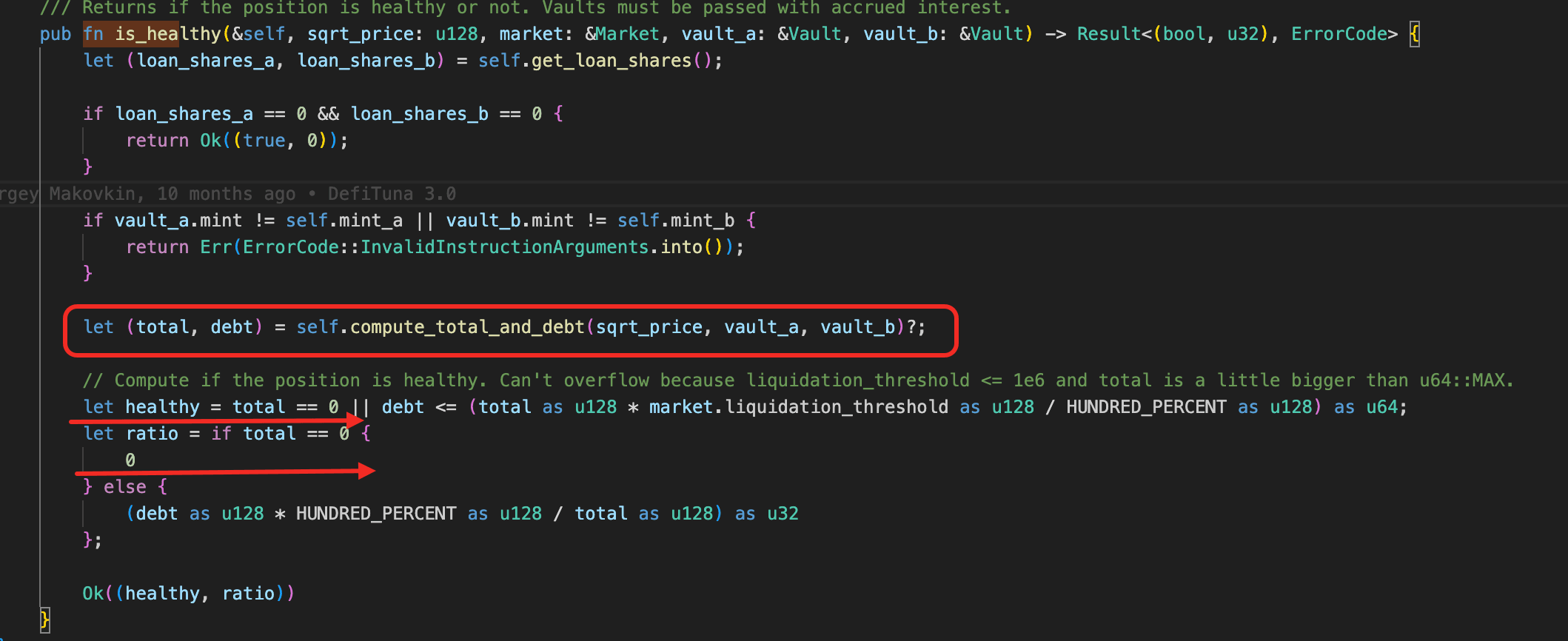
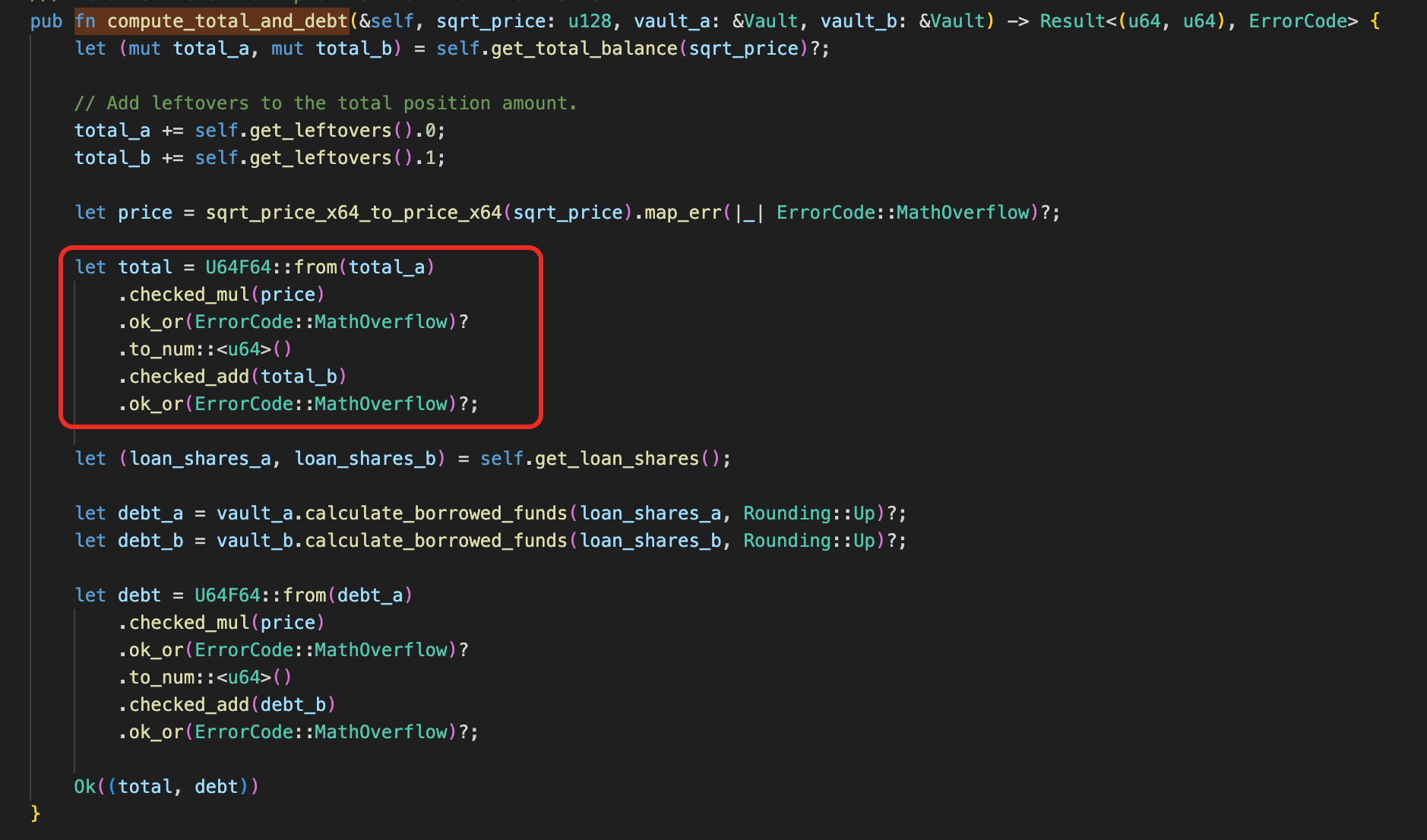
The root cause was a flawed zero-value branch in the position health check. After a swap, DeFiTuna valued the position by converting the held TUNA into USDC terms. If the TUNA balance was small enough to round down to zero, the total field became 0. The health check logic treated total == 0 as a healthy state without requiring debt == 0.
Attack Analysis
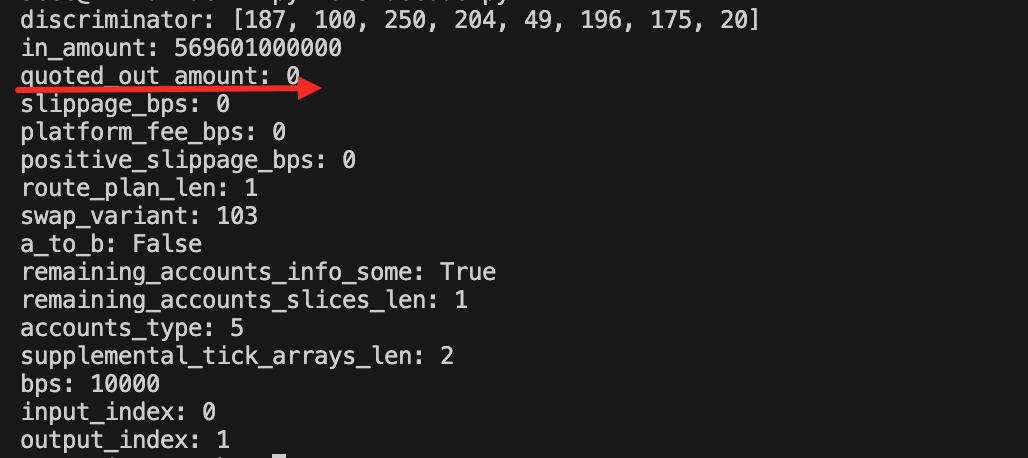
Two design properties gave the attacker control over where the borrowed funds were routed. First, DeFiTuna accepted caller-supplied Jupiter RouteV2 data without deriving its own minimum acceptable TUNA output from the oracle price and borrowed amount. Second, the pre-swap oracle check only validated the normal DeFiTuna market pool, not the pool that the Jupiter route would actually use.
Note: The post-incident analysis endorsed by the project team [1] describes the attacker-created pool as initialized near the legitimate oracle price. On-chain evidence shows the pool was initialized at an extreme price; the pre-swap check passed because it validated the separate normal market pool, not the attacker-controlled pool.
The following analysis is based on the transaction 4x33Dq...EXj1. Multiple attack transactions were executed; this one illustrates the core technique.
- Step 1: The attacker created a new Fusion
TUNA/USDCpool. This pool used the realTUNAandUSDCmints but was separate from the normal DeFiTuna market pool. The pool was initialized at an extreme price near tick208636, pricingTUNAat roughly 1.149 billionUSDCperTUNA. At this price, even a tiny amount ofTUNAcould absorb hundreds of thousands ofUSDCin a swap.


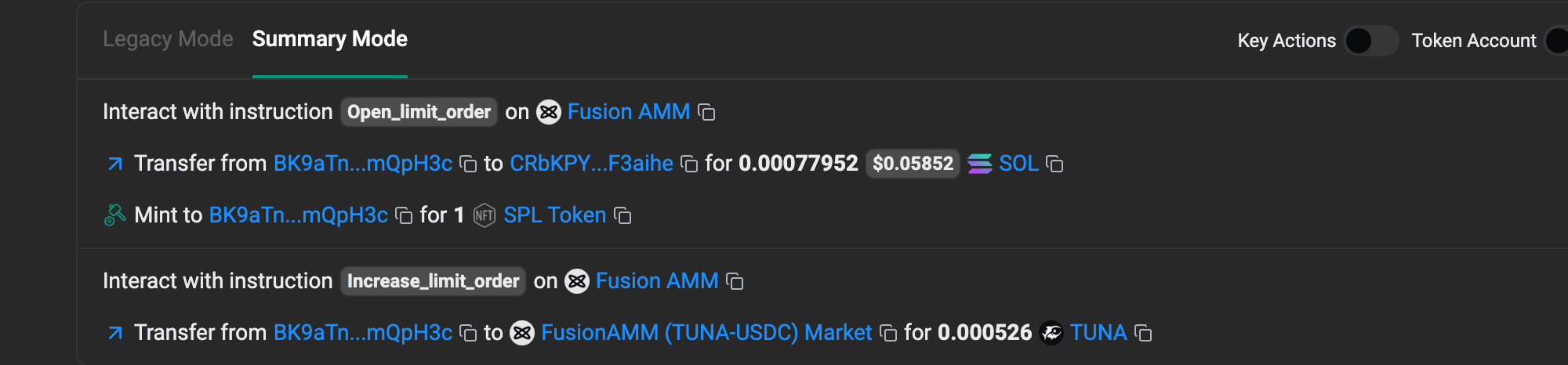
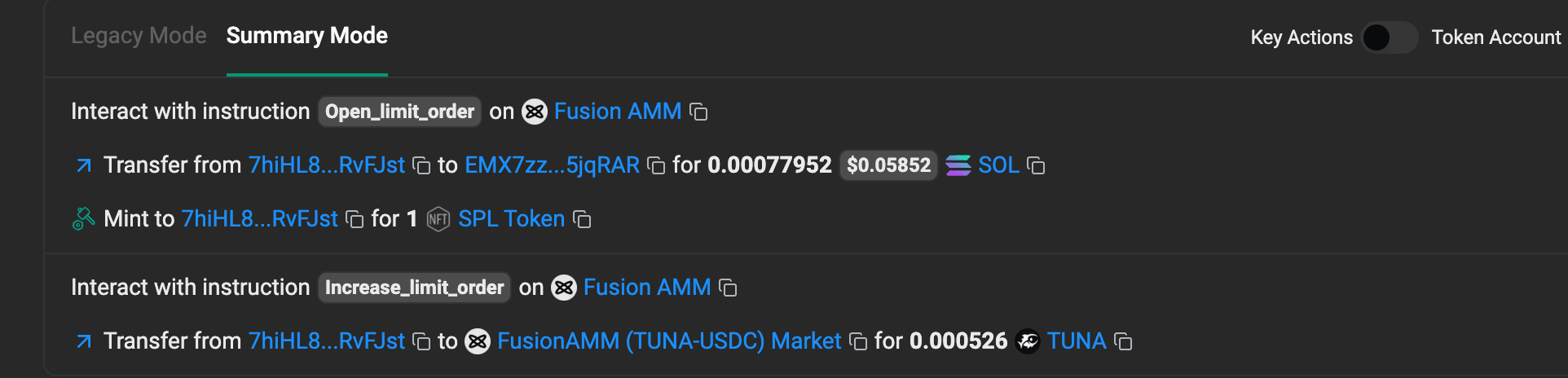
- Step 2: The attacker placed two small sell-side limit orders in the new pool. Each order deposited
0.000526 TUNA, totaling0.001052 TUNA. Because the pool price was extremely high, this tinyTUNAsupply could absorb the entire borrowedUSDCamount when the swap executed.
- Step 3: With the pool prepared, the attacker opened a DeFiTuna spot position with
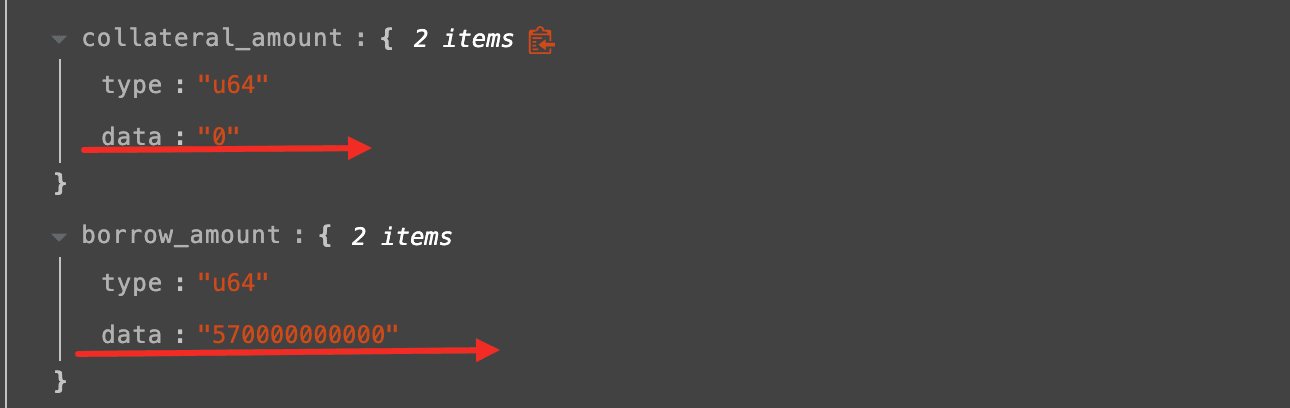
TUNAas the position token andUSDCas the collateral token. The attacker supplied0 USDCas collateral and borrowed570,000 USDCfrom DeFiTuna'sUSDCvault.
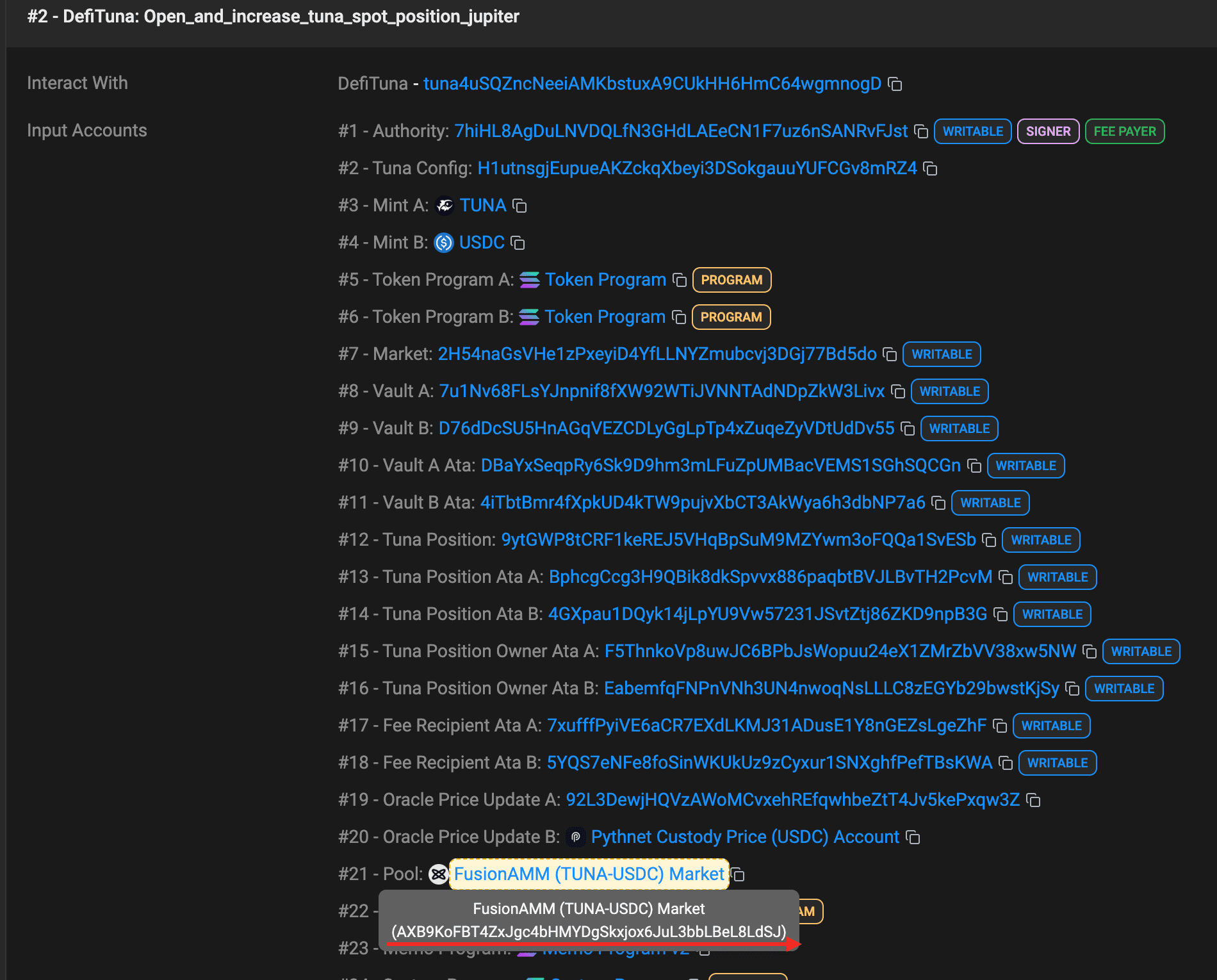
- Step 4: Before the swap, DeFiTuna compared the normal market pool price with the oracle price. The normal pool's spot price was close to the oracle, so the check passed. This check only validated the normal DeFiTuna market pool; it did not validate the Fusion pool that the Jupiter route would use.
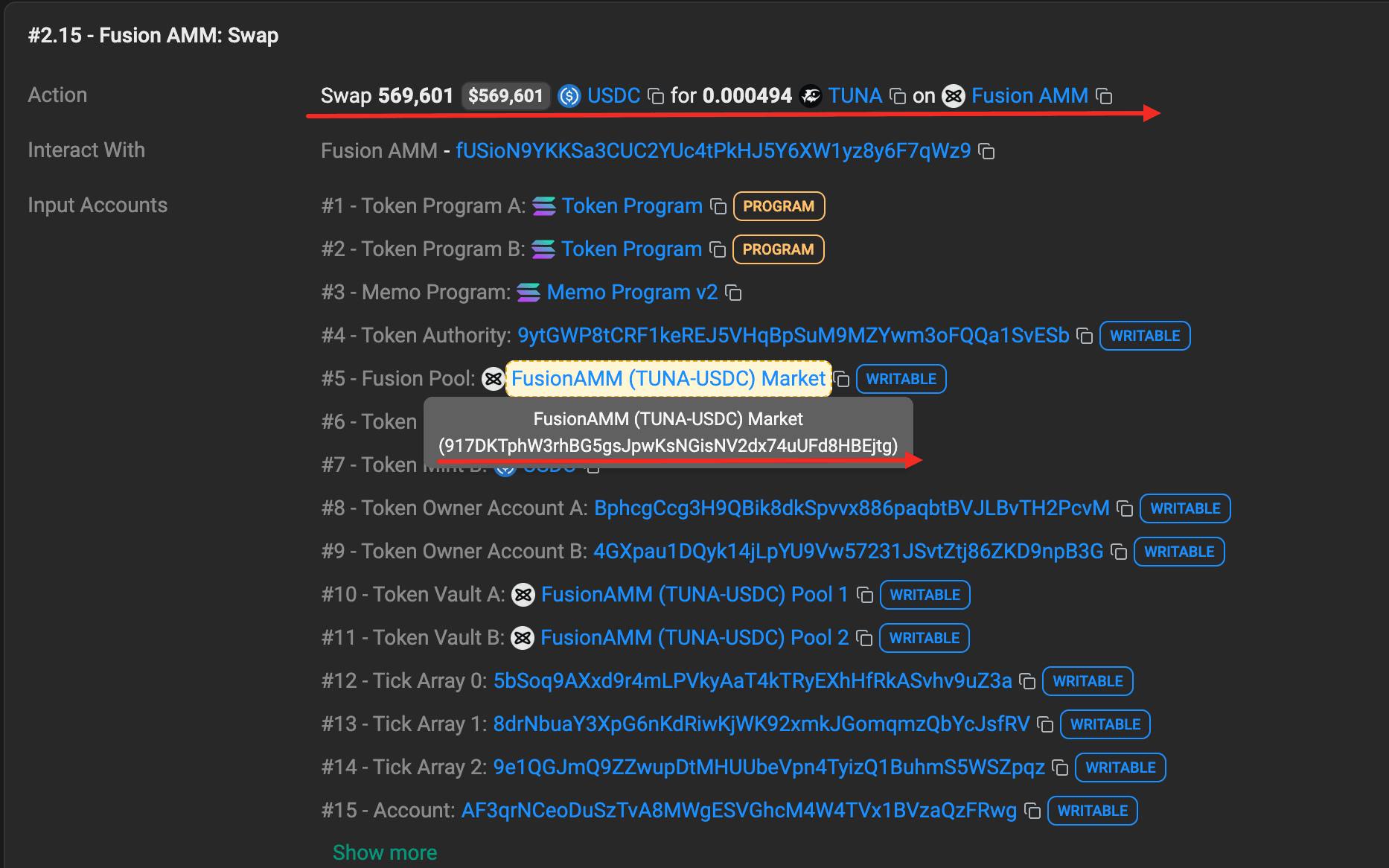
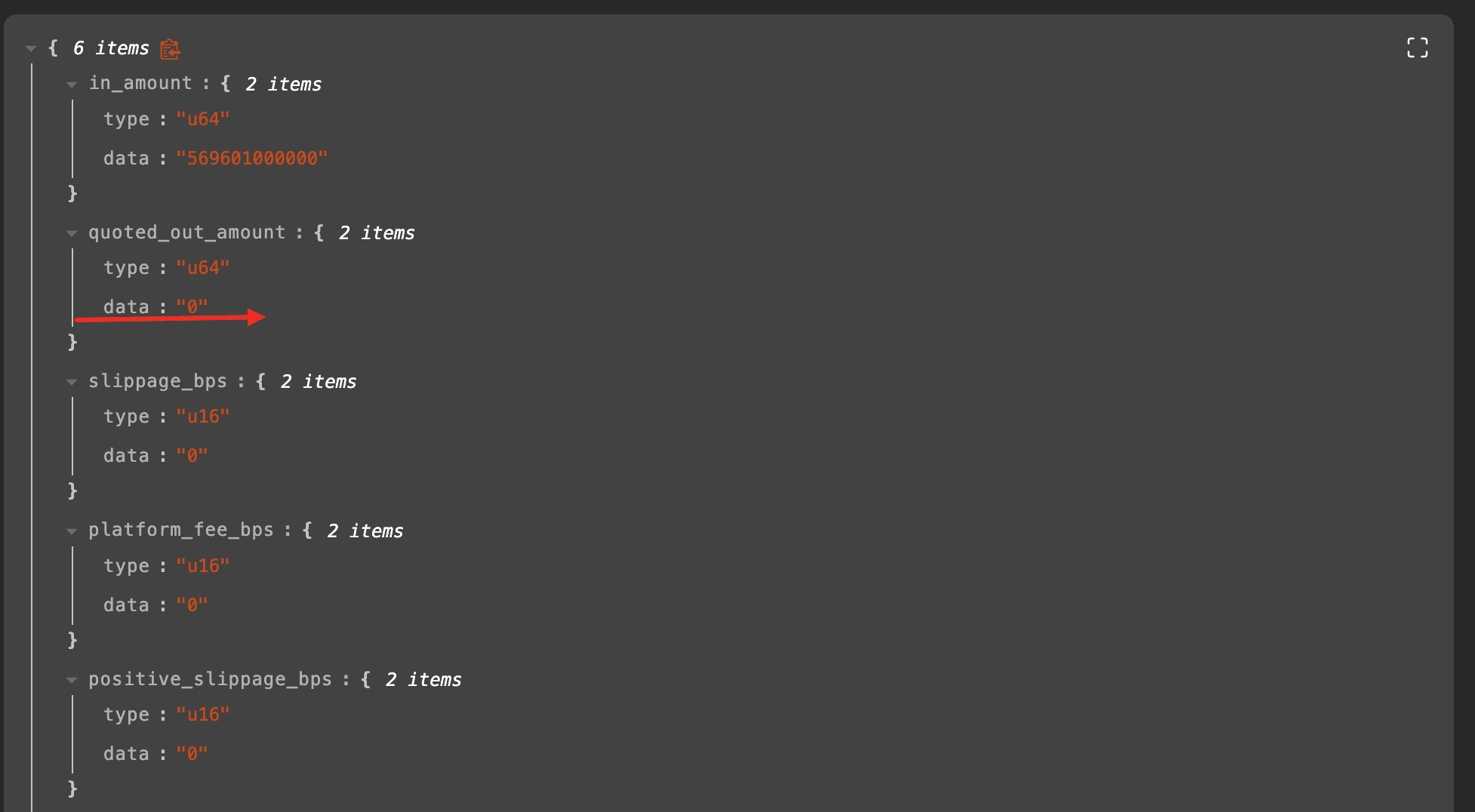
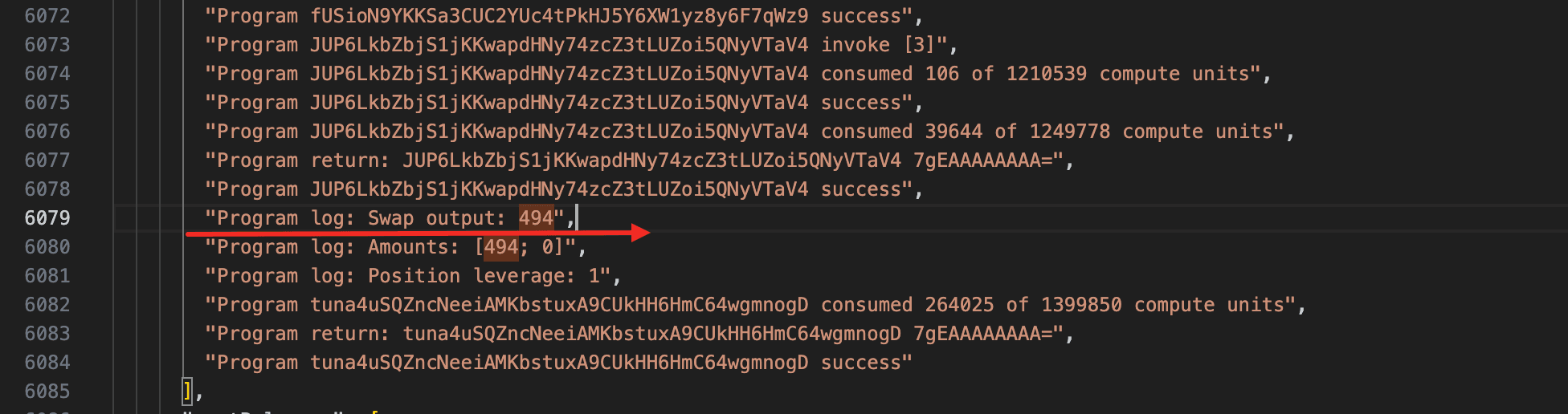
- Step 5: The swap followed the attacker-supplied Jupiter route, which directed the funds through the attacker-controlled Fusion pool with the minimum output effectively set to zero. After the protocol fee,
569,601 USDCwas routed into the attack pool, while the DeFiTuna position received only494raw units ofTUNA(0.000494 TUNA).
- Step 6: After the swap, the position held approximately
570,000 USDCof debt and only a dust amount ofTUNA. When DeFiTuna converted thatTUNAbalance intoUSDCvalue, the result rounded down to0. The health check treatedtotal == 0as healthy, so the bad debt position was accepted.

- Step 7: The attacker withdrew the
USDCaccumulated in the attacker-controlled Fusion pool. The two withdrawals were nearly equal, matching the two limit-order positions created in Step 2.
Conclusion
The root cause was the health check's total == 0 branch accepting a position as healthy regardless of outstanding debt. Attacker-controlled routing and liquidity created the conditions to trigger this defect, but the health check was the final control that should have prevented the bad debt.
The most direct fix is to reject any position where total == 0 and debt > 0. A zero-value position with outstanding debt is never healthy. Additionally, the protocol should derive a minimum acceptable swap output from the oracle price and borrowed amount, independent of the caller-supplied route parameters. Binding the oracle/price check to the actual swap pool, or verifying the swap output against a protocol-computed floor, would prevent the pre-swap check from being bypassed by routing through an unvalidated pool.
References
More Incidents This Week
BarnBridge
On July 15, 2026, BarnBridge, a yield-allocation protocol on Ethereum, was exploited for approximately $776K in USDC [1]. The root cause was the abandoned governance contract retaining authority to modify critical protocol configuration. The attacker acquired sufficient voting power to pass a malicious proposal that replaced the controller of a protocol component, then used the new controller to transfer user-approved USDC.
Background
BarnBridge is a DAO-governed protocol that allocates users' funds across different lending markets to generate yield. Voting power is determined by the amount of BOND staked and the lock-up duration. Creating a proposal requires voting power equal to at least 1% of the total voting power. A proposal must meet a minimum quorum of 40% and receive at least 60% of the total participating votes in favor to pass. Once submitted, a proposal goes through a two-day warm-up period, a three-day voting period, and a two-day queue period before it can be executed.
Vulnerability Analysis
The root cause was the abandoned governance contract retaining the authority to modify critical protocol configuration after the protocol had been deprecated. The governance system controlled the Controller assignment for CompoundProvider, a contract that users had previously approved to spend their USDC. Because BarnBridge had been deprecated, total staked BOND and active participation had dropped significantly, making hostile proposal passage trivially achievable.
Attack Analysis
The following analysis is based on the transaction 0xd191fe...895afb.
The attacker spent approximately 0.335 ETH to acquire about 32,795 BOND, then deposited and locked 32,000 BOND, obtaining approximately 43% of the total voting power.
- Step 1: The attacker deployed a proxy contract and submitted a malicious proposal. After the two-day warm-up period, the attacker cast all of their voting power in favor, satisfying both the quorum and approval requirements.

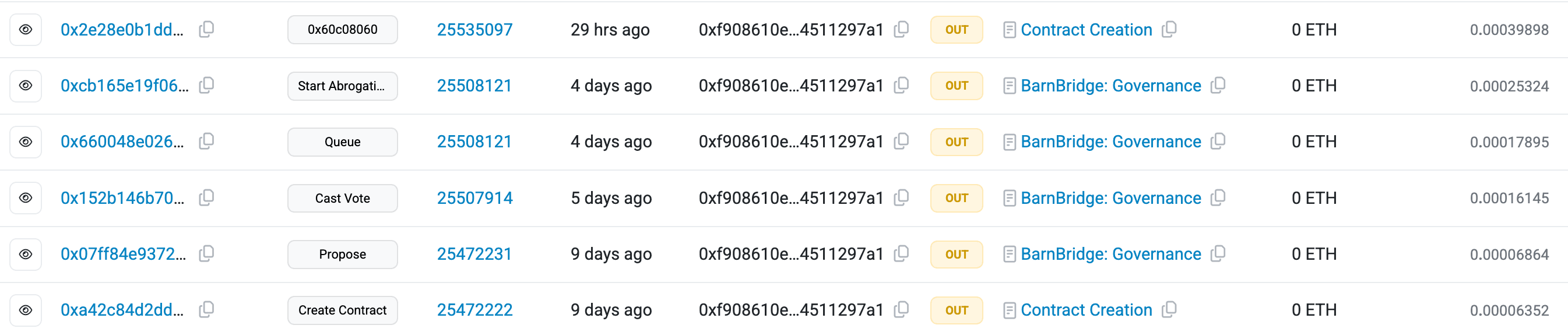
- Step 2: The attacker queued the proposal. After the two-day queue period elapsed, the attacker executed it, setting the
ControllerofCompoundProviderto the attacker's proxy contract.

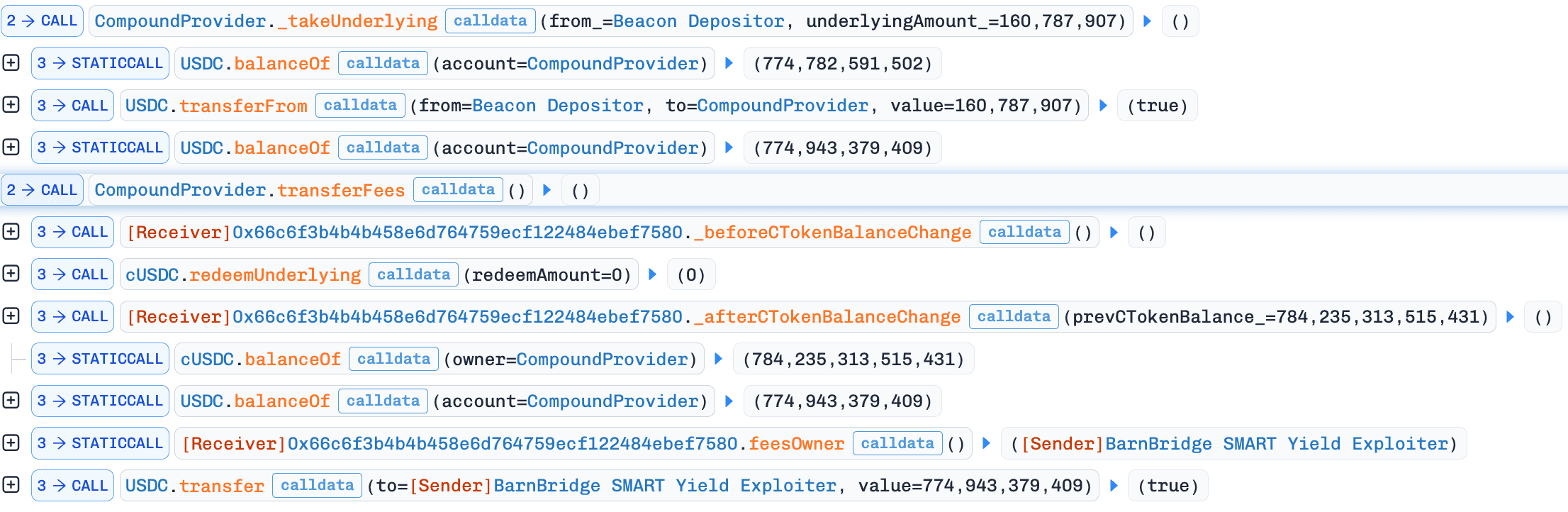
- Step 3: The attacker upgraded the proxy contract's logic and called
_takeUnderlying(), which used the outstandingUSDCallowances of approximately 50 users to transfer theirUSDCintoCompoundProvider. The attacker then calledtransferFees()to forward the funds to the attacker's address, profiting approximately $776K inUSDC.
Conclusion
If a DAO or protocol is being deprecated, its governance contract should relinquish or permanently disable the ability to modify security-critical configurations, especially administrator, controller, and fund-withdrawal permissions. Concrete measures include revoking the governance contract's admin role over downstream contracts, transferring ownership to a burn address, or executing a final proposal that disables upgrade functions and sets controller references to immutable safe values. Leaving governance authority intact on a deprecated protocol creates a low-cost attack surface: as participation declines, the capital required to reach quorum drops proportionally.
References
About BlockSec
BlockSec is a full-stack blockchain security and crypto compliance provider. We build products and services that help customers to perform code audit (including smart contracts, blockchain and wallets), intercept attacks in real time, analyze incidents, trace illicit funds, and meet AML/CFT obligations, across the full lifecycle of protocols and platforms.
BlockSec has published multiple blockchain security papers in prestigious conferences, reported several zero-day attacks of DeFi applications, blocked multiple hacks to rescue more than 20 million dollars, and secured billions of cryptocurrencies.
-
Official website: https://blocksec.com/
-
Official Twitter account: https://twitter.com/BlockSecTeam