Solana is celebrated for its high speed, low costs, high transaction throughput, and low latency. These features have made it an increasingly favored platform among both users and developers for all kinds of decentralized applications.
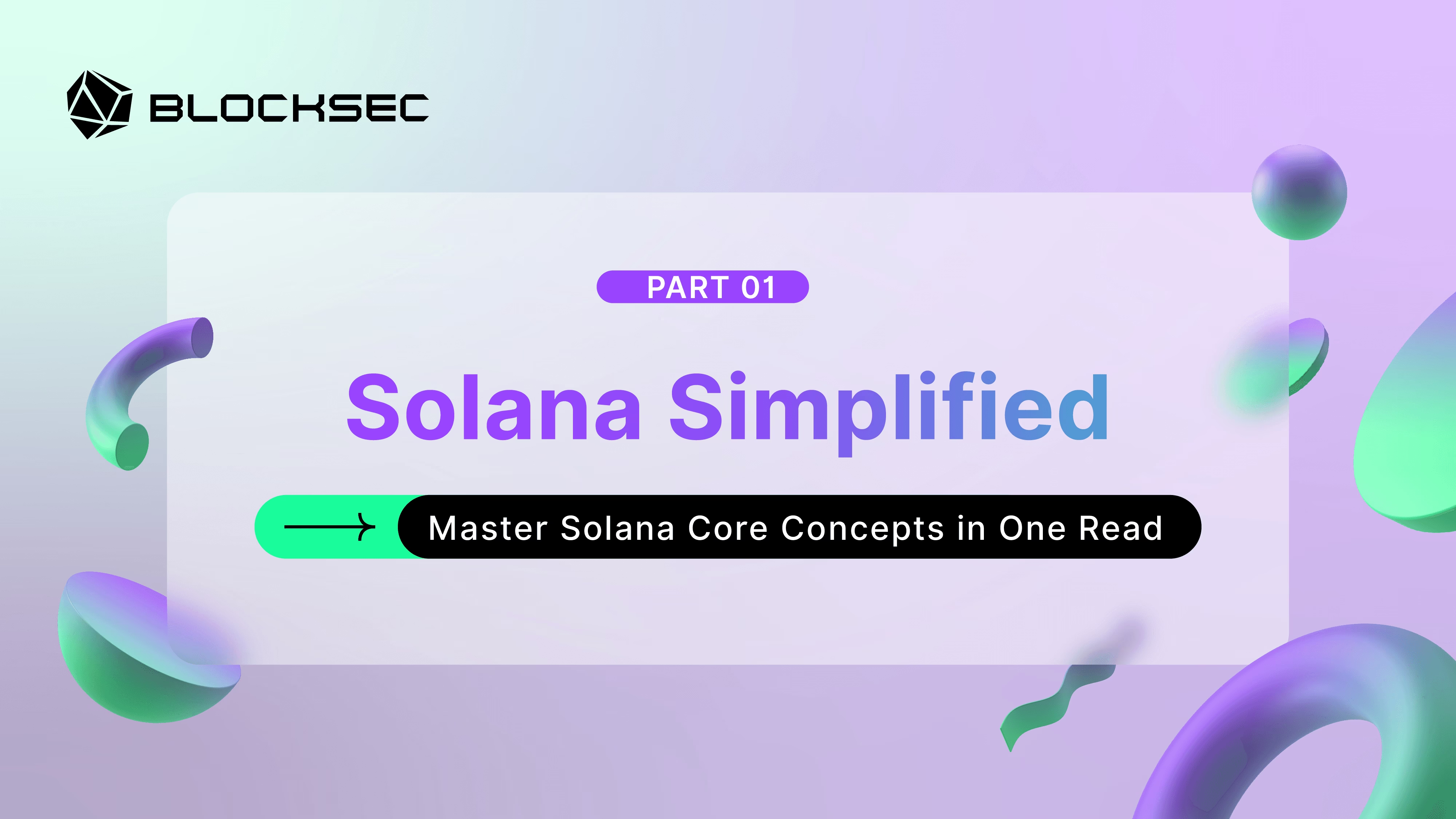
To help both readers and developers navigate this robust ecosystem, BlockSec has specially curated the "Solana Simplified" series. This series covers the fundamental concepts of Solana, practical guides on analyzing Solana transactions, and comprehensive tutorials on writing Solana smart contracts. Let's dive in. 🙌
Breaking Down: A Comprehensive Overview
In the first part of this series, let's delve into the key concepts of the Solana network, including its operating mechanisms, account model, and transactions. This will lay the foundation for writing correct and efficient smart contracts on Solana.
In this article, we will guide you through writing a Solana program (i.e., a Solana smart contract) for posting and displaying articles. We will cover everything from environment setup and contract logic to program testing.
In the last part, we will introduce Solana's special token mechanism and teach users how to analyze a simple Solana transaction using Phalcon Explorer.
About BlockSec
BlockSec is a full-stack Web3 security service provider. The company is committed to enhancing security and usability for the emerging Web3 world in order to facilitate its mass adoption. To this end, BlockSec provides smart contract and EVM chain security auditing services, the Phalcon Security platform for security development and blocking threats proactively, the MetaSleuth platform for fund tracking and investigation, and MetaSuites extension for web3 builders surfing efficiently in the crypto world.
To date, the company has served over 1,000 clients such as Uniswap Foundation, Compound, Forta, and PancakeSwap, and received tens of millions of US dollars in two rounds of financing from preeminent investors, including Matrix Partners, Vitalbridge Capital, and Fenbushi Capital.
Website: https://blocksec.com/
Email: [email protected]
Twitter:https://twitter.com/BlockSecTeam
MetaSleuth: https://metasleuth.io/
MetaSuites: https://blocksec.com/metasuites