Back to Blog

Solana上的Meme币追踪指南(MetaSleuth):DYOR加密投资

MetaSleuth
June 7, 2024
4 min read

引言

在本篇博客中,我们将演示如何使用 MetaSleuth 来追踪 Solana 上的 Meme 币 GME。

MetaSleuth 是一个专门用于加密货币追踪和调查的平台,用户需要利用链上工具进行 DYOR(自己做研究)。它提供了诸如资金追踪、可视化资金流、实时交易监控以及保存和分享分析结果等多样化功能。MetaSleuth 有助于监控市场动态,追踪犯罪活动的资金流向,并支持用户进行独立研究以避免诈骗。MetaSleuth 支持超过 20 条区块链,被社区广泛用于各种调查目的。

6 月 3 日上午 8:03,地址 4VnL1GoHxM3XnFTU1MeZnrLGG3zu9jC2SryANwsD6HML 以 0.004373 的价格花费 17,000 美元购买了约 400 万枚 $GME,距离 $GME 开始上涨仅六分钟。六分钟后,全部头寸被卖出,产生 13,265.06 美元的收益,约合 1.7 倍的回报。买卖时机极其精准。

使用 MetaSleuth 在 Solana 上追踪 Smart Money:案例研究

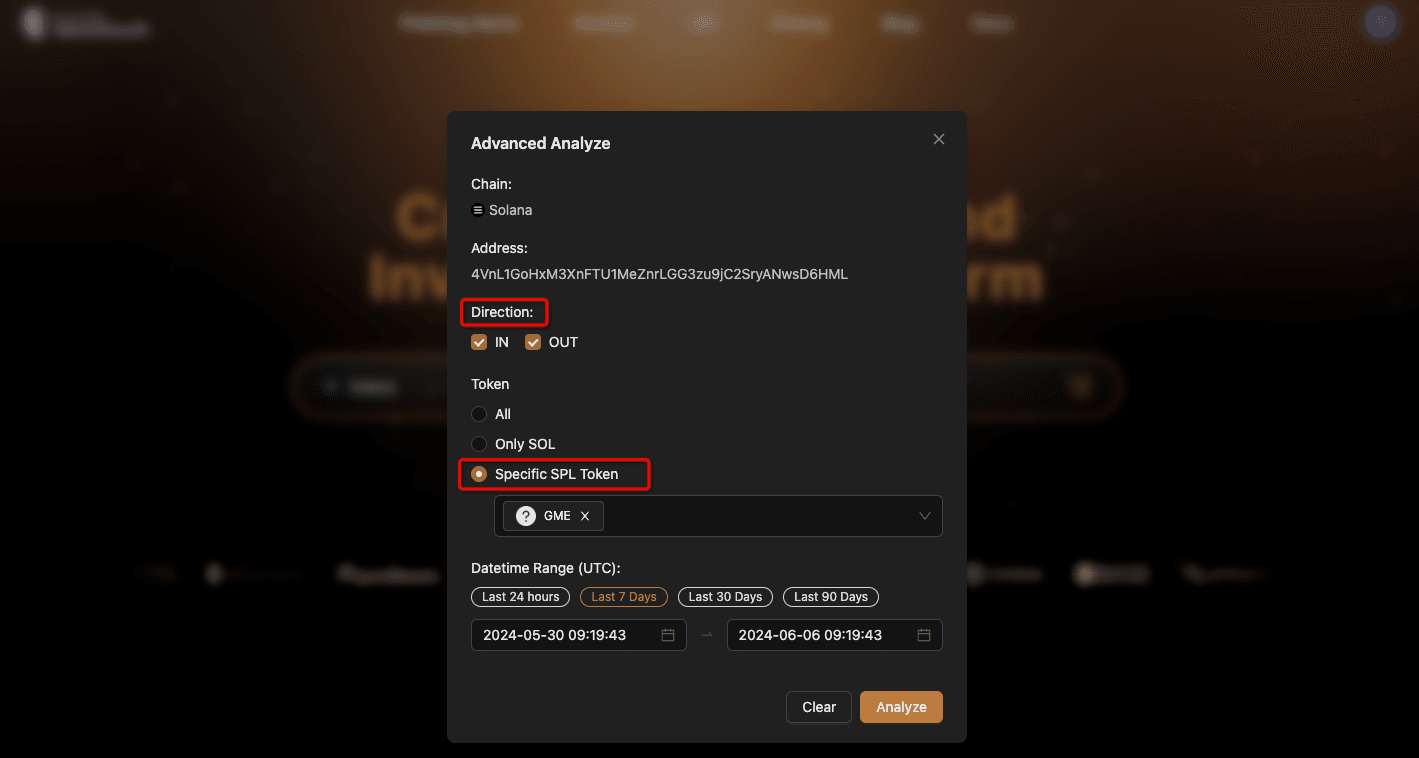
首先,在选项中选择“Solana”,然后输入地址 4VnL1GoHxM3XnFTU1MeZnrLGG3zu9jC2SryANwsD6HML,然后按“Advanced Analyze”。

由于我们的目标非常明确——分析此地址的 $GME 流动情况——我们可以在分析前进一步细化我们的标准,以使结果更加准确。

  • 首先,在“Direction”下选择所需的资金流向。
  • 接下来,您可以输入特定的代币地址来进一步缩小范围。在这里,我们可以选择“Specific SPL Token”并粘贴 $GME 代币的合约地址:8wXtPeU6557ETkp9WHFY1n1EcU6NxDvbAggHGsMYiHsB。
  • 最后,按所需时间段进行过滤。

MetaSleuth 会自动可视化与该地址相关的资金流。每个节点代表一个地址,节点之间的边代表总代币转账。即使两个节点之间发生多次同一代币的交易,也只显示一条边。
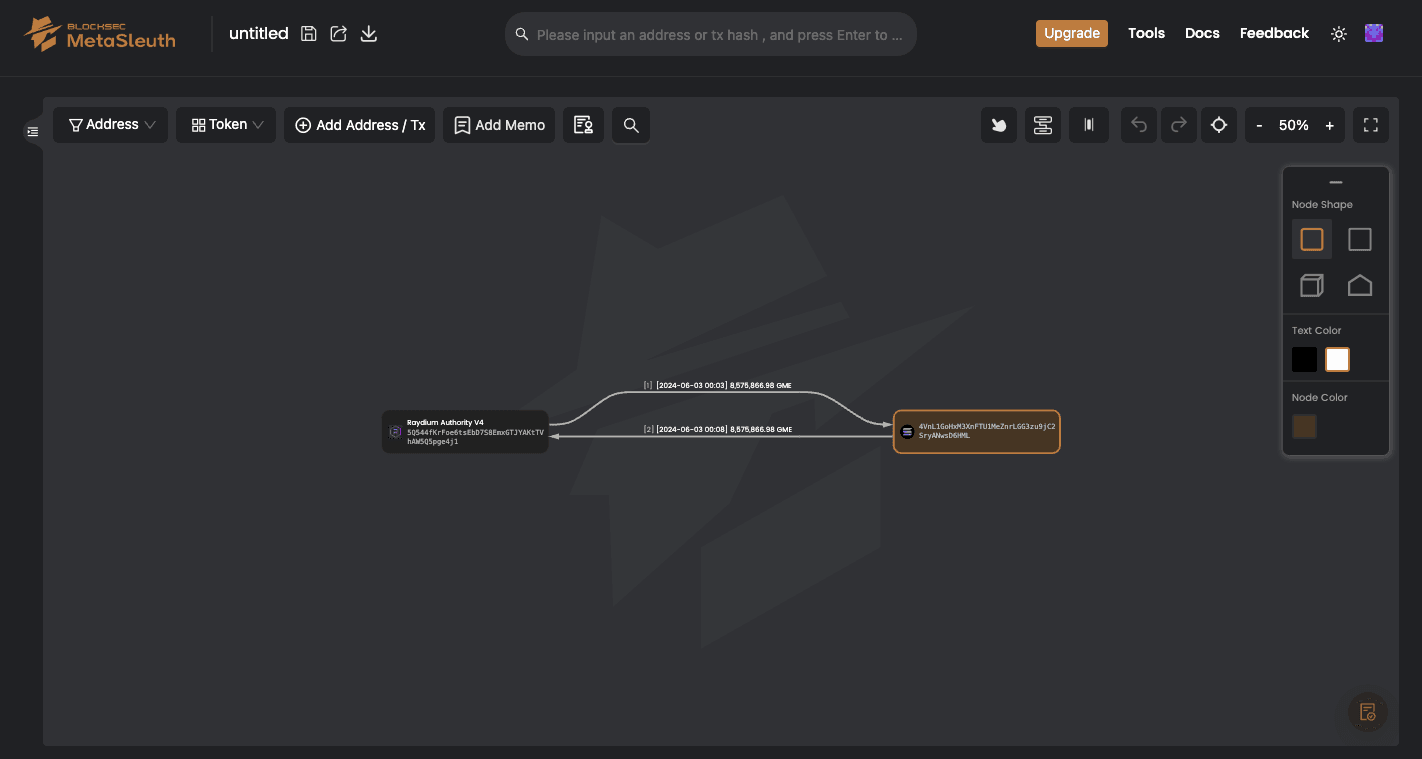
我们可以看到画布当前显示两条记录。
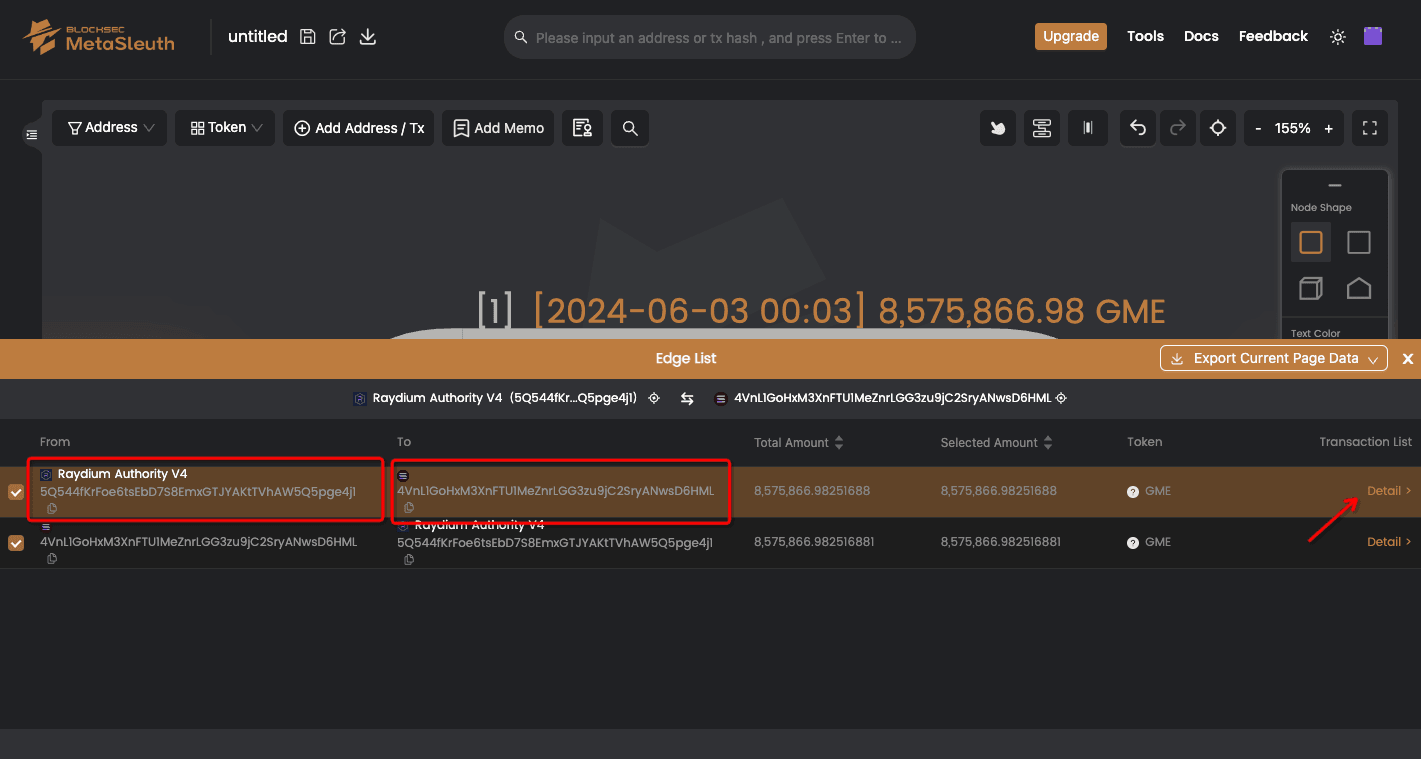
如前所述,边代表汇总的代币转账。我们可以点击边来查看更详细的信息。 在边列表中,我们可以看到节点之间的所有代币转账。由于显示的是汇总代币,我们可以点击“Details”展开以查看更多信息。
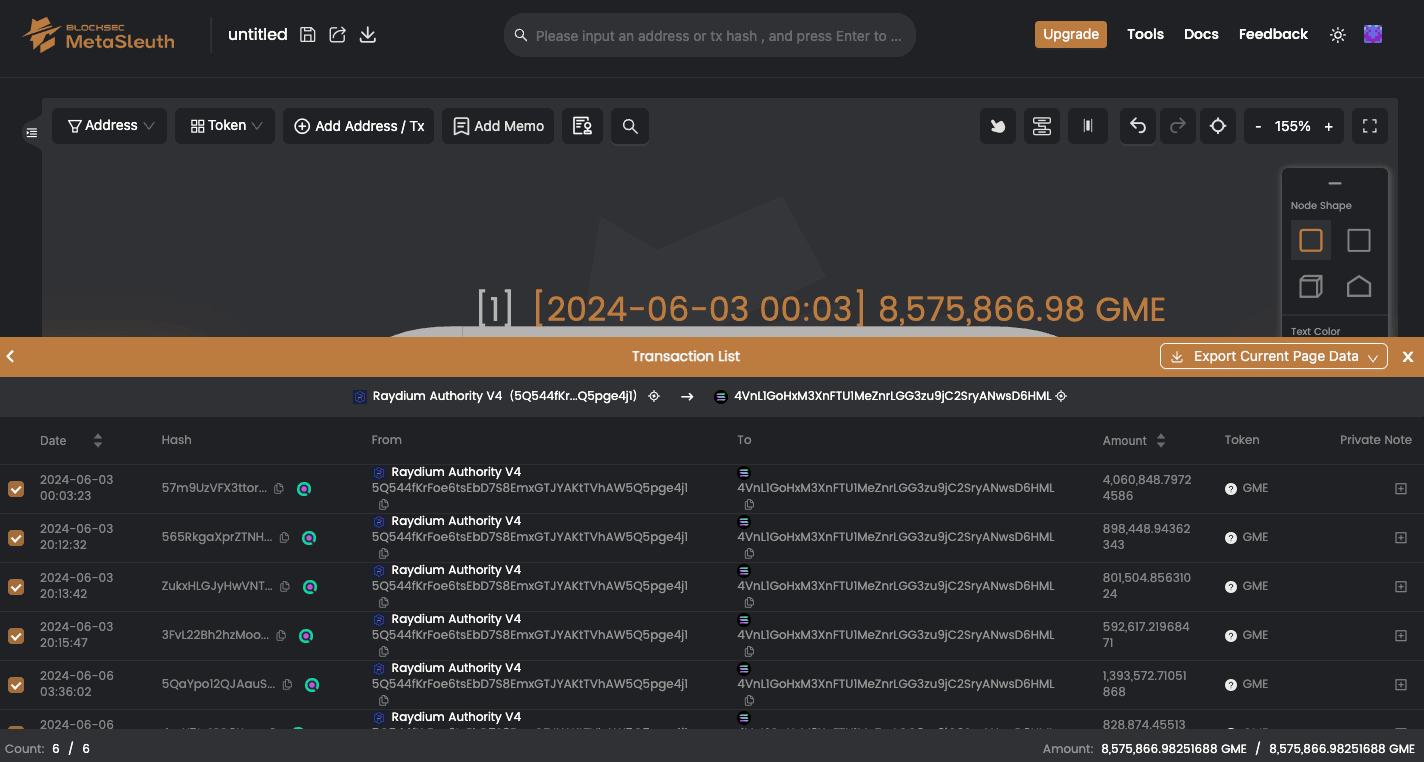
此外,您可以将交易哈希粘贴到上面的搜索栏中以查看交易详情。
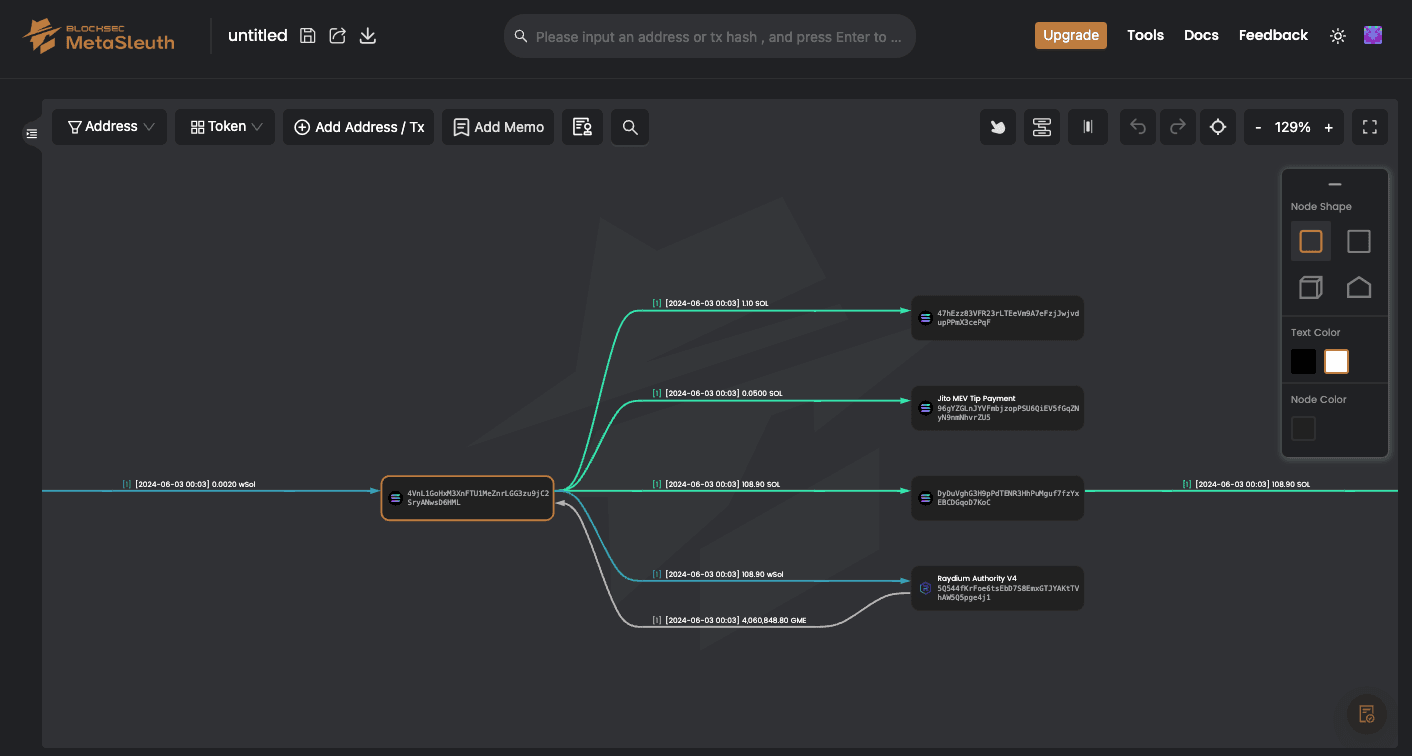
我们可以看到,在 00:03,108.90 WSOL 兑换了 4,060,848.79724586 GME。 接下来,我们需要确定这些 GME 以多少价格售出。点击第二条边,然后点击“Details”。
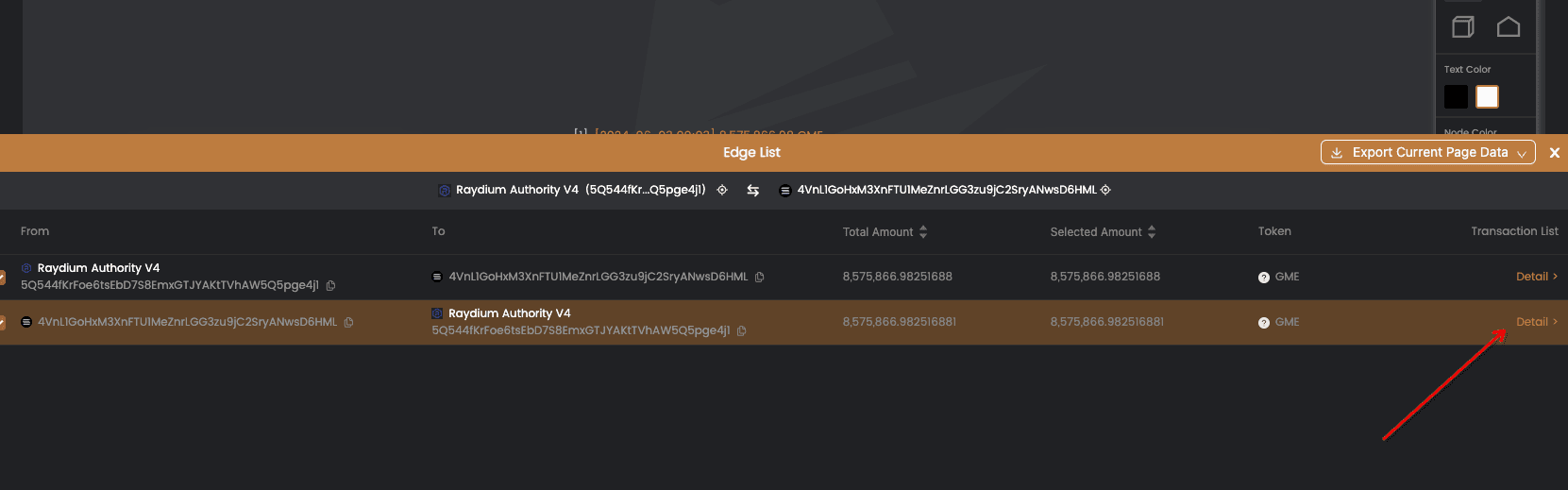
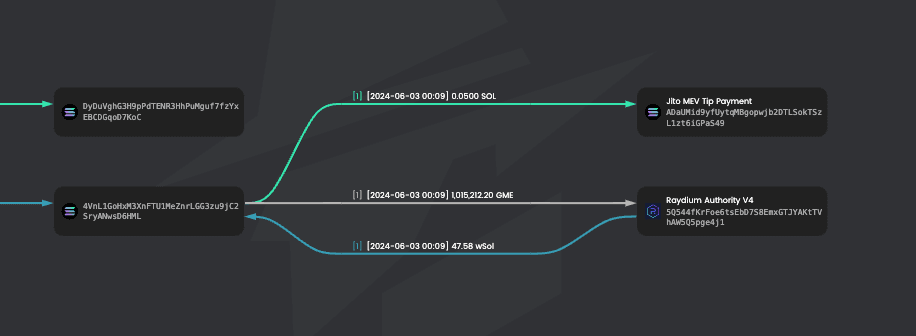
注意左下角,在 [2024-06-03 00:08:23]、[2024-06-03 00:09:12] 和 [2024-06-03 00:09:35] 时,分别售出了 2,030,424.39862293、1,015,212.19931146 和 1,015,212.19931146 GME,总计 4,060,848.797 GME。
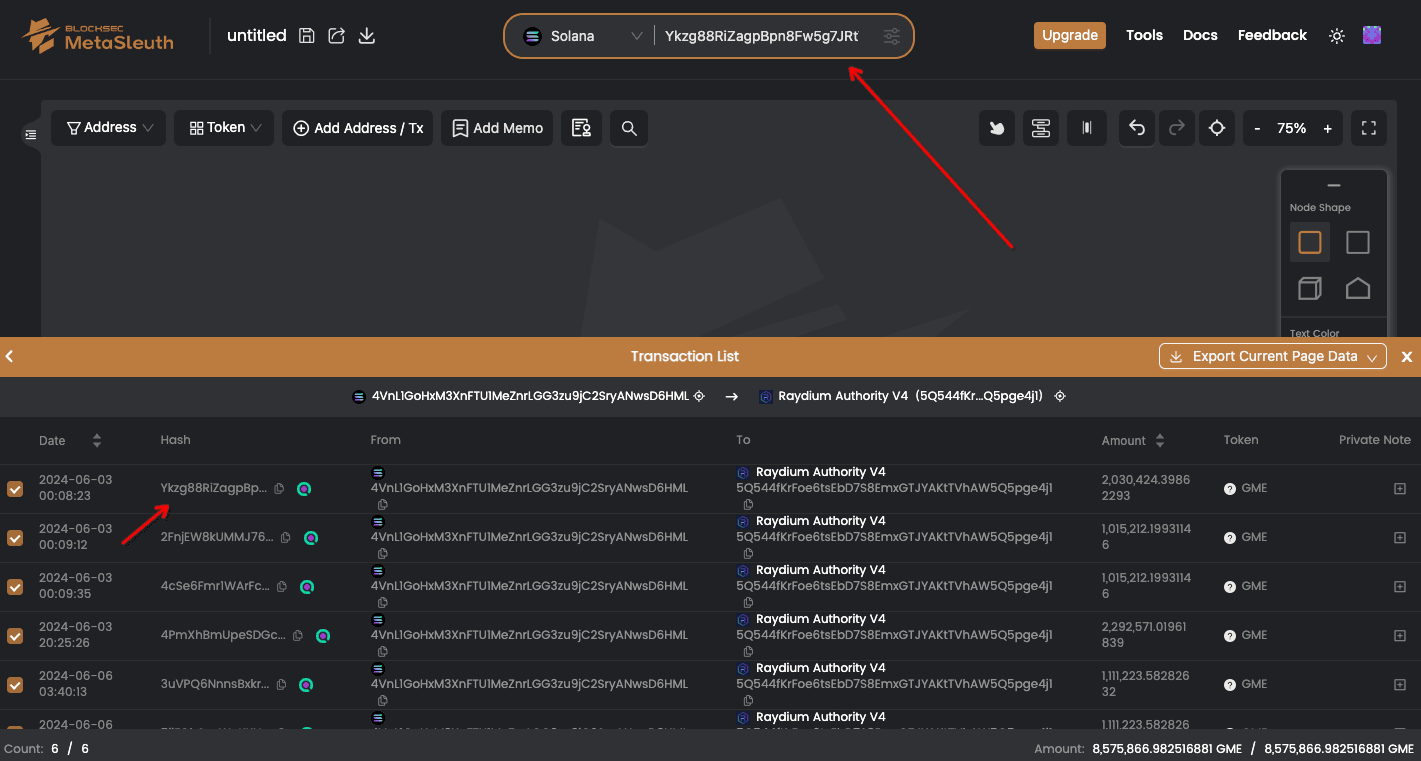
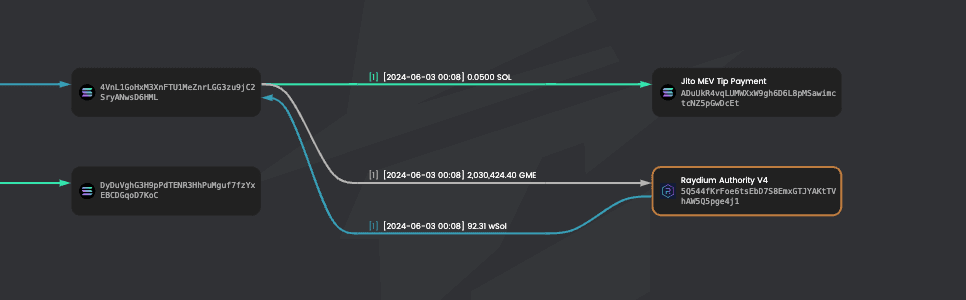
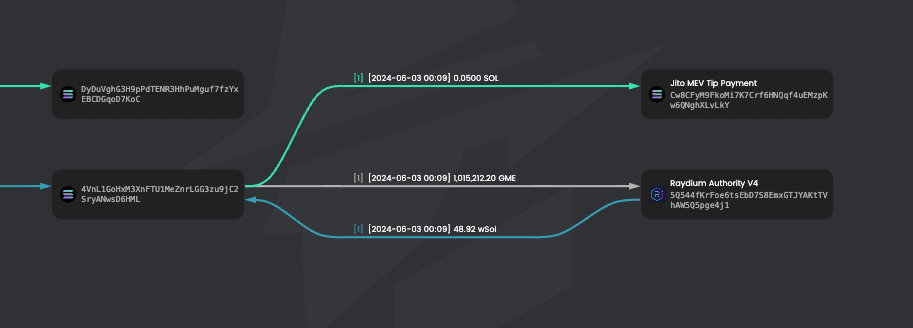
此时,将交易哈希粘贴到上面的搜索栏中,即可查看收到的 wSol 数量:92.31 wSol、48.92 wSol 和 47.58 wSol,总计 188.81 wSol。 在短短 5 分钟内,利润为 (188.81 - 108.90) * 166 = 13,265.06。
通过运用这些方法和技术,您可以利用 MetaSleuth 对 Solana 生态系统内的项目和钱包进行深入调查,监控 Smart Money 的投资活动,并做出更明智的投资选择。无论您是初学者投资者还是经验丰富的分析师,MetaSleuth 都可以作为探索和理解 Solana 生态系统的强大工具。

订阅并享受 10% 折扣

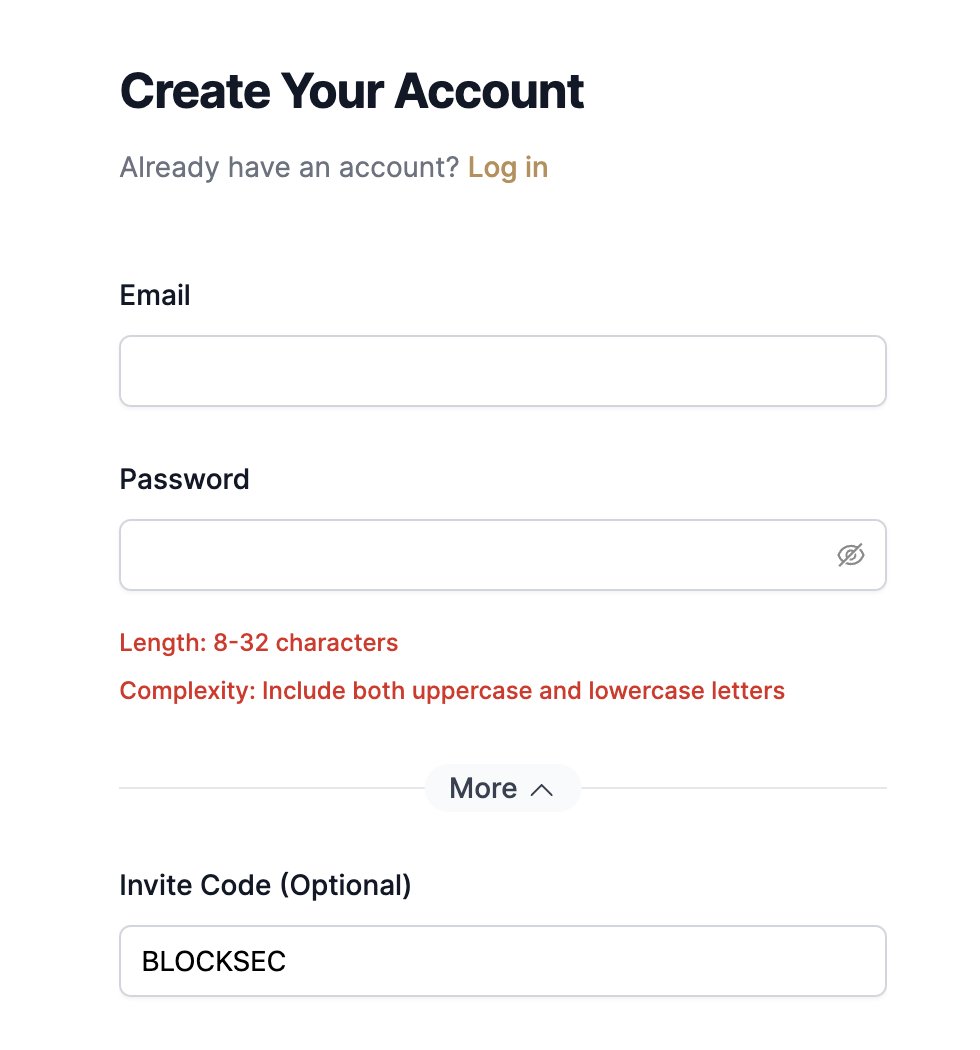
注册 MetaSleuth 时,请使用 BLOCKSEC 作为邀请码,即可享受订阅 10% 的折扣。 https://metasleuth.io/?invite-code=BLOCKSEC
关于 MetaSleuth

MetaSleuth 是由 BlockSec 开发的一个综合平台,旨在帮助用户有效追踪和调查所有加密货币活动。借助 MetaSleuth,用户可以轻松追踪资金、可视化资金流、监控实时资金动向、保存重要信息,并通过与他人分享其发现来协作。目前,我们支持 13 条不同的区块链,包括比特币 (BTC)、以太坊 (ETH)、波场 (TRX)、Polygon (MATIC) 等。 网站:https://metasleuth.io/ Twitter:@MetaSleuth @MetaSleuth 电报:https://t.me/MetaSleuthTeam

Sign up for the latest updates
~$7.04M Lost: GiddyDefi, Volo Vault & More | BlockSec Weekly
Security Insights

~$7.04M Lost: GiddyDefi, Volo Vault & More | BlockSec Weekly

This BlockSec weekly security report covers eight attack incidents detected between April 20 and April 26, 2026, across Ethereum, Avalanche, Sui, Base, HyperLiquid, and MegaETH, with total estimated losses of approximately $7.04M. The highlighted incident is the $1.3M GiddyDefi exploit, where the attacker did not break any cryptography or use a flash loan but simply replayed an existing on-chain EIP-712 signature with the unsigned `aggregator` and `fromToken` fields swapped out for a malicious contract, demonstrating how partial signature coverage turns any historical signature into a generic permit. Other incidents include a $3.5M Volo Vault operator key compromise on Sui, a $1.5M Purrlend privileged-role takeover, a $413K SingularityFinance oracle misconfiguration, a $142.7K Scallop cross-pool index injection, a $72.35K Kipseli Router decimal mismatch, a $50.7K REVLoans (Juicebox) accounting pollution, and a $64K Custom Rebalancer arbitrary-call exploit.

The Decentralization Dilemma: Cascading Risk and Emergency Power in the KelpDAO Crisis
Security Insights

The Decentralization Dilemma: Cascading Risk and Emergency Power in the KelpDAO Crisis

This BlockSec deep-dive analyzes the KelpDAO $290M rsETH cross-chain bridge exploit (April 18, 2026), attributed to the Lazarus Group, tracing a causal chain across three layers: how a single-point DVN dependency enabled the attack, how DeFi composability cascaded the damage through Aave V3 lending markets to freeze WETH liquidity exceeding $6.7B across Ethereum, Arbitrum, Base, Mantle, and Linea, and how the crisis forced decentralized governance to exercise centralized emergency powers. The article examines three parameters that shaped the cascade's severity (LTV, pool depth, and cross-chain deployment count) and provides an exclusive technical breakdown of Arbitrum Security Council's forced state transition, an atomic contract upgrade that moved 30,766 ETH without the holder's signature.

Weekly Web3 Security Incident Roundup | Apr 13 – Apr 19, 2026
Security Insights

Weekly Web3 Security Incident Roundup | Apr 13 – Apr 19, 2026

This BlockSec weekly security report covers four attack incidents detected between April 13 and April 19, 2026, across multiple chains such as Ethereum, Unichain, Arbitrum, and NEAR, with total estimated losses of approximately $310M. The highlighted incident is the $290M KelpDAO rsETH bridge exploit, where an attacker poisoned the RPC infrastructure of the sole LayerZero DVN to fabricate a cross-chain message, triggering a cascading WETH freeze across five chains and an Arbitrum Security Council forced state transition that raises questions about the actual trust boundaries of decentralized systems. Other incidents include a $242K MMR proof forgery on Hyperbridge, a $1.5M signed integer abuse on Dango, and an $18.4M circular swap path exploit on Rhea Finance's Burrowland protocol.

Go Deeper with MetaSleuth Investigation

Extend your crypto compliance capabilities with Blocksec's MetaSleuth Investigation, the first platform for tracing funds, mapping transaction networks and revealing hidden on-chain relationships.

Move from detection to resolution faster with clear visual insights and evidence-ready workflows across the digital assets ecosystem.

MetaSleuth Investigation